

Women have a HUGE misperception about the male-dominated workplace that has done incredible damage to our efforts to advance.
Women work from a narrative that says men want to climb to the top so they can have POWER over others. Many women believe men aspire to control and dominate others – they want to be authoritarians, dictators and the king.
But if you think about it, that makes men sound really dysfunctional and as if all men are inherently insecure with control issues. And from our personal experience know most men aren’t like that. They are normal guys. However, the few that have real control issues – such as the powerful men who are sexual harassers – get a lot of attention and reinforce the narrative.
In reality, men don’t aspire to have power over others.
Men aspire to keep others from having power over them.
Men aspire to be autonomous
Men want to be independent and have self-determination.
They want to exercise their own judgement to do what they want, when they want, how they want. They don’t want to be treated like a child who has to ask permission or be told what to do.
Therefore, reason they really aspire to rise higher in the organization is so there are fewer people above them who can tell them what to do.
If you think about that too, you realize it is why every revolution, rebellion and resistance movement was fought. It is why there are very few monarchies left. Men fought for autonomy, self-determination and self-governance.
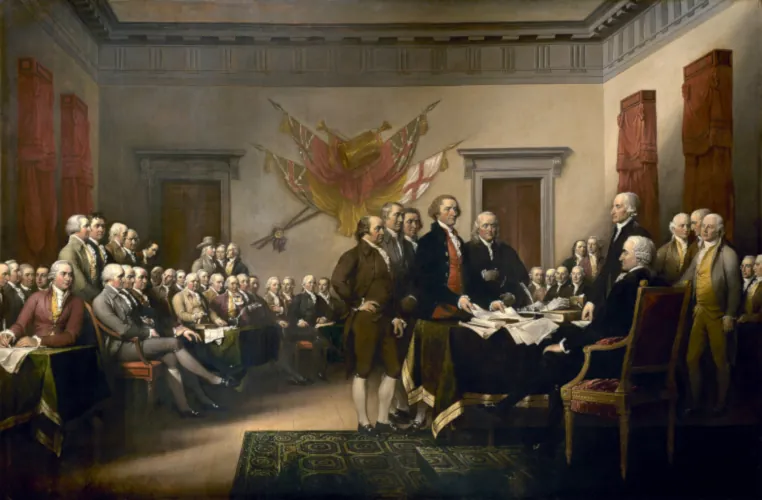

So, if men aspire to be autonomous then why do so many women believe men want POWER and are driven to protect their POWER structures?
To understand that, we have to go back in time to when women had no legal rights and were completely dependent on men. Women spent their lives in a precarious and vulnerable state. Their only means to attain financial security, power and status was to attach themselves, through marriage or family affiliation, to a strong man with those attributes. Therefore women needed to see the public sphere (the world of government and business) as the male proving ground where survival of the fittest played out and the strongest man rose to the top. Women used men’s success in the public sphere to measure how good of a marriage prospect he was.
Women saw the public sphere for what we needed it to be.
Our perceptions about how it functioned were formed by being on the outside looking in. They weren’t formed by actually watching and observing how men interact with each other in the workplace.
So, when women went into the male-dominated workplace we brought these perceptions with us. Consequently, we wrote our own narrative:
“Tear down to rise up.”
This narrative said women had to fight men for power. Women had to tear down men’s power structure in order for women to rise and take power for ourselves.
We weren’t shy about stating we wanted to be the CEO’s, on corporate boards and in top government positions for power. Once we obtained this power, we believed we could dictate new rules and exercise our control.
Ironically, women stated that we wanted to be just like the men we wanted to tear down.
However, women’s belief in how we thought the male-dominated workplace worked clashed with how it really worked.
Men who aspired to be autonomous, saw women’s quest for power and control as a threat to the autonomy they valued and the entire structure they built to promote their autonomy. Faced with this threat, men resisted the advancement of women.
For 40+ years, men and women have interacted through a huge misunderstanding of what the other wants and values.
Women interpreted men’s resistance to advancing women as men wanting to subjugate women. And when men treated women just like other men – like people who value autonomy – autonomy made women feel rejected.
To women autonomy feels like you are being left to fend for yourself, like no one supports you and you are in a sink or swim situation with no life preserver. It doesn’t feel like you are being treated as an equal to your male colleagues.
Autonomy makes women feel ostracized.
So when men treated women as their “equals”, women still saw it as men rejecting women in order to keep power for themselves. It reinforced the narrative that men work off a power and control structure and that women needed to tear down that structure. This in turn caused men to believe women worked off a power and control structure and men had to stop women in order to protect their autonomy.

We created a perpetual cycle of misunderstanding each other.
Even worse for women, men learned how to use women’s perception about the power and control structure against women. If women want to believe men have all the power and women assume they are in an inferior position, men, especially dysfunctional men, will take advantage of that.
I suspect that much of the harassment and bullying women experience is due in large part to this dynamic. Many men believe they will get away with it because women are taught, we are powerless victims who cannot overcome men’s power structure. And as I said earlier, these dysfunctional men get all of the media attention, which then perpetuates the cycle of misunderstanding.
Today we have a huge mess of misunderstandings and misperceptions we need to fix.
In order for women to achieve equality and parity with men, we must first change our perspective and stop buying into the power and control narrative. We have to see the male-dominated workplace for how it really functions and for the huge role AUTONOMY plays in its structure.
Women need to watch and listen to the men they work with.
Are men acting to have power and control over others?
Or, are they acting to preserve their AUTONOMY – to do what they want, when they want, how they want?
Are they being isolationists who want to pretend their actions don’t affect other people and resist other people’s actions affecting them?
Do they resist listening to others, wanting only their voice to be heard?
Do they take autonomy to an extreme by becoming selfish, self-centered and even narcissistic?
I guarantee that if you look around the male-dominated workplace you will be shocked by how AUTONOMY you see.
It’s rampant. If we tune into all those things that bug us about working with men, we will probably find autonomy as the cause.
When women learn to recognize autonomy and understand its power in the male-dominated workplace, we will finally put ourselves on the right path to realizing our own equality.
One more point.
I use the Yin-Yang concept to describe the natural and correct interaction of men and women. Notice in this image there are no power and control mechanisms. It is about mutual influence and harmony.

Therefore, for everything men do, women have a balancing, influencing reciprocal action. We are inherently equal.
However, women will never recognize and exercise our inherent equality if we continue to work off of bogus narratives. So, change your perspective. See the male-dominated workplace for how it really is.
Empowered Women See the Male-Dominated Workplace For How It Really Functions
To learn more, watch these YouTube videos:
 Beginning in childhood we are taught that we can’t act on our own. We have to wait for permission from our parents and other adults with authority.
 To learn more about how women can grab their empowerment, check out my