Tag: Change

  • Ladies – Supporting an Issue Isn’t Enough!

    Ladies – Supporting an Issue Isn’t Enough!

    Recently I read through the Action Plan of a women’s organization I was interested in joining.  As I read, I kept wondering:

    What action I am supposed to take? 

    What am I supposed to do?

    This is a huge problem women have.

    We have ideas, principles and values.  Let’s call these Abstracts.  We believe that when we state these Abstracts and say we support them, we are taking ACTION. 

    But that’s not action. It’s just words.

    Here are some examples:

    • The organization supports funding of a public education system that results in the uniform opportunity for all students to master the attitudes, knowledge, and skills necessary to thrive in a competitive and changing world.
    • The organization supports voter registration procedures, voting options and systems that are accessible to all, easy to administer, and have appropriate security measures to prevent fraud or technology disruptions. The organization supports Voting Options of:
      • Early voting in person and by mail
      • Traditional polling places
      • Voting Centers

    That sounds great but as a member of the organization:

    What is the Action Plan to accomplish these objectives?

    Loving sentiment but what is the issue and the action?

    The mistake women commonly make is that we think that if we put an idea out there – create awareness by protesting – then some male-dominated entity should pick up our idea and run with it.  We expect them to listen to our idea and exclaim:

    “That is a wonderful idea!  Let’s put Jack and Henry on it.  They can figure out what needs to be done and present their solution to the President/CEO for approval.  Thank you so much for bringing this deficiency to our attention. We are rewarding you with a promotion, raise or monument!”

    Sorry, that’s not how it works.

    A year ago, I criticized an article that was bemoaning how a group of women who wanted a better maternity leave policy in their company had to spend hundreds of hours of their own personal time to build the case, present it and convince their company to pass it.  By the time it was enacted, all the women involved in advocating for the new policy were past the point in their lives when the new policy would benefit them.

    The long list of women who commented were outraged that the company didn’t look at its own maternity leave policy and say “We need to change this!” 

    They were outraged that it took so long and the women had to spend their personal time and money on the issue.  They were outraged that the women weren’t even going to benefit from it so the company needed to compensate them for their time.

    I was taken aback that in the 21st century, so many women still have patriarchal views.

    So, my comment was:

    Protest sign saying "Moms demand action for gun sense in America
    Action by Who?
    Who do You want to act on the issue that is important to you?

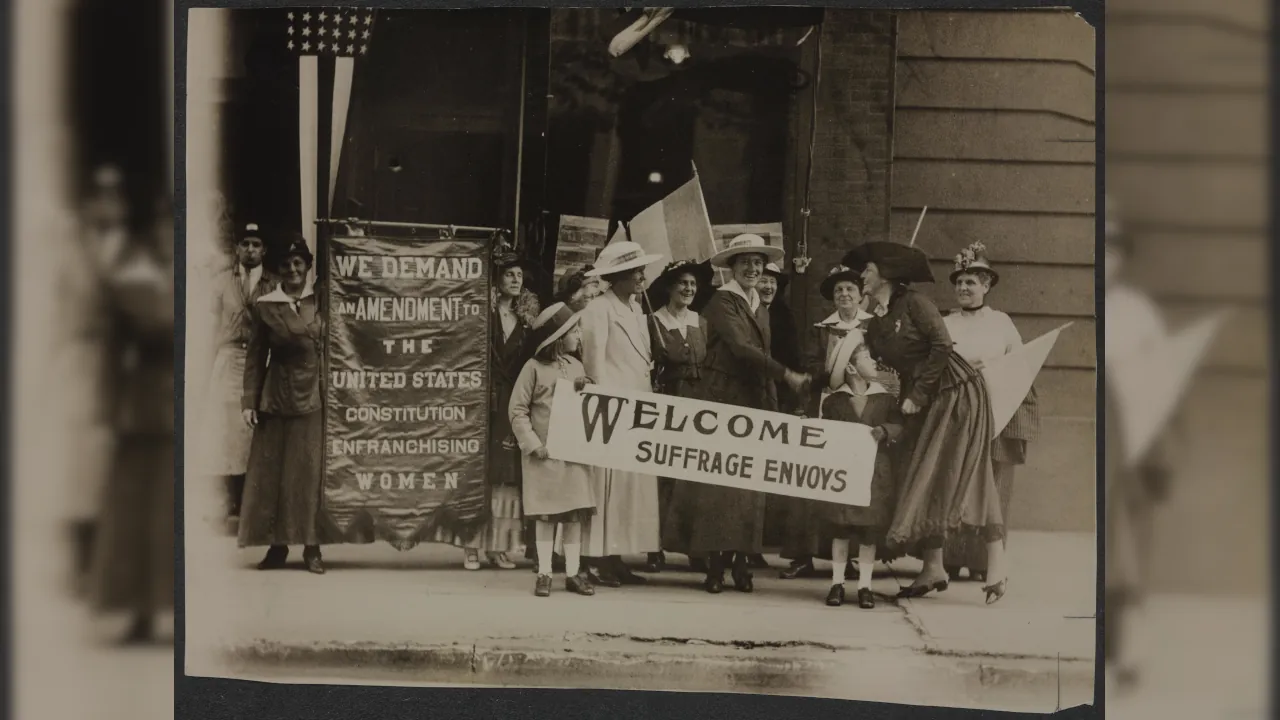
    For a while, I’ve been studying the Woman’s Suffrage movement.  There’s no better example of women taking action on a specific issue to create change – because they did it without any legal rights! 

    This statement by Carrie Chapman Catt who developed “The Winning Plan” to get women the right to vote, discusses what it took:
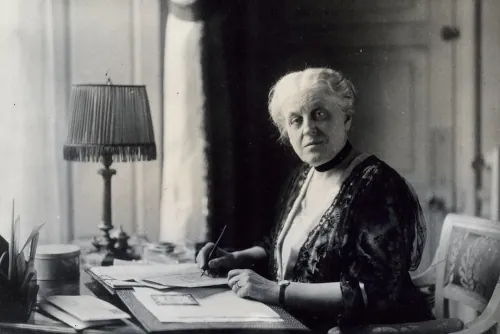
    Picture of Carrie Chapman Catt siting at her desk

    “To get that word, ‘male’, out of the Constitution, cost the women of this country 52 years of pauseless campaign; 56 state referendum campaigns; 480 legislative campaigns to get state suffrage amendments submitted; 47 state constitutional convention campaigns; 277 state party convention campaigns; 30 national party convention campaigns to get suffrage planks in the party platforms; 19 campaigns with 19 successive Congresses to get the federal amendment submitted, and the final ratification campaign.”

    They didn’t just protest and complain.

    They did the hard work!

    They developed an Action plan and worked the plan. 

    And many of the women who were the first leaders of the movement such as Lucretia Mott, Susan B. Anthony, Elizabeth Cady Stanton, Lucy Stone, Sojourner Truth…and the list goes on and on…never got to see their life’s work come to fruition.

    National Woman's Suffrage Statue of Lucretia Mott, Susan B Anthony and Elizabeth Cady Stanton

    After the 19th Constitutional Amendment was ratified, Carrie spoke about what it took to achieve it:

    The vote is the emblem of your equality, women of America, the guarantee of your liberty. That vote of yours has cost millions of dollars and the lives of thousands of women. Money to carry on this work has been given usually as a sacrifice, and thousands of women have gone without things they wanted and could have had in order that they might help get the vote for you. Women have suffered agony of soul which you can never comprehend, that you and your daughters might inherit political freedom. That vote has been costly. Prize it!

    Her words spoke to future generations of women to remind us that the work isn’t done and we must continue to ACT:

    The vote is a power, a weapon of offense and defense, a prayer. Understand what it means and what it can do for your country. Use it intelligently, conscientiously, prayerfully. No soldier in the great suffrage army has labored and suffered to get a `place’ for you. Their motive has been the hope that women would aim higher than their own selfish ambitions, that they would serve the common good.

    The vote is won. Seventy-two years the battle for this privilege has been waged, but human affairs with their eternal change move on without pause. Progress is calling to you to make no pause. Act!”
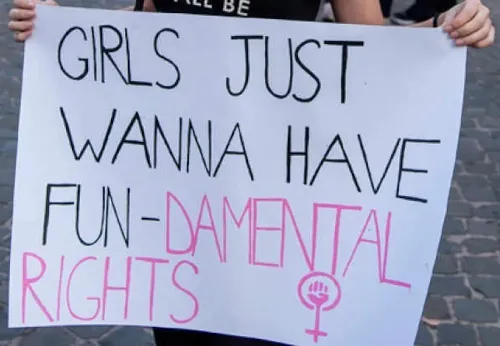
     

    Sign from 2017 Women's March saying Girls Just Wanna Have Fun Damental Rights
    Suffragettes already gave you Fundamental Rights.
    Use them.

    The Suffragettes worked hard so we could participate as equals in society, government and the workplace.  They expected us to assert our rights and end the patriarchy. They expected us to continue the hard work of creating change to better our family, community, workplace and government.

    If we just protest and expect men or the government (primarily men) to make changes on our behalf, then we let them down. We squander our rights, empowerment and equality.

    And nothing changes or gets done.

    The women who spent all the hours getting a better maternity leave policy did it for all of the women in their company and to add to the momentum of better maternity leave policies for all women in all workplaces.  They served the greater common good.

    Women have always inspired society to aspire to higher ideals, values and principles.  But to create the change that incorporates our values, ideals and aspirations into the way we work and live, requires hard work. 

    Whether or not we personally benefit from our action isn’t important. It’s important that our action benefits the greater and common good for all people.

    Empowered Women Take Action For The Good Of All People

    https://youtu.be/iXPkTVlDU-o
  • Change For Women Won’t Come From the Top Down

    www/123rf.com – 36093924

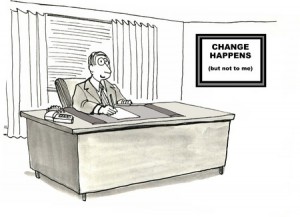
    There is an old fallacy that change happens from the top down.

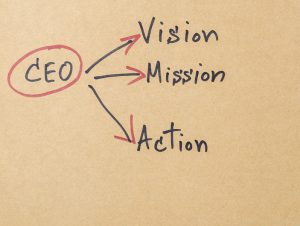
    It says that in order for a company to institute a new initiative the first must-do step is: Get CEO buy-in!  The CEO then gets the buy-in of senior management.  Senior management then directs the initiative down to middle management who carries it out through the workforce.

    But if you’ve ever worked for a medium or large company you probably learned a different response to any big announcement of a new initiative: “Yay, I’ll believe it when I see it.”

    Many initiatives never make it down to the workforce level.  And the few that do often fade out with few if any lasting remnants of their existence.  The common excuse, “We didn’t have enough buy-in.”

    But the real reason they fade is because they are clumsily tacked onto existing work.  They aren’t integrated into the existing operating, managing and reporting systems.  Therefore, they don’t feel natural and easy.  When we become over-worked or stressed the best solution is to lob off the work that doesn’t fit.

    When it comes to advancing women in the workplace, we’ve been trying to use this same top-down approach for 40 years.  A women’s organization approaches a CEO and in the tradition of all new initiatives, has him sign a document or make a video declaring the company will now work towards gender equality.  It’s great PR – for both parties – but the results are minimal – just like they were with every previous management initiative.

    So why do women still use the top-down approach to advance women?

    Because we still believe too much in the myth of the hierarchal power and not enough in our own inherent power.

    In reality change happens from within and amongst people.  It comes from interaction and open and honest communication.  So, any woman in any role has more power to affect changes in attitude, behavior and culture than the CEO.

    As women we can create change by positively asserting ourselves and making change safe.  People are often afraid of change because they fear they will be negatively impacted.  When we negate their fears and replace them with positive experiences, the change is embraced.

    This is why in my efforts to advance women I focus on the positive changes and meaningful outcomes any woman can create in her workplace:

    • Improved performance, efficiency and profitability
    • Achievement and pride in daily accomplishments
    • Less stress, frustration, chaos and health issues

    These changes happen because when women assert themselves, we transform the workplace.  We make our workplace Whole. 

    We’ve all heard narratives about how women “bring balance” to male-dominated workplace.  But balance is an incomplete portrayal of the power of women. It still implies that men take more initiative and drive performance while women only curb and prevent them from being total bulls in the china shop.

    Balance doesn’t imply full equality.

    Wholeness does.   

    To understand Wholeness, we only have to look at the Yin-Yang concept we are all familiar with.

    Yin and Yang are equal halves of the whole.  They are dynamic.  They continually interact and influence each other in an easy and natural manner, making their interaction feel right.  Neither is superior or inferior, each controls the other and both need the other to create a harmonious Whole.

    If we think about Yang working all by itself as it does in many of our workplaces, we realize its performance limitations.  Working by itself Yang can’t roll all the way over and revolve.  Not even the CEO with all of his mighty hierarchal power can make Yang to revolve on his own.

    Nor can the CEO make Yin to assert herself and influence Yang.  Yin has to decide to do that on her own.  That is the power of her equality – she must be the one who recognizes and accepts that she is one half of the whole.  She must be the one who steps into and exercises her full equal power.

    The changes women want have always been women’s to make.  We just haven’t seen our power to do so because we have always been misled into believing in the power of the hierarchy.  And even though the male-dominated workplace knows this is a myth it keeps quiet because it wants to hide the fact that the hierarchy can’t create  change and doesn’t even know how.

    Changes in the workplace and the advancement of women will happen, but only when women accept that men and women really are equal and choose to exercise their equality.

    Empowered Women Create the Change They Want


    Find this article helpful?

    Share and Sign up to receive more

    Follow The Woman In The Room on Facebook

    Checkout my New Book:

    The Woman In The Room: How I Realized the Unique Value of Women in the Male-dominated Workplace

    Available outside the United States on Amazon – Search using:

    The Woman In The Room Callihan


  • The Reality of Being a Change Agent

    Recently I read an article about how to be an effective Change Agent.  The article listed the characteristics of a Change Agent as Positive, Visionary, Likeable, Open and Strategic.  It is through these qualities that the Change Agent has the ability to alter the deeply held beliefs of others simply by being authentic.

    http://www.123rf.com/24692596

    Whoa.

    The person who wrote this has never been a Change Agent!

    I hate to burst anyone’s bubble but being positive, open, likeable or even collaborative isn’t enough to alter deeply held beliefs.  These positive characteristics aren’t a magic wand or magic fairy dust that makes Change easy.  Sorry.  That’s not how it works.

    I’ve been a Change Agent in all of my workplaces and learned that the most important quality of a Change Agent is the ability to deal with Conflict.  If you can’t deal with Conflict, then you can’t make Change happen.

    When we create a Change, we are asking our team to go beyond their current comfort zone.  Each team member has their own personal response.  For some the Change is non-threatening.  Others will be reluctant.  Using the positive qualities mentioned above helps get most people on board.

    But not everyone.  In most organizations there is one hold out.

    You know who I am talking about.

    This is the person who only wants to do things their way.  They have a history of resisting and derailing any attempt to Change the status quo.  The team, having been through this before, knows that unless this person buys-in. the Change won’t happen.  So they take a wait-and-see attitude.  They want to see how you, the Change Agent is going to deal with the Difficult Person.

    The Difficult Person resists Change as if their life depended on it.  Change threatens how they perceive themselves.  We all want to think that we are doing things right and working as hard as we can.   But, to a Difficult Person Change is like a megaphone publicly announcing: “You’ve been doing it WRONG!  You don’t know how to do your job because you are incompetent.”

    Change triggers something from their past that causes their response.  They see themselves losing status and fight back the way they were unable to do in their past.

    Being good people, we recognize they feel threatened and immediately try to ease their concerns.  We try to be nice, get to know them, be their friend, talk to them, hear them out etc. etc.  But none of this works.  Their negativity continues.  We become worn down and exhausted.  We are too drained to push forward with the Change and give up.

    Change is just too hard.

    The Difficult Person got exactly what they wanted.

    The rest of the team is discouraged.  They feel trapped and held hostage by the Difficult Person.  They view management as weak because they can’t deal with the Difficult Person.

    How do we create Change when there is a Difficult Person?

    First as the Change Agent you have to get your head screwed on straight.  You must accept that you aren’t a psychologist and aren’t paid to be one.  It isn’t your job to resolve the Difficult Person’s personal issues.  Your job is, to implement Changes, that improve your organization’ performance.

    Your colleagues are also responsible to implement Changes that improve the organization’s performance.  No one has the right to place their personal issues above organizational performance.  Each team member can either go along with the Change or face the consequences or find employment elsewhere.  It is their choice.

    Sound cold?

    Think of it this way:  Is it fair to everyone else to be held hostage by the Difficult Person’s issues?  Should their livelihood or family suffer because we want to be nice to the Difficult Person who has already demonstrated that they don’t care about the rest of the team?

    The Difficult Person isn’t interested in creating a win-win scenario.  They want a win-lose scenario where they are the victor.

    This creates the conflict the Change Agent must overcome.  Therefore Change requires a strategy.

    I take a positive approach.  I don’t dictate changes.  Instead I present a proposed Change as a workplace problem that we need to solve as a team.  I schedule a meeting where we can all sit down and work on the problem together.  Since most people in my organizations hate meetings but like free food, I have these meetings over lunch.  People bond when they share a meal so this increases the positive atmosphere.

    Most changes in the workplace are procedural – how to accomplish something.  This requires mapping out the new procedure.  My job is to act as the facilitator and let my team figure out the best procedure.  I stand at the white board to write out the procedure and ask simple questions such as:

    • What’s next?”
    • “Who does that?”
    • “Why?”
    • “When does that need to happen?”
    • “What about…”
    • “What else is there?”


    When we are done, the Change is mapped out and the team has buy-in.

    Except for the Difficult Person.  They had a last minute crisis so they couldn’t attend the meeting.

    http://www.123rf.com/ 36332388

    If you doubt that you have a Difficult Person amongst your team, hold the meeting and see who has the last minute crisis.  They will make it sound legitimate but it was contrived in order to avoid Change.

    Because I have dealt with so many difficult people, I am no longer amazed by the lengths they will go to avoid the meeting.  I personally tell them face to face about the meeting.  I personally remind them multiple times by email and in person about the meeting.  I deny them the ability to use the “I didn’t know about the meeting” or the infamous “I forgot” excuse.

    With experience I got good at anticipating their next excuse so I block it.  Yes it is a game.  They try to get out of the meeting and I block their attempt.  As the Change Agent, my job is to force them to be very creative in their excuses.

    When a Difficult Person has no way out, then what typically happens is they become sick.  Genuinely sick.  My best explanation is that they are coming face-to-face with their own issues.

    When this happens it is important to once again to have your head screwed on straight.

    You have to remember you are engaged a win-lose scenario.  Not with the Difficult Person, but with their personal issues.

    I recognize that the Difficult Person is also held hostage by their issues.  Their issues are stronger than them, their colleagues and their managers.  Their issues always win.  The Difficult Person needs to know someone is stronger than their issues by not giving in.

    That is the real Conflict a Change Agent takes on.

    On the day I put the Change into effect I clear my calendar to deal with nothing else.  I know this is the day when the Difficult Person will make their last ditch effort to stop the Change.  As the Change Agent it is my responsibility to handle the grenades the Difficult Person launches.  It is my responsibility to work with my team to make sure the Change happens.

    Standing up to the Difficult Person’s issues simply requires calling upon my super-stubborn inner 3 year old child who only knows the word “No.”

    I’m not aggressive.  I just refuse to budge.  The Change is going to happen.  It doesn’t matter what the Difficult Person says, how many threats they make or how they try to intimidate me, the Change is going to happen.

    It doesn’t matter how many alternative ways they come up with, the answer is “No.”  I am not budging.  The change is going to happen the way the team worked it out.

    I know from personal experience how far a Difficult Person will go to convince you that your proposed Change will have cataclysmic consequences.  They will do their best to make you question yourself and feel incompetent.  (How they are feeling inside.)  But you have to remember, that the Change wasn’t 100% your idea.  It was a collaborative effort, using the collective knowledge and experience of the team.

    The team knows what they are doing.  If any problems arise the team will figure it out.  The team wants to move forward.  And as the Change Agent your responsibility is to the team.

    How does this all play out in the end?

    Sometimes the Difficult Person breaks and suddenly everything is sunshine and roses.  The Difficult Person becomes a great team player.  It truly is magical.

    Sometime the Difficult Person quits and finds a job elsewhere.

    Sometimes you have to take disciplinary action and fire the Difficult Person.

    And sometimes, senior management steps in and sides with the Difficult Person.  The changes never happen and the organization never moves forward.  The workplace becomes deeply dysfunctional and you leave to find a job elsewhere where your Change Agent skills can make a real difference.

    However it turns out, you know you have what it takes to make your organization better.  And it feels really good to know you CAN make a difference!


    Empowered Women Aren’t Afraid To Be Change Agents

    To subscribe to my articles Contact Me

    Follow The Woman In The Room on Facebook