What value do women, bring to the workplace?
For centuries the accepted answer was “None.” Even today most of us can still only give a vague answer. We hear that companies with more women perform better but we can’t specifically state why that is. Without a clear answer, women don’t know how to leverage themselves at work and companies don’t have an incentive to proclaim “We need to hire and promote more women!”
The reason we can’t define the value of women is because we are still influenced by old ideas. Most notably is the Doctrine of Two Spheres, which most of us probably never heard of even though we know its effects.
The Doctrine of Two Spheres states that men and women, due to their biological makeup naturally inhabit two distinct and separate spheres. According to the doctrine men naturally have traits suited for the public sphere (politics, law, business, commerce, academia and finance) while women naturally have traits suited for the private sphere (domesticity, child rearing and religious and charitable work). This doctrine determined that male traits set a superior standard in the workplace and female traits are of little to no value.

Back in the 20th century when women first went into the workplace to work on par with men, we didn’t question the validity of the doctrine. We didn’t declare women’s equality by saying:
“Female traits are just as important to workplace success as male traits!”
Instead, we sought women’s equality on the basis of “equality.” As women we had the right and the opportunity to go into the workplace however, we had to comply with the standards established by men.
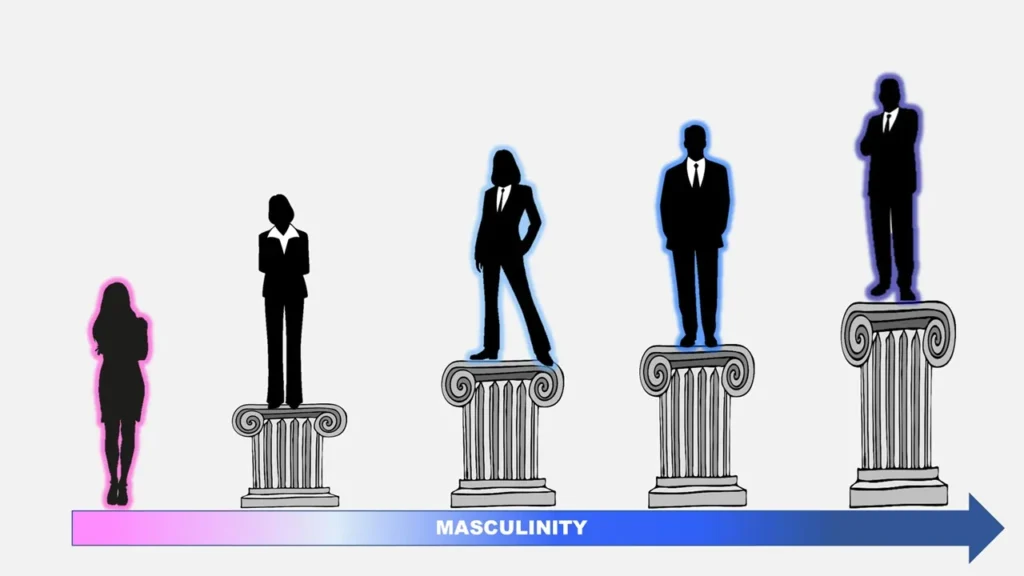
Without the declaration that female traits are just as valuable as male traits, a woman couldn’t work on par with men by acting like a woman.
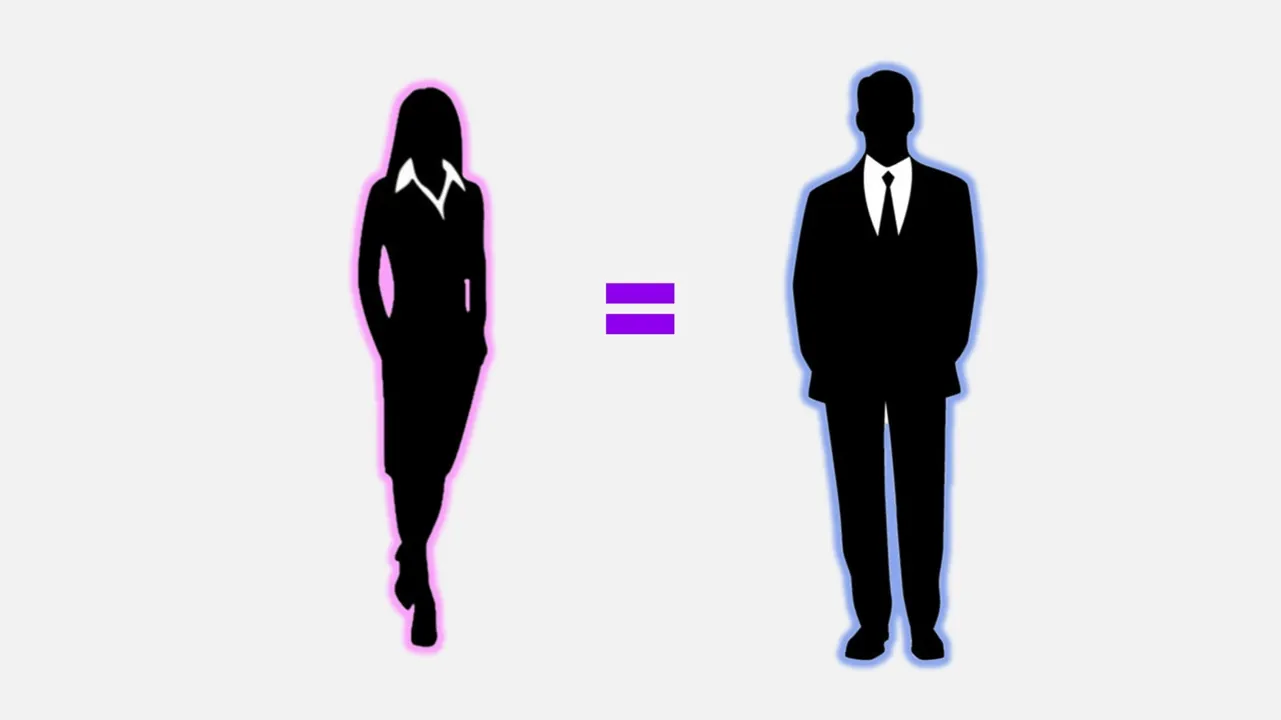
To be equal we had to be perceived as being the same as a man.
We had to leave our female traits behind in the private sphere and adopt male traits for the workplace. We could have the body of a woman, but we had to think and act like a man.
Many, many women still think this way.
The consequences of this have been enormous for women. We perpetuated the perception that men are superior and women inferior in the workplace. We made women choose between their femininity and having a career and financial security on par with men.
This choice keeps women out of many industries, jobs and professions, especially the highest paying. It is a major contributor to the wage gap. It leads women to conclude that we can have a career, but they can never go as far or achieve as much as our male colleagues. It is a significant reason why women aren’t advancing in the workplace.
This is why any effort to advance women has to start with throwing the Doctrine of Two Spheres in the trash can. We have to stop comparing women to men, stop telling women to copy men and stop believing that the way men do things in the workplace is the best and right way. We have to stop believing women will obtain equality when we measure up to the standards set by men.
Like many women, when I began my career, I had high expectations of my all-male workplace. However, it took me only a few days to say, “What the Hell? I thought you guys knew what you were doing!”
All around me I saw was chaos, crisis management, stress and lots of inefficiency. Any concerns I had about measuring up to my male colleagues immediately vanished. I saw lots of things that I needed to fix if my workplace was to meet MY standards.
I quickly realized that the way my male colleagues worked always felt incomplete – it was as if there were a lot of “things missing” in everything they did. At the time I couldn’t quite articulate what was “missing” so I began using the term “Swiss cheese” to describe how they “functioned” and “completed” tasks.

To fix my workplaces I didn’t copy my male colleagues or compete in their discussions. Instead, I listened for and looked for what they weren’t saying or doing. I looked for the Swiss cheese holes. Then I asserted myself and filled in the holes. Filling in the holes felt obvious and completely natural.

It also made our performance soar. It made me wonder why millions and millions of men armed with their “superior traits” never figured out how to fill in the holes like I did. We had the same education and experience.
There was only one difference between us – I was a woman.
Could it be that as a woman I brought unique and valuable traits to the workplace that men couldn’t?
After many years and many workplaces, I concluded the answer was – Yes!
I discovered that it was the combination and interaction of male and female traits that made workplace performance soar.
To understand how this works we only have to look to the Yin and Yang concept we are already familiar with.

Unlike the Doctrine of Two Spheres which divides male and female into two static and separate spheres, Yin and Yang are connected opposites.
Yin and Yang continually interact and influence each other. Neither is superior or inferior. Each controls the other and both need the other to create a harmonious whole.
Yin and Yang allows men and women to be different but still remain complete equals.
However what is really important about this concept is that it demonstrates that when men and women work together, we create:
Wholeness
This is what I picked up on when I first began working.
My male-dominated workplaces weren’t whole. They were full of Swiss cheese holes because they didn’t have any women.
As a woman, when I asserted my female ways of thinking and doing things I made my workplaces whole. Performance soared.
The significance of this is enormous to all workplaces and companies.
It means they are all under-performing. (Sorry guys but it’s true.)
This is especially true for all those heavily male-dominated STEM industries who work from the premise that male traits are the right traits for their industry.
Don’t believe me?
Watch the movie Steve Jobs: The Man in the Machine.
Listen to how many times the word “chaos” is used and how often the men talk about their stress and frustration. This occurred because they were working with only one half of the whole.
Workplaces that function in wholeness, achieve greater performance while also reducing stress, frustration, chaos and inefficiency. That is the beauty of working in wholeness.
So let’s answer the original question: What value do women, bring to the workplace?
Women make the workplace WHOLE.
This is why workplaces with more women perform better.
Empowered Women Know They Are One Half Of The Whole And Essential To Every Workplace
To learn more, watch this YouTube video: