

We like to think of negotiating as two sides coming together, sharing ideas and compromising on their interests in order to achieve a larger common objective. That is how negotiations work in an ideal world.
However, all too often we wind up in negotiations where one or both sides don’t want to negotiate in good faith – they refuse to subjugate their personal interests to the common objective.
They want to win.
They want the other side to lose.
Compromise is not acceptable.

Working in the construction industry I dealt with many of these bad faith negotiations where intimidation and threats were common tools. Negotiations worked on the belief that the strongest and most powerful will prevail and win. Negotiations were little more than a contest of wills, testing who was weaker and give in first.
Most people hate these types of negotiations. We don’t like the ugliness that goes along with them. So, when we face bad faith negotiations most of us (both men and women) make a critical mistake:
We are too nice.
We believe that if we are nice, if we act in good faith, if we concede something first then, they will realize we are good people who they can trust and work with. We believe our goodness will cause them to have a change of heart.
In our optimism and naivety, we believe we have the power to make goodwill blossom all over so we can negotiate among the sunshine, flowers and rainbows.

But it doesn’t happen.
Instead ,they hit us with a sledgehammer and then run over us with a truck.
Undeterred, we stick to our values.
We continue to tell ourselves that if we continue to be nice, we have the power to win them over.
But then our good faith efforts are rewarded with an even larger hammer getting dropped on us and an even larger truck running us over.
We may try again. We may try again several times. But eventually we get the message that the other side’s top objective is for us to lose.
They want us to bend to their will so they are in control.
So, how do we negotiate towards a common objective when we are faced with bad faith actors?
The traditional response is for each side to aggressively attack each other. We get as ugly as we can be in order to intimidate the other side into backing down and conceding. However, this seldom works. It usually results in each side just getting more entrenched in their position.
In more strategic workplaces there is a different tactic.
Instead of being more confrontational and taking steps forward to get in each other’s face, we deliberately take steps back.
We engage in a dangerous game of trying to back up them up so they step backwards off their cliff first. In other words, we want them to make so many mistakes that they take themselves out.
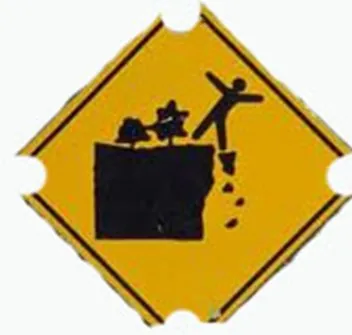
When we take a step backwards and claim our power, we send a message that they don’t intimidate us. We don’t have to be aggressive and confrontational because we are confident in our position. We create the perception that we are using our territory and taking everything that is rightfully ours. And we will NOT give it up.
In response the other side takes a step backwards too. They have to claim their territory too and prove how confident and powerful they are.
But are they?
Do they really know what is rightfully theirs and the limitations of their power? Or are they going to make false claims – claims they can’t deliver or prove. Claims that prove their incompetence and lack of credibility.
When we assert everything that is rightfully ours, our strategy is to force them to also assert themselves. However, they are still playing the domination and intimidation game. So, in their haste to prove they are more powerful than us, they eventually respond with false claims.
We then calmly discredit their claims, “Sorry, you can’t do that. Sorry, that’s not true.”
We prove we aren’t intimidated.
Because people hate to lose, they then make more false claims and take actions they expect to intimidate us. They believe they are expanding their territory and proving their power. However, if we know those claims are false, they discredit themselves. We have successfully backed them up onto unstable ground and eventually they fall.

This is not a game for the faint of heart!!
(And why most people don’t do it.)
It requires, putting away our ego and defensiveness so we play strategically. We must know our industry and profession inside out, backwards and forwards. We must know and be honest about our capabilities and our limitations. In my industry, I also had to know my legal and contractual obligations that gave me both power and restrictions.
I learned how to project my power and work within my limitations.
To succeed, we must play cooly and confidently. We must engage intellectually, not emotionally.
The biggest mistake people make is that they revert back to emotions. Some go back to being aggressive and trying to intimidate, going for the win. However, playing into this emotion causes us to do something stupid and shoot ourselves in the foot. (We want to make our opposition to do that to themselves.)
Other people revert back to being nice. They value “being liked, being respected, making friends and being seen as fair and compassionate,” above all else. They tell themselves this is the best long-term strategy that will pay off in future negotiations.
WRONG!!!
It actually sends a clear message that you are a weenie who is afraid to assert yourself. It reveals your vulnerability.
Too often people are afraid to assert their full power and leverage because they’re afraid of how the other side will respond. They don’t understand that the other side already knows what power you have and if they see that you’re afraid to use it, they know you are a weenie. And they will take full advantage of.
They will take advantage of that today and in every future negotiation.
This is why we must NEVER be afraid to project our full power.
This quote from Marianne Willamson says a lot about us:
“Our deepest fear is not that we are inadequate. Our deepest fear is that we are powerful beyond measure. It is our light, not our darkness that frightens us.”
So, we concede nothing. We give up nothing. We stand up for ourselves and refuse to back down. (I can imagine how many people are cringing at this thought. How many people, especially women, are afraid of doing this.)
And that is why it is so effective. Anyone who is willing to project their full strength and power is INTIMIDATING! It’s what makes the other side respond foolishly and take themselves out.
When the other side sees themselves losing, they may go for the stalemate. They back off and lull us into thinking we won. But nothing is resolved. There is no guarantee they will now negotiate in good faith. They could just be buying time until they have the opportunity to strike again.
In my industry stalemates were very common but never a good thing. Since nothing was fully resolved, tensions kept boiling under the surface. When either side believed they could assert an advantage they took it and conflict erupted all over again. This lack of resolution ultimately resulted in a lose-lose scenario.
This is why we can never be afraid to play hardball and go for a final resolution or what we think of as “the win.” In order to get the outcome, we want we must become skilled players who force the other side to acquiesce. We must force them to accept there will be no win-lose scenario in which they are the winner.
We must also accept there won’t be a no win-lose scenario in which we are the winner either.
In order to turn bad faith, into good faith, we must be gracious and generous in our victory. We must grant a win-win solution.
When the other side knows they are going to lose, their priorities change. Their biggest priority isn’t making us lose – it’s protecting themselves. They want to save face and not look like a bunch of weeny losers.
This is when we can finally be nice.
Their change in priorities makes them very willing to accept a win-win solution. Amazingly, these solutions are easy to derive once everyone stops trying to intimidate and prove their power. Win-win solutions just require everyone to accept the realities of the situation (not bravado) and to do their job.
Understandably, many women don’t like engaging in these bad faith negotiations because of all of the macho bravado and posturing that accompanies it. I know that because I am a woman, the first tactic men used on me was intimidation.
However, my reaction was to roll my eyes and think, “Really??”
Who says that just because he is a man and I am a woman, I have to be intimidated?
What is there about him that is supposed to intimidate me?
I never figured that out.

Many men used intimidation because they assumed that I was the “token woman hire” who didn’t know my job. They assumed they could roll right over me with a bunch of BS. But not so fast guys. I know my job and profession extremely well. Much better than most men.
Over the years I learned that women are far better at knowing details. Therefore, we’re really good at detecting men’s BS. This gives us leverage…and power. We’re the ones who can force negotiations to be based on facts, not intimidation. We’re the ones who actually discover the full strength and power of our side.
I learned that men’s weakness in providing and working through details is what led to all the bravado and intimidation tactics. So, when the bravado started on the other side, I knew they were losing. To be a powerful negotiator, I just had to stick to the strategy. And yes, there was a lot of satisfaction in being the “toughest” person in a room full of men.
While negotiating through intimidation is still very popular, in the early 2000’s some men came up with a new negotiation strategy.
Instead of going all macho-bravado against macho-bravado, one side changed out a team member. They brought in a man who could nitpick really well (for a man).
Now, men have always dealt with nitpicky men and know how to intimidate them and blow them off. So, this new man wasn’t one of those. This man applied a new tactic:
He acted like men’s worse nightmare: A bitchy, nagging wife.

Yup.
The first time I saw it used, I was stunned.
I was also stunned by how incredibly effective it was at neutralizing the machismo in the room. (And yes, I chuckled.) But I was also a little freaked out by the inner depths of the male psyche that was revealed to me. Were men really that intimidated by bitchiness and nagging?
At first, I thought this tactic was unique to one particular situation. But then I encountered it again. And again, in different workplaces. It had become common place.
Admittedly, I found this tactic humorous until it was used against me.
Yes, men (note the plural) played bitchy, nagging wife against me.
Really???
No.
Sorry guys, that will NEVER work against me!
“Do you really want to see who can be the bigger bitch?!”
“Bring it on! I guarantee no man will ever out-bitch me!”
They caught on. So, they changed tactics again and went all macho.
After I stopped laughing my response was: “No guys. After you’ve gone all bitchy-woman, you can’t pull off being a macho-man. It just doesn’t work.”
When they realized none of their tactics were working against me, I was labeled “infuriating.” Personally, I loved being called “infuriating” because it meant we were now playing by my rules.

Playing by my rules, intimidation and BS claims have no effect. I don’t react to it. I stay put and send a very clear message “That doesn’t work against me.”
My second rule was to deal only with facts. No game playing.
In life there are facts and realities that are fixed. They can be laws of nature, industry requirements, contract terms, laws or even basic math: 2 + 2 = 4.
Bravado does not change facts. All the bravado in the world doesn’t make 2 + 2 = 8, even though men will try their best to convince us it does.
In negotiating it is important to find and put all the facts out on the table. When the BS is discarded and we deal only in facts, then the number of negotiable items is significantly reduced.

As I said, women are extremely good at facts and details. This is where we find our leverage in negotiations. We can overload the other side with the inarguable facts that cement our territory.
My bad faith actors also knew this tactic. So, they had their bitchy-man write a very lengthy letter or email making all kinds of claims. It was very effective against my male colleagues. They only made it part way through before they were overwhelmed and lost it using a lot of colorful graphic language.
But not me. (No bitchy-man was going to out-woman me. I was ready to play.)
Remember that episode from season 4 of Friends where Ross and Rachel decide to get back together after “taking a break”? Rachel has one condition.
She writes Ross a long letter in which she describes everything that went wrong and requires Ross to accept full responsibility for why things went wrong. Ross, anxious to get back together lies and says he read the letter – twice – and agrees to everything in the letter. But, as he learns what he agreed to, he is unable to keep up the charade.
Ross finally comes clean and admits that he fell asleep reading the letter – it was 18 pages long – front and back!
Rachel’s letter is a pure female masterpiece. It’s what the bitchy-man tries to replicate.
But he can’t out-woman, out-bitch, or out-Rachel us.
We are women and those qualities belong to us.
During my career I write countless “Rachel Letters” and relished every opportunity to dive into the deepest depths of my femininity and turn male bravado BS into stuttering, stammering blather. It is so empowering!
No matter what strategy they use, we CANNOT allow men to intimidate us during negotiations.
We know they will get ugly and try to intimidate us because they believe we are afraid of conflict. They believe we only want sunshine and roses. They don’t realize the power of our sunshine and light.
Unfortunately, too many of us have been conditioned to fear conflict and give intimidation and bravado more power than it deserves. We were never taught about our own feminine power and how to use it to get the good outcome we want.
As women, we are NOT required to negotiate by men’s rules which set us up to lose. We can use strategies that rely on our feminine strengths to counter male tactics and gain the upper hand.
As women who want the win-win scenario and to create a workplace full of sunshine and roses, we can’t be afraid to get our hands dirty. We must remember that to plant the flowers, we must dig in the dirt and get our hands dirty.
Empowered Women Aren’t Intimidated By Anyone Who Acts In Bad Faith
2026 Update:
I’ve thought about this blog many times during President Trump’s tenure. While I’ve never read “Art of the Deal,” I suspect Trump uses a similar strategy to one I talk about in the first half of this blog.
He absolutely is NOT afraid to use the full power of the United States economically or militarily. And he certainly seems to be overly friendly to “enemies” at the end of a conflict.
It’s interesting to watch all the responses, especially from media.
There are many people who believe he is all about aggression because that is the only strategy they know. It aligns with a narrative they promote.
There are many people who believe we diplomacy has more power than it has. They say we should always be nice and value friendships and alliances above all else. They want to believe everyone in the world wants sunshine and roses and the only reason anyone is aggressive is because we were aggressive first.
This attitude ensures you will be taken advantage of.
A lot of people also don’t want to believe there are ‘bad faith actors” in the world because well, they are afraid to deal with them. It’s easier to ignore them and forever kick the can down the road hoping some event will magically change who they are, just like the singing in Whoville changed the Grinch.
Recently saw a sign that said:

My immediate reaction was, “What do you do when your neighbor is throwing stones at you and doesn’t stop????”
We must remember that this is the real world and “bad faith actors” exist and need someone to stand up to them.
The bottom line is, that when we are faced with “bad faith actors,” we need to wisely use whatever power we have to stop them. That is the only way we can possibly change them.
To learn more, watch these YouTube videos:
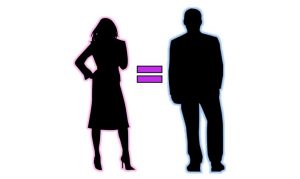
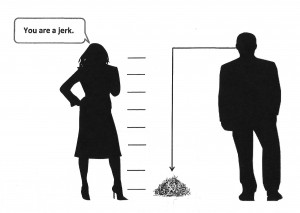
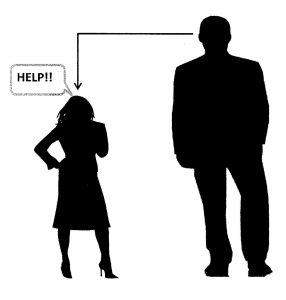
 So, whenever you face incidents in this category take a good look around your workplace. You will probably discover that you are not alone in your situation. This includes your male colleagues who often silently endure degrading behavior.