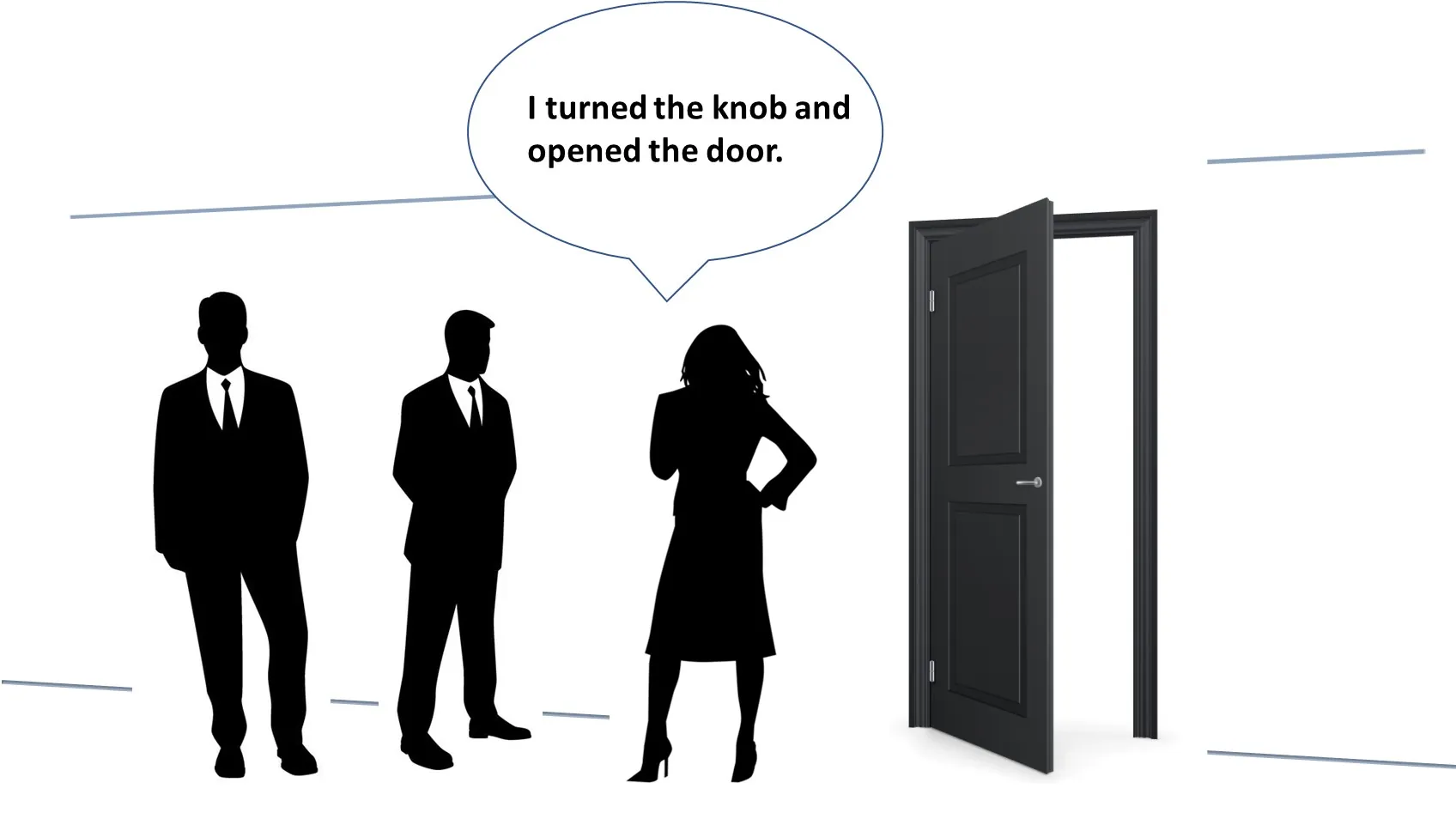
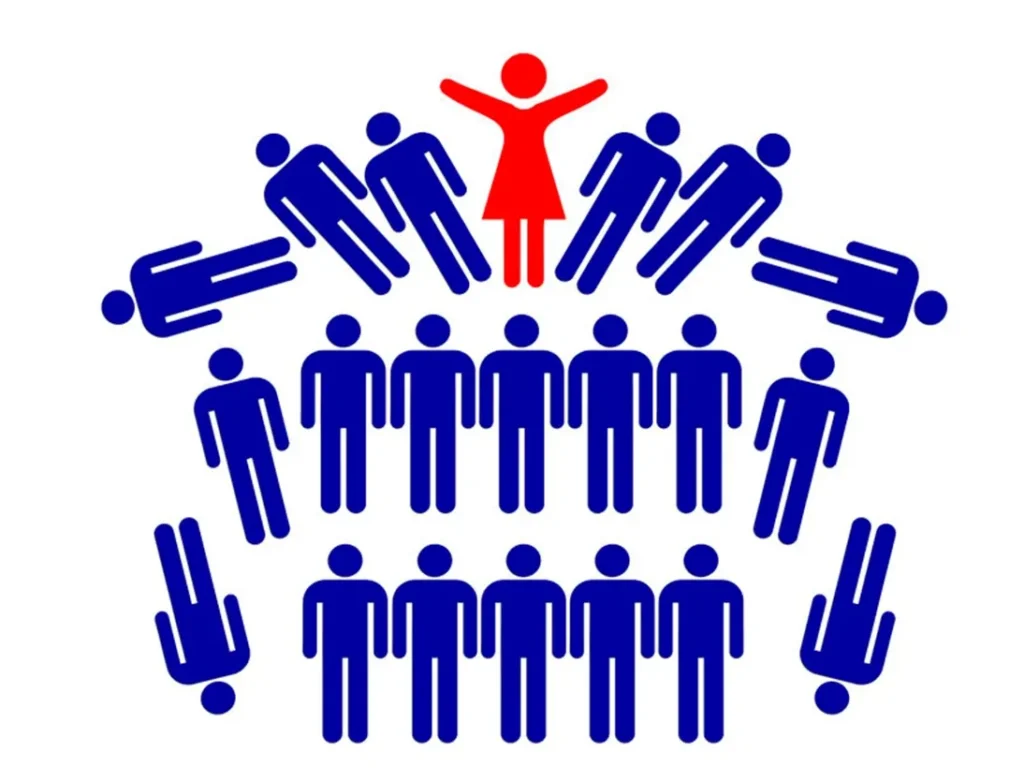
All through my career I faced closed doors. On the other side of the doors were the All-Boys Clubs. I could have let each closed door stop me but as I looked at the door, I also saw knob.
So, I turned the knob, opened the door and walked in.
It was easy.
Of course, men were surprised to see me. but I knew I had just as much right to be there as any man. I knew my credentials, experience and achievements actually gave me more right to be there than many of the men.
And this may shock many women – the vast majority of men accepted me and made me part of their group.
Remember closed doors have knobs. So, turn the knob and walk in.
“Toxic Masculinity” makes women concerned about working with men. However, since I spent my career in environments where women expect to find lots of toxic men and toxic masculinity to run rampant, I want to share what I learned about toxic behavior and how to control it.
Watch this YouTube video:
Working in a hard-core male industry I found that out of every 10-15 men, I could expect to find 1 toxic man.
I usually identified him because he spent a lot of time trying to make himself sound important or tough. He was usually the man I found to be the most obnoxious.
As women we frequently think their aggressive behavior makes a toxic man the Alpha male – and that is exactly what he wants us to think.
But, in reality, the toxic man is just an Alpha Wannabe.
As women, since we don’t understand relationship dynamics of our male colleagues, we get a lot of things about them wrong. For example, we’re taught that the Alpha male is horrible, toxic, oppressive, epitomizing every male behavior we hate.
That is NOT true!
In reality, the Real Alpha Male is our best and most powerful ally.
So, watch this video and learn how the male dynamic really works.
And by the way, my feedback from men has been that I got this right!
During my career the first issue I dealt with in every workplace was that my male colleagues never worked with a woman as a peer and certainly not as their boss. Therefore, they didn’t know what to expect.
Their concerns immediately went to the stereotypes:
Is she competent?
Can she function in her role as well as a man?
Is she a man-hating feminist?
Some men were concerned with my mental state:
Will she cry?
Will she be too girlie?
Will she talk too much?
The women in traditional roles who never worked with a nontraditional woman had their own concerns:
Will she manipulate the men into doing her work for her?
Will the guys fawn all over her?
Is she going to make me feel inferior?
Everyone was concerned about how my presence would affect them and the work environment.
How will her presence change the long-established power structure between men and women?
These concerns caused many of my supervisors “to advise” my male colleagues of my hiring. My pending arrival sparked lots of conversation, especially as I rose higher in the workplace hierarchy. The discussions centered on how:
“How are we going to quickly assess what she is like?”
In other words:
“What TEST are we going to give her, so we can see how she reacts?”
Prior to my arrival or shortly thereafter, my male colleagues conspired to create or use an upcoming situation they thought would make me uncomfortable, put me off balance or challenge/intimidate me to see how I handled it. My reaction would then form their opinion of me and my suitability for my job; an opinion that would forever stay with me and be shared with every man.
When I was young and just beginning my career, I was warned to expect these tests. However, several months into my tenure as an Air Force officer, I was surprised I wasn’t tested and I asked my male colleagues about it. Their response was:
“You were tested and all the Senior NCO’s were really impressed.”
Really? When? What was the test?
As it turned out the test came during a training exercise when we practiced our convoy being ambushed. We had to jump off the back of a truck, hit the ground and roll. When my turn came, I jumped, hit the ground and rolled…through a watery mud puddle. I remember observing at the time that I was the only one who had to roll through a mud puddle.
That was the test. Was I afraid to get dirty?
I passed my test because I rolled through the mud without hesitation and then spent the entire day covered in mud from head to toe without complaining about being dirty.
That test taught me a valuable lesson:
If I face every situation in front of me and choose to take it on, I will prove the strength of my character.
I learned that when tested, the best reaction is no reaction. I should just continue moving forward through the situation until I saw it though.
In time I learned this is what distinguished me as someone who can lead an organization through any adverse situation.
Was I ever upset that I was continually tested and needing to prove myself?
No.
I considered each test as an opportunity to distinguish myself above my male colleagues and set a higher standard. I knew that each test was a shortcut to:
RESPECT
In their careers, my male colleagues faced their own tests – though probably only once and it was an easier test.
But by facing a harder test (according to male standards but not necessarily female standards) I earned the right to carry an attitude:
The question I am most frequently asked isn’t about working with men, its about working with women:
Why are so many women such horrible bosses?
Even though I’ve never had a female boss, I’ve supervised and worked with women who supervised other women. From those experiences, I totally understand the question. There never seemed to be a shortage of drama and conflict. And because many of the women bosses acted horribly towards their subordinates, I dealt with a lot of HR issues that my male colleagues either ignored or just ran away from.
It may seem surprising that so many women are horrible bosses because women frequently tout their soft skills – understanding, listening, empathy, communication and teamwork – as reasons why women are better supervisors and managers.
But when women abandon those traits, we become cold, selfish, mean and bitter. I found we also choose to isolate ourselves, rejecting all efforts to feel included and part of the team.
Why does this happen to so many women?
The short answer is:
Because we listened to and believed all the erroneous narratives about men and the male-dominated workplace.
The most destructive narrative we believe is that the male-dominated workplace functions through survival of the fittest.
http://www.123rf.com/ 29871151
I remember this narrative from back in the 1960’s. Every week we watched Mutual of Omaha’s Wild Kingdom where we witnessed how the strongest, boldest, fiercest male rose to the top. Then we would see a courageous young male challenge and fight the Alpha for his position.
Most of the time the Alpha wasn’t toppled and the young usurper retreated to lick his wounds.
As we watched survival of the fittest play out, male scientists also told us men were like a wolf pack with Alphas, Betas and Omegas. In school, teachers taught us about the Gilded Age when ruthless, cutthroat men rose to enormous power and wealth.
We were conditioned to believe men and the male-dominated workplace functioned through aggression.
In response, we created our own narrative:
“Tear-down-to-rise-up.”
Women touted this narrative over 40 years ago and it still thrives.
“Tear-down-to-rise-up” teaches women to be aggressive. We believe we have to tear down and discredit our male colleagues in order to stand out. If we want a promotion, then we have to take down the person in the position and replace them.
www.123rf.com – 39546075
Through the decades, “tear-down-to-rise-up” hasn’t been an effective strategy to advance women in the workplace. It’s only been effective in ruining our workplace relationships.
When we use it on our male colleagues they respond aggressively and ostracize us. We then interpret these responses as proof that the narratives are right – the workplace functions through survival of the fittest and men don’t want women competing with them in the workplace.
Unfortunately, we haven’t realized we just created and trapped ourselves in a self-fulfilling prophecy.
Our fundamental problem is that we don’t understand how men really function in the workplace and we don’t understand their form of aggression.
Even worse, we’ve spent decades teaching women to act like men – to act the way our narratives tell us men act. In the process, we’ve forgotten that WE ARE WOMEN! And women’s aggression is very different from men’s.
Men use offensive aggression. They aggressively go after what they want. Most conflicts between men exist because a man can’t do what he wants, the way he wants because another man, is using his position or power to stop him. Eventually, someone backs down or there is a compromise. Then, for the most part, once there is resolution, the antagonism is gone.
Women use defensive aggression. When we feel attacked, we go for the kill. Mutual of Omaha’s Wild Kingdom showed us that females are not afraid of any predator, especially when it comes to protecting their young. So, when we feel defensive in our workplace, we apply our instinctual “mama bear” attitude and we can get really mean. And as long as our defensiveness persists, so does the antagonism.
We use “tear-down-to-rise-up” to focus on our relationship with men in our workplace. Meanwhile we’ve ignored the effect our defensive aggression and using “tear-down-to-rise-up” has when we use it on another woman.
Many women bosses came up through the ranks believing in or using “tear-down-to-rise-up.” If they used it on their male colleagues, then they probably developed a lot of hard feelings.
In my experience, a woman who is a horrible boss is also extremely defensive. She expects to be attacked by men and women.
She expects men to favor a popular woman colleague and unfairly advance her career. She expects an ambitious younger woman to use “tear-down-to-rise-up” on her.
Her defensiveness makes her attack.
In response, the woman who is attacked becomes defensively aggressive. She attacks back.
Since the boss’s self-fulling prophecy has come true, she escalates. The other woman sees the boss as a predator and doesn’t back down. She may not openly retaliate. She may just rely on other more subversive means to get back at the boss.
It doesn’t take long for the workplace to be consumed in emotional female drama.
Chances are you’ve witnessed this in your workplace. And if not, turn on any REALITY television show featuring women. These shows promote women as aggressive, combative and overly emotional. They don’t act the way we want women to act.
In my experience many women bosses who act horribly have personal issues that have nothing to do with the workplace. Being a woman, I used to try to help them. But they exhausted me. So, I decided that I’m not a psychologist and they were responsible for getting help with their issues. My job was to address and hold them accountable for how their behavior affected the workplace.
The other common problem I’ve encountered with horrible women bosses is that they don’t how to work with other women.
Many turned off or abandoned their female traits believing they are incompatible with the male-dominated workplace. They try to fit in with the guys by becoming one of the guys.
Some look down on women in traditional roles. They fear that being seen as “a woman” will make their male colleagues lose respect for them. They fear they will lose some of their nontraditional responsibilities and be assigned more traditional ones. Their fear makes them defensively aggressive.
So how do we get women to stop being so defensive and aggressive? How do we get them to empower their positive female traits?
I found that since so many of these women feel ostracized, the best strategy is teambuilding. While there are many ideas for “teambuilding” out there, I’ve found that most of them aren’t effective. People know it’s artificial. So, you can always count on some men to not show up because “they have real work to do.”
What I’ve done that is very effective is to get everyone together and have them solve a workplace problem together. This video discusses this method and why it is so effective, especially when led by a woman.
Unfortunately, most men just wimp out of dealing with horrible women bosses which is why they persist. So, it comes down to women to address them. And while we may not think it is our job to do so, what we are really trying to do is have women empower their true female traits in the workplace.
All of our workplaces have goals and objectives they want to achieve. The standard approach is to ask the best and brightest employees to generate ideas, work through the planning process and develop a plan to achieve the objective. But, no matter how “well-planned,” our workplaces still experience problems achieving the objective.
Why is that?
It is because the planning process is too entrenched in male-thinking.
Don’t believe me?
Google “Planning Process” and read some of the results. They leave little doubt that the planning process requires a lot of stereotyped male traits – intellectual, analytical, rational etc. They also use a lot of jargon leading us to believe that Planning is what the smart and highly educated people do.
The not-so-smart and not-so-well-educated execute the plans that are handed-down to them. I read “Plans must be communicated and explained to those responsible for putting them into practice. The participation and cooperation of subordinates is necessary for successful implementation of plans.”
Sounds a bit elitist and snobbish.
I could let that pass if the feelings of superiority were deserved – but they aren’t. In my experience very few, if any, plans can be handed-down and implemented without revamping. I’ve seen many plans designed by the so-called planning experts get thrown in the trash because they simply don’t work.
The fundamental problem is that the male-dominated workplace believes in the separation of planning and implementation. This idea goes back to the 19th century and Frederick Taylor’s scientific management theory. Even though we have moved away from a manufacturing economy into a more service and technology based economy, we still dragged a lot of his management theory into the 21st century.
Why?
Dr. Myron Tribus of MIT explained it this way:
“It suits the self-image of managers [and planners] that they were superior, the brains for others who could only supply the brawn.”
So even though the management theory doesn’t produce the best results, the male-dominated workplace hangs onto it because it feeds ego, status and a feeling of superiority for some.
We see this distinction carried out in many of our workplaces (and society) – there is a separation of the educated personnel who “work with their heads” from the “uneducated” personnel who work with their hands.
The Suits
As a young female engineer, this class distinction was readily apparent in my first workplaces. Engineers worked over here and craftsmen worked over there. The only engineers who worked with the craftsmen were there as the managers.
I often thought that if I were a man, I probably wouldn’t question this arrangement. But as a woman the separation and distinction seemed contrived. I questioned it.
When I was assigned several plans to write, I could have sat at my desk and developed them all by myself like my male colleagues were doing. However, I decided to “cross over,” interact with the craftsmen and ask for their input. I found that they were incredibly knowledgeable. I learned that if I wanted to know HOW things worked and HOW to get things done, I should ask them. Working with them, I wrote plans that they later implemented. The plans actually worked and achieved the objective.
About a year later the engineering staff was floundering for 2 years trying to solve a recurring design problem. Many engineering consultants from top firms were brought in. No one could come up with a solution.
Then I had an idea:
Let’s ask the craftsmen who were sent out every week to fix the problem.
I took the initiative to gather them together and asked them if they could come up with a solution. Working together it took them 1 hour to figure it out.
1 freaking hour!!!
That was a pivotal moment.
I realized that all of the separations and the distinctions in the workplace by function and education was a detriment to effective planning and implementation. If everyone worked together through the planning and implementation processes, we would meet and potentially exceed our objectives.
When I became a manager, this became my management philosophy:
Work Together
At first it was difficult because the various factions had rivalries they enjoyed. So, I forced the issue. I scheduled planning meetings between the planners and craftsmen and literally sat in the meetings as the babysitter. Eventually they began building relationships and collaborating. I almost died of shock the first time I walked into the Planning office and found craftsmen in there voluntarily collaborating with the planners.
Within a few months the change in our performance was noticeable. Within a year our performance was exponentially better.
Throughout my career I continued to make the various workplace functions work together in both the planning and execution of work. I believed everyone needed to park their egos at the door and that no one is so smart and so superior that they have all the answers.
I ran into opposition, especially in the last 15 years or so. There seems to be more and more men who believe their education distinquishes them and it is beneath them to interact with the workforce. They believe they get to pontificate from the on-high of their cubicle and create dictates for the minions to follow.
Of course, their dictates don’t work because they don’t understand how things work in the real world. But don’t tell them they are wrong – they get angry and ugly.
However, I NEVER had a problem telling them they needed to get off their perch and participate in the real world if they wanted to be of any value. If they still didn’t listen, I cut them out.
I didn’t involve them. I let them sit in their cubicle by themselves and pout. When they got upset because “they aren’t consulted in their area of expertise, my response was, “We’re all working together over here. You may join us any time you like. That decision is up to you.”
A few men never joined.
For most men, it is a challenge to undo the old learned ways of how the male-dominated workplace should function because their ego and self-identity are tied to their function and place in the organizational hierarchy. I found that women are essential to creating the change.
Women are much more comfortable working together with other people. Women aren’t as ashamed of what they don’t know so they are more willing to ask questions and collaborate. I laughed many times when men witnessed how women work together for the first time. They were amazed by women’s interaction, collaboration, problem-solving and the volume of work women produce.
As a manager I used women to draw men into collaboration. There are always a few men who are easily drawn in by the energy women create when they work together. These men and women form the core of the collaboration group. Once the core is established it is easier to invite more men to join in. Before long men are telling other men they have to join in.
That’s when you know you are successful.
The collaboration group creates a lot of positive energy in the workplace. That positive energy is a natural attraction since so many of our workplaces drain us of energy. As people work together to produce results, achieve the objectives and improve performance, the positive energy grows and the group becomes powerful. It isn’t afraid to take on the bad actors, the people who use the workplace for selfish gain and the workplace bullies.
It is this positive energy that transforms the male-dominated workplace and creates the genuine teamwork we want.
Empowered Women Put Teamwork First By Respecting Everyone, In Every Role
My first boss died of a heart attack 4 months after I began working.
A year later a male co-worker died of complications following quadruple by-pass surgery.
Six months later a man I frequently worked out with died of a massive heart attack following a run.
One month later, a male co-worker standing 20 feet from me, dropped dead of a massive stroke.
I went to retirement parties and then attended funerals where we sadly sighed, “He never got to enjoy his golden years.”
Many of my male colleagues were alcoholics. It was common to be warned, “Don’t light a match near him today.”
I lost track of how many male colleagues suffered breakdowns from stress. And how many times I wondered if any of my male colleagues would show up for work because they were too stressed-out. Or how many times I heard, “He will be out for a while – don’t know how long yet.”
Heart attacks, high blood pressure, strokes, alcoholism, diabetes, high cholesterol, depression, chain smoking and drug addiction are what I think of when I hear the term “Toxic Male Workplace.”
There absolutely was something “toxic” about the male-dominated workplace that impacted my male colleagues’ health.
These health issues were compounded by the health issues resulting from the safety hazards and work conditions my male colleagues dealt with every day.
Cancer from working around hazardous materials. Cancer from excessive sun exposure. Hearing loss from working around machinery and equipment. Bad backs, knees, hands and hips from repetitive motions and physical work. Arthritis and continuous pain from soft tissue injuries.
Many of the men I worked with “in the office” were there because they suffered an injury and could no longer do the same work they did when they were young.
Somewhere along the way I stopped counting how many men were killed in car accidents as they traveled to work locations.
Nine of my male colleagues were injured in a propane tank explosion, two critically. One never returned to work.
One morning I went to work only to hear that a male colleague was electrocuted during the night while responding to an emergency call.
In one workplace we began the new year with a man being killed at 8:15 in the morning. It wasn’t a Happy New Year.
I can tell lots of gruesome stories of injuries.
So, when I hear the term “male privilege” this is what I think of:
The privilege to do the hazardous and potentially life-altering jobs that few women do.
Working alongside men, doing the same work as men, I don’t ever recall being jealous of my male colleagues or thinking they had it so much better than me.
As a woman, I am supposed to recount all the times I was a “victim” of the male-dominated workplace. However, I saw many more men victimized by it.
I cannot recall how many times I thought, “I’m lucky to be a woman.”
I felt lucky that so much of the pressure my male colleagues felt on a daily basis to get ahead, to provide financially for their family and to get the job done didn’t apply to me the same way it did them. While those things were important to me, especially as a single mother, they didn’t impact my identity, my sense of self or how I perceived my value as much as it did them.
I also felt fortunate that I had the power to change my workplaces in ways men could not.
I lived through the male-dominated workplace’s self-improvement gyrations with its long line of initiatives, programs and technology to change and function better. They all fell short of expectations and most faded away into obscurity.
However, the initiative I introduced made a profound impact.
I encouraged myself and the women I worked with to assert our female traits – our way of thinking and acting.
As women (working in any role), we are well aware of the problems within the male-dominated workplace. We see the stress, frustration and pressure. However, we don’t realize that the power to correct those problems lies within us – not men.
It all begins by exercising our empathy.
We know why “things go wrong” and why our male colleagues get frustrated and stressed out. We have lots of ideas and even know how to fix and prevent some of the problems. However, we remain silent or we talk among ourselves because we bought into the BS belief that we can’t make a difference.
As women, we need to put our empathy into action. We need to speak up and say, “Do it this way.”
And we can’t be deterred when they don’t get it or don’t listen. We simply say, “Do you want your problem to go away or not?”
It takes just one time of us fixing a problem to the get the wheels turning and start changing attitudes.
So, we take the initiative and assert ourselves more, “I can tell you how to fix that problem too.”
Men start listening. Then they start thinking, “Maybe I should ask her about this other problem too.”
Before you know it there is communication, collaboration and coordination. Bigger and bigger problems are getting solved. More problems are prevented. Performance improves.
Better yet, stress and frustration are reduced. My guys told me, “I don’t feel like I’m coming to work and pounding my head against a brick wall all day.”
That is so rewarding to hear.
When we put our empathy into action, we create a happier workplace. We end the toxic male workplace.
Empowered Women Put Their Empathy Into Action and Eliminate The Toxic Workplace
In the mid-1970’s I decided I wanted to be an engineer. I didn’t have any role models, except for maybe, sort of, Barbara Walters who I met when I was 15. I told her I wanted to be an aerospace engineer and she told me to go for it and not let the men stop me. She confirmed that it was up to me to make my dreams happen.
The idea that I needed a female role model – a female engineer to mentor me – never really occurred to me, partly because I don’t know where I would have found one. But mostly it was because I didn’t know what purpose a female role model served other than to set an example – If she can do it then, I can do it too.
I knew lots of boys who had role models or sports heroes – men they wanted to emulate or who inspired them. Most boys never met or worked with their role models.
Their role models just set high performance bars and showed them what was possible. Each boy knew he had to find it within himself if he wanted to reach or exceed the bar set by his role model.
As a young woman going into a traditionally male career field, I identified with the male concept of inspirational role models. But I also I found male role models in my workplaces – men who set a high performance bar and inspired me to achieve more. I thought, “If he can do it then, I can do it too…and probably better.”
I made it through my career without any female role models. Looking back would they have helped?
Maybe, but probably not.
The few women I met who could have been a role model, well let’s just say that some didn’t have good relationships with their male colleagues. They wouldn’t have been a good source of advice. I also knew lots of other “professional” women who worked in secondary or support roles. However, in their roles, they didn’t have to compete with men for a promotion. We didn’t face the same obstacles.
Looking back, I realize that the type of female role model that would have been helpful would have been a woman who saw herself as an equal professional to her male colleagues, but who also knew how to leverage herself as a woman.
So yes, some professional womanly workplace wisdom would have been nice. That way I wouldn’t of had to figure it out on my own.
Today, our narratives cite the lack of female role models in the workplace as one of the reasons women aren’t advancing in their careers and in certain professions. They say women need female role models.
However, from my experience I have a problem with why they say women need role models.
According to too many articles, young women need other women they hold in high esteem to give them “a sense of personal acceptance, approval and validation.” Female role models “give young women permission to be in the workplace” and provide a “support system.”
Wow.
That sounds so 1970’s. It reminds me of the stereotypes that say women can’t function as individuals. That we, poor little women, need the constant support of other women because we don’t have what it takes to make it.
I also suspect that these narratives are driven in part by our media-driven culture that promotes certain female role models not so much as to help women, but to boost the image of the female role model.
So, let’s be honest about the type of help and guidance women really need.
Women should have professional role models.
Our role models can be either male or female. They inspire women to think bigger, grow professionally and strive for more.
Women need professional mentors in their workplace.
Again, they can be either male or female. Mentors teach women teamwork, leadership and the skills necessary for their industry. A mentor helps groom a woman for the next step(s) in her career.
Women should have female role models who broke through barriers and achieved something few other women have. Female role models inspire women to think bigger and try something they never considered themselves doing.
Female role models are especially helpful for girls and women who were conditioned to be in a box. Some women were taught falsehoods about what women CAN’T do. Others were taught falsehoods about what women SHOULDN’T do. Female role models help women break free of their box and explore who they can be.
Women need female mentors to help them understand and assert the value of their feminine self in the (male-dominated) workplace. Female mentors help women realize that women are one half of the whole and the only way a workplace can achieve its highest potential is by women asserting themselves. Female mentors remind women, “Our workplaces need us.”
Women also need female mentors to help them navigate how to be a 21st century woman who wants a strong marriage, a family and a career. We are still in the very early stages of figuring out how women can have it all and do it all. And figuring that out will require a big female group effort.
While role models and mentors inspire and guide us, we have to remember one thing:
It still always comes down to us.
We still need to have the drive, self-confidence and sense-of-self to grow, overcome challenges, achieve our potential and have the life we desire.
Only we can make our dreams and aspirations a reality.
Empowered Women Use the Wisdom of Others and Share Their Wisdom
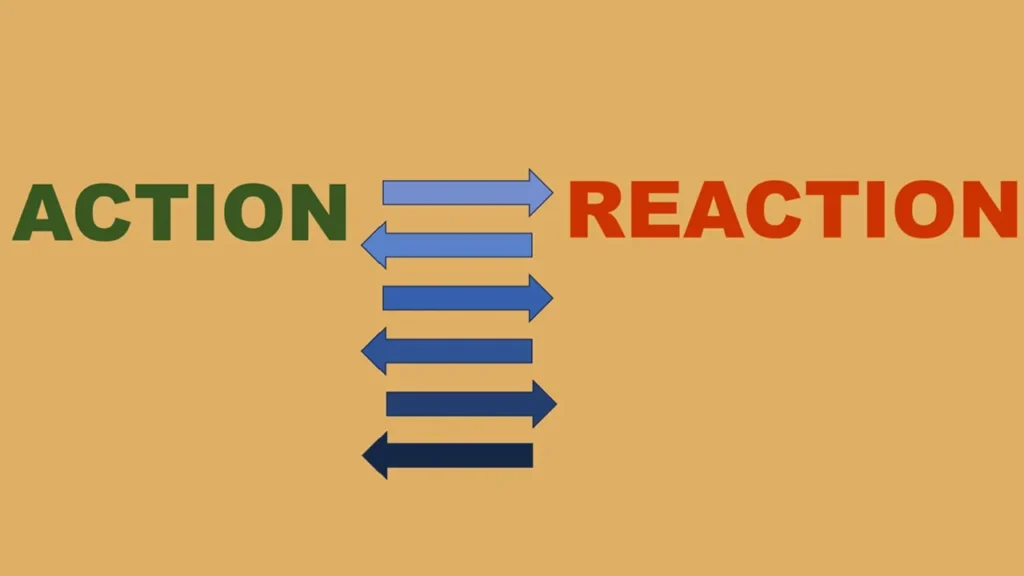
For every Action, there is an equal and opposite Reaction
As a female engineer, I discovered there is a similar law in the male-dominated workplace:
When one man Acts, all other men must React
Early in my career, my Reaction to this phenomena was to ask: “What are you guys doing?”
To me it was wild to watch the frenzy of activity that went in all different directions as each man gave his individual response.
Why do men act this way?
They do it to maintain a balance of power and their individual status. Now as women, we’re told men aspire to have power over each other.
Not true.
Men don’t want power over each other as much as they don’t want another man to have power over them. In other words, men want Autonomy more than power.
So, when one man acts, all other men must react in a way that shows they are not subjugated to the actor. If the actor acts in a way to prove his power over other men, then expect those men to rebel.
Any man who doesn’t react is seen as weak. He isn’t a man who has a manly sense of self or self-respect. He is a submissive man who can easily be used and manipulated.
Being a woman, this law of the male-dominated workplace didn’t apply to me, so I didn’t react. Then of course a man asked in a frenzied, panicked voice “Aren’t you going to do something?”
My response was typically:
“Do what? I’m not going to react just to react. If I need to react, I will react and I will do so with the appropriate response.”
In the first couple of years of my career men’s Law of Action and Reaction created one of my biggest pet peeves about working with men:
Too many men shooting from the hip.
It drove me nuts.
When men shoot from the hip, they don’t take the time to figure out the appropriate and best response. They don’t even take the time to figure out what really happened. They just React. Consequently, they create new but completely avoidable problems. Men call this:
The Law of Unintended Consequences
I call it: The Law of IGNORED Consequences.
Resolving unintended consequences wastes a lot of time and money which is my other big pet peeve. So, out of my frustration I got very forceful at breaking the Law of Action and Reaction.
One time when I was leading a meeting something happened. As soon as the guys started reacting, I ran and stood in front of the door. As I barred the door, I said:
“Guys, STOP!You don’t know what you are doing.”
That got their attention because challenging men’s competency is always a good way to get their attention. That’s another law of the male-dominated workplace.
Before they could React to me, I would tell them:
“Do you guys even know what you are reacting to? No, you don’t. So, let’s stop and figure out what is going on so we can respond the right way and we shut him down, for good.”
You see, in the male-dominated workplace the Law of Action and Reaction is perpetual. The original actor interprets the initial Reaction to his initial Action as an Action, so then he must React. This Reaction is then interpreted by the original reactors as a new Action so they must React again. As so it goes back and forth.
This back and forth can go on and on for days, weeks, months, years…
A great example of this is the Stock Market.
Something happens. The big investors immediately make the market plunge or soar. But is the reaction the correct response? There is no way to know because there is no tangible change in the performance of a company or sector yet. They react to possibility of a change.
Then when other men see the big guys acting, they get worked up into a frenzy:
“I have to React. I have to React.”
These “Momentum Investors,” then drive the market way too far up or way too far down – far beyond a reasonable response to the situation. But this is what happens when everyone is just reacting to what everyone else is doing.
The Stock Market calls it “Volatility.” I call it “Stupidity.” There is no need for it if we stop and think about the situation.
(However, on the positive side, it does create great opportunities for women to make money if we buy low when men over-tank the market and sell high when men get way too enthusiastic.)
In the list of tangible values women bring to the male-dominated workplace, our ability to break the Law of Action and Reaction is at the top.
It is of enormous value because we can stop the behavior that leads to the creation of wasted time, money and manpower. When we stop or disrupt this behavior we can make a huge direct and meaningful impact on productivity and the bottom line of our workplace.
Empowered Women Don’t React Blindly. They Respond Appropriately.
Making a video version of this blog to post on YouTube is on my to-do list. Stay tuned…and in the meantime, watch my other videos.
Today, men and women still have very different perceptions of empowerment and freedom. The difference is based in our different histories but continues because women dwell too much on our history.
As women we’re taught that empowerment and freedom are granted to us by those with power. We’re also taught that white men always had them. I saw this view expressed in a comment by a young woman who wrote, “White men have never had to fight for their freedom.”
I posted a simple reply, “Yes they did. It was called the Revolutionary War.”
We often forget how very different life was prior to the mid-18th century when the vast majority of people were oppressed and struggled just to survive. The American and French revolutions were the historic milestones when common white men (and women) rebelled against the tyranny, power and control of monarchies and the church. They fought for their inherent right to liberty, individual freedom and self-determination.
The Declaration of Independence documents their creed that “all men are created equal, that they are endowed by their Creator with certain unalienable rights” and “to secure these rights, Governments are instituted by men, deriving their just powers from the consent of the governed.”
These beliefs made liberty and personal freedom the guiding principles for western societies.
In the United States the importance of liberty and self-determination is cemented through The Bill of Rights. It guarantees citizens certain rights and freedoms while limiting the power (control) of the federal government. The Tenth Amendment specifically states:
“The powers not delegated to the United States by the Constitution, nor prohibited by it to the states, are reserved to the states respectively, or to the people.”
The U.S. Constitution elevates personal liberty above the power that was historically held by a governing entity. In doing so it gave men a new self-image where they were free and empowered to act based upon what they believe is best.
Men applied this same concept in their workplace. When the captains of industry acted like kings and treated men as serfs, once again men rebelled. The labor and union movements began the procession to give men more liberty and self-determination in the workplace.
Men don’t aspire to have power over others.
Men aspire to be independent.
Therefore, men rebel when faced with oppressive power.
This is why I always push back when someone says the male-dominated workplace is all about power and the only way women can have power is by tearing down men and claiming power on behalf of women. If women try to oppress or assert power over men, men will find a way to rebel. Every woman who supervises or manages men needs to understand that.
Men believe liberty, autonomy, independence and self-determination are an inherent part of their being. They aspire to have freedom to use their own judgement to do what they want, when they want, how they want. Men understand this about each other. Therefore, today most men don’t even try to control other men. They understand the futility in it.
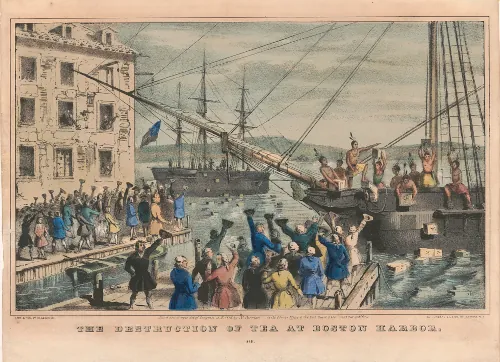
Boston Tea Party
Women, slaves, and people who have a very different history with liberty need to be aware of how that changes our perceptions. These groups weren’t granted equal rights because some (not all) white men were fearful of how equal rights for these groups would negatively impact their self-determination and self-interests.
In other words, men oppress others not because of a quest for more power, but out of a fear of losing the power they have.
In 1870 the 15th Amendment to the Constitution granted African American men the right to vote by stating that the “right of citizens of the United States to vote shall not be denied or abridged by the United States or by any state on account of race, color, or previous condition of servitude.”
Women had to wait until another 50 years for the 19th Amendment to be ratified in 1920 to have voting rights.
The 15th and 19th Amendments and the subsequent Voting Rights Act of 1965 weren’t achieved by revolution. They were achieved by convincing men with power to grant others the same rights as them.
This distinction had a profound effect.
Women and other historically oppressed people don’t see themselves as having liberty. They see themselves as being granted license.
License is very different from liberty.
License says there are entities who have the power to control and restrict the actions of other people. Therefore, people only have as much self-determination as these entities grant them. The 15th and 19th Amendments are examples of this. They enfranchised disenfranchised people.
However, many people exercised their autonomy and ignored these Amendments. So, enforcing some of these new rights, required more legislation – which is why the Voting Rights Act was necessary.
License reinforces in women that we need to ask permission for additional independence and self-determination. We have to prove ourselves worthy before we can assert or advance ourselves. If we are fortunate, the entities who hold power will write more rules, policies and laws to grant us more authority over our own lives.
Consequently, men and people with power have a different definition of empowerment from women and historically oppressed people.
Men define Empowerment as Liberty
Women define Empowerment as License
Today women need to update our perspective and grab our legal equality by embracing our liberty. Out of all the lessons I learned from working with men the most important was to believe in my inherent right to liberty. I don’t have license. I have liberty!!!
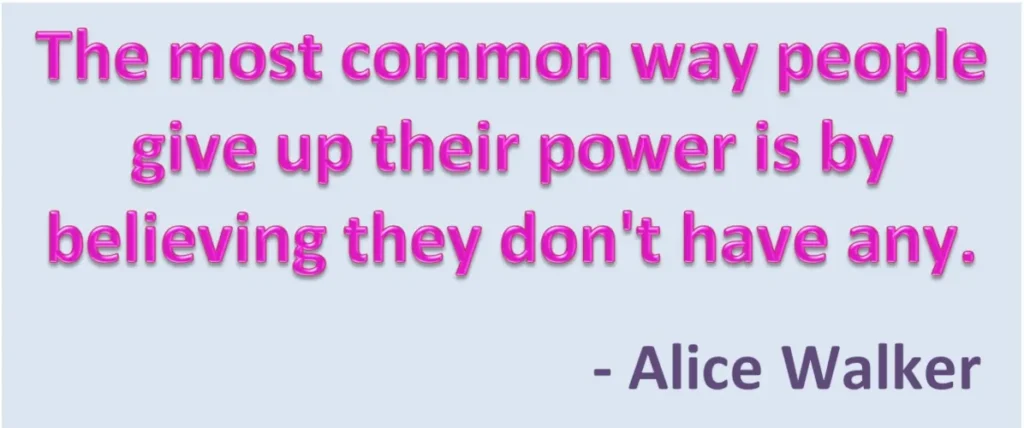
“The most common way people give up power is by believing they don’t have any” – Alice Walker
In my career I always believed I had the same right to pursue the same jobs and opportunities as my male colleagues and get paid as much as men. If someone told me I couldn’t because I was a woman, I did what my male colleagues would do – I challenged them: “Who are you to deny me my right to self-determination and decide what I do?”
It’s amazing how many men respected me when I said this. I didn’t threaten them or try to take them down. I just stood up for myself. In doing so I was speaking their language of liberty and self-determination. I not only understood their values, I voiced them and stood up for them. That earned me respect and trust.
During the course of my career I’ve seen most of the career restrictions against women get removed. So today there’s no reason why women (and other groups) shouldn’t see ourselves with the same inherent right to liberty and self-determination as (white) men. If someone questions why we are living our life as we are and making the choices we make our answer should be “Because it’s what I want to do.”
Unfortunately, there are still many people and organizations who tell us that women must be granted more license. These are the people who don’t recognize our inherent right to liberty. Even worse some tell us that they want power so they can fight on our behalf and then grant us more license.
This should be a huge red flag warning to us.
We should question them:
“Why don’t you recognize my unalienable right to liberty and self-determination?”
“Why don’t you believe that I have the fortitude to exercise my personal power and liberty?”
“Why don’t you believe in my inherent equality?”
As Women have a choice:
We continue to live in our past history. We can oppress ourselves by giving entities power hoping they then decide to grant us more license and power over our own lives.
Or,
We do what men did in 1776. We claim and exercise our inherent right to liberty, self-determination and equality.
When men and women go into the same trade, vocation or profession they take very different career paths. Men tend to take the path that leads to the higher paying jobs and advancement while women take the path to lower paying government, secondary and support jobs that don’t offer as much advancement. This is a significant underlying cause of the pay gap and why women aren’t advancing in society and the workplace.
As women we need to ask ourselves:
“Why aren’t we getting on the same paths as men?”
After all, that was a point of equality – to give women the same opportunities to achieve as men.
One major problem is we still believe a lot of the misrepresentations and false narratives that tell us that we aren’t suited for these paths. However, s a woman who followed men and took their most aggressive career paths, let me just say:
“Ladies, we should be all over these paths. We are definitely well-suited for them and in many cases, better suited.”
To correct our misguided perceptions, let’s first understand that all of our employers see us as Doers and that we are in a transactional relationship with our employer. (We do work and they pay us for that work.) Our employers then divide us into two Doer groups:
The Active Doers work directly with producing our workplace’s product and service and therefore have a direct impact on performance, profitability and viability.
The Support Doers work in the background helping the Active Doer be successful.
Secondly, we know that all of our workplaces have goals and objectives they have to meet such as:
Sell more product and increase revenue by $X or X%
Win that big contract
Finish the project by this Date with a margin of $X
Deliver a new product by this Date
Improve efficiency and deliver $X to the bottom line
To meet these goals, our workplaces turn to the Active Doers to “make it happen” and “git’er done.” There is pressure, often intense pressure on the Active Doers to meet these goals. The Active Doers who meet them, whether they are in management or part of the workforce, are then elevated to a small and elite group of Achievers.
In return for their effort and their direct impact on workplace performance, Achievers demand promotions, higher pay and bigger bonuses.
Many of us have a very stereotypical perception of Achievers. They are bulls in the china shop – aggressive, brash, very confident, risk-takers and driven. To reach their objective they bulldoze through people and obstacles creating a rampage chaos in their wake.
But, no one cares because they got the job done!
As women, in our Support Doer roles, we see the mess the Achievers leave behind, and our job is to clean it up. Our job isn’t easy however, we get a sense of satisfaction from it, knowing that the Achievers aren’t so perfect.
If we’re lucky, we’re rewarded with a “thank-you” but no big paycheck or bonus.
This is the scenario most workplaces are stuck in, but it is so 20th century. In the 21st century this is NOT how you become an Achiever, individually or as a workplace.
Super Bowl LII gave us a great example of how to be 21st century Achievers.
It was 4th down and the Eagles were on the 1 yard line. They decided to go for the touchdown instead of the field goal. Everyone saw it as a gusty, risky move and they assumed the Eagles would rely on brute force to bulldoze their way through the Patriot’s line to reach their objective.
But they didn’t.
In a very creative play, Nick Foles who was the quarterback, didn’t receive the snap. Instead, he ran to the side and into the endzone to be the receiver who caught the ball and scored the touchdown. Consequently, he was credited for the touchdown and awarded the game MVP.
Singling out and elevating one person ignores everyone and everything else that went into making the touchdown. The touchdown and the game weren’t won just because of one person’s superior performance.
It was all possible because there was a Team of Achievers.
As a woman who took the Achiever career path, I used the Team of Achievers approach and I always out-performed my male colleague Achievers.
I learned to use it when I was just 23 years old. My task was to coach and train a team for a competition. My team was comprised of a very young man and woman who had less than 1 year of experience. Our competitors were all men who had 15 – 30 years more experience.
Using the conventional male-dominated workplace wisdom of the time, my team and I were a joke. We were mocked, openly laughed at and called the “Kindergartners” because of our youth and inexperience.
However, we WON in our category.
We also achieved the highest score among all the teams in all of the categories in the competition. We earned the title Best of the Best.
Most importantly, we blew up all of the conventional male wisdom of what it takes to be a Top Achiever.
For years I carried in my wallet a picture of my team accepting their trophy to remind me not to listen to all the nay-sayers who said I couldn’t achieve, or all the Achiever-Wannabes who tried to stop me because they didn’t want a woman showing them up.
That picture was my reminder to using the Team of Achievers approach to succeed far beyond expectations.
As I kept succeeding, I reinforced over and over and over again that as a woman, I brought a unique value to the team that my men cannot. When women are part of the team and our traits are blended with men’s traits, together, we create unprecedented achievement. And that feels really good.
It feels really, really good to achieve. It is a feeling of euphoria that you want others to experience. However, many people are afraid to do what it takes to experience it.
Many women are afraid to achieve because we believe too many false narratives about hierarchies. From our feminine perspective we believe that if we raise ourselves up, we automatically diminish someone else. Using a male perspective, we believe that male-dominated career paths are all about competition and quests for power. We believe that if we achieve then we will be attacked and we don’t want that confrontation.
But the truth is that Achievers appreciate other Achievers.
Achievers don’t care about gender, race, education, religion, ethnicity or any of that stuff because the feeling of Achievement diminishes all that other garbage. Achievers want to be surrounded with other Achievers because they know that together they can achieve more.
A lot of women get discouraged in our careers, because we choose career paths that are too low for us and run into Achiever Wannabes. When we out-perform the Wannabes, we reveal that they are just a Wannabe and not the Achiever they espouse to be. The Wannabes then work to discourage and even sabotage us to protect their imaginary status. And all too often, we let them.
When we run into Wannabes who attack us, we don’t stay and fight them. Instead we move our career path up and leave them behind. We seek out people who perform at our level and want us to be part of their Team of Achievers.
Many men don’t want the responsibility and more importantly the accountability that goes along with being an Achiever. They are still believe achievers are MVP’s who work alone and act like the bull in the china shop. They don’t understand the Team of Achievers approach.
This is where women come in.
Watch an office of full women who work in secondary and support roles. They talk, collaborate and help each other out. As women we inherently understand teamwork, shared responsibility and shared accountability.
This is why we gravitate to secondary and support roles and stay there. We believe our collaborative nature is a detriment in what we believe is a cut-throat, achievement-oriented environment.
But we are wrong.
Our desire to help people, support people and make them feel good about themselves is exactly why we should step into team leadership positions.
As a woman Achiever working with men Achievers, I found that my best opportunity wasn’t being the team quarterback or wide receiver. There were a lot of men who wanted those positions for the stereotypical personal glory that comes with it. Even though I was a good quarterback, I saw my greater opportunity was in being the team coach. Not only was it a great fit for a woman Achiever, none of the guys wanted to be the coach.
www.123rf.com 33148930
As the coach my job was to create teamwork, develop each team member and design the plays that made us a Team of Achievers. I had to bring together the Active Doers and the Support Doers together into a cohesive and synchronized team. I didn’t fill my teams with A players, just with people who wanted the opportunity to experience being an Achiever and the great feeling that comes with it. Together we racked up a long list of Achievements.
All of our workplaces need to transition to operating through Teams of Achievers but to do that they need women to leave the Support Doer career paths for that of an Achiever. There is a goldmine of opportunity for women in the higher paying career paths of all professions and especially the male-dominated professions that women avoid. We don’t need to compete with the men who all want to be the star quarterback or wide receiver because the coaching positions are wide open. As the coach we then take on the role of the Leader of Achievers and we make a real difference by delivering the feelings pride and self-worth we hoped we could deliver in our low paying support positions.
It seems like a really intimidating situation for any woman. But it isn’t – if you understand what is really going on.
Like us, men get frustrated. But unlike women, men don’t “tend and befriend.” They don’t go running to each other to talk about their feelings or what is bothering them. They tend to bury it and keep it inside, periodically letting little bits of their frustration come out.
Many men were conditioned to keep it all bottled up inside. They then use alcohol, smoking, drugs etc. to help suppress their feelings. But then at some point it builds up and they explode – they yell and scream in a long expletive filled rant.
This is their coping mechanism.
For women, being at the receiving end of the rant can be nothing short of traumatic. It can (and has) driven many women out of the male-dominated workplace because we don’t know how to handle it and we take it personally.
To deal with these situations we first have to recognize that the rant isn’t about us. So even though the anger and frustration is directed at us, we don’t have to receive it and absorb it.
We also must recognize that many men work in high pressure jobs where the finger of blame is pointed at them. They are under pressure to make things happen or risk losing their job.
You must win this contract.
You must make $X in revenue.
You must fix this problem by X date
Even men who aren’t under this kind of pressure they can still have the perception that they cannot fail in order to protect their image or status. Consequently, they put a lot of unnecessary extra pressure on themselves.
In either case some men just have a hard time dealing with the stress and pressure of their work environment.
So, we should men’s rants as men trying to cope.
And their inability to deal with deal with it!
Rants are simply about their frustration, stress and being overwhelmed.
Women are often at the receiving end of these rants because men typically pick out “the weakest person” to unload on. They don’t think “the weak person” will fight back or stand up to them
Men don’t want to rant to a person who is going to remind them of their perceived “weakness’ or “failure.” They just one directional rant where they can release the emotion.
So, as hard as it may seem this is why we shouldn’t take these rants personally or believe they say anything about us. They aren’t about us, they are about him. They are about his stress and frustration.
I learned to see men having rants as sad, lost boys crying for help.
As women we are in a unique position to provide that help. We can put our empathy and understanding into action and ask him, “What do you need to get done and what help do you need to get it done?”
Contrary to what we are taught, men are much, much, much more receptive to opening up to women if women just ask the simple question “What do you need help with?”
Men like having a woman, they can trust, who they can be vulnerable with. They like having a Girl Friday to whom they can say “I need X done” and she replies “I’ll take care of it.” That task can be trivial, or it can be significant.
Our willingness to help opens up a goldmine of opportunity for women especially since it is usually our boss or a manager who needs help. We can use it to get our foot in the door, work on issues above our pay grade, give us exposure to the Bigger Picture and build a key relationship. It is an advantage of being the woman in the room that we should take advantage of.
We should also consider that sometimes men unload on us because of issues in their personal life. They need someone to talk to. The man I mentioned at the opening of this article, screamed at me because he was working away from home and his wife just called him to tell him she had brain cancer. His outburst was a huge cry for help.
Of course, not every man will want the help. But we can still help him, even if he doesn’t know it. We do it – not because we are doormat – but because we want to lead our workplace to becoming a supportive team environment.
And it’s amazing how many men will come back later and thank us.
Women who don’t work in a predominantly male environment, may be surprised (shocked)about how much men open up and confide in a female colleague. They will open up and talk to us about anything and everything!!
So, with more women in the workplace, men can find a woman they trust to talk to and vent with. Then as we work through issues, and come together as a team, the number of the emotional rants decrease.
This is just another advantage of women in the workplace.
It can be intimidating to be a woman entering an all-male workplace. Even though the reception is professional you aren’t sure it’s an accurate representation of the environment. You don’t know what your male colleagues really think about working with a woman in their career field and what they are saying about you behind your back.
I’ve navigated this situation many times. I was successful because I didn’t look at the situation from my perspective but through the perspective of my male colleagues.
I know. Many women don’t like me to say that. They believe men simply need to get over their biases and just accept that a woman can do the same job as them.
However, that response fails to recognize that most of the men are in a situation they are absolutely clueless on how to handle.
They need help.
That is why I go into this situation seeing myself as the bigger, more secure and confident person who can help my male colleagues learn and grow. I see beyond myself and my personal interests to recognize that my male colleagues – in spite of their bravado – also have trepidations.
Their primary concern is that they don’t know what my presence means to them personally. Therefore, they don’t TRUST me.
To men trust is enormously important. They want to know that the presence of a new person will not negatively impact them. That is how they define Trust.
As a woman, I only had to look to the negative stereotypes to figure out my male colleagues’ “Trust issues” with a female colleague. Unfortunately, most of them heard about or experienced women that men couldn’t trust. This put an extra burden on me so they needed to Trust that I would:
Not be a man-hating feminist with an agenda to take down as many men as I could.
Not be a DEI hire with special privileges.
Do my job thoroughly, completely and accurately so none of my work was dumped on them.
Be willing to work hard, get my hands dirty and put in the hours needed to get a job done.
My male colleagues also had some positive expectations of women that I used to build Trust. They learned these from working with women in traditional support roles. And while a few of my male colleagues bravely admitted men knew these were true, they told me not to expect men to admit to it.
Men knew women were much better at communication. They needed women in writing assignments and for creating presentations. Women could transform their garbled ideas into logical, flowing expressions.
Men knew women are far better at details and forming complete ideas and solutions.
They knew women had a smartness, wisdom and intelligence that they needed to listen to because it could keep them out of trouble.
Women had a different kind of strength. We can handle a tough situation better than men. So, when men really needed to be bailed out, they knew they could depend on women to rescue them.
As women, we need to understand that all of the items I listed are starting points for building Trust. Men have fears so we can’t play into those. Instead, we focus on our strengths and demonstrate that our presence doesn’t create a burden.
We aspire to show that our presence is an enhancement to our workplace.
From my experience I know that the male-dominated workplace is very flawed. And men, no matter how hard they try, can’t fix it on their own because the critical flaw is that their workplace is too male. Therefore, when women come into a male-dominated workplace, we are a natural enhancement if we assert ourselves properly.
However, many women immediately stumble and create unnecessary challenges for themselves. We focus too much on being a woman. We focus on the negatives of biases, discrimination, harassment and what men need to do to make us feel accepted. We create obstacles to building Trust which damage our relationships and careers.
Any woman entering a male environment must recognize that Trust is the foundation on which working relationships are built. After we create Trust, then we can earn Respect. Trust and Respect then work in conjunction with each other to build alliances with our male colleagues.
Those alliances are what we use to advance our career.
In order to advance women in the workplace, women need solutions for the unique issues and challenges we face. That is why I started this website.
When I began, the women who had worked deep in the male-dominated workplace weren’t sharing the lessons they learned. So, through this website my original intent was to share a lot of “How To’s” such as:
How to get your voice heard and take command of the conference room when you are the only woman in a meeting with 25 loud, opinioned men who all want to be in charge.
How to prevent sexual harassment and what to do when it occurs.
How to get a lot of recognition for your achievements without being an obnoxious braggart.
How to recognize and seize the hidden opportunities in your workplace that will propel your career forward
How to deal with women in traditional roles when you are the first female manager and upset the decades old informal power structure.
How to be a leader as a woman.
How to be confident when you don’t have all the answers.
How to approach any job so you always out-perform your male colleagues
How to deal with very competitive male peers.
These are the solutions women need. However, as soon I began putting these solutions out there, I met resistance. I quickly discovered that women had a larger, more fundamental problem:
We don’t understand how the male-dominated workplace really functions.
Our perceptions about the male-dominated workplace are based on narratives written over 40 years ago. And these narratives have been repeated decade after decade. Consequently, young women today think they are facts. They aren’t.
What women don’t know is:
Those narratives weren’t written by women with any experience working in traditional male roles.
Even now when I speak to a group of women, I sometimes get lambasted by women who want to protect these old narratives. Meanwhile the women who have been “the woman in the room” as computer programmers, mathematicians, procurement specialists and statisticians are quietly sitting, nodding their head in agreement with what I am saying.
It seems many women are focused more on protecting the narratives, than on advancing women. They don’t want to hear how their bad workplace experiences come from the bogus narratives. They don’t want to know how the male-dominated workplace really functions.
We know that if we want to succeed in an environment, then we have to understand that environment.
Therefore, if women want to advance in the workplace, one of the first solutions we have to put in place is and understanding of how the male-dominated workplace functions.
Here are some basics:
Men and the male-dominated workplace are driven by a quest for Autonomy, independence and self-determination. (Women’s narratives say they are driven by a quest for power and domination over others.)
Trust and respect are paramount in the male-dominated workplace. (Women’s narratives eradicate men’s trust.)
Men fear blame. In some men that fear is intense. (Women’s narratives blame men.)
A good sense of humor is critical. (If you have never LMFAO at a Trump tweet, you will have problems working with men.)
The result of not understanding of how the male-dominated workplace really functions is having a devastating effect on advancing women. Too many women see themselves as powerless.
Consequently, too many young women accept that the only way women can become empowered, and advance is when men decide to give up some of their power and give it to women. Since this idea follows the dictionary definition of empowerment, women accept it as a real-world truth. We accept that this is the way the world works.
Out of all of the narratives this definition of empowerment is the most devastating to women. To remedy this woman must adopt men’s attitude towards empowerment:
I turned 18. I am a legal adult. I am fully empowered. Period.
Women need to understand that our full empowerment and equality already exist. They are just sitting there waiting for each of us to pick them up and do something with them. We just have to choose to do so.
As women we should never accept that we aren’t fully empowered. And when someone says we aren’t we should do what men do – challenge them.
But many women resist accepting this perspective on empowerment and equality. Why?
Why don’t women want to see our own inherent equality and power?
I found one answer when I first began talking about my career. I wasn’t cheered for my success. Instead, I was slammed with comments that I was lying or making it up. Women didn’t want to hear that a woman was successful in a male-dominated job.
Why not?
Because I could then turn to them and ask:
Why didn’t you try?
Why didn’t you go into a male-dominated profession where you could break barriers and shatter glass ceilings?
The truth is that the old narratives give women an excuse not to try. They give us an excuse to play it safe and stay in our traditional roles and protect our feminine privilege.
The fundamental, underlying reason women don’t want me speaking out is because I was willing to give up my feminine privilege in order to achieve equality and advance my career.
Feminine privilege says women can assume less responsibility in the workplace but still have the same pay and promotion opportunities as men who take on more work, responsibility and accountability.
But that is not how the workplace functions. Ultimately the workplace is merit based. So, we need to prove we merit the same opportunities, pay and promotions as men because we take on the same work, responsibility and accountability as men.
If we really want to advance women in the workplace, then the very first thing we have to do is give up our feminine privilege.
I know that the male-dominated workplace is a goldmine of opportunity for women. My blogs, videos and book can help women advance and achieve their full potential.
We just have to choose to do it.
Empowered Women Give Up Their Feminine Privilege To Achieve Their Equality.