Recently I read through the Action Plan of a women’s organization I was interested in joining. As I read, I kept wondering:
What action I am supposed to take?
What am I supposed to do?
This is a huge problem women have.
We have ideas, principles and values. Let’s call these Abstracts. We believe that when we state these Abstracts and say we support them, we are taking ACTION.
But that’s not action. It’s just words.
Here are some examples:
The organization supports funding of a public education system that results in the uniform opportunity for all students to master the attitudes, knowledge, and skills necessary to thrive in a competitive and changing world.
The organization supports voter registration procedures, voting options and systems that are accessible to all, easy to administer, and have appropriate security measures to prevent fraud or technology disruptions. The organization supports Voting Options of:
Early voting in person and by mail
Traditional polling places
Voting Centers
That sounds great but as a member of the organization:
What do I need to do?
What is the Action Plan to accomplish these objectives?
Loving sentiment but what is the issue and the action?
The mistake women commonly make is that we think that if we put an idea out there – create awareness by protesting – then some male-dominated entity should pick up our idea and run with it. We expect them to listen to our idea and exclaim:
“That is a wonderful idea! Let’s put Jack and Henry on it. They can figure out what needs to be done and present their solution to the President/CEO for approval. Thank you so much for bringing this deficiency to our attention. We are rewarding you with a promotion, raise or monument!”
Sorry, that’s not how it works.
A year ago, I criticized an article that was bemoaning how a group of women who wanted a better maternity leave policy in their company had to spend hundreds of hours of their own personal time to build the case, present it and convince their company to pass it. By the time it was enacted, all the women involved in advocating for the new policy were past the point in their lives when the new policy would benefit them.
The long list of women who commented were outraged that the company didn’t look at its own maternity leave policy and say “We need to change this!”
They were outraged that it took so long and the women had to spend their personal time and money on the issue. They were outraged that the women weren’t even going to benefit from it so the company needed to compensate them for their time.
I was taken aback that in the 21st century, so many women still have patriarchal views.
So, my comment was:
“Welcome to the real world ladies! This is how things get done and change is made. It takes hard work and sacrifice.”
Action by Who? Who do You want to act on the issue that is important to you?
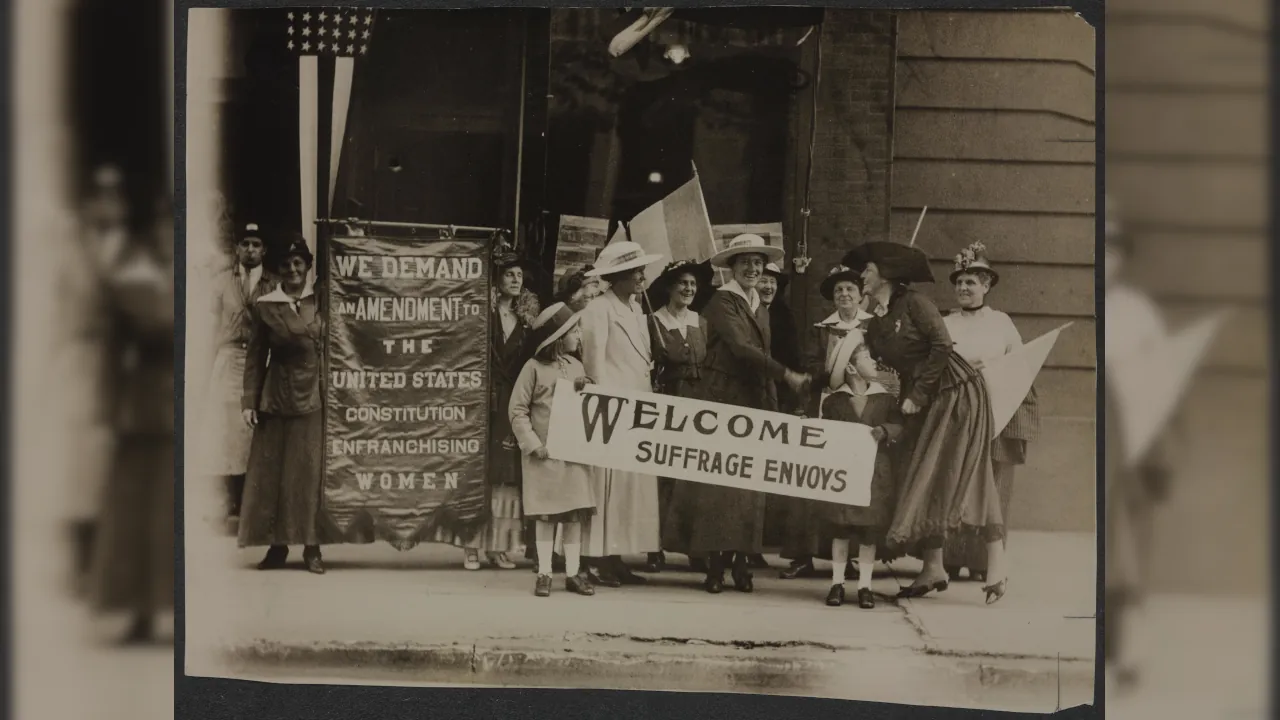
For a while, I’ve been studying the Woman’s Suffrage movement. There’s no better example of women taking action on a specific issue to create change – because they did it without any legal rights!
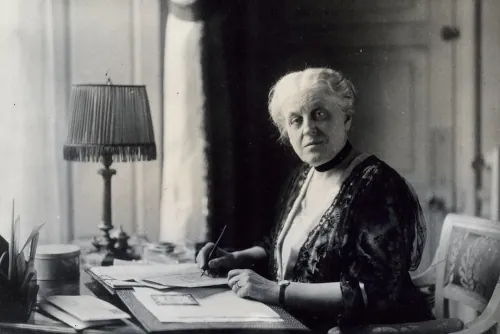
This statement by Carrie Chapman Catt who developed “The Winning Plan” to get women the right to vote, discusses what it took:
“To get that word, ‘male’, out of the Constitution, cost the women of this country 52 years of pauseless campaign; 56 state referendum campaigns; 480 legislative campaigns to get state suffrage amendments submitted; 47 state constitutional convention campaigns; 277 state party convention campaigns; 30 national party convention campaigns to get suffrage planks in the party platforms; 19 campaigns with 19 successive Congresses to get the federal amendment submitted, and the final ratification campaign.”
They didn’t just protest and complain.
They did the hard work!
They developed an Action plan and worked the plan.
And many of the women who were the first leaders of the movement such as Lucretia Mott, Susan B. Anthony, Elizabeth Cady Stanton, Lucy Stone, Sojourner Truth…and the list goes on and on…never got to see their life’s work come to fruition.
After the 19th Constitutional Amendment was ratified, Carrie spoke about what it took to achieve it:
The vote is the emblem of your equality, women of America, the guarantee of your liberty. That vote of yours has cost millions of dollars and the lives of thousands of women. Money to carry on this work has been given usually as a sacrifice, and thousands of women have gone without things they wanted and could have had in order that they might help get the vote for you. Women have suffered agony of soul which you can never comprehend, that you and your daughters might inherit political freedom. That vote has been costly. Prize it!
Her words spoke to future generations of women to remind us that the work isn’t done and we must continue to ACT:
The vote is a power, a weapon of offense and defense, a prayer. Understand what it means and what it can do for your country. Use it intelligently, conscientiously, prayerfully. No soldier in the great suffrage army has labored and suffered to get a `place’ for you. Their motive has been the hope that women would aim higher than their own selfish ambitions, that they would serve the common good.
The vote is won. Seventy-two years the battle for this privilege has been waged, but human affairs with their eternal change move on without pause. Progress is calling to you to make no pause. Act!”
Suffragettes already gave you Fundamental Rights. Use them.
The Suffragettes worked hard so we could participate as equals in society, government and the workplace. They expected us to assert our rights and end the patriarchy. They expected us to continue the hard work of creating change to better our family, community, workplace and government.
If we just protest and expect men or the government (primarily men) to make changes on our behalf, then we let them down. We squander our rights, empowerment and equality.
And nothing changes or gets done.
The women who spent all the hours getting a better maternity leave policy did it for all of the womenin their company and to add to the momentum of better maternity leave policies for all women in all workplaces. They served the greater common good.
Women have always inspired society to aspire to higher ideals, values and principles. But to create the change that incorporates our values, ideals and aspirations into the way we work and live, requires hard work.
Whether or not we personally benefit from our action isn’t important. It’s important that our action benefits the greater and common good for all people.
Empowered Women Take Action For The Good Of All People
How do you recharge yourself after a stressful day at work?
I used to answer that question by saying I go running or I go cycling. I also love massages and reflexology. In one high stress job I got a pedicure every 4 weeks. But in thinking about it that is how I got rid of negative energy which is different than how I take on positive energy. There is a distinction between the two and we need understand that.
So how do I recharge? Well sometimes it is through cycling – I ride out in scenic areas and explore. I don’t care about how fast I am going or if I am climbing enough hills. It is a very different experience than cranking away hard and fast.
I also work around my house – my house was a bit of a fixer upper when I bought it. While the inside is almost fully renovated the outside landscaping needs constant attention so I can always go out there and “play”. I walk in the mornings checking plants to see where the irrigation needs adjustment and to see which plants the bunnies, chipmunks and jhavelina made a meal of. As I walk around I am joined by the hummingbirds who literally chat in your ear. I also have hawks nesting nearby who swoop down to see what critters I send scurrying as I walk around. It’s really cool to see them up close. There is also the roadrunner who perches in the trees and is very noisy in his mating calls. But by the birdfeeder amongst the doves, finches and quail, I also get the brightest reddest cardinals I have ever seen. And just as I am writing this my dog lets me know the coyotes are sauntering across the driveway to return to their daytime resting area. But the best part is that every night I have that perfect expansive view of the desert sunset which when I am home I always take a moment to enjoy. I think all of this is pretty cool and it recharges me.
Even though I enjoy the beauty of many landscapes, I love living in the desert where I can see mountains in every direction. Some people enjoy the ocean or the lake. For others it is the vast plains of the Midwest. What is important is that we recharge ourselves and where we recharge ourselves from.
We shouldn’t look to other people to recharge us – we should not take their energy and use it for ourselves. Unfortunately this is often the case in the male-dominated workplace. We go to work and instead of being energized we become depleted. And while we go home and rest and attempt to de-stress, we don’t always recharge. And it is important that every woman who works in the male-dominated workplace finds her way to draw energy from the infinite supply of the earth’s energy.
The earth is our energy source. Connecting with the earth was an essential part of spirituality in many ancient and Indigenous cultures. Native American cultures believe in Mother Earth and Father Sky but western culture through its separation of science and spirituality has estranged most of us from our spiritual connection to the earth. The earth has become merely an object that is to be used for our own purposes. We no longer consider earth as a living entity so we don’t see it as having energy. We have forgotten that Mother Earth provides us with everything we need and nurtures every level of our human existence. And as a result we believe we have to pull energy from each other instead of the world around us.
This may sound truly corny but whenever I think of this subject I am reminded of the opening scene in Rodgers and Hammerstein’s The Sound of Music. We all know the feeling we feel when we watch this scene and listen to the music and we know this is why the movie touches us so much. The symbolism in this scene captures a woman completely connected to herself and the world. Watch the clip, look at the scenes and listen to the lyrics.
Julie Andrews comes into the scene opens her arms and twirls – she is connecting with the universe – she is both taking in the energy of the hills and sharing her energy. This is what women do. When we are happy we throw open our arms and let our positive energy radiate out. For as much as feminism wants to put down the concepts of True Womanhood, they had it right – women shine bright light out into the world! And we have the power to recharge that light as often as we need.
When Julie is done connecting with the universe she then puts her hands in her pockets symbolizing that her energy is fully replenished.
“The hills are alive with the sound of music with songs they have sung for a thousand years. The hills fill my heart with the sound of music. My heart wants to sing every song it hears.” It is the hills (nature/universe) that fills her heart with the positive energy that she in return wants to express without limit or boundaries. It is through women that the universe shares and spreads its positive energy.
“My heart wants to beat like the wings of the birds that rise from the lake to the trees.” Women have the power of making connections and become part of the nature/the universe. It is through our need to connect that we rise up.
“My heart wants to sigh like a chime that flies from a church on a breeze.” She wants to say what is in her heart but she doesn’t need to be loud or forceful. When speaks from her heart the message is naturally carried and spread.
“To laugh like a brook when it trips and falls over stones on its way.” We will have trips and falls as we journey through life but we laugh at them and don’t let them stop us. We just keep flowing and bubbling along on our journey.
“To sing through the night like a lark who is learning to pray.” We don’t give power to fear but learn to ask for strength.
“I go to the hills when my heart is lonely. I know I will hear what I’ve heard before. My heart will be blessed with the sound of music and I’ll sing once more.” It is from our natural connection to the hills and nature that we find our strength and replenish our energy. We don’t get it from men or even other people. When women connect one-on-one with the universe, the universe will give us what we need.
So next time you are feeling depleted, play this. Oh what the heck – play it loud, twirl and sing!
I’ve probably mentioned this before but my biggest pet peeve at work is that people can’t problem solve. Working in the construction industry where we come across problems on a daily basis this is especially frustrating. Looking through some old notes this week, I found some examples of problems that were difficult to solve until I got some women involved.
In the male-dominated workplace when a problem arises, solving the problem can take a distant back seat to being a competition of status. The first concern is who is to blame for the problem. In the autonomous, expertise driven Blue Zone, a problem occurred because someone did something wrong. Watching men try to assign blame to each other is literally like watching a game of hot potato played around the conference table. What they fail to understand is that the problem arose out of complexity and the inability of the male-dominated workplace to adequately deal with complex issues that require the integration of three or more parties. No one person or team is to blame – they way men operate is to blame.
Once blame is assigned to either someone who isn’t present or no longer with the company, then attention is turned to the generation of ideas on how to solve the problem. I love this part! Every man must voice a solution or opinion or risk being considered irrelevant. Some of the ideas can be fairly far fetched but at least he said something. Over a period of time men will start dropping their idea in favor of adopting another man’s idea until there are two or three solutions left. Now it becomes really interesting as they try to decide on solution. Picking a solution really about picking a winner but the problem is that there is a 900 lb gorilla in the room – they know neither of the solutions is a complete solution. The reason they problem occurred in the first place was due to a lack of coordination or integrating all parties. Those same issues are preventing them from coming up with a complete solution. If left to their own devices then no solution is accepted. The problem just lingers on and on and on.
An even worse outcome is when the men convince themselves a half-baked solution will work and charge full speed ahead down this path. This always winds up generating new compounding problems that in my experience take an inordinant amount of time and energy to untangle and resolve. So I am always glad when they decide to do nothing instead.
Unlike other people I tell women not to jump in while every man is busy voicing his opinion. Instead just listen to the ideas. Then when the discussion simmers down and the men are vying for their idea to be deemed the winner that is when you start speaking up. As women we are better at seeing the big picture. By listening to all of the ideas, you start putting together the big picture. It is like working a jig saw puzzle. You know what information you have and you know there are missing pieces – you don’t know exactly what they are but you know something about what they look like. So you start asking questions and integrating the ideas. The men will continue to voice their ideas, if they have any – and that is a big if. The missing information is often information no one at the table. So now instead of the problem just lingering, there is a path forward.
In my experience when it comes to problem solving in the male-dominated workplace men are good at generating the basic building blocks of ideas and women are good at assembling the blocks and driving the group to a decision. This is a natural skill all women should practice and become very comfortable with. Start doing this within your own peer group and you will find that the men are receptive. Then as you grow in confidence you will find yourself doing the same thing in meetings with more senior managers. We often make the mistake thinking that senior managers have better decision making skills than our peers but they often fall into the same trap. Speaking up in front of senior managers and helping them come to a conclusion on a decision is a great way to get noticed.
Having problem solving and decision making skills are the most important skills to have in business so those are what you need to hone. A lot of your male peers will concentrate on building their expertise in the profession or trade and keep a narrow focus. Women don’t do that, we always keep a wide perspective. As a woman, you want to take the expertise of your peers and continuously bring it all together for planning, decision making and problem solving. When you build that expertise, you are no longer in competition with your male peers, you compliment their skills. This is also the foundation of leadership and you prepare yourself for larger leadership positions.
Empowered women are leaders who use their inherent female traits to compliment the traits of their male colleagues for the betterment of the company.
I started this website to teach other women the concepts I successfully used in my career. Little did I know that I preparing myself for my biggest challenge yet into the male-dominated workplace.
I want to share this experience because I was in such an extreme condition and yet I dramatically changed the company in one year. I will not lie and say it was easy because it wasn’t – this was the hardest I’ve ever worked. Work consumed my life. But my experience demonstrates the capabilities of women when they are empowered to apply themselves. I am now in awe of what is in us to achieve.
This article long so read it when you have a good half hour. I dealt with a lot in my job and this article discusses only about 25% of the issues. I included music clips – the songs I associated with the issues and sang over and over again in my head to maintain my sense of humor. And as you will see, I needed my sense of humor!
I was recruited to be the General Manager of a construction company (I will call it DSC) because of my experience creating a process-driven workplace. I was a little wary about the job. Just because an employer says he wants a process-driven company, doesn’t mean he really understands what a process-driven company is.
Because this company was not in the U.S and not American, I wanted to make sure it was solid. I was assured the company which was part of a larger group of privately owned companies was profitable, functioning well and in a market full of opportunity. So, I looked forward to what I saw as an adventure.
My Job Won’t Be Hard!
Upon my arrival my boss welcomed me with a card showing a tranquil dirt road ascending a gently-sloped grassy hill. To him, this expressed the extent of the difficulty I would encounter in my new job.
That was my first hint. This is construction and there is no such thing as smooth roads. I suspected that dirt road was a bit bumpier than depicted. But, no problem, there’s a reason I drive a Jeep not a BMW.
By noon on my fourth day, I knew DSC had serious financial issues. Neither DSC nor the corporate financial department understood or used the basic principles of construction financial management. I thought back to a construction financial course I took many years ago and realized I was in the worst case scenario. DSC was projecting revenue it could not justify and didn’t know its outstanding costs. There was no way to know DSC’s true financial position.
Then as I do with every company I work for, I applied the Dollars to Doughnuts Concept. I discovered DSC had no idea how to make money in construction because there was no project management. This meant the entire middle section of the concept was missing. While a gap between the top and bottom section is common, within this corporation, they weren’t even aligned. The corporate level didn’t know what DSC did as a business, how they functioned or how they should function. And since no one within DSC had any project management training, they didn’t know how they were supposed to function either.
Dollars To Doughnuts Concept
DSC Version of Dollars to Doughnuts Concept
I thought about the four quadrants of knowledge. This corporation was in the “we don’t know what we don’t know” quadrant.
Or in layman’s terms – this is the blind leading the blind.
That gentle grassy hill just got very steep and rocky. I had to teach everyone the most basic fundamental principles of the construction business and how to integrate them into construction management processes.
My first DSC Theme Song
I didn’t need my Jeep, I needed a rock crawling Rubicon Jeep with a 5” lift!
During my first two weeks, I had a steady stream of people from the corporate staff and our sister companies inform me that DSC’s fundamental problem was a lack of accountability. I found this ironic because in the management meeting, anytime someone was questioned, they deflected by bringing up something DSC was doing wrong. I made a HUGE mental note of this. It seemed everyone liked that DSC wasn’t functioning because they used DSC to avoid their own accountability. That meant possible trouble in the future. Once I get DSC on track, how will they react when they can’t deflect onto DSC and have to address their internal performance issues?
By the end of that second week I realized a lack of accountability was merely a symptom of DSC’s real fundamental problem – Autonomy. DSC valued autonomy above all else. Each person did what they wanted, when they wanted, how they wanted. And they fiercely protected their right to do so!
Its excessive value for autonomy made DSC an extreme male-dominated company. DSC was so deep into the Blue Zone that it didn’t know there were other colors in the rainbow! Even the women were pure blue.
To understand DSC’s and the corporation’s culture you have to go back in time at least 60 years and forget all management concepts that have been developed since. (This job involved time travel too!)
I pulled out some old articles written in the 1980’s that discussed old management styles to refresh my memory. I read: “People choose which competencies to develop based upon their self-image. They develop an idea of what it means to be a manager and act accordingly.” I remembered one of my first articles, Understanding Why Being a Manager Is So Important discussed this passage and I pulled that out too.
DSC is a unionized company (yes, I hear the collective U.S. groan) and most of the current supervisors had been with the company for decades. They remember the days before professionals were needed, when their senior union supervisors ran all the work. Now that they were the supervisors, they wanted the same status and autonomy their predecessors enjoyed. They believed, and were corporately empowered to believe, that when it came to doing “the work” they alone could make all decisions. There was no need for management or technical professionals such as project managers, quality managers, estimators, schedulers or even engineers for design.
The union members had a pre-industrial revolution era concept of how to do work. (Now we are really going back in time to the days before building codes! Scary but true.) They believed in the master craftsman that independently decided how to construct the project and directed the trades in what to do. As a worker moved up vertically from foreman to general foreman to superintendent , he grew in status based upon his expertise. And because they didn’t have any horizontal perspective, the higher a supervisor was in the vertical hierarchy, the greater his autonomy – there were fewer people he had to answer to. At DSC Autonomy = Status. Listening to them I often thought of teenagers, anxious to achieve adult status at 18, and no longer be answerable to mom and dad.
The Autonomy of DSC Divisions
The DSC org chart depicted these beliefs. DSC did not have a central office and each division operated from client sites or various corporate offices. Each DSC division was its own independent company working an assigned territory and reported only to me. They did not trespass onto each other’s territory. There were no shared resources – they did not share personnel, tools, vehicles or equipment. Trade workers worked for a specific superintendent and were not allowed to work for another.
I continuously hired project managers and other professionals in an attempt to fill in the middle management ranks and delegate my massive workload. But every manager I hired created more work than he relieved. The reason – each and every one of them got pulled deep into the Blue Zone and continuously engaged in intense arguments with the union workforce. The union workforce did not want a middle management layer to erode the status they waited decades to attain.
I spent my days (Sundays and holidays were the most frequent) breaking up arguments and averting physical fights, leaving me to do my work late into the night. One night while working with Mad Men playing in the background I heard:
Don’t fight with the Pig in the mud.
You get dirty.
And the Pig loves it.
I replayed the scene several times – that described DSC! I made up signs and plastered that saying everywhere. But every male manager still wound up in the mud. They ALL also wound up at the hospital with stress related ailments. Eventually they all left.
Status was important at the corporate level too. Going back to my old reference article, a passage read “It suited the self-images of the managers that they were superior, the brains for others who could only supply the brawn.” This fit the corporate culture! Most of the corporate staff was located in another larger city where “higher quality people” could be found. The town and area DSC operated in was industrial, “dirty” and a blue collar working town, (think Hunger Games, District 13) not a desirable place for professionals. Our physical separation enhanced the distinction in status between blue collar and professional.
The corporate staff did the strategic planning – the highest level of thinking. It wasn’t until my last couple of weeks that I understood that as a general manager I was under/inferior to the corporate staff. In this hierarchy they did not need my input. According to them, they were responsible to audit and evaluate (critique) DSC performance.
It always seemed odd to me that I didn’t discuss what DSC was working on with anyone. In management meetings the corporate staff gave detailed reports but the operating company GM’s (those of us who actually produced revenue) had only 5 minutes once a month to list our top projects. But if you understand that the corporate staff didn’t believe they needed our input to do their jobs to support us, it makes perfect illogical sense.
As I was writing this article I came across another passage I marked back then: “To managers employees were considered expendable, factors of employment, no different from machines. Managers demanded an allegiance they did not return. Workers responded by developing an allegiance to their unions.”
No wonder I marked it – that is DSC and the corporation in a nutshell!! I often thought to myself: Welcome to the 1950’s!!
At the corporate level, they were obsessed with returning DSC to its past glory days of being the local contractor who successfully competed with the big out-of-town general contractors. For decades DSC successfully grew without any project management or professional support! But that was 10+ years ago and a very different business climate.
The Corporate Theme Song That I Sang Several Times a Week!
Back then it was simple – Clients’ big oil money flowed like water. DSC did their work on a time and material basis – they went out, did the work, made whatever changes to the scope they wanted and got paid for every dime. This was construction project and financial management at its absolute simplest.
But then the environment changed dramatically in 2009. Oil money no longer flowed like water – oil companies competed for investors who expected higher returns, forcing them to crank down tight on budgets. DSC’s simple environment suddenly got complex – safety, construction management, quality management and financial controls were now required. But DSC didn’t evolve; it didn’t learn how to operate in its new complex construction market.
Complexity is the ultimate enemy of Autonomy and it beat the crap out of DSC! The complexity of construction project management put DSC on life support but without financial management, no one even realized it! By my third month I realized DSC would not survive another year without drastic and immediate changes.
DSC, who used billable rates established in its contracts, was losing money on every man-hour worked. Their billable rates were so far out of date they did not cover their costs. I “joked’ that their project manager rate was $20/hr. lower than the rates I used 12 years ago!
Because no one understood contracts, no one read the contracts so no one knew the contracts allowed for an annual adjustment of overhead costs. (I thought: ever hear of inflation?) Their oldest contract hadn’t updated overhead costs and non-union wages in 9 years! Even worse, that contract was about to quadruple in work. Do the math: lose $7 per man-hour for 60 men working 10 hours per day, 365 days a year! (7*60*10*365 = $1,533,000) Ouch!
Luckily the time to increase rates was upon us. I recalculated rates and increased the rates as much as each of our Clients allowed (It gave me something to do every night from 11:00 pm to 3:00 am for two weeks) I also restructured the profit calculations to capture more profit. They collected $2.50/hr. profit on regular time rates of $54/hr., overtime rates of $80/hr.and double time rates of $106/hr. I was shocked – $2.50 profit on costs of $106! I told them that was just plain Un-American!!
Rates were only one issue – DSC was hemorrhaging money everywhere. Another root problem was the women’s lack of clout. At DSC “the girls” as they were called didn’t carry the job title of Project Administrators as they do in most construction companies. They were Administrative Assistants. DSC hired girls with a clerical backgrounds believing the girls simply filled out forms in Excel and administratively cleaned up after “the guys.”
But their responsibilities weren’t that simple any more. Project Administrators are the first line of defense in protecting the financial integrity of projects. They watch over the financial and contractual processes and for this reason, good construction companies empower Project Administrators. Without any clout the girls at DSC couldn’t resolve issues. The filled out their Excel forms the best they could, then built walls for autonomy and to protect themselves from accountability for the incomplete work.
Without communication and teamwork issues remained unresolved. The associated costs mounted into hundreds of thousands of dollars. Then because the issues seemed too complex to resolve, the costs were routinely written off.
Early on, I hired a phenomenal young woman to help me clean up the mess. She quit after 3 weeks and confided in me why. She worked with one of the men before (he recommended her to me) and didn’t want to work under him again. She felt that with her college degree and her experience she shouldn’t be “his girl” who cleaned up the mess he made of projects. She was burnt out from doing that with her previous employer and she knew she deserved more professionally. Because she was close friends with this man, she didn’t want to get into a power struggle as she asserted herself and ruin their friendship.
I felt bad for her because she was so capable but like the women of DSC she was pure Blue and that is what she really struggled with. She acted like a man thinking that is what she needed in order to get ahead but no matter what she would always be “his girl” and personal administrative assistant. (I always got a kick out of listening to her cuss up a storm while her little Prada handbag sat daintily on my desk.)
Her story emphasized just how deeply male-dominated the culture was. After she left, I really had to think about my strategy to move DSC to the Purple Zone.
I already began separating people into two groups – those that were willing to grow and learn (“Roundies”) and those that weren’t. The ones who weren’t willing to grow, I started calling “Flatties”. They believed the world was flat and that if we sailed too far in the direction I was taking DSC, we would fall off the edge of the earth into the abyss. When I discussed new processes, you could see genuine fear in their eyes! Their fear of the unknown, of losing autonomy and of having to acknowledge what they didn’t know would always prevent them from reaching the brave new world of the Purple Zone.
My Second DSC Theme Song.
The Flatties resisted change with everything in them. One woman was anointed as the head of the resistance movement. Her tactic was to resist until you gave up in complete frustration and backed down. In construction men often resolve conflict this way – he who backs down first loses. I was fascinated that a woman was so effective in this technique with the men. I secretly liked her for this and hoped she would become a “Roundie”.
Unlike the men who engaged her in the Blue Zone and failed, I engaged her from the Purple Zone. No threats, no hostility. I gave her a firm explanation of why procedures were changing and expressed my excitement as to how much better everything will be! (In the new world is it sunny, warm and we drink mojitos all day!) As she resisted, hoping to wear me down, I didn’t budge and maintained my chipper attitude. I responded to each and every email she sent – I could not allow her to have the last word. I kept responding and it took hours, if not all day or two days, until she gave up. The Flatties were no match for the American Dream Team! (That’s what the Flatties called the Americans in the company)
Over several months, most of the Flatties eventually left on their own. A lot of people were scared about the Flatties leaving because they were perceived to have the power and knowledge base – if they left then DSC would immediately fall apart. I’ve heard that same fear mongering many times and always found that once the bad apples leave, the good people who were pushed into the back corner step forward and flourish. And this is what happened at DSC. (Baby and Johnny tore it up on Kellerman’s dancefloor!)
I will admit that I was surprised how much so many people blossomed. They literally became different people!
With a lot of the resistance gone, I concentrated on closing out hundreds of projects with hundreds of unresolved problems. I gathered “the girls” from all of the divisions together to create a cleanup team. Some of the girls hated each other threatening to quit if they had to work with each other. To turn DSC around I had to start with the women and get them to the Purple Zone first.
I never imagined I would have to lead women from the Blue Zone and train them how to work in the Purple Zone. I encouraged and empowered their female traits and praised their use of their female traits. Soon, they all started talking and chatting away – the girls became women and a team. I used our clean-up process to train them on project change management. I encouraged them in their role as the protectors of project financial integrity. I expected them to speak up whenever they saw something wrong. They now had the clout to stand up to the men and correct them when they didn’t follow processes.
My New DSC Theme Song
And the men responded as most good construction men do – they loved the support! There was no fighting in the mud!
Empowered Purple women led the men to the Purple Zone. Hallelujah! At times the women ventured into the Pink Zone and I was surprised by how Pink some of these formerly Blue women could be. It was actually refreshing to see women be natural and true to whom they really are.
About the time we started the clean-up process I hired a new cost analyst. He was phenomenal. He knew construction financial management, he understood processes and he worked in the Purple Zone! He didn’t get dragged into the Blue Zone and fight in the mud. He took an enormous burden off of me and he was an amazing asset in growing DSC.
Mid-way through the clean-up process, we finally moved into the new central office. Standardizing processes was about to become so much easier! With everyone in one room the DSC divisions were finally forced to work together. To prevent problems, I assigned the cubicles. When everyone got situated I realized a huge mistake on my part or maybe it was just a glaring reminder that this was still a male-dominated organization. The office had rows of cubicles, two of which I considered the core rows – one with the Estimating/Planning staff and one with the administrative. In other words, one row of all women and one row of all men.
(As The Woman In The Room, I hung my head in shame!)
I had to fix this! There was one woman in particular I wanted to move over to the Estimating row. I had mentored her for months because she was in a non-traditional role. When hired, she was treated and paid like an administrative assistant and her real abilities were ignored. (I will write more about her in a separate article) I wanted her to work closely with a young man in the Estimating row because they had opposite professional weaknesses and strengths and they needed to learn from each other. Over the next few months a couple men left, and I moved her. That was the beginning of the real transition. I hired a planner – another young woman. Then, another project coordinator, also a young woman. The row was now this beautiful mix of 3 men and 3 women. Purple!!
The administrative row had a vacant cubicle so one of the superintendents used it when he came to work in the office. After a few more movements, the entire office was a wonderful Purple Zone workspace!
The project management process chart we developed together was printed large and hung on the wall. We had a small conference room where I met with the project coordination staff to review projects. My cost analyst met with the admin staff regularly to ensure DSC financials were on track. I designed a new organizational structure that addressed the realities of the limited labor pool and the DSC skill level. We were beginning to function.
For the first time in several years DSC was profitable! Our new work made good margins because we were following our processes and people were empowered to speak up when they questioned something. We started to come together as a team and one project administrator arranged pot luck lunches for celebration. We still had a very long way to go but we were moving in the right direction. I was so proud of my purple team!
Remember how I said that the corporate staff liked that DSC functioned poorly because they used DSC to deflect issues from themselves? For a few months, I was quietly saying that the time was coming when DSC would start functioning and that the corporate departments would also have to improve their performance. That time arrived.
I don’t remember what triggered it, but I came up with a somewhat tongue in cheek theme for DSC: DSC- Not Quite the F*ck Ups We Used To Be!
The multimillion dollar question was whether or not the corporate departments could accept the new emerging DSC. Were they willing to admit to their “opportunities for improvement” and take action to improve their performance too? Or would their pride stop them?
Department 1 had always been difficult to work with. I reported to HR several time that Dept. 1 management and personnel were demeaning to DSC employees. There was one project administrator in particular they openly denigrated in public and she got to listen to it on a regular basis. It was cruel. During our conference calls I felt like answering their questions with “because we’re stupid, that’s why.” After the calls, I could see the hurt on the faces of my team.
Dept. 1 was developing a new system for DSC which was several months behind schedule and plagued with issues. Dept. 1 said it was the fault of my administrative supervisor. But the underlying issue was that Dept. 1 didn’t understand how DSC operated and went forward with designing the system without a process map. The first system we reviewed had the process backwards.
The system highlighted the new complexity of our work. Completing the system took a long time not because the DSC admin supervisor was being…I will say it…a Bitch…but because Dept. 1 didn’t consider all of the administrative components outside of DSC that had to be integrated into the system. The problem was not a person; it was not understanding the complexity of the process.
As we moved to another issue with Dept. 1, DSC and a sister company proposed the standard industry process which was simple and easy. Dept. 1 rejected the process and instead came up with a cumbersome process that still didn’t do what we needed. It created a new mess! I will admit that I called their process “stupid” because it was. I told them we would be humiliated if anyone in the real world knew this is how we handled the problem.
In our next meeting to figure out how to make this process work, Dept. 1 came up with an even more complex system that required extensive system reprogramming. (WTF? They haven’t even gotten the other project right yet.) So, my Cost Analyst asked our boss if our initial solution was open for discussion. The response was ugly. (On the upside we learned our quiet and polite Cost Analyst had some brass huevos!)
Even as DSC greatly improved its performance we did not gain Dept. 1’s respect. They always reminded me of the "smart" kids in school who always had to brown nose the teacher for attention.
Department 2 whose support was critical to DSC projects refused to work with us. Even though they worked under DSC contracts, they proclaimed their complete autonomy and that DSC could not direct any Dept. 2 actions. Even my requests for support were met with “we will take it under advisement.” DSC managers and supervisors complained constantly that Dept. 2 personnel did nothing all day and never went out to the projects.
In construction, conflict between Dept. 2 and construction personnel is common but it is usually because Construction feels Dept. 2 is being too zealous in its duties. This was the first time I ever encountered Construction complaining that Dept. 2 was not being zealous enough.
Part of the conflict was due to the different pay structure between Dept. 2 personnel and DSC’s union personnel. During a typical work cycle, union personnel were paid for 15 hours more, even though they worked the same number of hours. This angered Dept. 2 personnel so they weren’t anxious to be proactive in their duties and they had very high turnover. Dept. 2’s solution was to hire women for the job because they won’t argue over pay like men do. (Yes, you read that right!)
Two years earlier, Dept. 2’s lack of diligence caused DSC’s largest client to shut down all work. Even after this Dept. 2 only did the minimum required to get DSC back to work. They did not continue to grow their functional expertise. Their current Sr. Manager, a self-proclaimed Intellectual, stayed at the 30,000 ft. level, and only associated with Dept. 2 through his manager – he didn’t associate with the working class.
The Dept. 2 Manager did not believe in the new stringent industry principles for this function and often thwarted them. (The cause for so many arguments with DSC management). His attitude put DSC, its personnel and our clients at risk. Until his attitude changed and Dept. 2 became champions for their function, clients would continue to limit DSC work on their sites. The bottom line is that DSC could not grow until Dept. 2 got their sh*t together!
Elevating issues to our mutual boss did not help DSC. Dept. 2 had one responsibility that DSC complained for years that Dept. 2 was not doing. For six months I followed up monthly directly with the Dept. 2 Sr. Manager and Manager requesting the reports. I was always promised them but never got them. I finally went to our boss to ask for his help. The Dept. 2 Manager was standing right outside the boss’s office so our boss asked if the reports were being done. The Manager replied that they were. End of story.
Our boss was very young for his position and inexperienced in industrial construction; he was more suited to the scope of work of one of our sister companies. One of his flaws is that he couldn’t deal well with problems. So, he just always wanted to hear that everything was fine. If you told him all was good, gave him the thumbs up, he didn’t dig any deeper. Managers used that to their advantage – an autonomy preservation techinique.
In early August DSC had an issue (yes we screwed up) that required Dept. 2’s support. At first Dept. 2 didn’t even respond. When they did they made mistakes, then more mistakes which upset the Client and gave DSC a big black eye. The Client requested Dept. 2 to produce the same reports I had been requesting. It took days and when Dept. 2 produced the reports they were incomplete and filled with obvious errors. Now the Client was extremely upset and the stuff hit the fan! This was the same Client who shut down work two years earlier because of Dept. 2. So there was a lot of stuff hitting an industrial sized fan!
Our boss realized he had been misled by Dept. 2.
DSC personnel were embarrassed and hurt that after all of our progress, Dept. 2 could bring us down. Our mistake was recoverable but Dept. 2’s errors…maybe not. August became a miserable month – it seemed like everything fell apart and that it was all beyond our control.
Complexity was once again, crushing DSC. Even though DSC could internally make vast improvements we were not autonomous. We relied on corporate departments to do their functions well so they could support our work. They failed us.
Internally, I questioned if we fighting a losing battle to save DSC. My gut told me that I had taken DSC as far as I could.
DSC’s future hinged on whether or not the corporate functions could learn from their mistakes and now admit that they needed to improve their performance too.
Because my boss wasn't experienced in the industrial application of Dept. 2's function, I explained to him how my previous employers exceled in this area – they got "Religion!” Our client has "Religion." Our Client is waiting for us to be born again!! We need to let them know that we have seen the errors of our ways! We will confess our sins, we will atone and go forward into the shiny light and glory! Are you with me brother? Let me have an “Amen!!” Sing it! Do you feel it?!
Can I get that Amen?! Nope. My boss is agnostic.
The first week of September we forged forward anxious to get back on track. Later that week, my boss walked into the DSC office, looked right down my beautiful Purple rows and tells me he doesn’t like it. (Somebody wants to asserts himself.)
The next week I briefly met with him and he says he doesn’t like my organizational structure. He wants to go back to the old hierarchal structure that he and my predecessor designed. (You mean the structure that failed and had managers fighting in the mud?)
Call me naïve. But, up until that meeting, I thought the DSC I was fixing was the screwed up company my boss inherited. I thought I was helping him out. But I was wrong. I was correcting the DSC he created. He created the overly-empowered union members who fought with managers. He created and encouraged the gap and misalignment between the operating companies and the corporate office. He believed in and reinforced the vertical hierarchy. He believed in Autonomy – he had Autonomy Religion!! He was the one entrenched in the Blue Zone.
He never wanted the process-driven company he hired me to create. Our early conversations were not about a process-driven company but always about how soon I could fire two individuals. Get rid of them and the Glory Days return! All this time he and I were on different pages!
Nonetheless, I kept getting things back on track. DSC still hoped that our relationship with Dept. 2 would change dramatically. After our boss realized they lied to him about producing the reports, we thought he would finally listen to us and we would get the support we needed.
I invited my boss and the Dept. 2 management to a meeting with my staff. The meeting went very poorly. In the spin, DSC got blamed for the Dept. 2 not being able to produce the reports. (Wait a second! If you are saying that DSC prevented Dept. 2 from doing the reports, then you just admitted that Dept. 2 abdicated their job! Do you get that? No.) My staff pushed back like I had never seen them push back before. They asked direct questions but got NO answers.
After the meeting, it was the first time I heard my staff openly blame my boss and say he was part of the problem. Before the meeting, my boss said he wanted to build a bridge between DSC and Dept. 2 but in the meeting he burnt that bridge down.
The next time I met with my boss and Dept. 2 accusations were launched at me. I understood how my managers had felt, being enticed to get into the mud for a fight. I kept my responses short and direct, I was not going to get dragged into the Blue Zone. I felt like I was supposed to submit to the corporate staff, accept their abuse and DSC’s lowly position in the vertical hierarchy.
Sorry guys. It just ain’t in my nature to be submissive and you know that! !n this case everything in me screamed not to submit. This is the wonderful thing about being a woman – you pick up on so many signals that men will tell you are not real, but they are! My instincts told me not to trust them. Something’s up.
My boss and Dept. 2 had to avoid all personal accountability to the Client for the way Dept. 2 messed up in August. If the Client believed the accountability was at the corporate level, (as it really) then there would be huge ramifications to the entire corporation.
So, right from the beginning they openly made DSC the scape goat (and I suspect me directly). But that in turn had even bigger consequences which I don’t think they understood. I knew that being the scapegoat placed me in a precarious situation. Any issue in the future could result in legal consequences to me personally. I do not want to wind up in court in a foreign country. I could not submit. No job was worth that.
I was dismissed.
I was told “There were many complaints about you,” making it sound like everyone in all the companies complained about me. From his tone I was supposed to interpret that I was a horrible person. (Sorry I need to wave the Bullshit flag! I understand that you may want to hurt me but I know who I am, what I have accomplished and what my team thinks of me.)
I will always remember my body language when I asked the question – I was very relaxed like a friend just told me a funny story. I was even smiling. So, "People in DSC complained about me?”
Pause and stuttering. “No. The complaints all came from Dept.2 personnel.” Then it was something about “not being on their team.”
I didn’t say anything else because I knew it would do no good. He was coached to say nothing else.
In a male-dominated, hierarchal, status-driven organization, the person on top gets to decide who will be held accountable for anything that goes wrong. It is the opposite of ‘the buck stops here.” It is the opposite of process driven company. In a company like this, that values autonomy, an individual’s independent actions are to blame for problem. One of my fellow GM’s described our boss’s management style as- fire the right person and problems go away; hire a new person and all is wonderful again, until it isn’t.
So, after working 100 hours per week for weeks and on end, the inevitable question is: Was it all worth it?
Yes! Because I learned that the concepts I discuss really do work, even in the most screwed up, archaic, male-dominated company! I now have enormous confidence in myself and my concepts. This experience put all of the concepts of The Woman in the Room in one environment and I saw how powerful they are! I know everything in my career has built to this moment and I know my mission is to empower women to lead the male-dominated workplace.
And one more thing – God bless America! I am so glad to be home!
In my last article, The Woman In the Arena, I quoted an excerpt from Teddy Roosevelt’s “Citizenship In A Republic” speech that he deliver in 1910. When I wrote the article I looked up the entire speech and found another excerpt that has tremendous meaning for where our culture and economy is today. I think this excerpt gives women a great sense of peace, purpose and direction.
In our current culture we are told that to be “successful” we need to aspire to become part of the plutocracy, to climb to the top of the corporate ladder. In my article “Should Women Strive For The Top 0.1%?”, I questioned why we should and if there is a certain amount of futility in it. Teddy Roosevelt, over 100 years ago, drive home my point.
Nevertheless,…there must be a basis of material well-being for the individual as for the nation, let us with equal emphasis insist that this material well-being represents nothing but the foundation, and that the foundation, though indispensable, is worthless unless upon it is raised the superstructure of a higher life. That is why I decline to recognize the mere multimillionaire, the man of mere wealth, as an asset of value to any country; and especially as not an asset to my own country. If he has earned or uses his wealth in a way that makes him a real benefit, of real use- and such is often the case- why, then he does become an asset of real worth. But it is the way in which it has been earned or used, and not the mere fact of wealth, that entitles him to the credit. There is need in business, as in most other forms of human activity, of the great guiding intelligences. Their places cannot be supplied by any number of lesser intelligences. It is a good thing that they should have ample recognition, ample reward. But we must not transfer our admiration to the reward instead of to the deed rewarded; and if what should be the reward exists without the service having been rendered, then admiration will only come from those who are mean of soul. The truth is that, after a certain measure of tangible material success or reward has been achieved, the question of increasing it becomes of constantly less importance compared to the other things that can be done in life. It is a bad thing for a nation to raise and to admire a false standard of success; and there can be no falser standard than that set by the deification of material well-being in and for itself. But the man who, having far surpassed the limits of providing for the wants; both of the body and mind, of himself and of those depending upon him, then piles up a great fortune, for the acquisition or retention of which he returns no corresponding benefit to the nation as a whole, should himself be made to feel that, so far from being desirable, he is an unworthy, citizen of the community: that he is to be neither admired nor envied; that his right-thinking fellow countrymen put him low in the scale of citizenship, and leave him to be consoled by the admiration of those whose level of purpose is even lower than his own.
This excerpt reminds me of the saying “with great wealth comes great responsibility.” It gives us a sense of purpose and great wealth a valuable meaning.
I have often wondered if the reason women aren’t clamoring to the top the top of the corporate ladder or to the plutocracy is because we find no purpose in it – when we get to those lofty positions we become too disconnected from the rest of society which is contrary to what women strive for. For us, this disconnection associates wealth with being low on the scale of citizenship.
But what if we take a different perspective – that we need to climb the corporate ladder and the ranks of the plutocracy so we can lead men there too. If we believe we have a moral obligation to keep our companies and the plutocracy connected to the real world then we must have parity within those arenas. We must work from the inside to ensure everyone remains good citizens of the community.
I know I have sat in many a conference room and listened to men sacrifice their values for either money or to make another entity feel inferior. I felt an obligation to steer them back to the moral high ground. This is why we need more women who understand this role in the conference room at all levels of companies.
With more women high on the scale of citizenship in all aspects of society, maybe then there will be less men low on the scale. As women that is our moral responsibility to our communities, our nation and our world.
Empowered women are high on the scale of citizenship and lead men to do the same.
One of the traits women are most credited with is improving collaboration. We get more people to open up and participate in conversations and problem solving. The result is a more complete solution to a problem.
Sounds great – in theory!
The issue many women face is that collaboration isn’t valued. Collaboration goes against the company’s driving, hard charging, make it happen culture – it is sissy stuff. In these environments the merit of an idea is based upon how hard the promoter is willing to fight for and drive his solution through. If you are not willing to fight hard for your idea, then it couldn’t have been a very good one.
Even in an environment where men are less contentious, they may already have their minds made up as to who they aren’t going to listen to, whose ideas are going to be shot down even before they are voiced. They know who is going to be shut down and shut out of all discussion. They are very good at enforcing the shut out.
For women getting their ideas heard in these environments is hard enough, let alone getting men to listen to each other and discuss all ideas.
So what’s a woman to do – how can she make a room full of men collaborate? (more…)
Have you ever noticed years that singers have their biggest hits when they sing songs that they pick or write themselves, not what the industry tells them to sing? They do best when they connect with a song that expresses who they really are.
When I think about this Garth Brooks always comes to mind – not quite country and not quite rock. He didn’t try to fit into a music industry genre – he created his own. There is something energizing and powerful about that.
Being around a lot of women entrepreneurs lately, I noticed that women start businesses that are an expression of who they are. Their businesses have a meaning or purpose to them. Women personally connect with their businesses. (more…)
Monday morning I was finishing up this article asthe news came on about the Boston Marathon terrorist attack. I decided to re-write it since I talk about a study I did on terrorism several years ago.
Back in 1985 when I was an Air Force 1st Lt. I had a project dumped on me. Originally it was assigned to someone else but they dropped the ball leaving me 6 weeks to complete a 4 month project. My assignment – conduct an Energy Vulnerability Assessment to determine the mission impact if a terrorist disrupted the water, electricity and/or natural gas supply to Minot AFB.
In a bit of a panic I called the project’s manager and explained my situation hoping for a time extension. He told me not to worry, that this was a preliminary idea gathering study and there would be follow-on work.
After talking to him, I had an idea. What they really wanted to know was if terrorism could impact the base’s mission. Could terrorism keep Minot AFB’s B-52’s and Minuteman missiles grounded? That would require taking down the command and control system. (more…)
I never really liked my tag line “Empowering Women for Success in the Male-Dominated Workplace.”
To me it sounds kind of blah-blah, boring typical professional language. I always felt it was missing something – that it wasn’t exactly hitting the mark of what I needed to say, but I haven’t known what was off.
Sometimes as I am writing my articles I find myself reading my words and saying “Blah, blah, blah, blah,” same old stuff. I then trash it and rewrite using the words and expressions I like. Over time I have noticed that what I am rejecting is all of the professional words and thoughts that have been drilled into me throughout my career. They just seem so freaking dull!
Why are they so dull? Because they are male! I want to express myself as a woman and women have emotion! We have vibrancy and enthusiasm! (more…)
I have – many times – “You are the most infuriating woman I’ve ever known!”
Even though it was meant to belittle me, I take it as a compliment. My reply is simply “Thank you.”
The scenarios in which I’ve been called infuriating are always the same – a man is trying to intimidate me.
Years ago, I was hired into a company that had just bought another company. A female manager I supervised who had been part of the old company wanted my position. She was very upset she didn’t get it. She rallied the other male manager I supervised to fight her battle for her.
God, was he obnoxious!
He openly threatened me, challenged me and refused to do things according to the new procedures. Together they spread rumors that I was incompetent. But I didn’t back down. So one day he came into my office and went off.
I just sat back in my chair, looked at him and said “You need to leave.”
After several weeks, I finally got clearance from HR to discipline him. I called him into my office and stood in front of my desk while he sat in a chair. I explained the problem and told him that he had to either get on board with the corporate changes or I will force his departure.
I told him the choice was his: “Get on board or there’s the door.”
He started to yell at me. I didn’t react. I simply repeated and motioned “Either get on board or there’s the door.” That is all I said. I probably said it five more times before he screamed “You are the most infuriating woman I’ve ever known!”
“Thank you. Now you need to use the door and leave.”
A few weeks later, I went to his office to give him an assignment which I knew he would challenge. I stood in front of his desk and told him what needed to be done. As I expected he challenged me. Then he did a body language power play.
He pushed back in his chair, leaned way back and opened up his chest, arms and legs – you know the position. He was trying to make himself look really big and intimidating.
www.123rf.com 31225598
But there was just one problem.
The way he was sitting back pulled his pants really tight across the crotch area leaving nothing to the imagination. And right there, front and center, was a hole just below the bottom of the zipper. I could see his tighty-whities through the hole. I started to laugh.
(All these years later this image is still emblazoned on my brain!)
I choked down my laugh. But all I really wanted to do was bust out hysterically!
To regain control, I put my hands down on his desk and leaned over to hide my face. Every time I lifted my head I saw the hole and started to laugh. I then had to lower my head again. It seemed like I was positioning myself to stare at his crotch. This made him so uncomfortable! (Yes, I enjoyed that part of it.) Eventually he sat back up and folded his hands in his lap like a demure little schoolboy.
As I turned to leave his office, he once again said, “You are the most infuriating woman!”
I looked back at him, let out a big smile and proudly said, “Yes I am.”
He soon used to the door himself and found another job.
I learned that the best response to a man intimidating you is to be infuriating. Do nothing. Don’t engage. Just look at him.
Let him stand there and act like a jerk. Pull out a nail file and do your nails and look at him as if to say “let me know when you are done embarrassing yourself.”
Just because a man is trying to dominate and intimidate who says we have to respond?
When men try to intimidate each other they engage in a battle for power – who is going to come out on top. That’s what men do. But we are women. We don’t need to engage, we don’t need to play the game, we don’t need to go into the Blue Zone.
So, don’t advance. Don’t retreat. Stay where you are – don’t act or react based on their behavior. Show their behavior is powerless.
Take a line from Macbeth – “full of sound and fury signifying nothing.” I have mumbled that line countless times listening to men go off. There is power in thinking this way.
I love being called “infuriating.” To me it is one of the greatest compliments about my personal strength.
Empowered women know the power of being infuriating.
It seems every discussion lately about working women is tied to the term “work-life balance.”
Having been there, done that – I don’t get it! I don’t know what the issue is or what point women are trying to make.
Are women trying to justify leaving work to watch the kids at soccer practice? Are they seeking recognition for carrying a greater load in taking care of their children and homes?
Or are they setting “work-life balance” as a higher moral purpose – as a rationalization to why we are not advancing up the corporate ladder?
No matter what the reason is, I don’t see women coming from a position of strength and empowerment in this discussion. It seems we are trying to justify what we are doing. Instead we should take a lesson from men and just do it!
A magazine published an article about the advances women are making in construction. To my surprise the article featured a former co-worker of mine and painted a pretty rosy picture. Reading the article it sounds like women have finally achieved parity with men in construction.
There’s only one problem…all the stuff the article didn’t mention. (more…)








 Find this article helpful?