Tag: plan

  • Empowered Women Don’t Let Ego Get in the Way of Teamwork

    Empowered Women Don’t Let Ego Get in the Way of Teamwork

    All of our workplaces have goals and objectives they want to achieve.  The standard approach is to ask the best and brightest employees to generate ideas, work through the planning process and develop a plan to achieve the objective.  But, no matter how “well-planned,” our workplaces still experience problems achieving the objective.

    Why is that?

    It is because the planning process is too entrenched in male-thinking.

    Don’t believe me?

    Google “Planning Process” and read some of the results.  They leave little doubt that the planning process requires a lot of stereotyped male traits – intellectual, analytical, rational etc.  They also use a lot of jargon leading us to believe that Planning is what the smart and highly educated people do.

    The not-so-smart and not-so-well-educated execute the plans that are handed-down to them.  I read “Plans must be communicated and explained to those responsible for putting them into practice.  The participation and cooperation of subordinates is necessary for successful implementation of plans.”

    Sounds a bit elitist and snobbish.

    I could let that pass if the feelings of superiority were deserved – but they aren’t.  In my experience very few, if any, plans can be handed-down and implemented without revamping.  I’ve seen many plans designed by the so-called planning experts get thrown in the trash because they simply don’t work.

    The fundamental problem is that the male-dominated workplace believes in the separation of planning and implementation.  This idea goes back to the 19th century and Frederick Taylor’s scientific management theory.  Even though we have moved away from a manufacturing economy into a more service and technology based economy, we still dragged a lot of his management theory into the 21st century.

    Why?

    Dr. Myron Tribus of MIT explained it this way:

    So even though the management theory doesn’t produce the best results, the male-dominated workplace hangs onto it because it feeds ego, status and a feeling of superiority for some.

    We see this distinction carried out in many of our workplaces (and society) – there is a separation of the educated personnel who “work with their heads” from the “uneducated” personnel who work with their hands.

    A confident professional in a suit holds a yellow hard hat, symbolizing the blend of business acumen and construction expertise as the city skyline reflects the hues of dusk behind him.
    The Suits

    As a young female engineer, this class distinction was readily apparent in my first workplaces.  Engineers worked over here and craftsmen worked over there.  The only engineers who worked with the craftsmen were there as the managers.

    I often thought that if I were a man, I probably wouldn’t question this arrangement.  But as a woman the separation and distinction seemed contrived.  I questioned it.

    When I was assigned several plans to write, I could have sat at my desk and developed them all by myself like my male colleagues were doing.  However, I decided to “cross over,” interact with the craftsmen and ask for their input.  I found that they were incredibly knowledgeable.  I learned that if I wanted to know HOW things worked and HOW to get things done, I should ask them.  Working with them, I wrote plans that they later implemented.   The plans actually worked and achieved the objective.

    About a year later the engineering staff was floundering for 2 years trying to solve a recurring design problem.  Many engineering consultants from top firms were brought in. No one could come up with a solution. 

    Then I had an idea:

    Let’s ask the craftsmen who were sent out every week to fix the problem. 

    I took the initiative to gather them together and asked them if they could come up with a solution.  Working together it took them 1 hour to figure it out.

    1 freaking hour!!!

    That was a pivotal moment.

    I realized that all of the separations and the distinctions in the workplace by function and education was a detriment to effective planning and implementation.  If everyone worked together through the planning and implementation processes, we would meet and potentially exceed our objectives. 

    When I became a manager, this became my management philosophy:

    At first it was difficult because the various factions had rivalries they enjoyed.  So, I forced the issue.  I scheduled planning meetings between the planners and craftsmen and literally sat in the meetings as the babysitter.  Eventually they began building relationships and collaborating.  I almost died of shock the first time I walked into the Planning office and found craftsmen in there voluntarily collaborating with the planners.

    Within a few months the change in our performance was noticeable.  Within a year our performance was exponentially better.

    Throughout my career I continued to make the various workplace functions work together in both the planning and execution of work.  I believed everyone needed to park their egos at the door and that no one is so smart and so superior that they have all the answers.

    I ran into opposition, especially in the last 15 years or so.  There seems to be more and more men who believe their education distinquishes them and it is beneath them to interact with the workforce.  They believe they get to pontificate from the on-high of their cubicle and create dictates for the minions to follow.

    Of course, their dictates don’t work because they don’t understand how things work in the real world.  But don’t tell them they are wrong – they get angry and ugly.

    However, I NEVER had a problem telling them they needed to get off their perch and participate in the real world if they wanted to be of any value.  If they still didn’t listen, I cut them out. 

    I didn’t involve them. I let them sit in their cubicle by themselves and pout. When they got upset because “they aren’t consulted in their area of expertise, my response was, “We’re all working together over here.  You may join us any time you like.  That decision is up to you.”

    A few men never joined.

    For most men, it is a challenge to undo the old learned ways of how the male-dominated workplace should function because their ego and self-identity are tied to their function and place in the organizational hierarchy.  I found that women are essential to creating the change.

    Several women standing in a circle looking inward and downward portraying teamwork and unity

    Women are much more comfortable working together with other people.  Women aren’t as ashamed of what they don’t know so they are more willing to ask questions and collaborate.  I laughed many times when men witnessed how women work together for the first time.  They were amazed by women’s interaction, collaboration, problem-solving and the volume of work women produce.

    As a manager I used women to draw men into collaboration.  There are always a few men who are easily drawn in by the energy women create when they work together.  These men and women form the core of the collaboration group.  Once the core is established it is easier to invite more men to join in.  Before long men are telling other men they have to join in.

    That’s when you know you are successful.

    The collaboration group creates a lot of positive energy in the workplace.  That positive energy is a natural attraction since so many of our workplaces drain us of energy.  As people work together to produce results, achieve the objectives and improve performance, the positive energy grows and the group becomes powerful.  It isn’t afraid to take on the bad actors, the people who use the workplace for selfish gain and the workplace bullies.

    It is this positive energy that transforms the male-dominated workplace and creates the genuine teamwork we want.

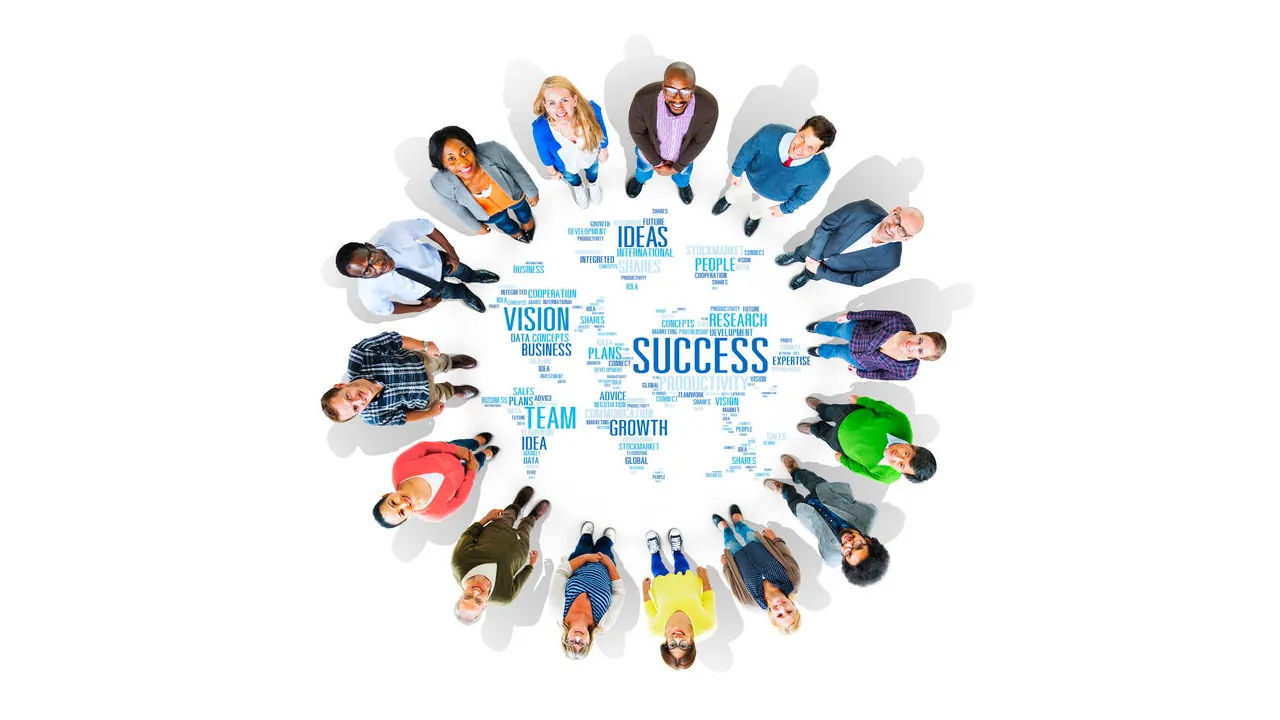
    A diverse group of professionals gathers in a circle, embodying the spirit of collaboration and innovation. The words 'Success', 'Vision', and 'Growth' float around them, symbolizing their shared goals and aspirations in the dynamic world of business.

    Empowered Women Put Teamwork First By Respecting Everyone, In Every Role

  • Ladies – Supporting an Issue Isn’t Enough!

    Ladies – Supporting an Issue Isn’t Enough!

    Recently I read through the Action Plan of a women’s organization I was interested in joining.  As I read, I kept wondering:

    What action I am supposed to take? 

    What am I supposed to do?

    This is a huge problem women have.

    We have ideas, principles and values.  Let’s call these Abstracts.  We believe that when we state these Abstracts and say we support them, we are taking ACTION. 

    But that’s not action. It’s just words.

    Here are some examples:

    • The organization supports funding of a public education system that results in the uniform opportunity for all students to master the attitudes, knowledge, and skills necessary to thrive in a competitive and changing world.
    • The organization supports voter registration procedures, voting options and systems that are accessible to all, easy to administer, and have appropriate security measures to prevent fraud or technology disruptions. The organization supports Voting Options of:
      • Early voting in person and by mail
      • Traditional polling places
      • Voting Centers

    That sounds great but as a member of the organization:

    What is the Action Plan to accomplish these objectives?

    Loving sentiment but what is the issue and the action?

    The mistake women commonly make is that we think that if we put an idea out there – create awareness by protesting – then some male-dominated entity should pick up our idea and run with it.  We expect them to listen to our idea and exclaim:

    “That is a wonderful idea!  Let’s put Jack and Henry on it.  They can figure out what needs to be done and present their solution to the President/CEO for approval.  Thank you so much for bringing this deficiency to our attention. We are rewarding you with a promotion, raise or monument!”

    Sorry, that’s not how it works.

    A year ago, I criticized an article that was bemoaning how a group of women who wanted a better maternity leave policy in their company had to spend hundreds of hours of their own personal time to build the case, present it and convince their company to pass it.  By the time it was enacted, all the women involved in advocating for the new policy were past the point in their lives when the new policy would benefit them.

    The long list of women who commented were outraged that the company didn’t look at its own maternity leave policy and say “We need to change this!” 

    They were outraged that it took so long and the women had to spend their personal time and money on the issue.  They were outraged that the women weren’t even going to benefit from it so the company needed to compensate them for their time.

    I was taken aback that in the 21st century, so many women still have patriarchal views.

    So, my comment was:

    Protest sign saying "Moms demand action for gun sense in America
    Action by Who?
    Who do You want to act on the issue that is important to you?

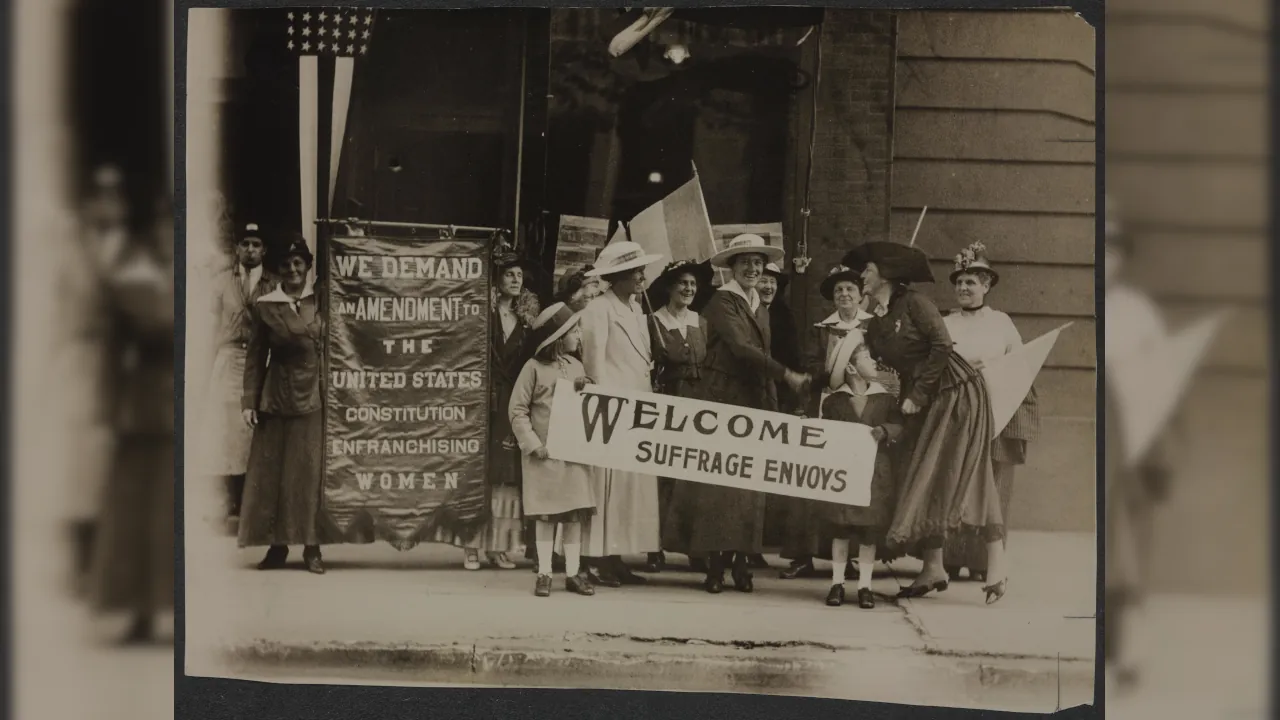
    For a while, I’ve been studying the Woman’s Suffrage movement.  There’s no better example of women taking action on a specific issue to create change – because they did it without any legal rights! 

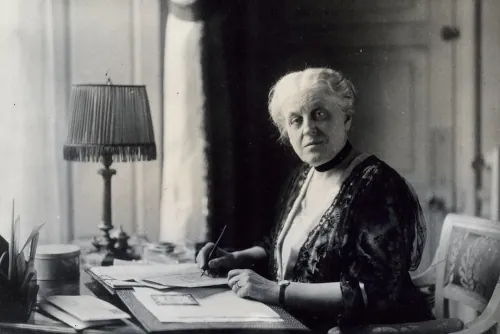
    This statement by Carrie Chapman Catt who developed “The Winning Plan” to get women the right to vote, discusses what it took:

    Picture of Carrie Chapman Catt siting at her desk

    “To get that word, ‘male’, out of the Constitution, cost the women of this country 52 years of pauseless campaign; 56 state referendum campaigns; 480 legislative campaigns to get state suffrage amendments submitted; 47 state constitutional convention campaigns; 277 state party convention campaigns; 30 national party convention campaigns to get suffrage planks in the party platforms; 19 campaigns with 19 successive Congresses to get the federal amendment submitted, and the final ratification campaign.”

    They didn’t just protest and complain.

    They did the hard work!

    They developed an Action plan and worked the plan. 

    And many of the women who were the first leaders of the movement such as Lucretia Mott, Susan B. Anthony, Elizabeth Cady Stanton, Lucy Stone, Sojourner Truth…and the list goes on and on…never got to see their life’s work come to fruition.

    National Woman's Suffrage Statue of Lucretia Mott, Susan B Anthony and Elizabeth Cady Stanton

    After the 19th Constitutional Amendment was ratified, Carrie spoke about what it took to achieve it:

    The vote is the emblem of your equality, women of America, the guarantee of your liberty. That vote of yours has cost millions of dollars and the lives of thousands of women. Money to carry on this work has been given usually as a sacrifice, and thousands of women have gone without things they wanted and could have had in order that they might help get the vote for you. Women have suffered agony of soul which you can never comprehend, that you and your daughters might inherit political freedom. That vote has been costly. Prize it!

    Her words spoke to future generations of women to remind us that the work isn’t done and we must continue to ACT:

    The vote is a power, a weapon of offense and defense, a prayer. Understand what it means and what it can do for your country. Use it intelligently, conscientiously, prayerfully. No soldier in the great suffrage army has labored and suffered to get a `place’ for you. Their motive has been the hope that women would aim higher than their own selfish ambitions, that they would serve the common good.

    The vote is won. Seventy-two years the battle for this privilege has been waged, but human affairs with their eternal change move on without pause. Progress is calling to you to make no pause. Act!”


    Sign from 2017 Women's March saying Girls Just Wanna Have Fun Damental Rights
    Suffragettes already gave you Fundamental Rights.
    Use them.

    The Suffragettes worked hard so we could participate as equals in society, government and the workplace.  They expected us to assert our rights and end the patriarchy. They expected us to continue the hard work of creating change to better our family, community, workplace and government.

    If we just protest and expect men or the government (primarily men) to make changes on our behalf, then we let them down. We squander our rights, empowerment and equality.

    And nothing changes or gets done.

    The women who spent all the hours getting a better maternity leave policy did it for all of the women in their company and to add to the momentum of better maternity leave policies for all women in all workplaces.  They served the greater common good.

    Women have always inspired society to aspire to higher ideals, values and principles.  But to create the change that incorporates our values, ideals and aspirations into the way we work and live, requires hard work. 

    Whether or not we personally benefit from our action isn’t important. It’s important that our action benefits the greater and common good for all people.

    Empowered Women Take Action For The Good Of All People