I received a fear laced text about COVID-19 and climate change from a political party. My gut reaction was:
“OMG!!!! I’m going to die!!!”
I decided to reply to the text which began an exchange with an unknown person. Our exchange was frustrating, so I ended it by saying:
“Get freaking real! Stop fear-mongering me and stop trying to manipulate me. Treat women as if we have a brain.”
Politics and COVID-19 proved a powerful combination to fear-monger and emotionally manipulate women. We’re susceptible because:
We mistakenly identify with our emotions, not our ability to think.
We aren’t as technically savvy, so we rely on “the experts.”
We rely on other people (news media and politicians) who also aren’t technically savvy to interpret and analyze for us what the experts are saying.
These media personalities and politicians also conditioned us to believe that anyone who utters those three magical words,
‘Science, Data, Facts”
must know what they are talking about.
However, that’s not true. Those of us who are trained to work with numbers know “Science, Data and Facts” are completely meaningless until they are analyzed.
Too often people don’t analyze the data.
Instead, they hear big numbers such as 214,917 COVID-19 deaths and believe they are at high risk of dying if they get COVID-19.
Fear-mongering such as the text I received reinforce fears that may be completely unfounded. So, in order to understand the risk of dying from COVID-19, I looked for the COVID-19 facts that were analyzed.
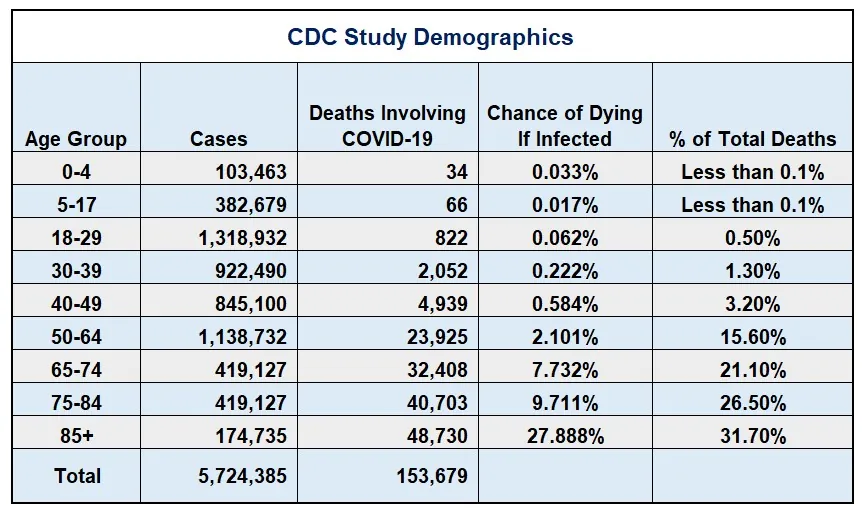
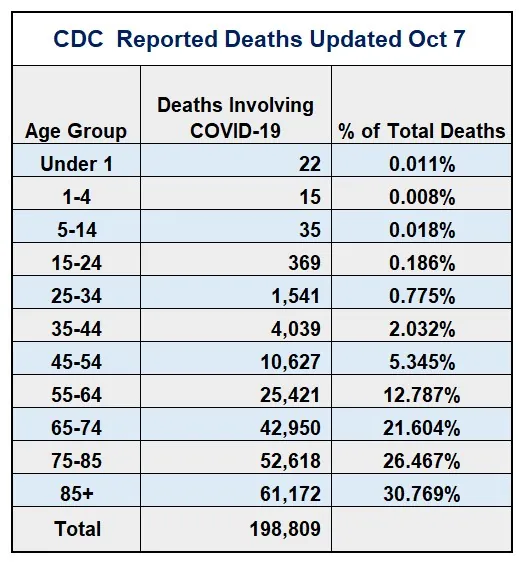
I first noticed that their chart says: “Deaths Involving COVID-19.”
The chart DOES NOT say “Deaths From COVID-19”
This suggests that COVID-19 was in many cases the final overloading cause of death (the final straw), not the stand-alone cause. (Important distinction) We also notice that there is a jump in deaths beginning with people in their mid-fifties. For most of us this is when our health issues become apparent and begin to require care or intervention.
Like the study, the chart also shows that about 79% of deaths occur in people over 65 with 30% of the deaths coming from people over the age of 85.
So from the Science, Data, Facts and Analysis should we be fearful of getting COVID-19?
Well that depends on your age group and maybe more importantly your health.
The analysis helps us know where we should place our concern. It also helps us stop creating unfounded fear. But more importantly, it prevents us from being fear-mongered by those who an agenda and want to use fear to manipulate us.
The average age of teachers is 41. Older teachers have reason for concern if they have health issues. Young, healthy teachers have little to fear.
Women are conditioned to defer to others. In school we were praised for raising our hand before we were called on to speak. We won favoritism and were rewarded with special privileges for being “good girls.”
We also watched boys speak out of turn, disrupt class and disregard the rules. Some boys were scolded. But others learned how to get around the rules with charm and humor. And even though their behavior was “bad,” they got attention which became its own form of reward.
So, boys learned that breaking the rules doesn’t necessarily result in negative consequences.
This difference in how boys and girls are conditioned became apparent during the COVID-19 era. At first, all non-essential personnel worked from home. But slowly that began to change.
I live adjacent to a major road. In late March and early April of 2020, I could pull out of my street onto the major road without even stopping. There wasn’t a car in sight.
But then, the week after Easter traffic began to change. Work trucks were back on the road. Then by the end of April there were several cars which I noticed were driven by men.
Even as the news media reported that people were working from home traffic steadily increased each week.
Who wasn’t working from home anymore?
My unofficial surveys indicated they were predominantly men.
To me this made sense.
From my decades of working with men, I knew many men who always showed up to work no matter what. They came to work because they thought of themselves as “essential.”
When COVID-19 broke out, we understood this was an emergency situation. Therefore, the only people who went to work were people who dealt directly with the emergency (doctors and nurses) and those who provided critical services in support of the emergency (grocery store workers).
But then we stopped calling these people “emergency workers” and began calling them “essential workers.” This opened the door for more people to return to work because to men “essential employees” means something very different from “emergency employees.”
Having spent my career working with the trades, I know plumbers, roofers, HVAC mechanics and electricians respond to emergency situations and provide “essential” services. This is why they were the first ones out on the road after Easter 2020.
I also know that when “routine” trade services such as maintenance are delayed, bad things happen. Things break and can quickly escalate into “urgent” and even “emergency” situations. Consequently, crises were created across many industries and workplaces.
Most men understand this natural progression in their work.
They know authorities can’t command “shelter in place” and expect everything in existence to freeze. They know the forces of physics, biology, nature and weather certainly won’t listen. And these forces will create a growing ripple effect. More and more of us will need to resume normal activities to prevent the escalation and spread of “urgent and emergency” situations.
Men are also acutely aware that the faster someone is required to return to work, the more essential (important) they are.
So, men began their progression back to their workplace in the order of their real or perceived importance.
Men don’t want to be seen as one of those people who can disappear and not be missed. Because, if no one misses them, then their job isn’t important…and can be eliminated.
This is why once back in the workplace men quietly note who is and isn’t in the office. They assess the pecking order. They note who sees their job as important and who doesn’t.
Now as women, our good girl conditioning tells us to listen to “the experts” who tell us to keep working from home. If we raise our hand to ask if we should come into the office, our workplace’s “official statement” is that we should continue to work from home. So, we wait for permission to return to our workplace.
But are we the only ones waiting??
How many of our male colleagues have gone back to the office either full time or part time?
Do we know? (They certainly know we are still “at home.”)
We need to know. We need to know if we are foolishly waiting to be praised for being a “good girl” who follows all of the rules but also sending the message that neither we nor our job is essential.
So, if you haven’t done so yet, drive by your workplace during work hours. See how many and whose cars are in the parking lot.
Go into your workplace, even if you have to go in at night. Take a look around and gauge the daytime activity. You will be able to tell who does and doesn’t come into the office.
This information will tell you whether you are leaving yourself out and ultimately leaving yourself behind.
Only you can know when the right time to return is. Just make sure you aren’t the last, unessential worker to return.
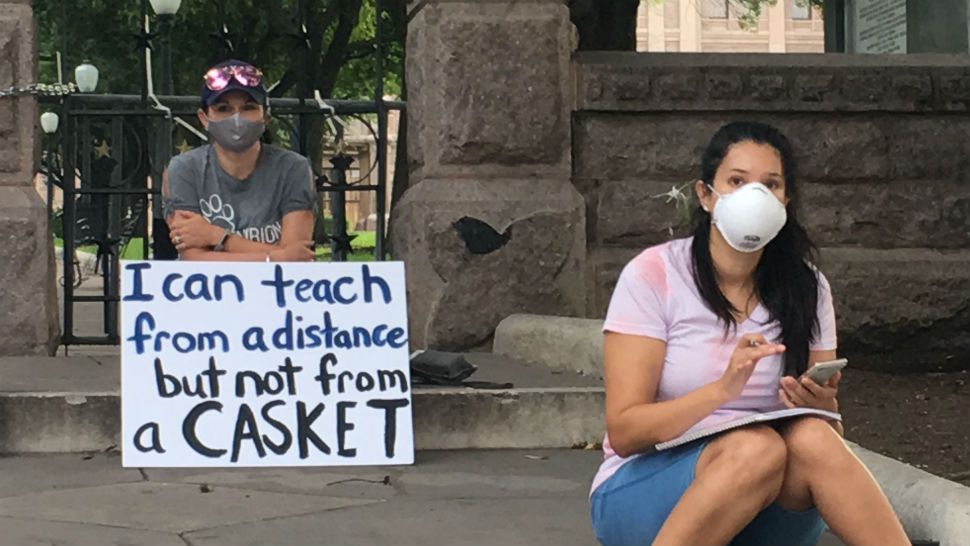
During the Covid pandemic, I was listening to my local news when a teaser for the national news came on broadcasting:
“Teachers and school nurses quit rather than return to school.”
The next commercial that came on was from my local power company showing men going to work and taking safety precautions for Covid-19 because they have to be out there. Their work is essential. They have to get it done.
The contrast between the two commercials was stark.
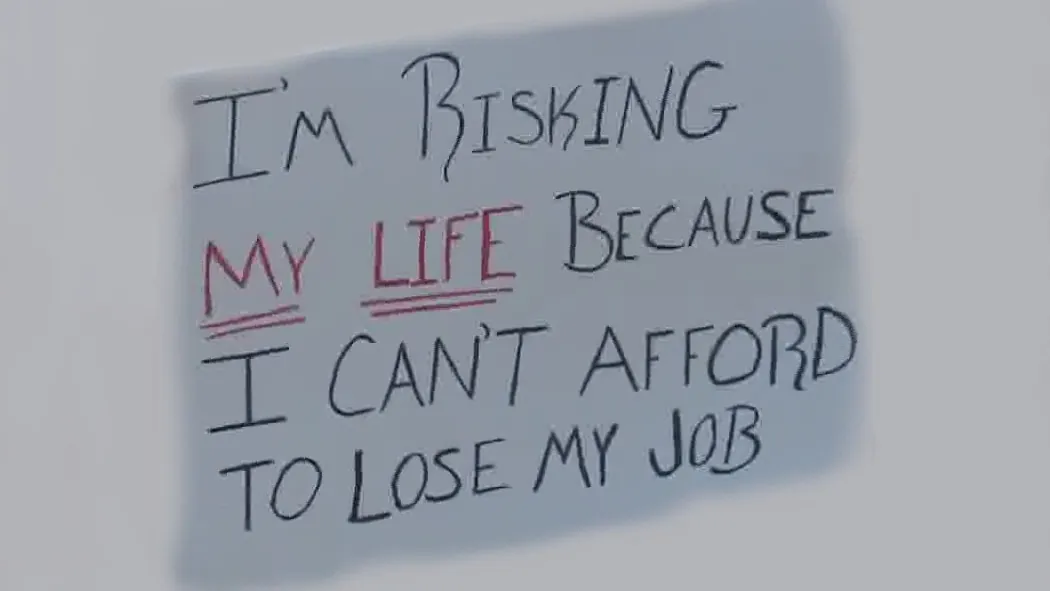
Women saying, “We can’t, we can’t” accompanied by signs saying, “I don’t want to die.”
While men whose work is inherently dangerous and where they can die just from doing their tasks say, “We can and we will.”
The contrast is an immediate reminder of the stereotypes.
Men are brave, daring, risk takers who get things done. While women who are caring and compassionate are driven by emotion. Our emotions make us weak and fearful, leading us to become irrational and hysterical.
The media then reinforces the stereotype of women being overly dramatic with stories of mothers who are afraid to send their children back to school for fear they might “get sick” (with no symptoms) or become “transmitters” (nice way of saying “silent killers.”)
Now of course there is science, data and facts to help alleviate women’s fears but mathematical, rational, analytical thinking is just too much for women’s brains. This is why we defer to “the Experts” who happen to be men to tell us what we need to do. Right?
No.
This is just what we’re conditioned to believe about ourselves.
Now this may be breaking new to some – especially those in the media industry – but women are quite capable of thinking and solving problems. I would venture to say that women are even far, far, far better than men at solving complex problems because we think about how this has to work with that, and that has to fit into this but then there is also this other thing we have to consider.
In other words, women are really good at thinking about all of the pieces and parts that are needed to solve a problem, and we are also really good at fitting all of them together to create a complete solution.
However, women aren’t taught to recognize this ability. Instead we are taught that men and their brains are superior to ours in problem solving. So, when women see men and especially “the Experts” get stumped by a complex problem, we believe that of course our poor little emotionally driven brains can’t handle it either.
This belief is what conditions us to respond to complex problems with “I can’t, I can’t, I can’t.”
But we can.
Throughout my career I’ve seen women – irrespective of their education or role – “help men” figure out how to assemble all the pieces and parts of a complex problem to come up with a solution. And it made me question, “Who is the real leader in this situation? Who is the more valuable person?”
So, it’s time for women to break free of our conditioning and recognize our abilities for the leadership qualities they are. But first, we also have to adopt the same attitude as men.
When women adopt this attitude then we will stop saying “No, I can’t” and begin saying “Bring it on….Because…Yes, I can!”
But more importantly, we will experience the joy and challenge of problem-solving and the sense of achievement that comes from creating a solution that works.
Women are told to go to college because a college degree is essential to a higher paying job and career success. We are told that people with college degrees will earn significantly more than people without.
So, we go to college. We get the degree. We acquire debt. We get a job – a low level job working alongside people who don’t have degrees.
Where did we go wrong?
For many women we make the mistake of getting a degree that doesn’t give us any employable skills. We ignore the fact that employers hire people with skills, people who can do things and people who can accomplish things. And our paycheck depends on the value of our skills and accomplishments.
So a degree that doesn’t give you employable skills won’t translate into a high paying job no matter how prestigious a university it comes from.
As women we also have to recognize that knowledge on a subject isn’t good enough either. In the workplace no one cares that you had a 4.0 GPA. In the workplace your employer cares that you can apply that knowledge to varying situations and achieve their objective.
Closing the wage gap will require more than women getting college degrees. It will require women going into the workplace with the same employable skills as men and accomplishing as much as men.
Watch this YouTube video:
And pay attention to the ending…you may be surprised who has the greatest potential to become a self-made multi-millionaire.
As women we like to distinguish ourselves from men based on our emotions – women are more empathetic, nurturing and compassionate.
But we have to ask ourselves:
How do our emotions benefit us in the workplace?
Years ago, when women tried to assert the value of our emotions, men just looked at us and mocked:
What are you going to make us do?
Sit around holding candles and sing?”
Touting our emotions didn’t get us anywhere.
After that we got lost. We didn’t know what unique value women brought to the workplace. We didn’t know what would make a workplace say, “We need to hire and promote more women!”
So, we fell back to the stereotypes and that is where we have been stuck for decades.
It’s actually gotten worse. The media loves dramatic, emotional women fighting over insignificant issues. Women in politics love to yell at each other and call each other names. Everywhere we look we see emotional, yelling, fighting women.
This is why one of the first videos I made is:
THINK – Women Are More Than Emotions
So watch my video on YouTube:
It’s way past time for women to stop believing we are driven by emotions. We have a miraculous, powerful, wonderful brain.
And once we start applying it, we will change the world.
We often hear about “White Privilege”, “Male Privilege” and of course “White Male Privilege.” where these privileges give you an advantage or opportunity others who don’t have those characteristics don’t get. And, if you follow intersectional feminism, you learn there are an endless list of privileges.
As a female engineer in the military and the construction industry, I had many opportunities to see many “privileges” in action. And while feminists and liberals want to make a big deal out of “White Male Privilege”, it’s really just plain old “Male Privilege” at work.
Even early in my career, I knew many successful “men of color” who became successful at a time when racism was rampant. The reason for their success is something feminism doesn’t understand – the merit system. The old male-dominated workplace valued people who got things done. Period.
I knew many crotchety old white guys who today we would take one look at and think “racist.” However, they respected and were even best friends with nonwhite men who shared their value of working hard and getting things done.
As a young woman, when I asked my first mentor what I needed to do in order to be successful as a woman, he replied:
“Be someone who gets things done.”
I listened to that advise and it served me well. As a 31-year-old woman, I worked on par and with equal pay to men who were old enough to be my father…because I was getting done the same job as them. Actually, I was doing it better.
However, that was not always the case. One of my workplaces was very patriarchal. And even though I was one of the top 3 project managers in the company, I was held back in every way. I was kicked off projects and sent to sit at my desk to twiddle my thumbs while men I trained, mentored and whose work I was expected to correct, replaced me. And of course, they got higher pay.
It was pure male privilege which doesn’t care about the race or ethnicity of a man. It only cares that he is a man and as such he is preferable to even the most qualified, intelligent, competent woman.
I know many women would have given up faced with my circumstances. However, growing up I learned that there are many types of disadvantages and privileges. I faced two lesser-known forms of privilege which should have scarred me for life but instead taught me how to overcome my lack of privilege.
Hair Color Privilege
The first is what I call Hair Color Privilege. When I grew up having blond, brunette and black hair (in that descending order) was the preference. The style of the times also said that your hair was parted in the middle, long and straight.
I didn’t have Hair Color Privilege or any kind of Hair Privilege. You see I grew up with short, curly RED hair.
In the days before Prince Harry made being ginger was cool, my first-grade teacher informed me that my red hair was the mark of “the Devil’s child.” I spent the year dealing with her abuse.
In middle school my math teacher called me “a witch” and routinely marked my correct answers wrong in order to sabotage my grades. In high school one teacher refused to teach me. And I can’t even count how many assignments, tests, reports and homework was marked as turned in but mysteriously was the only one that was lost and not graded.
And of course, being the different girl with red hair (and lots of freckles) was a calling card to all bullies.
On the positive side, my lack of Hair Color Privilege taught me how to stand up for myself. And for other people too.
It made me comfortable being different and being “the only.”
It prepared me for being the woman in the room. So, I am very thankful for my lack of Hair Color Privilege and the strength it gave me.
My second lack of privilege didn’t occur to me until I went to college. It was even more pervasive in it’s conspiracy to hold me back and it was based on my last name.
A-B-C privilege
When I grew up, schools loved alphabetical order. Alphabetical order ensured the kids with A-B-C-D last names were in the front of the line and in the front rows of the classroom. Everyone knew who these kids were. They got lots of attention.
So, with a maiden last name that started with STI, I was very close to the back of the line, perfectly placed to be invisible. Even my bright red hair couldn’t overcome how my lack of A-B-C privilege cast me into obscurity.
When I was in middle school, two schools had to combine for a year, creating overcrowding and I suffered consequences of A-B-C privilege. The most advanced classes were filled in alphabetical order, and by the time they got down to my name, those classes were full. Consequently, another boy (SUT) and I, weren’t placed in our proper class, even though we were more qualified than most of those who were.
This then affected our high school class placement. The math teacher who called me a “witch” used his influence to keep me out of the “honors program” high school. The SUT boy overcame this through his acceptance to a highly accredited private all-boys high school (male privilege). Without a similar female option, it took several months for my high school guidance counselor to realize I was badly misplaced and put me in the “honors program.” Without this correction, it would have been much harder for me to get into the best engineering colleges.
In college, ABC privilege was still prevalent. However, I got married after my junior year and changed my last name to CAL.
That is when I realized the enormity of “A-B-C Privilege“!
With a CAL last name, I was transformed from obscurity to visibility. I was in the front of the line. In the front row. Part of the first group.
It was like a whole new world opened up!!
When I got divorced people asked if I was going back to my maiden name. My answer was:
“Hell no!” I’m not giving up my A-B-C privilege!
(Sorry Mom and Dad.)
Creativity To Overcome
My experience with these two lacks of privilege taught me a lot. Yes, a lack of a privilege is unfair however, it doesn’t make you permanently disadvantaged.
I learned a lack of privilege could be overcome.
In elementary school I watched the boys who were last in line “act up.” By being disruptively funny, these boys got a lot of attention. Every adult in the school knew who they were. In elementary school these boys (and I) learned a very powerful lesson about how a change in attitude and a little creativity can go a long way to overcome a disadvantage.
The high school teacher who refused to teach me, was my teacher again my senior year. However, this time I really got into the subject and remembered those elementary school boys at the back of the line. So, from the back of the classroom, I sat on the back of my chair, or stood up and walked around as I voiced my ideas. I hijacked discussions and amazingly, the teacher and I really clicked. She loved having a student who was as much into the subject as she was. As for me, I learned a lot about taking command of a room, a lesson that came in handy when dealing with a room full of loud, opinionated men.
In my professional life I put these early lessons about Privilege and Opportunity to use.
Many people assume that being the Woman In The Room created a huge disadvantage for me because my colleagues all had Male Privilege. However, I quickly discovered my uniqueness overcame their privilege.
When my male colleagues and I were introduced to senior leadership, or a new client, who stood out?
I did.
I was the person people remembered. I was the one they talked about. I was the one they let approach and talk to them because they were curious about me, my story and most importantly, how I was going to measure up against my male colleagues.
Even if people questioned my capabilities, they all knew who I was. I learned how to leverage that. Then when I was the one who could be counted on to get things done, I was a force to be reckoned with.
Be Positive and Be Your Own Privilege
Life isn’t fair. There will always be people who have some kind of advantage or privilege over you. So, use your lack of Privilege to find creative and different paths to give you opportunity.
And since life isn’t fair, not every situation creates an opportunity. It creates other lessons.
My middle school math teacher who held me back, well, he went to prison for embezzlement. He taught me the joy of Karma.
And speaking of Karma, that very patriarchal company I worked for that kept replacing me with younger, less qualified men all in an effort to prove that “whatever a woman can do, any man can do better.” Well, the project they did it the most on, became the worst project in their history. It is forever, a huge blemish on their previously perfect record. And I never have a problem reminding them of exactly why the project was a total failure.
Then because Karma truly is a bitch (and feminist) she wasn’t done.
In the weeks prior to me leaving the good ole boys were all congratulating themselves for being awarded the biggest project in company history. And since in construction, size matters, they were really stroking their “egos”.
But with my resignation, I also proudly announced:
“By the way guys, my new project is 20% bigger than yours! I have the biggest. I WIN!”
(Yes, that felt really good.)
However, I “won” because I stayed positive. I didn’t let my lack of privilege and all the disadvantages cast on me, stop me from looking for new opportunities. I chose not to stay in places that didn’t let me be all I could be.
As it turns out, Privilege turns out not be all that privileging. It stunts your development opportunities in the things that really matter in life.
Truth be told, from a young age I never wanted to be the kid with all the popular privileges. Their life seemed so boring, so in the box, so safe, so stagnant. I felt like so many of the privileged kids were afraid to take risks or express who they really are because they were afraid of diminishing the arbitrary status their privileges supposedly gave them.
I felt sorry for them. And I guess that’s why I like the people who are different, who stand out, who are quirky and eclectic.
These are the people who learn to be themselves, to express themselves and like themselves.
During my career the first issue I dealt with in every workplace was that my male colleagues never worked with a woman as a peer and certainly not as their boss. Therefore, they didn’t know what to expect.
Their concerns immediately went to the stereotypes:
Is she competent?
Can she function in her role as well as a man?
Is she a man-hating feminist?
Some men were concerned with my mental state:
Will she cry?
Will she be too girlie?
Will she talk too much?
The women in traditional roles who never worked with a nontraditional woman had their own concerns:
Will she manipulate the men into doing her work for her?
Will the guys fawn all over her?
Is she going to make me feel inferior?
Everyone was concerned about how my presence would affect them and the work environment.
How will her presence change the long-established power structure between men and women?
These concerns caused many of my supervisors “to advise” my male colleagues of my hiring. My pending arrival sparked lots of conversation, especially as I rose higher in the workplace hierarchy. The discussions centered on how:
“How are we going to quickly assess what she is like?”
In other words:
“What TEST are we going to give her, so we can see how she reacts?”
Prior to my arrival or shortly thereafter, my male colleagues conspired to create or use an upcoming situation they thought would make me uncomfortable, put me off balance or challenge/intimidate me to see how I handled it. My reaction would then form their opinion of me and my suitability for my job; an opinion that would forever stay with me and be shared with every man.
When I was young and just beginning my career, I was warned to expect these tests. However, several months into my tenure as an Air Force officer, I was surprised I wasn’t tested and I asked my male colleagues about it. Their response was:
“You were tested and all the Senior NCO’s were really impressed.”
Really? When? What was the test?
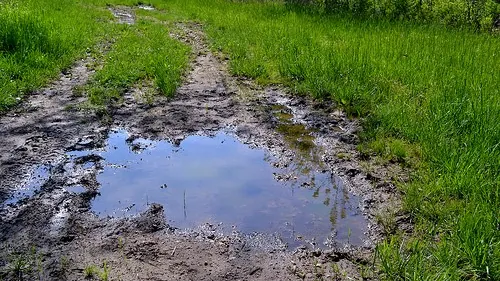
As it turned out the test came during a training exercise when we practiced our convoy being ambushed. We had to jump off the back of a truck, hit the ground and roll. When my turn came, I jumped, hit the ground and rolled…through a watery mud puddle. I remember observing at the time that I was the only one who had to roll through a mud puddle.
That was the test. Was I afraid to get dirty?
I passed my test because I rolled through the mud without hesitation and then spent the entire day covered in mud from head to toe without complaining about being dirty.
That test taught me a valuable lesson:
If I face every situation in front of me and choose to take it on, I will prove the strength of my character.
I learned that when tested, the best reaction is no reaction. I should just continue moving forward through the situation until I saw it though.
In time I learned this is what distinguished me as someone who can lead an organization through any adverse situation.
Was I ever upset that I was continually tested and needing to prove myself?
No.
I considered each test as an opportunity to distinguish myself above my male colleagues and set a higher standard. I knew that each test was a shortcut to:
RESPECT
In their careers, my male colleagues faced their own tests – though probably only once and it was an easier test.
But by facing a harder test (according to male standards but not necessarily female standards) I earned the right to carry an attitude:
This debate leaves us confused. Which is it? And why does it matter to women?
Initially as women we may be drawn to the side of the debate that says “words matter” because women are typically better at communication. The importance of Words puts female skills on par with the stereotyped male trait of Action and helps us see our equality. We are further encouraged by the old saying:
“The pen is mightier than the sword.”
It tells us that words wield power over the physical Action which has always made women feel weaker and inferior.
But let’s keep this in perspective.
The typical debate between Words and Action is philosophical and we need to concern ourselves with what is important in the workplace. Do “Words matter” there? Or is Action what counts?
In actuality our workplaces deal in both Words and Action.
Our workplaces exist to develop, plan, market and deliver a product or service to its customers. All of those require Action. When we are involved in those activities, we have timelines and budgets to meet and pressure to get our work done. Therefore,
ACTION = WORK
Our workplaces also have people who deal in words. They are typically in business development and sales. They use words to convince customers to purchase buy a product or service. We don’t always view this as Work. We see it as something less, like hype.
It is one of the first lesson we all learn in life – be leery of the sales pitch. We know it is easy to use Words to make false claims and promises; that a good salesman can use Words to make a sow’s ear sound like a silk purse. However, when the sow’s ear is delivered instead of the silk purse, customers aren’t happy. They don’t complain to the salesman because they are no longer around. Customers complain to the person who made and delivered the final product to them.
Consequently, there is often friction between the people who work through Words and the people who work through Action. The people who work through Action have to figure out how to deliver on what the Words sold. They must have the skills, knowledge and experience to solve problems and make customers happy. Therefore, they are critically important to any business.
Words can claim or promise anything. They can say the sun rises in the West then makes a sharp turn to set in the South.
Words have the luxury of being able to ignore and lie about Reality.
Action can’t. Action must deal with Reality in order to achieve an objective.
So then why do we keep hearing, “Words matter”?
Well, let’s look at who says it – the media, spokespeople, lawyers, salespeople, diplomats, and politicians.
These are all people whose business product is Words. So obviously “Words matter” to them because their livelihood and status come from Words.
Therefore, we can conclude that “Words matter” to people who sell Words. Likewise, “Action speaks louder than words” to people who must deliver a product or service.
The ultimate conclusion to the debate may be that neither Action nor Words matter more because in our workplace, ultimately it is Money that matters.
As women we can’t allow ourselves to get sucked into the debate and into believing our Words have power that actually belongs to our Action. We have to recognize the limitations of our Words.
“Words don’t change the Truth.”
“Your actions speak so loud, I can’t hear what you are saying.”
We often use Words to create awareness about a problem. However, solving the problem requires Action. For this reason, women have to move beyond the stereotypes and take the Action that delivers a viable solution.
But we are hesitant to do so because we like that our Words to offer empathy and express our feelings. We like the stereotypical way we identify as women:
Men Act, Women Feel
So, to find our equality, we elevate Feelings which means we elevate the power of Words. We dismiss the old saying:
“Sticks and stones may break my bones,
but words will never hurt me.“
Today we use Words on social media to create emotional reactions and hurt people. This proves that “Words matter.”’ Our ability to use Words to effect other people makes us feel like we have power over them. So yes, in dysfunctional way “Words matter” and are mightier or at least more practical than sticks, stones or a sword if we want to hurt other people.
However, doing good and making positive change will always require us to put our Feelings and Words into Action.
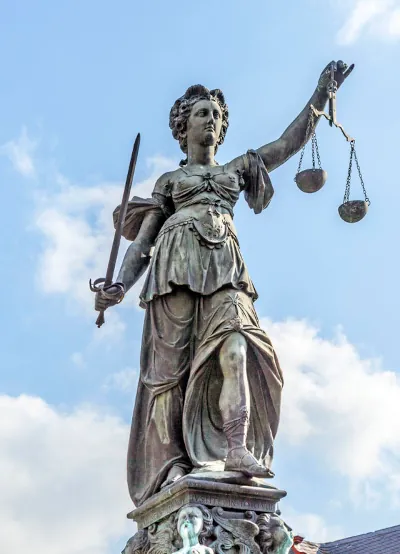
Only through Action can we correct a situation and deliver Justice.
(Notice Justice is NOT blindfolded so she sees her scales and is ready to use her sword. She is ready to ACT.)
Contrary to our narratives and the stereotypes women have a long history of taking Action and improving civilization.
Our Action helped end slavery, expand voting rights, improve health and sanitary conditions, improve labor conditions, reduce childhood mortality, win wars and secure our equal rights.
Women’s Action is powerful.
It makes our workplace, community and society better.
That is why we need to be leery when someone tells us, “Words Matter.” We need to question if they trying to sell us something. Or are they trying to dissuade us from using the power of our Action?
Remember:
History books are written about the people who believe Action matters and recited by people who believe Words matter.
We need more women taking Action and making it into our history books.
In spite of all of the workplace advice women are given I’ve noticed there is one topic that is seldom discussed – the importance of Informal Power.
Instead, we focus our attention on women achieving Formal Power. I presume this is because Formal Power is an easy measuring stick for how far women are climbing up the corporate ladder. However, when we focus on Formal Power, we neglect to mention that success isn’t only measured only by job title and status.
Real workplace success is measured by our effectiveness and ability to get things done.
In reality, Formal Power has very little to do with being effective. All our Formal Power does is give us the authority and responsibility associated with our role and title.
Formal power doesn’t guarantee we will be respected or have the power to influence and create change.
When I began my career as an Air Force 2nd Lt. this is the very first lesson men taught me.
As a 2nd Lt., I was an officer and had Formal Power over all of the enlisted ranks. However, they reminded me that the Senior NCO’s in the enlisted ranks had Informal Power over me.
So, even though I “outranked” them, I could not get the enlisted ranks to carry out any of my orders unless the Senior NCO’s respected me first.
As the only female officer, in-charge of an all-male operation, this should have been intimidating. However, I heeded their simple lesson:
Before I could effectively exercise Formal Power, I had to earn Informal Power.
So I did.
Informal Power is the ability to lead, direct or achieve without the title or status derived from Formal Power. It is all about You.
Informal Power is derived from your ability to build relationships that are based on Respect. In other words, before you can exercise Formal Power, you typically have to do things and achieve things. You have to take actions that earn you Respect.
As a woman I found the best way to earn tremendous informal power in a male-dominated workplace is:
Stand up for what is right and fair.
Correct an injustice, deal with an ignored personnel issue or end a bad practice. Men in our workplaces can be pretty conflict-adverse so there can be a lot of issues that the guys never addressed. These are golden opportunities for women to seize informal power.
In the later years of my career, when a new job gave me Formal Power, I still always assumed I had no Informal Power. So, I focused on building that first. It was my Informal Power then made me a force to be reckoned with whenever I chose to exercise my Formal Power.
Informal Power is the Power of Influence.
Long before women had any legal rights we mastered exercising our Influence and Informal Power. However, now that we are seeking Formal Power we’ve shunned Informal Power as an inferior form of power – only suitable for those who aren’t capable of obtaining Formal Power.
This dismissal of Informal Power then creates myths about Formal Power, giving it much more power and control than it really has. We lead women to believe that with Formal Power comes respect, influence and ability to impose our will.
It doesn’t.
The weakest and most ineffective manager is the one who relies only on their Formal Power. They use the powers of coercion and reward to make people respond. Or they withhold information, or they don’t offer the help of their connections or expertise. They work from personal insecurities to exercise control.
However, people can only take so much of that before they leave the workplace for another job or they rebel against their manager.
Rebellion sets up a workplace battle between the forces of Formal Power and the forces of Informal Power. In my experience Informal Power typically wins out in the end. We see this lesson throughout history – it is Informal Power that brought about every successful revolution, rebellion and major social change.
So, let’s stop giving Formal Power more clout than it deserves.
Remember, Real Power comes from Informal Power.
And Formal Power if awarded correctly, is the earned authority and responsibility to exercise our Informal Power in the best interests of everyone in our workplace.
In the mid-1970’s I decided I wanted to be an engineer. I didn’t have any role models, except for maybe, sort of, Barbara Walters who I met when I was 15. I told her I wanted to be an aerospace engineer and she told me to go for it and not let the men stop me. She confirmed that it was up to me to make my dreams happen.
The idea that I needed a female role model – a female engineer to mentor me – never really occurred to me, partly because I don’t know where I would have found one. But mostly it was because I didn’t know what purpose a female role model served other than to set an example – If she can do it then, I can do it too.
I knew lots of boys who had role models or sports heroes – men they wanted to emulate or who inspired them. Most boys never met or worked with their role models.
Their role models just set high performance bars and showed them what was possible. Each boy knew he had to find it within himself if he wanted to reach or exceed the bar set by his role model.
As a young woman going into a traditionally male career field, I identified with the male concept of inspirational role models. But I also I found male role models in my workplaces – men who set a high performance bar and inspired me to achieve more. I thought, “If he can do it then, I can do it too…and probably better.”
I made it through my career without any female role models. Looking back would they have helped?
Maybe, but probably not.
The few women I met who could have been a role model, well let’s just say that some didn’t have good relationships with their male colleagues. They wouldn’t have been a good source of advice. I also knew lots of other “professional” women who worked in secondary or support roles. However, in their roles, they didn’t have to compete with men for a promotion. We didn’t face the same obstacles.
Looking back, I realize that the type of female role model that would have been helpful would have been a woman who saw herself as an equal professional to her male colleagues, but who also knew how to leverage herself as a woman.
So yes, some professional womanly workplace wisdom would have been nice. That way I wouldn’t of had to figure it out on my own.
Today, our narratives cite the lack of female role models in the workplace as one of the reasons women aren’t advancing in their careers and in certain professions. They say women need female role models.
However, from my experience I have a problem with why they say women need role models.
According to too many articles, young women need other women they hold in high esteem to give them “a sense of personal acceptance, approval and validation.” Female role models “give young women permission to be in the workplace” and provide a “support system.”
Wow.
That sounds so 1970’s. It reminds me of the stereotypes that say women can’t function as individuals. That we, poor little women, need the constant support of other women because we don’t have what it takes to make it.
I also suspect that these narratives are driven in part by our media-driven culture that promotes certain female role models not so much as to help women, but to boost the image of the female role model.
So, let’s be honest about the type of help and guidance women really need.
Women should have professional role models.
Our role models can be either male or female. They inspire women to think bigger, grow professionally and strive for more.
Women need professional mentors in their workplace.
Again, they can be either male or female. Mentors teach women teamwork, leadership and the skills necessary for their industry. A mentor helps groom a woman for the next step(s) in her career.
Women should have female role models who broke through barriers and achieved something few other women have. Female role models inspire women to think bigger and try something they never considered themselves doing.
Female role models are especially helpful for girls and women who were conditioned to be in a box. Some women were taught falsehoods about what women CAN’T do. Others were taught falsehoods about what women SHOULDN’T do. Female role models help women break free of their box and explore who they can be.
Women need female mentors to help them understand and assert the value of their feminine self in the (male-dominated) workplace. Female mentors help women realize that women are one half of the whole and the only way a workplace can achieve its highest potential is by women asserting themselves. Female mentors remind women, “Our workplaces need us.”
Women also need female mentors to help them navigate how to be a 21st century woman who wants a strong marriage, a family and a career. We are still in the very early stages of figuring out how women can have it all and do it all. And figuring that out will require a big female group effort.
While role models and mentors inspire and guide us, we have to remember one thing:
It still always comes down to us.
We still need to have the drive, self-confidence and sense-of-self to grow, overcome challenges, achieve our potential and have the life we desire.
Only we can make our dreams and aspirations a reality.
Empowered Women Use the Wisdom of Others and Share Their Wisdom
I’ve noticed a trend in social media posts – women are offended at being the woman in the room. They are offended when other people are surprised to see a woman in a predominantly or historically male role.
A common refrain is:
“It is so unfair that I have to break through these barriers …that I have to deal with people who don’t understand that a woman can do this job.”
I have to be honest, my reaction is, “OMG – get over it!”
Reflecting back over my career, whenever I was introduced to people they included my non-traditional accolades
Civil Engineer
Air Force Officer Veteran
Construction Project Manager
Construction Company Manager
A woman who spent her career supervising men
Yes, most people looked at me as if I was some kind of alien creature. They didn’t know what to make of me. As for me, I enjoyed my power to mess with their minds and eventually shatter their preconceived notions and stereotyped expectations.
I was never offended by their reaction. I saw myself as broadening their perceptions. I was their educator as to the possibilities of what women can do.
I am proud to be the woman in the room, the woman on the construction site and the woman in charge of the men. I am proud of all the obstacles I’ve overcome and barriers I broke through. I am proud of all perceptions I’ve changed and all the times I inspired men to want more for the women in their lives. I am especially proud of all the times I exceeded expectations and out-performed all of my male colleagues.
Being the woman in the room made me the woman I am today, a woman who is helping forge a new path for women that allows all of us to become the women we have the potential to be.
So no, I don’t get the drama and distress women have because they are the woman in the room. They are continuing to widen the path so more women can follow. They are continuing the mission to advance women in the workplace.
Actually, let me take that back. I do understand what is causing women to be more upset than proud – social media.
When I began this website in 2012, I realized that the posts and blogs about “advancing women” didn’t provide actionable advice. They were more interested in generating clicks and “likes” than in actually advancing women. It is the age-old marketing tactic of playing to women’s emotions.
Over the years this marketing tactic has evolved. The current trend is to write posts that make women react with empathy and play to our tend and befriend response to stress. So, when a fellow woman writes about being offended or treated unfairly, our instinctive female response is to befriend her and respond with sensitivity and empathy…generating lots of click, “Likes” and comments…which generate revenue.
Coincidentally as I was drafting this article I received an email from a woman’s organization containing a link to a woman who talked about how to generate more followers on social media. About 1 minute into her talk, she said, “create empathy.”
Once you become aware of how we are being manipulated you will see lots of posts and blogs that create an empathetic reaction. Some of the story lines include:
It’s lonely – no one looks like me.
I don’t have a female role model
It feels like everyone is critical
I tried but it was hard to interact with my male coworkers
I feel like no matter what I do, it isn’t good enough
I’m not heard – they don’t listen to my ideas
My dream job turned into a nightmare because of the men
Let’s be honest.
These types of posts don’t help women.
They discourage women.
So, we need to wise up. We need see how women are being used, manipulated and played. How so many efforts to “advance women” are actually designed to hold us back.
We have the power to disrupt the industry so, lets do it. Let’s show that women aren’t just empathetic reactions – we can think and solve situations.
We need to reject empathy-triggering posts and change the discussion. When a post discusses an unfair or offensive action, we need to ask:
What did you do about it?
Did you stand up for yourself?
How did you resolve it?”
What lesson can other women learn from your experience?
We need to demand solutions.
Those of us who are or have been the woman in the room should take the lead in this effort. We should be the biggest advocates and spokeswomen for women. We should seize opportunities to broaden people’s perspectives and even blow a few minds. We should be proud of what we accomplished and the contribution we’e made to advancing women.
Every woman who has been the woman in the room knows it can be challenging and also lonely.
So, let’s give the woman in the room some female companionship.
Let’s make The Woman In The Room, The Women In The Room.
Empowered Women Are Proud To Be The Woman In The Room
“You never know what is going to happen in life so go to college and get a degree that will allow you to support your family on your own.”
That turned out to be really good advice, especially after I got divorced.
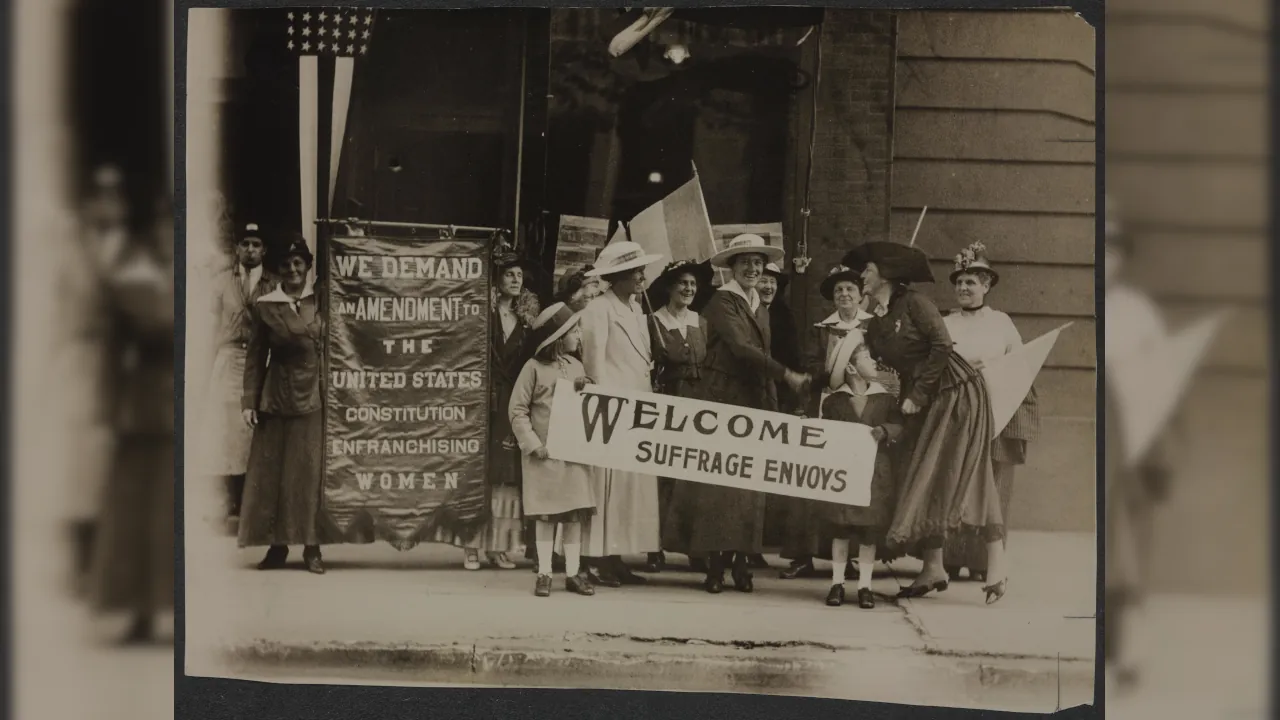
Given my father’s generation, his advice was unusual, but not original. As it turns out, he was channeling the Woman’s Suffrage movement.
While we typically associate Suffragettes with voting rights for women, their deeper purpose was to deliver women from the vulnerability of dependency. They wanted women to have the opportunity to fully develop themselves as individuals and reach their full potential.
To do this, Suffragettes understood that women had to step out from under the protective shadow of men and assume responsibility for their own lives.
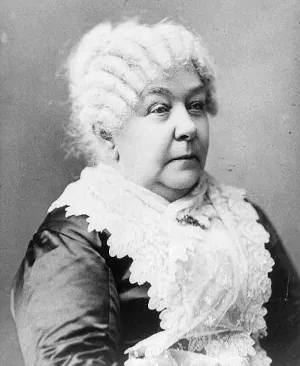
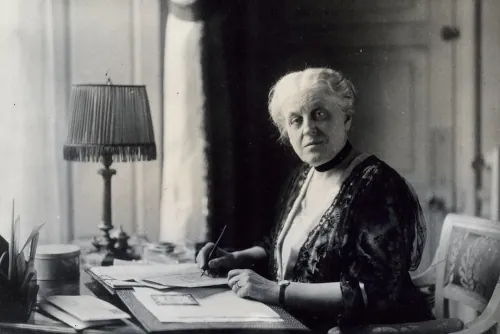
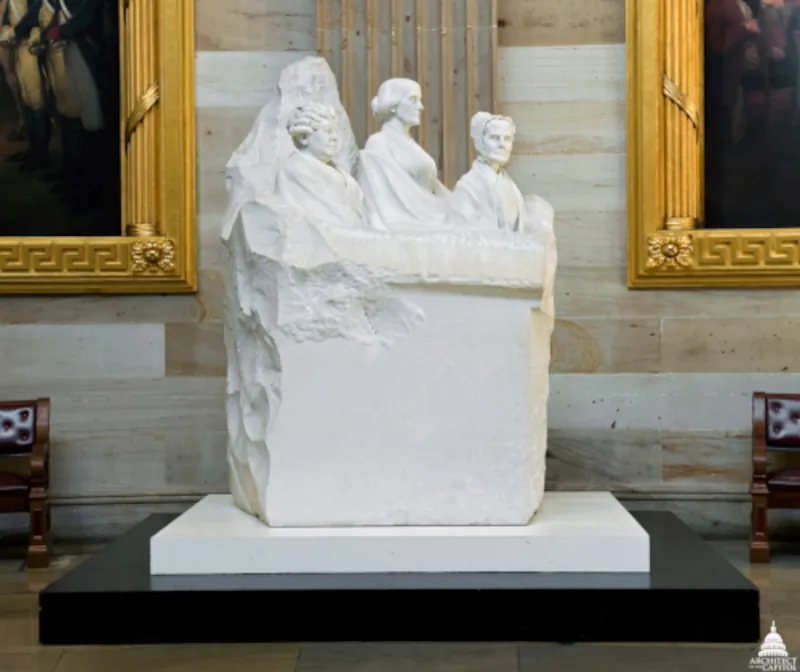
The most prominent advocate for this was Elizabeth Cady Stanton who on January 18, 1892 delivered a powerful speech before Congress:
“The Solitude of Self”.
In her speech she stated that women needed equality and the same opportunities as men “because of her birthright to self-sovereignty [and] because, as an individual, she must rely on herself.”
In 1892 the idea that a woman “must rely on herself” was radical because society said it was men’s duty to protect women. But Stanton raised a good point: What happens to a woman and her children if her husband dies or abandons her?
“The talk of sheltering woman from the fierce sterns of life is the sheerest mockery, for they beat on her from every point of the compass, just as they do on man, and with more fatal results, for he has been trained to protect himself, to resist, to conquer.”
Stanton argued that a woman who hasn’t been prepared to rely on herself through hardships and adversities will struggle and suffer because we bear these situations in solitude.
Stanton carries this idea deeper and become insightful about how much of ourselves we never share with others. It is this “solitude” that is inherent to every human soul. It is this solitude that women must be prepared to deal with as an individual.
“In youth our most bitter disappointments, our brightest hopes and ambitions are known only to ourselves; even our friendship and love we never fully share with another; there is something of every passion in every situation we conceal. Even so in our triumphs and our defeats.”
Stanton argued that education and exposure to the public sphere (the larger world outside the home) gives women the knowledge and experience to help us survive the most adverse conditions that are certainly to come into each of our lives. She reminds us that no matter who we are, what our station in life, we still bear these situations in solitude.
“Such are the facts in human experience, the responsibilities of individual. Rich and poor, intelligent and ignorant, wise and foolish, virtuous and vicious, man and woman, it is ever the same, each soul must depend wholly on itself.”
“The great lesson that nature seems to teach us at all ages is self-dependence, self-protection, self-support.”
Today, we teach women that they have the right to self-sovereignty, but we still don’t emphasize enough the lesson my father taught me – the necessity for self-dependence and self-support.
We still encourage women to believe that marriage and/or the protection by a man or government provides us with a safety net. We still believe marriage is the escape hatch that gets us off the hook from having to face the adversities and hard parts of life – we can shift all of that or the majority of that to our husband to deal with.
If we marry well (marry a kind, wealthy or protective man), then we will be rewarded with a leisurely life. We will be free from the drudgery of chores because we can hire someone to do them. We don’t have to worry about finances – our husband can be responsible for the family finances. We don’t have to push ourselves forward in our career. Our career can be secondary to our husband’s, so we are free to pursue our (low paying) passion.
We don’t recognize how all of this erodes our equality as a self-sufficient individual and also diminishes our ability to realize our full potential and find self-fulfillment.
“Nothing strengthens the judgment and quickens the conscience like individual responsibility. Nothing adds such dignity to character as the recognition of one’s self-sovereignty, the right to an equal place, everywhere conceded; a place earned by personal merit, not an artificial attainment by inheritance, wealth, family, and position. “
Many of us were never taught how to be a full and complete individual in our own right or that we even needed to be. Media teaches us that we need a man to complete us – we all know the movie line, “You complete me.”
Today, many parents protect their children (their little princesses) too much from the realities and responsibilities of life. Parents think they are helping their children when in fact they rob them of the skills for self-sufficiency.
And even though many women get a college degree, what job skills and financial security does that degree provide?
So, the idea that women can be full and complete by ourselves, can be as foreign today as it was over 100 years ago.
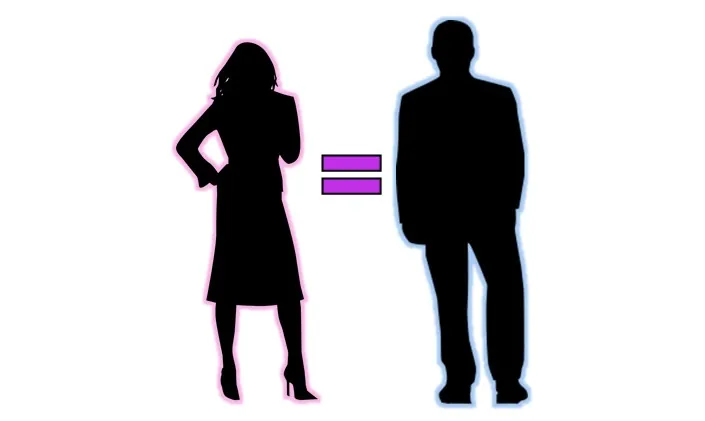
The Woman’s Suffrage movement fought for women to be the full Equals of men. This means each of us must be self-reliant, self-supporting, self-protective and strive to develop ourselves to our full potential as a unique individual.
Empowered Women Are Self-Reliant Individuals
And to learn more, watch this YouTube video:
Below is Elizabeth Cady Stanton’s full speech. It will make you think about your own life.
I highlighted the more relevant sections, so you don’t have to read all of it.
SOLITUDE OF SELF
Delivered by Mrs. Stanton before the Committee of the Judiciary of the United States Congress
Monday, January 18, 1892
Mr. Chairman and gentlemen of the committee: We have been speaking before Committees of the Judiciary for the last twenty years, and we have gone over all the arguments in favor of a sixteenth amendment which are familiar to all you gentlemen; therefore, it will not be necessary that I should repeat them again.
The point I wish plainly to bring before you on this occasion is the individuality of each human soul; our Protestant idea, the right of individual conscience and judgment–our republican idea, individual citizenship. In discussing the rights of woman, we are to consider, first, what belongs to her as an individual, in a world of her own, the arbiter of her own destiny, an imaginary Robinson Crusoe with her woman Friday on a solitary island. Her rights under such circumstances are to use all her faculties for her own safety and happiness.
Secondly, if we consider her as a citizen, as a member of a great nation, she must have the same rights as all other members, according to the fundamental principles of our Government.
Thirdly, viewed as a woman, an equal factor in civilization, her rights and duties are still the same–individual happiness and development.
Fourthly, it is only the incidental relations of life, such as mother, wife, sister, daughter, that may involve some special duties and training. In the usual discussion in regard to woman’s sphere, such as men as Herbert Spencer, Frederic Harrison, and Grant Allen uniformly subordinate her rights and duties as an individual, as a citizen, as a woman, to the necessities of these incidental relations, some of which a large class of woman may never assume. In discussing the sphere of man we do not decide his rights as an individual, as a citizen, as a man by his duties as a father, a husband, a brother, or a son, relations some of which he may never fill. Moreover he would be better fitted for these very relations and whatever special work he might choose to do to earn his bread by the complete development of all his faculties as an individual.
Just so with woman. The education that will fit her to discharge the duties in the largest sphere of human usefulness will best fit her for whatever special work she may be compelled to do.
The isolation of every human soul and the necessity of self-dependence must give each individual the right, to choose his own surroundings.
The strongest reason for giving woman all the opportunities for higher education, for the full development of her faculties, forces of mind and body; for giving her the most enlarged freedom of thought and action; a complete emancipation from all forms of bondage, of custom, dependence, superstition; from all the crippling influences of fear, is the solitude and personal responsibility of her own individual life. The strongest reason why we ask for woman a voice in the government under which she lives; in the religion she is asked to believe; equality in social life, where she is the chief factor; a place in the trades and professions, where she may earn her bread, is because of her birthright to self-sovereignty; because, as an individual, she must rely on herself.
No matter how much women prefer to lean, to be protected and supported, nor how much men desire to have them do so, they must make the voyage of life alone, and for safety in an emergency they must know something of the laws of navigation. To guide our own craft, we must be captain, pilot, engineer; with chart and compass to stand at the wheel; to match the wind and waves and know when to take in the sail, and to read the signs in the firmament over all. It matters not whether the solitary voyager is man or woman.
Nature having endowed them equally, leaves them to their own skill and judgment in the hour of danger, and, if not equal to the occasion, alike they perish.
To appreciate the importance of fitting every human soul for independent action, think for a moment of the immeasurable solitude of self. We come into the world alone, unlike all who have gone before us; we leave it alone under circumstances peculiar to ourselves. No mortal ever has been, no mortal over will be like the soul just launched on the sea of life. There can never again be just such environments as make up the infancy, youth and manhood of this one. Nature never repeats herself, and the possibilities of one human soul will never be found in another. No one has ever found two blades of ribbon grass alike, and no one will never find two human beings alike. Seeing, then, what must be the infinite diversity in human, character, we can in a measure appreciate the loss to a nation when any large class of the people in uneducated and unrepresented in the government. We ask for the complete development of every individual, first, for his own benefit and happiness. In fitting out an army we give each soldier his own knapsack, arms, powder, his blanket, cup, knife, fork and spoon. We provide alike for all their individual necessities, then each man bears his own burden.
Again we ask complete individual development for the general good; for the consensus of the competent on the whole round of human interest; on all questions of national life, and here each man must bear his share of the general burden. It is sad to see how soon friendless children are left to bear their own burdens before they can analyze their feelings; before they can even tell their joys and sorrows, they are thrown on their own resources. The great lesson that nature seems to teach us at all ages is self-dependence, self-protection, self-support. What a touching instance of a child’s solitude; of that hunger of heart for love and recognition, in the case of the little girl who helped to dress a Christmas tree for the children of the family in which she served. On finding there was no present for herself she slipped away in the darkness and spent the night in an open field sitting on a stone, and when found in the morning was weeping as if her heart would break. No mortal will ever know the thoughts that passed through the mind of that friendless child in the long hours of that cold night, with only the silent stars to keep her company. The mention of her case in the daily papers moved many generous hearts to send her presents, but in the hours of her keenest sufferings she was thrown wholly on herself for consolation.
In youth our most bitter disappointments, our brightest hopes and ambitions are known only to otherwise, even our friendship and love we never fully share with another; there is something of every passion in every situation we conceal. Even so in our triumphs and our defeats.
The successful candidate for Presidency and his opponent each have a solitude peculiarly his own, and good form forbide either in speak of his pleasure or regret. The solitude of the king on his throne and the prisoner in his cell differs in character and degree, but it is solitude nevertheless.
We ask no sympathy from others in the anxiety and agony of a broken friendship or shattered love. When death sunders our nearest ties, alone we sit in the shadows of our affliction. Alike mid the greatest triumphs and darkest tragedies of life we walk alone. On the divine heights of human attainments, eulogized land worshiped as a hero or saint, we stand alone. In ignorance, poverty, and vice, as a pauper or criminal, alone we starve or steal; alone we suffer the sneers and rebuffs of our fellows; alone we are hunted and hounded through dark courts and alleys, in by-ways and highways; alone we stand in the judgment seat; alone in the prison cell we lament our crimes and misfortunes; alone we expiate them on the gallows. In hours like these we realize the awful solitude of individual life, its pains, its penalties, its responsibilities; hours in which the youngest and most helpless are thrown on their own resources for guidance and consolation. Seeing then that life must ever be a march and a battle, that each soldier must be equipped for his own protection, it is the height of cruelty to rob the individual of a single natural right.
To throw obstacles in the way of a complete education is like putting out the eyes; to deny the rights of property, like cutting off the hands. To deny political equality is to rob the ostracized of all self-respect; of credit in the market place; of recompense in the world of work; of a voice among those who make and administer the law; a choice in the jury before whom they are tried, and in the judge who decides their punishment. Shakespeare’s play of Titus and Andronicus contains a terrible satire on woman’s position in the nineteenth century–“Rude men” (the play tells us) “seized the king’s daughter, cut out her tongue, out off her hands, and then bade her go call for water and wash her hands.” What a picture of woman’s position. Robbed of her natural rights, handicapped by law and custom at every turn, yet compelled to fight her own battles, and in the emergencies of life to fall back on herself for protection.
The girl of sixteen, thrown on the world to support herself, to make her own place in society, to resist the temptations that surround her and maintain a spotless integrity, must do all this by native force or superior education. She does not acquire this power by being trained to trust others and distrust herself. If she wearies of the struggle, finding it hard work to swim upstream, and allow herself to drift with the current, she will find plenty of company, but not one to share her misery in the hour of her deepest humiliation. If she tried to retrieve her position, to conceal the past, her life is hedged about with fears last willing hands should tear the veil from what she fain would hide. Young and friendless, she knows the bitter solitude of self.
How the little courtesies of life on the surface of society, deemed so important from man towards woman, fade into utter insignificance in view of the deeper tragedies in which she must play her part alone, where no human aid is possible.
The young wife and mother, at the head of some establishment with a kind husband to shield her from the adverse winds of life, with wealth, fortune and position, has a certain harbor of safety, occurs against the ordinary ills of life. But to manage a household, have a desirable influence in society, keep her friends and the affections of her husband, train her children and servants well, she must have rare common sense, wisdom, diplomacy, and a knowledge of human nature. To do all this she needs the cardinal virtues and the strong points of character that the most successful statesman possesses.
An uneducated woman, trained to dependence, with no resources in herself must make a failure of any position in life. But society says women do not need a knowledge of the world, the liberal training that experience in public life must give, all the advantages of collegiate education; but when for the lock of all this, the woman’s happiness is wrecked, alone she bears her humiliation; and the attitude of the weak and the ignorant in indeed pitiful in the wild chase for the price of life they are ground to powder.
In age, when the pleasures of youth are passed, children grown up, married and gone, the hurry and hustle of life in a measure over, when the hands are weary of active service, when the old armchair and the fireside are the chosen resorts, then men and women alike must fall back on their own resources. If they cannot find companionship in books, if they have no interest in the vital questions of the hour, no interest in watching the consummation of reforms, with which they might have been identified, they soon pass into their dotage. The more fully the faculties of the mind are developed and kept in use, the longer the period of vigor and active interest in all around us continues. If from a lifelong participation in public affairs a woman feels responsible for the laws regulating our system of education, the discipline of our jails and prisons, the sanitary conditions of our private homes, public buildings, and thoroughfares, an interest in commerce, finance, our foreign relations, in any or all of these questions, here solitude will at least be respectable, and she will not be driven to gossip or scandal for entertainment.
The chief reason for opening to every soul the doors to the whole round of human duties and pleasures is the individual development thus attained, the resources thus provided under all circumstances to mitigate the solitude that at times must come to everyone.
I once asked Prince Krapotkin, the Russian nihilist, how he endured his long years in prison, deprived of books, pen, ink, and paper. “Ah,” he said, “I thought out many questions in which I had a deep interest. In the pursuit of an idea I took no note of time. When tired of solving knotty problems I recited all the beautiful passages in prose or verse I have ever learned. I became acquainted with myself and my own resources. I had a world of my own, a vast empire, that no Russian jailor or Czar could invade.” Such is the value of liberal thought and broad culture when shut off from all human companionship, bringing comfort and sunshine within even the four walls of a prison cell.
As women of times share a similar fate, should they not have all the consolation that the most liberal education can give? Their suffering in the prisons of St. Petersburg; in the long, weary marches to Siberia, and in the mines, working side by side with men, surely call for all the self-support that the most exalted sentiments of heroism can give. When suddenly roused at midnight, with the startling cry of “fire! fire!” to find the house over their heads in flames, do women wait for men to point the way to safety? And are the men, equally bewildered and half suffocated with smoke, in a position to more than try to save themselves?
At such times the most timid women have shown a courage and heroism in saving their husbands and children that has surprise everybody. Inasmuch, then, as woman shares equally the joys and sorrows of time and eternity, is it not the height of presumption in man to propose to represent her at the ballot box and at the throne of grace, do her voting in the state, her praying in the church, and to assume the position of priest at the family alter.
Nothing strengthens the judgment and quickens the conscience like individual responsibility. Nothing adds such dignity to character as the recognition of one’s self-sovereignty; the right to an equal place, everywhere conceded; a place earned by personal merit, not an artificial attainment, by inheritance, wealth, family, and position. Seeing, then that the responsibilities of life rests equally on man and woman, that their destiny is the same, they need the same preparation for time and eternity. The talk of sheltering woman from the fierce sterns of life is the sheerest mockery, for they beat on her from every point of the compass, just as they do on man, and with more fatal results, for he has been trained to protect himself, to resist, to conquer. Such are the facts in human experience, the responsibilities of individual. Rich and poor, intelligent and ignorant, wise and foolish, virtuous and vicious, man and woman, it is ever the same, each soul must depend wholly on itself.
Whatever the theories may be of woman’s dependence on man, in the supreme moments of her life he cannot bear her burdens. Alone she goes to the gates of death to give life to every man that is born into the world. No one can share her fears, no one mitigate her pangs; and if her sorrow is greater than she can bear, alone she passes beyond the gates into the vast unknown.
From the mountain tops of Judea, long ago, a heavenly voice bade His disciples, “Bear ye one another’s burdens,” but humanity has not yet risen to that point of self-sacrifice, and if ever so willing, how few the burdens are that one soul can bear for another. In the highways of Palestine; in prayer and fasting on the solitary mountain top; in the Garden of Gethsemane; before the judgment seat of Pilate; betrayed by one of His trusted disciples at His last supper; in His agonies on the cross, even Jesus of Nazareth, in these last sad days on earth, felt the awful solitude of self. Deserted by man, in agony he cries, “My God! My God! why hast Thou forsaken me?” And so it ever must be in the conflicting scenes of life, on the long weary march, each one walks alone. We may have many friends, love, kindness, sympathy and charity to smooth our pathway in everyday life, but in the tragedies and triumphs of human experience each moral stands alone.
But when all artificial trammels [restrictions] are removed, and women are recognized as individuals, responsible for their own environments, thoroughly educated for all the positions in life they may be called to fill; with all the resources in themselves that liberal though and broad culture can give; guided by their own conscience an judgment; trained to self-protection by a healthy development of the muscular system and skill in the use of weapons of defense, and stimulated to self-support by the knowledge of the business world and the pleasure that pecuniary [financial] independence must ever give; when women are trained in this way they will, in a measure, be fitted for those hours of solitude that come alike to all, whether prepared or otherwise. As in our extremity we must depend on ourselves, the dictates of wisdom point of complete individual development.
In talking of education how shallow the argument that each class must be educated for the special work it proposed to do, and all those faculties not needed in this special walk must lie dormant and utterly wither for want of use, when, perhaps, these will be the very faculties needed in life’s greatest energies.Some say, Where is the use of drilling series in the languages, the Sciences, in law, medicine, theology? As wives, mothers, housekeepers, cooks, they need a different curriculum from boys who are to fill all positions. The chief cooks in our great hotels and ocean steamers are men. In large cities men run the bakeries; they make our bread, cake and pies. They manage the laundries; they are now considered our best milliners and dressmakers. Because some men fill these departments of usefulness, shall we regulate the curriculum in Harvard and Yale to their present necessities? If not why this talk in our best colleges of a curriculum for girls who are crowding into the trades and professions; teachers in all our public schools rapidly hiring many lucrative and honorable positions in life? They are showing too, their calmness and courage in the most trying hours of human experience.
You have probably all read in the daily papers of the terrible storm in the Bay of Biscay when a tidal wave such havoc on the shore, wrecking vessels, unroofing houses and carrying destruction everywhere. Among other buildings the woman’s prison was demolished. Those who escaped saw men struggling to reach the shore. They promptly by clasping hands made a chain of themselves and pushed out into the sea, again and again, at the risk of their lives until they had brought six men to shore, carried them to a shelter, and did all in their power for their comfort and protection.
What special school of training could have prepared these women for this sublime moment of their lives. In times like this humanity rises above all college curriculums and recognizes Nature as the greatest of all teachers in the hour of danger and death. Women are already the equals of men in the whole of ream of thought, in art, science, literature, and government. With telescope vision they explore the starry firmament and bring back the history of the planetary world. With chart and compass they pilot ships across the mighty deep, and with skillful finger send electric messages around the globe. In galleries of art the beauties of nature and the virtues of humanity are immortalized by them on their canvas and by their inspired touch dull blocks of marble are transformed into angels of light.
In music they speak again the language of Mendelssohn, Beethoven, Chopin, Schumann, and are worthy interpreters of their great thoughts. The poetry and novels of the century are theirs, and they have touched the keynote of reform in religion, politics, and social life. They fill the editor’s and professor’s chair, and plead at the bar of justice, walk the wards of the hospital, and speak from the pulpit and the platform; such is the type of womanhood that an enlightened public sentiment welcomes today, and such the triumph of the facts of life over the false theories of the past.
Is it, then, consistent to hold the developed woman of this day within the same narrow political limits as the dame with the spinning wheel and knitting needle occupied in the past? No! no! Machinery has taken the labors of woman as well as man on its tireless shoulders; the loom and the spinning wheel are but dreams of the past; the pen, the brush, the easel, the chisel, have taken their places, while the hopes and ambitions of women are essentially changed.
We see reason sufficient in the outer conditions of human being for individual liberty and development, but when we consider the self-dependence of every human soul we see the need of courage, judgment, and the exercise of every faculty of mind and body, strengthened and developed by use, in woman as well as man.
Whatever may be said of man’s protecting power in ordinary conditions, mid all the terrible disasters by land and sea, in the supreme moments of danger, alone, woman must ever meet the horrors of the situation; the Angel of Death even makes no royal pathway for her. Man’s love and sympathy enter only into the sunshine of our lives. In that solemn solitude of self, that links us with the immeasurable and the eternal, each soul lives alone forever.A recent writer says:
I remember once, in crossing the Atlantic, to have gone upon the deck of the ship at midnight, when a dense black cloud enveloped the sky, and the great deep was roaring madly under the lashes of demoniac winds. My feelings was not of danger or fear (which is a base surrender of the immortal soul), but of utter desolation and loneliness; a little speck of life shut in by a tremendous darkness. Again I remember to have climbed the slopes of the Swiss Alps, up beyond the point where vegetation ceases, and the stunted conifers no longer struggle against the unfeeling blasts. Around me lay a huge confusion of rocks, out of which the gigantic ice peaks shot into the measureless blue of the heavens, and again my only feeling was the awful solitude.
And yet, there is a solitude, which each and every one of us has always carried with him, more inaccessible than the ice-cold mountains, more profound than the midnight sea; the solitude of self. Our inner being, which we call ourself, no eye nor touch of man or angel has ever pierced. It is more hidden than the caves of the gnome; the sacred adytum of the oracle; the hidden chamber of Eleusinian mystery, for to it only omniscience is permitted to enter.
Such is individual life. Who, I ask you, can take, dare take, on himself the rights, the duties, the responsibilities of another human soul?
Recently I read through the Action Plan of a women’s organization I was interested in joining. As I read, I kept wondering:
What action I am supposed to take?
What am I supposed to do?
This is a huge problem women have.
We have ideas, principles and values. Let’s call these Abstracts. We believe that when we state these Abstracts and say we support them, we are taking ACTION.
But that’s not action. It’s just words.
Here are some examples:
The organization supports funding of a public education system that results in the uniform opportunity for all students to master the attitudes, knowledge, and skills necessary to thrive in a competitive and changing world.
The organization supports voter registration procedures, voting options and systems that are accessible to all, easy to administer, and have appropriate security measures to prevent fraud or technology disruptions. The organization supports Voting Options of:
Early voting in person and by mail
Traditional polling places
Voting Centers
That sounds great but as a member of the organization:
What do I need to do?
What is the Action Plan to accomplish these objectives?
Loving sentiment but what is the issue and the action?
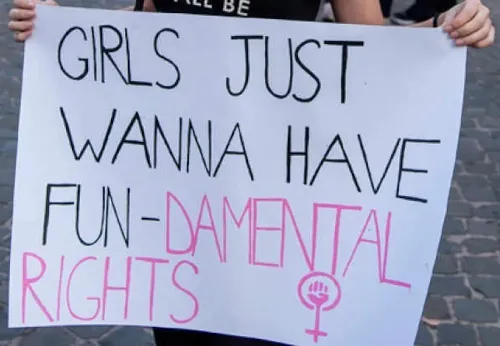
The mistake women commonly make is that we think that if we put an idea out there – create awareness by protesting – then some male-dominated entity should pick up our idea and run with it. We expect them to listen to our idea and exclaim:
“That is a wonderful idea! Let’s put Jack and Henry on it. They can figure out what needs to be done and present their solution to the President/CEO for approval. Thank you so much for bringing this deficiency to our attention. We are rewarding you with a promotion, raise or monument!”
Sorry, that’s not how it works.
A year ago, I criticized an article that was bemoaning how a group of women who wanted a better maternity leave policy in their company had to spend hundreds of hours of their own personal time to build the case, present it and convince their company to pass it. By the time it was enacted, all the women involved in advocating for the new policy were past the point in their lives when the new policy would benefit them.
The long list of women who commented were outraged that the company didn’t look at its own maternity leave policy and say “We need to change this!”
They were outraged that it took so long and the women had to spend their personal time and money on the issue. They were outraged that the women weren’t even going to benefit from it so the company needed to compensate them for their time.
I was taken aback that in the 21st century, so many women still have patriarchal views.
So, my comment was:
“Welcome to the real world ladies! This is how things get done and change is made. It takes hard work and sacrifice.”
Action by Who? Who do You want to act on the issue that is important to you?
For a while, I’ve been studying the Woman’s Suffrage movement. There’s no better example of women taking action on a specific issue to create change – because they did it without any legal rights!
This statement by Carrie Chapman Catt who developed “The Winning Plan” to get women the right to vote, discusses what it took:
“To get that word, ‘male’, out of the Constitution, cost the women of this country 52 years of pauseless campaign; 56 state referendum campaigns; 480 legislative campaigns to get state suffrage amendments submitted; 47 state constitutional convention campaigns; 277 state party convention campaigns; 30 national party convention campaigns to get suffrage planks in the party platforms; 19 campaigns with 19 successive Congresses to get the federal amendment submitted, and the final ratification campaign.”
They didn’t just protest and complain.
They did the hard work!
They developed an Action plan and worked the plan.
And many of the women who were the first leaders of the movement such as Lucretia Mott, Susan B. Anthony, Elizabeth Cady Stanton, Lucy Stone, Sojourner Truth…and the list goes on and on…never got to see their life’s work come to fruition.
After the 19th Constitutional Amendment was ratified, Carrie spoke about what it took to achieve it:
The vote is the emblem of your equality, women of America, the guarantee of your liberty. That vote of yours has cost millions of dollars and the lives of thousands of women. Money to carry on this work has been given usually as a sacrifice, and thousands of women have gone without things they wanted and could have had in order that they might help get the vote for you. Women have suffered agony of soul which you can never comprehend, that you and your daughters might inherit political freedom. That vote has been costly. Prize it!
Her words spoke to future generations of women to remind us that the work isn’t done and we must continue to ACT:
The vote is a power, a weapon of offense and defense, a prayer. Understand what it means and what it can do for your country. Use it intelligently, conscientiously, prayerfully. No soldier in the great suffrage army has labored and suffered to get a `place’ for you. Their motive has been the hope that women would aim higher than their own selfish ambitions, that they would serve the common good.
The vote is won. Seventy-two years the battle for this privilege has been waged, but human affairs with their eternal change move on without pause. Progress is calling to you to make no pause. Act!”
Suffragettes already gave you Fundamental Rights. Use them.
The Suffragettes worked hard so we could participate as equals in society, government and the workplace. They expected us to assert our rights and end the patriarchy. They expected us to continue the hard work of creating change to better our family, community, workplace and government.
If we just protest and expect men or the government (primarily men) to make changes on our behalf, then we let them down. We squander our rights, empowerment and equality.
And nothing changes or gets done.
The women who spent all the hours getting a better maternity leave policy did it for all of the womenin their company and to add to the momentum of better maternity leave policies for all women in all workplaces. They served the greater common good.
Women have always inspired society to aspire to higher ideals, values and principles. But to create the change that incorporates our values, ideals and aspirations into the way we work and live, requires hard work.
Whether or not we personally benefit from our action isn’t important. It’s important that our action benefits the greater and common good for all people.
Empowered Women Take Action For The Good Of All People