The true secret to success is being yourself – your true authentic self, full of strengths, weakness and quirks.
We all gladly embrace our strengths. We love to show them off. But we should also be proud of our weaknesses and quirks because through them we find real strength.
Embracing our weaknesses and quirks demonstrates confidence. Declaring them out in the open makes us strong.
We’re taught our weaknesses and quirks are something we should be ashamed of, so we try to hide them. That makes us vulnerable and insecure. We’re afraid of being found out. But when we put them out there – no one can hold anything over us – there is nothing left to expose. We have freedom.
For example, I can do many things as well as a man. I like to cycle and I like it when I pass younger men. It makes me feel good.
But don’t ask me to throw a ball. I throw like a girl.
No, actually a 6-year-old girl throws a ball better than me. When I was in middle school and we tried for the Presidential Fitness Award, I was the top girl in all of the physical tests except for throwing the softball. For two years, I didn’t get the Presidential Fitness Award because I couldn’t throw a freaking ball.
I can make business decisions and solve problems all day long. But don’t ask me where to eat. My mind literally goes blank and all I can say is “I dunno know.”
On weekends I get dressed to go out to eat but then drive around in circles because I can’t decide where to go. I wind up going home to eat.
Now that’s a quirk!
And I cannot tell left and right. All through elementary school I put my left hand, then my right hand then my left hand over my heart for the pledge of allegiance. My family knows that if I am driving and they tell me to turn left or right, they have to point. Ironically I can do izquierda y derecha (Spanish) with no problem. Weird huh?
Laugh at me. It’s funny. And I’m not embarrassed. It’s who I am.
At work when we share our little quirks with each other, we find out that each of has a peculiarity to laugh at ourselves about. We discover that we can help each other deal with our quirks and it feels good to help them.
My colleagues learned that when they ask me to go to lunch, I would reply “Sure, where are we going?”
I would go to any hole-in-the-wall eatery and eat anything as long as I didn’t have to decide.
Our quirks are what make us real, authentic and unique. They show we are human. So, embrace them and share them.
Empowered Women Embrace Who They Are, Quirks and All
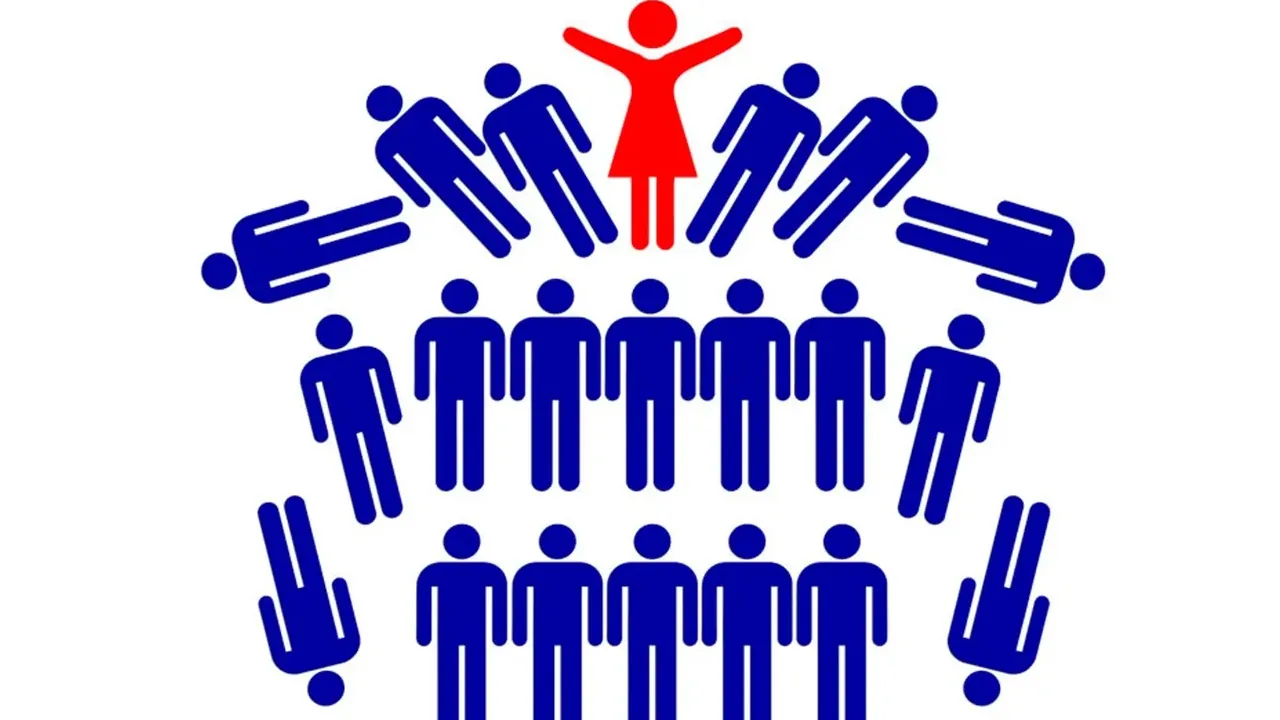
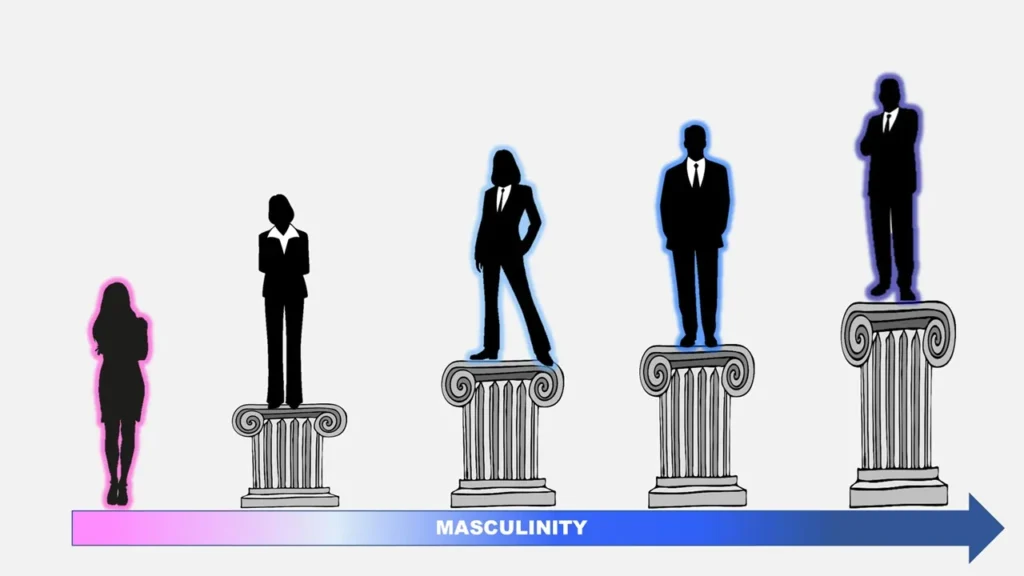
Women have a HUGE misperception about the male-dominated workplace that has done incredible damage to our efforts to advance.
Women work from a narrative that says men want to climb to the top so they can have POWER over others. Many women believe men aspire to control and dominate others – they want to be authoritarians, dictators and the king.
But if you think about it, that makes men sound really dysfunctional and as if all men are inherently insecure with control issues. And from our personal experience know most men aren’t like that. They are normal guys. However, the few that have real control issues – such as the powerful men who are sexual harassers – get a lot of attention and reinforce the narrative.
In reality, men don’t aspire to have power over others.
Men aspire to keep others from having power over them.
Men aspire to be autonomous
Men want to be independent and have self-determination.
They want to exercise their own judgement to do what they want, when they want, how they want. They don’t want to be treated like a child who has to ask permission or be told what to do.
Therefore, reason they really aspire to rise higher in the organization is so there are fewer people above them who can tell them what to do.
If you think about that too, you realize it is why every revolution, rebellion and resistance movement was fought. It is why there are very few monarchies left. Men fought for autonomy, self-determination and self-governance.
So, if men aspire to be autonomous then why do so many women believe men want POWER and are driven to protect their POWER structures?
To understand that, we have to go back in time to when women had no legal rights and were completely dependent on men. Women spent their lives in a precarious and vulnerable state. Their only means to attain financial security, power and status was to attach themselves, through marriage or family affiliation, to a strong man with those attributes. Therefore women needed to see the public sphere (the world of government and business) as the male proving ground where survival of the fittest played out and the strongest man rose to the top. Women used men’s success in the public sphere to measure how good of a marriage prospect he was.
Women saw the public sphere for what we needed it to be.
Our perceptions about how it functioned were formed by being on the outside looking in. They weren’t formed by actually watching and observing how men interact with each other in the workplace.
So, when women went into the male-dominated workplace we brought these perceptions with us. Consequently, we wrote our own narrative:
“Tear down to rise up.”
This narrative said women had to fight men for power. Women had to tear down men’s power structure in order for women to rise and take power for ourselves.
We weren’t shy about stating we wanted to be the CEO’s, on corporate boards and in top government positions for power. Once we obtained this power, we believed we could dictate new rules and exercise our control.
Ironically, women stated that we wanted to be just like the men we wanted to tear down.
However, women’s belief in how we thought the male-dominated workplace worked clashed with how it really worked.
Men who aspired to be autonomous, saw women’s quest for power and control as a threat to the autonomy they valued and the entire structure they built to promote their autonomy. Faced with this threat, men resisted the advancement of women.
For 40+ years, men and women have interacted through a huge misunderstanding of what the other wants and values.
Women interpreted men’s resistance to advancing women as men wanting to subjugate women. And when men treated women just like other men – like people who value autonomy – autonomy made women feel rejected.
To women autonomy feels like you are being left to fend for yourself, like no one supports you and you are in a sink or swim situation with no life preserver. It doesn’t feel like you are being treated as an equal to your male colleagues.
Autonomy makes women feel ostracized.
So when men treated women as their “equals”, women still saw it as men rejecting women in order to keep power for themselves. It reinforced the narrative that men work off a power and control structure and that women needed to tear down that structure. This in turn caused men to believe women worked off a power and control structure and men had to stop women in order to protect their autonomy.
We created a perpetual cycle of misunderstanding each other.
Even worse for women, men learned how to use women’s perception about the power and control structure against women. If women want to believe men have all the power and women assume they are in an inferior position, men, especially dysfunctional men, will take advantage of that.
I suspect that much of the harassment and bullying women experience is due in large part to this dynamic. Many men believe they will get away with it because women are taught, we are powerless victims who cannot overcome men’s power structure. And as I said earlier, these dysfunctional men get all of the media attention, which then perpetuates the cycle of misunderstanding.
Today we have a huge mess of misunderstandings and misperceptions we need to fix.
In order for women to achieve equality and parity with men, we must first change our perspective and stop buying into the power and control narrative. We have to see the male-dominated workplace for how it really functions and for the huge role AUTONOMY plays in its structure.
Women need to watch and listen to the men they work with.
Are men acting to have power and control over others?
Or, are they acting to preserve their AUTONOMY – to do what they want, when they want, how they want?
Are they being isolationists who want to pretend their actions don’t affect other people and resist other people’s actions affecting them?
Do they resist listening to others, wanting only their voice to be heard?
Do they take autonomy to an extreme by becoming selfish, self-centered and even narcissistic?
I guarantee that if you look around the male-dominated workplace you will be shocked by how AUTONOMY you see.
It’s rampant. If we tune into all those things that bug us about working with men, we will probably find autonomy as the cause.
When women learn to recognize autonomy and understand its power in the male-dominated workplace, we will finally put ourselves on the right path to realizing our own equality.
One more point.
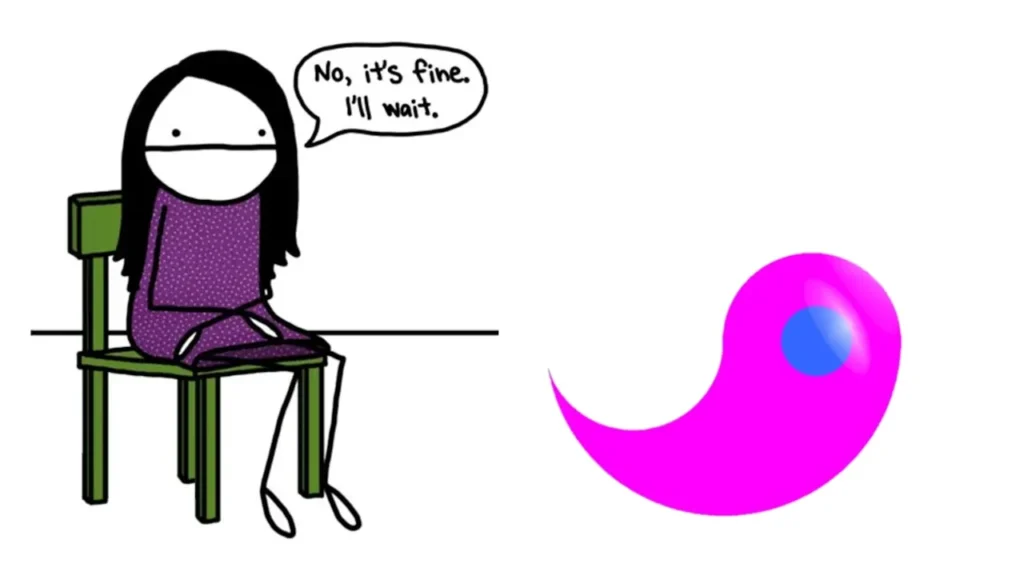
I use the Yin-Yang concept to describe the natural and correct interaction of men and women. Notice in this image there are no power and control mechanisms. It is about mutual influence and harmony.
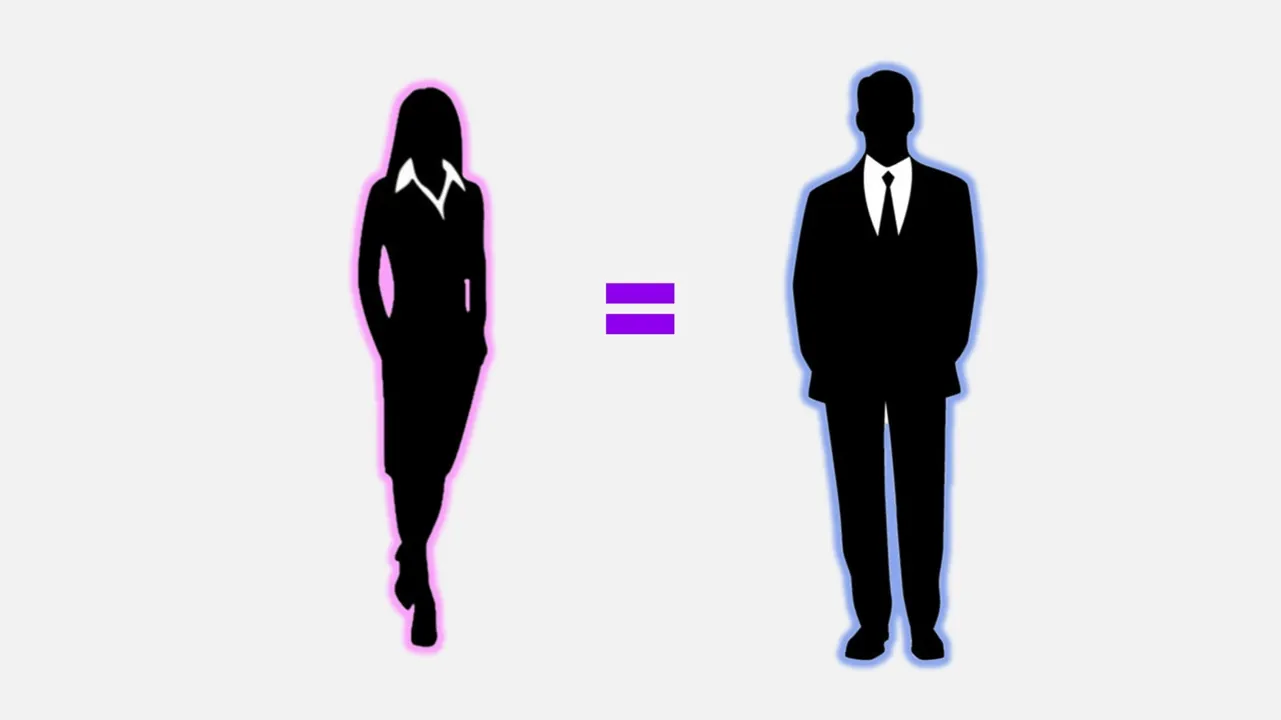
Therefore, for everything men do, women have a balancing, influencing reciprocal action. We are inherently equal.
However, women will never recognize and exercise our inherent equality if we continue to work off of bogus narratives. So, change your perspective. See the male-dominated workplace for how it really is.
Empowered Women See the Male-Dominated Workplace For How It Really Functions
When we talk about how women influence the male-dominated workplace we often say that women create balance. But that isn’t very impactful and it doesn’t portray the full power of women.
Often when we think of women balancing men, we equate it to men going too far and women tempering their efforts. It creates the perception that men are the driving force who get things done while carelessly going 120 mph. Women then, out of fear, apply the brakes and slow them down to 80 miles an hour.
However, this concept of balance doesn’t portray women as an equal driving force. It doesn’t portray women as capable of getting things done at 80 mph, or even 60 mph or 40 mph.
It only portrays women as fear driven.
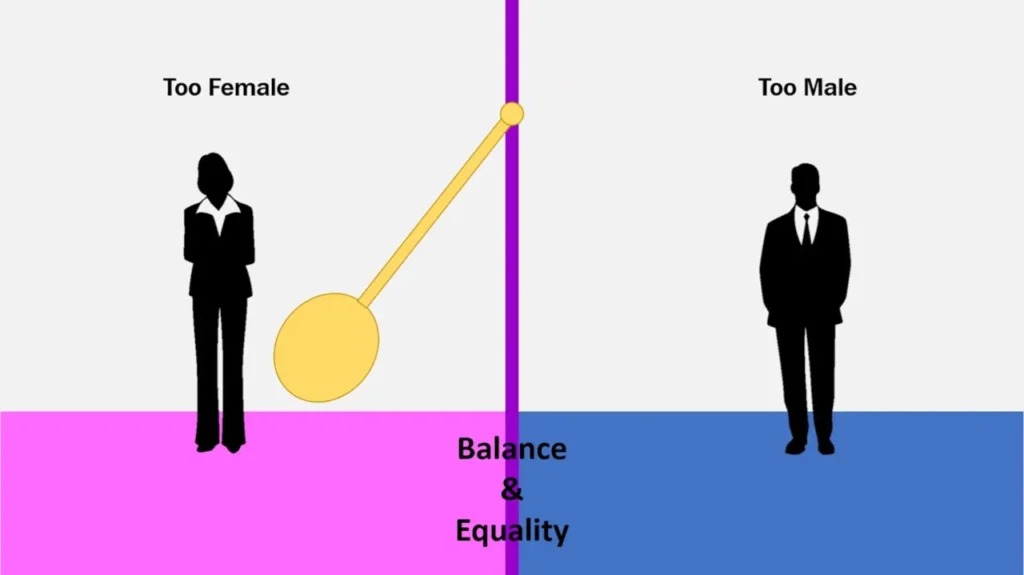
Another common way we think of balance is through pendulum swings.
For a while the pendulum swings in one direction. But then it goes too far causing things get out of balance and no longer function properly. In response we then swing the pendulum in the opposite direction…until it goes too far and we decide to swing it back in the opposite direction.
Whenever the pendulum is swinging upward, we think we are making progress and accomplishing great things. We push the pendulum to greater heights and greater extremes. We forget that we will eventually push the pendulum too far and cause it to come crashing down creating turmoil, chaos and negativity.
This drive to extremes and the resulting cataclysmic crashes are causing us to associate balance with high drama. But balance isn’t about drama. It is about two forces of equal strength and importance continuously interacting and influencing each other so they produce a steady state of harmony and equilibrium.
We find this type of balance in the concept of Yin and Yang.
When men and women apply Yin and Yang to themselves, they recognize that they are each one half of the whole and need each other for balanced action. As we picture the Yin and Yang acting on each other, we see them rotating in a circle. Yin and Yang each take turns being the driving force that pushes over the top to create the rotation.
Their rotation is gentle, peaceful and very efficient. There is none of that clumsy wasted energy we find in pendulum swings. Acting together, Yin and Yang build up energy and increase their momentum without falling out of balance.
If you read Jim Collins famous book Good to Great you remember him talking about the “flywheel effect.” He described the way the flywheel begins rotating as “a cumulative process – step-by-step, action-by-action, decision-by-decision, turn-by-turn of the flywheel – that adds up to sustained and spectacular results.”
But what he doesn’t say it that the flywheel mimics Yin and Yang interaction – it requires women to assert themselves as full equals in the workplace. Without women helping to complete the rotation, the flywheel becomes nothing more than a pendulum.
This explains why Collins’ flywheel companies like Circuit City couldn’t sustain their results and came crashing down.
Many companies avoid the crashes by moderating their pendulum swings. But this won’t create sustained and spectacular results.
That is why we need to stop thinking about balance and start thinking about working in wholeness.
Wholeness is a much larger concept than balance. Wholeness has the power to hold everything together and create unity. It doesn’t allow Yang to disregard Yin as it goes off to act independently or put itself first. Wholeness reminds Yang that its actions affect Yin and will cause Yin to act in response. Yin’s resulting actions will then impact Yang.
Wholeness creates a complete circle so an entity’s negative actions always come back to them. Likewise, so do their positive. Therefore, wholeness inspires people to act positively. And it is only through positive action that we can achieve sustained spectacular results.
Where we have gone wrong for centuries is believing in the great myth that men have the miraculous power to create wholeness all by themselves.
So, in comparison to women, men have all of this incredible power. Consequently, women have demanded men give up half of their power and give it to women. But in reality, men only have their half of the whole and only one half of the power.
Women’s half has been sitting off to the side patiently waiting for women to recognize it, realize its value and put it into action.
Men cannot put women’s half into action. As women we have to act on our own volition and do this ourselves. That after all is what equality and empowerment really are.
Whether or not we continue to function through wild pendulum swings or begin functioning like the flywheel is completely up to women. Because at this point, the power to create wholeness lies entirely with women. It depends on whether or not women recognize our inherent equality and put it into action.
For centuries the accepted answer was “None.” Even today most of us can still only give a vague answer. We hear that companies with more women perform better but we can’t specifically state why that is. Without a clear answer, women don’t know how to leverage themselves at work and companies don’t have an incentive to proclaim “We need to hire and promote more women!”
The reason we can’t define the value of women is because we are still influenced by old ideas. Most notably is the Doctrine of Two Spheres, which most of us probably never heard of even though we know its effects.
The Doctrine of Two Spheres states that men and women, due to their biological makeup naturally inhabit two distinct and separate spheres. According to the doctrine men naturally have traits suited for the public sphere (politics, law, business, commerce, academia and finance) while women naturally have traits suited for the private sphere (domesticity, child rearing and religious and charitable work). This doctrine determined that male traits set a superior standard in the workplace and female traits are of little to no value.
Back in the 20th century when women first went into the workplace to work on par with men, we didn’t question the validity of the doctrine. We didn’t declare women’s equality by saying:
“Female traits are just as important to workplace success as male traits!”
Instead, we sought women’s equality on the basis of “equality.” As women we had the right and the opportunity to go into the workplace however, we had to comply with the standards established by men.
Without the declaration that female traits are just as valuable as male traits, a woman couldn’t work on par with men by acting like a woman.
To be equal we had to be perceived as being the same as a man.
We had to leave our female traits behind in the private sphere and adopt male traits for the workplace. We could have the body of a woman, but we had to think and act like a man.
Many, many women still think this way.
The consequences of this have been enormous for women. We perpetuated the perception that men are superior and women inferior in the workplace. We made women choose between their femininity and having a career and financial security on par with men.
This choice keeps women out of many industries, jobs and professions, especially the highest paying. It is a major contributor to the wage gap. It leads women to conclude that we can have a career, but they can never go as far or achieve as much as our male colleagues. It is a significant reason why women aren’t advancing in the workplace.
This is why any effort to advance women has to start with throwing the Doctrine of Two Spheres in the trash can. We have to stop comparing women to men, stop telling women to copy men and stop believing that the way men do things in the workplace is the best and right way. We have to stop believing women will obtain equality when we measure up to the standards set by men.
Like many women, when I began my career, I had high expectations of my all-male workplace. However, it took me only a few days to say, “What the Hell? I thought you guys knew what you were doing!”
All around me I saw was chaos, crisis management, stress and lots of inefficiency. Any concerns I had about measuring up to my male colleagues immediately vanished. I saw lots of things that I needed to fix if my workplace was to meet MY standards.
I quickly realized that the way my male colleagues worked always felt incomplete – it was as if there were a lot of “things missing” in everything they did. At the time I couldn’t quite articulate what was “missing” so I began using the term “Swiss cheese” to describe how they “functioned” and “completed” tasks.
To fix my workplaces I didn’t copy my male colleagues or compete in their discussions. Instead, I listened for and looked for what they weren’t saying or doing. I looked for the Swiss cheese holes. Then I asserted myself and filled in the holes. Filling in the holes felt obvious and completely natural.
It also made our performance soar. It made me wonder why millions and millions of men armed with their “superior traits” never figured out how to fill in the holes like I did. We had the same education and experience.
There was only one difference between us – I was a woman.
Could it be that as a woman I brought unique and valuable traits to the workplace that men couldn’t?
After many years and many workplaces, I concluded the answer was – Yes!
I discovered that it was the combination and interaction of male and female traits that made workplace performance soar.
To understand how this works we only have to look to the Yin and Yang concept we are already familiar with.
Unlike the Doctrine of Two Spheres which divides male and female into two static and separate spheres, Yin and Yang are connected opposites.
Yin and Yang continually interact and influence each other. Neither is superior or inferior. Each controls the other and both need the other to create a harmonious whole.
Yin and Yang allows men and women to be different but still remain complete equals.
However what is really important about this concept is that it demonstrates that when men and women work together, we create:
Wholeness
This is what I picked up on when I first began working.
My male-dominated workplaces weren’t whole. They were full of Swiss cheese holes because they didn’t have any women.
As a woman, when I asserted my female ways of thinking and doing things I made my workplaces whole. Performance soared.
The significance of this is enormous to all workplaces and companies.
It means they are all under-performing. (Sorry guys but it’s true.)
This is especially true for all those heavily male-dominated STEM industries who work from the premise that male traits are the right traits for their industry.
Listen to how many times the word “chaos” is used and how often the men talk about their stress and frustration. This occurred because they were working with only one half of the whole.
Workplaces that function in wholeness, achieve greater performance while also reducing stress, frustration, chaos and inefficiency. That is the beauty of working in wholeness.
So let’s answer the original question: What value do women, bring to the workplace?
Women make the workplace WHOLE.
This is why workplaces with more women perform better.
Empowered Women Know They Are One Half Of The Whole And Essential To Every Workplace
There are some industry cultures that endorse a drinking culture – frequently getting together after work to drink. Coming from one such industry I understand how it normalizes alcoholism and creates problems for women.
Many women and women’s organization encourage women to participate in this culture in order to get ahead. However, my been-there, dealt-with-that, experience says:
Women must be very careful any time they are around men who are drinking!
Personally, I’m not much of a drinker – one glass of wine is my limit. So, I’m not big into getting together 3-4 nights a week after work for drinks. Frankly, I have better things to do with my time. And that is the first lesson about men the drinking culture:
Men who participate in it don’t have much of a life outside of work.
They don’t have a family or girlfriend they want to get home to. They don’t have a dog or even a hamster to take care of. They don’t go to the gym to work out, play a sport or have a hobby. Sadly, work is their life because it is their escape from the rest of their life. Recently separated or divorced men are often the ring leaders of getting the guys together after work so they don’t have to go home to a small, empty apartment.
Women are mistakenly encouraged to go out with the guys for the social bonding that will build relationships and advance our careers.
But how much career advancement do we get from our peers?
The answer is: Very little.
We are also told we need to participate if our boss or management is going because it is a great time to pitch your ideas and get face-time.
No, it isn’t. Because when men leave work, they leave work.
If you want to pitch an idea or discuss business in a more casual setting, that is what lunch is for.
After work, at the bar the “work” men discuss is in the form of telling war stories. Their minds are on story telling not on solving any workplace issues or making important business decisions. So, any idea you pitch probably won’t penetrate the boss’s brain…but…one of your male colleagues may overhear it and pitch to the boss over coffee the next morning.
Actually, the only career tangible value to going out with the guys is to get to know them better as guys. As they tell their war stories and jest at each other, we can pick up on tidbits of useful information.
We can find out who worked on what and how they screwed it up. We can learn more about office politics. We can learn who has a relationship with who and who we might want to get to know. these could become opportunities for us to assert ourselves – if we remain sober and clear headed enough to mine those gold nuggets of information.
But this is where we can run into problems.When we are out with the guys, they will pressure you to drink. More than you want to. More than you should.
The guys will offer to buy you drinks; they will buy you drinks even if you decline. They will pressure you to keep up with them and it is easy to fall to the pressure unless you own your limits.
As I said I am not much of a drinker and I proudly declared it.
I encouraged the guys to call me a “light-weight.” Make me the Designated Driver. The more pressure that was put on me to drink the more of I proudly I declares – to the entire bar – that I am a genuine light-weight. Poke fun at me for my limits – I will accept the laughter at my expense because I know that the ability to laugh at myself is 100 times more important to bonding with the guys than how much or how often I drink.
I also limit my drinking for my own safety!
Feminism encourages women to go out drinking with their male colleagues and act just like “one of the guys.”
But when there is a lot of drinking going on we must always remember that this is when we ARE NOT one of the guys.
Let me repeat that:
When it comes to drinking, WE ARE NOT one of the guys!!
We all know what people are like when they get drunk. And while I like to talk about how men and women are equal and how women have a mental strength, we lose our edge when we get intoxicated.
We must always remember that men are physically stronger, so when we get drunk, we become physically vulnerable.
A woman who gets drunk in the presence of men potentially puts herself in a dangerous situation.
This situation is exponentially magnified when we are traveling out of town with the guys.
We all know the slogan: “What happens in Vegas, stays Vegas.”
Well, this slogan is derived from an old military saying, “What happens TDY, stays TDY.”
It was a permission slip for military men on temporary duty away from home to behave in (crude and vulgar) ways that was completely unacceptable back at home. But they could get away with it because no one every told.
All men know this code. And they apply it on business trips.
Consequently, on a business trip, that nice family man whose family hangs out with your family suddenly hits on you. Or he’s in the “gentlemen’s club” or a bar doing things you know would piss off and hurt his wife.
The bottom line is that you don’t know who a man will become when he travels out of town.
So, my best advice to you when you go out of town for the firsttime with your male colleagues is: Trust No One!! This includes your boss and senior managers. (Yes, I had a new senior manager in our get-to-know-each-other-dinner invite me to the Crystal City Restaurant. I didn’t show up.)
This first trip is the time to act like prudish Little Miss Goody-Two-Shoes.
Some rules I follow are:
Don’t tell anyone your hotel room number.
Remain situationally aware at all times.
Be social. Go out to dinner with the guys but limit your drinks.
Decline dinner or drinks at the CCR and other gentlemen’s club no matter how famous the club is.
After dinner, you can hang out with the guys for a bit but be aware. Be aware of the drinking. Be aware of colleagues who are getting too friendly and asking lots of personal questions. As soon as they do err on the side of caution and go back to your room. Don’t accept offers to walk you to your room. Don’t get in an elevator with your colleague. And if you get a knock on your door in the middle of the night by one of your colleagues, (yes, it happens) DO NOT answer it!! Don’t even respond.
Our male colleagues want to know “what kind of girl we are” when we are out of town. This is especially true for women who are single or perceived by our colleagues to be available or potentially available.
If you have a man in your life and he has not made himself known to your male colleagues, you may be perceived as fair game. (Guys know exactly what I’m talking about.)
Unless known to be “off limits” our colleagues will push themselves on us just to see how we respond. They will push our boundaries, just to test our resistance.
And this isn’t just about testing how we will behave out of town. They are also gauging how much they will be able to push us around once we are back at work.
Now, as for “What happens in Vegas, stays in Vegas,” well, sorry ladies, that applies to the guys. It may not apply to you!
When you get back to the office, expect all of the guys to hear about “what kind of girl” you are.
As unfair as it is, your behavior out of town can affect you. It may determine how much RESPECT your male colleagues give you.
To men, respect is super important. Our male colleagues want us to respect them. Therefore, when we demand respect from them, we are speaking a language they understand. Likewise, when we don’t respect ourselves or act in a way, so they don’t respect us, they see it as us inviting their bad behavior.
This is why it is up to you to set your boundaries and keep them.
As women we are free to set our boundaries wherever we want BUT we must always be aware of the potential consequences.
This is why it’s better to err on the side of caution and be a little prudish than to wind up in a situation that produces lifelong regrets.
As for our male colleagues, they understand we have the power to set our own boundaries. Most men will rise to whatever standards you set because most men want to earn our trust and respect!
When men know they have earned our trust and respect, they will then become our protectors from the few men we absolutely cannot trust. (It’s another guy thing.)
It takes time to learn which men we can trust completely. And we need to remember that trust is built over time and through many situations. But even with that we shouldn’t be surprised if a man suddenly breaks our trust. We can be disappointed and even hurt but not totally surprised.
This doesn’t mean we should always be wary or fearful.
It means that as women we always need to be situationally aware so if something does happen, we can manage it.
For example, I was roofied in what seemed like a safe situation – the typical get together after work for drinks with my colleagues. I have no idea who did it or even if the drink was meant for me. But because I limited my drinking, I recognized the situation and got help.
And yes, there have been occasions when I had too much to drink and had an absolute blast with some of my male colleagues who also had too much to drink. But again, theses were men I trusted completely.
As women we can be one of the guys but only in a safe environment.
Too often we listen to bad feminist narratives telling us that our equality means we can act just like men. If men can do it, then we can do it too!
These narratives ignore the obvious differences. They ignore Reality.
Consequently, too many women have suffered the consequences. We are the ones who get sexually assaulted, raped and even gang raped.
Our equality is not about acting the same as men. Women originally fought for our rights, so we had the power to elevate men’s behavior. Not copy their bad behavior.
Our equality is about exercising our inherent power to influence men. We set the standards for acceptable behavior, and we maintain our power and control to enforce that behavior. We decide who we can trust and which men become our equal by rising to our standard.
2026 Update:
When I first published this article, the feminists HATED it. How dare I tell women we can’t act like men, behave however we want and get drunk whenever, wherever we want.
Well, in the years since, I think the #Me Too movement proved my point.
Empowered Women Know When They Can’t Be One of the Guys
A lot of women tell me I am strong. My usual response is to screw up my face because I don’t think I am any different from many women I know. Well, not very different from all the other women who grew up in New Jersey.
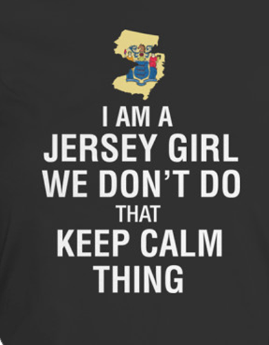
To be honest, I think I’ve become a little more restrained than most of my fellow Jersey girls. That’s because after I left New Jersey and lived all over the country, I learned that many people don’t know how to deal with a full-fledged Jersey girl.
Jersey girls are different. All those female stereotypes women are supposed to identify with don’t apply to us. And we are dramatically different from Southern girls who mastered the fine art of “Southern Diplomacy:”
Telling someone to go to hell in such a nice way that they actually look forward to the trip.
Jersey girls can’t do that. We don’t have enough patience or tact. We prefer to be blunt, very blunt. But on those rare occasions when we do choose to soften our tone, you can bet our comments will be dripping with sarcasm.
You see, Jersey girls grew up in a fast-paced, densely populated state and that affected us. We learned to assert and stand up for ourselves because if we didn’t, we’d get run over. To survive we learned to be little bulldozers running around at 120 mph.
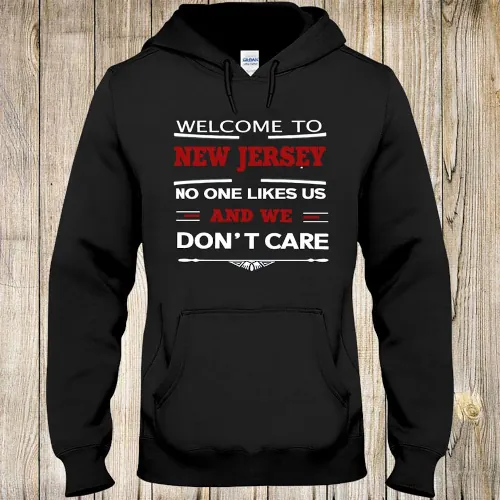
In spite of our tough reputation, Jersey girls have a lot of characteristics that all women can learn from So, to help you understand Jersey girls, I borrowed a few pictures from the New Jersey Pride Facebook page.
The world outside the Jersey borders wants to be special and popular. They want to fit in and be accepted. Jersey girls scoff at such notions.
Jersey knows its “guttery” reputation…and we don’t care. You may think that where you come from makes you sooo special, but we know the truth – it ain’t so perfect either! And we will gladly point out all of its faults if you need us to.
As a woman working in hard core male jobs, many guys didn’t want me there. But guess what? This Jersey girl didn’t care. And as for all those guys who thought they were hot sh*t, I took great pride in pointing out their failings.
Jersey girls are different because we are REAL and we can handle the truth!
We know the truth scares people a lot of people. So, we love to blurt it out at inopportune times just to see their shocked reaction.
Will they acknowledge and face the truth? Or will they run and hide? Their reaction tells us whether or not they are strong enough to handle running with a Jersey girl.
Being real also means we are adaptable and as contradictory as New Jersey itself. We can go from the city to the shore. From industry to the farm. From pizza and beer to glammed up for dinner at an expensive restaurant. All within minutes.
Who will keep up with us??
The contradictory nature of New Jersey’s landscape, culture and industry is embedded in us.
We can be incredibly sweet, soft, generous and caring.
We have fun Jersey shore nights until the early morning hours then we’re off to our favorite Jersey Diner till morning.
But , please pay heed to the third side.
In case you aren’t taking me seriously, here is another warning:
Hell, hath no fury like a Jersey girl who has been wronged. Hell can’t produce a storm as full of fire and fury like that of a Jersey girl on a rampage.
When President Trump threatened North Korea with fiery and fury the likes of which they’ve never seen, he wasn’t threatening military action. Instead, he was planning to send over a bunch of Jersey girls after lying to them that North Korea had great discount shopping. When the girls discovered the great shopping was actually in South Korea, the fire and fury would begin.
Beware of the Jersey girl who feels she or her friends were wronged. She will not stop until she gets her justice and revenge.
True confessions time.
I have a long list of former male colleagues who wonder who and how they got f*cked over.
It was me.
You tried to f*ck me over. But you didn’t know you were messing with a Jersey girl. I was quiet. I didn’t create a lot of drama. I just smiled as I cut off your nuts and shoved them down your throat.
BTW, that’s “New Jersey diplomacy.”
Jersey girls are best known for our opinions and our big mouths that we can’t keep shut. We will tell you exactly what we think whether you want to hear it or not. You can’t silence us by walking away, hanging up, closing the door or turning up the music. We will find a way to make you hear our opinion and deal with it.
And don’t ever try that “manterrupting” thing on us. We will just keep talking louder and louder until you shut up. Then we will give you that look that says “don’t you ever dare try that again, if you know what is good for you.”
Then there is that “mansplaining” thing so many women complain about. We don’t get it because no one “mansplains” a Jersey girl. A Jersey girl always knows what she’s talking about, as Mona Lisa Vito in My Cousin Vinny demonstrates.
One more warning. Just because our mouths aren’t running, it doesn’t me we are docile and submissive. The wheels in our brains are still turning.
We are planning how to get exactly what we want.
Jersey girls don’t need men to take care of us or rescue us. We can take care of things ourselves. When we ask men to take care of something, it is really a test to see if they know how. If they don’t know, then they won’t be around long (especially if they are our boss.)
I’ve said this many times on the construction site.
Men are fascinated by Jersey girls and we know what they say about us in the locker room. Consequently, we get a lot of unwelcome attention by men who think they are man enough to handle a Ferrari. When they crash just backing out of the driveway they love to turn on us and blame us. But we don’t listen.
We just shove them back into their Prius or Minivan and blow a kiss as we drive away in our 789-hp 6.5 liter V12. We know we need to leave fast because the only thing faster than our Ferrari’s 0-60 in 2.8 seconds is our temper which can go from 0-150% in 0.01 seconds.
People who don’t understand Jersey girls like to point out our flaws to put us down. But we aren’t afraid of our flaws. We accept them. Actually, we accentuate them – just to drive people crazy!
We can also spot a fake a mile away because we grew up with a lot of slick men coming out of the city flashing around their cash, jewelry, and fancy cars. We aren’t impressed cause we know they the truth: They aren’t rich – they are dead broke and up to their ears in debt. We send them back to the city with their tail between their legs.
So be wise and don’t ever BS a Jersey girl or play her for a fool. Don’t ever deny her the promotion or the raise she deserves. Don’t think you can get away with paying her less than her male peers. She will not stand for it.
All of this adds up to the unique attitude and the most identifiable Jersey girl quality:
We don’t take sh*t off of anyone.
Anyone.
We don’t care who you are or who you think you are.
All women need to know that being a Jersey girl is empowering.
We know who we are and accept who we are.
We know what we want and how to get it.
And most importantly we don’t let anyone or anything get in our way.
So next time someone tells you to “Lean-in,” tell them you don’t want to do any of that touchy-feely kumbaya Silicon Valley California stuff. Tell them you are going to Jersey-up and heading out to the shore because…
America loves the story of the self-made man – the man who started his life in abject poverty and rose to the pinnacle of wealth and success. It is story of extremes, drive and determination. And it seems to be an almost exclusively male story.
I went through the lists of the wealthiest men and women in the world. Many of the wealthiest men were self-made men. However, all of the women inherited their wealth from their father or husband. While there were plenty of men who also inherited their wealth, the common thread was that it was a man who started the company and created the wealth.
As I looked down through the list of “self-made women,” Oprah Winfrey stands out as a true self-made woman, as well as Judy Faulkner who founded Epic Systems – ever hear of her? Probably not, because she is ranked #722 in wealth. (Oprah wasn’t in the top 500 either.)
The other “self-made women,” co-founded the company with their husband which makes us wonder: Given that the list of wealth-creators is so overwhelmingly male, should we assume that it was really the husbands who founded the company and their wives received co-founder status as a benefit of marriage rather than effort?
That may seem unfair to the wives especially when we recall the saying:
Behind every great man is a great woman
And the unsaid second part:
Who really deserved to be out in front because she had 10 times the business sense!
This discrepancy reveals the difference in how we value the roles men and women play in a business.
In many start-up family businesses it is typically the man who provides the technical skills that produce the company’s product or service, while the wife provides the business (financial) sense to keep the company going. While both skill sets are needed for success, we give more credit to the men and their skills that produce the product or service. The wife’s business skills are considered secondary support skills.
A modern example of this is Mark Zuckerberg and Sheryl Sandberg – the corporate marriage of technical skills and business skills. He has $74 billion while she has a mere $1.6 billion. But how much of his $74 million is a direct result of her business skills?
As women, this disparity is something we have to come to terms with. We must recognize that the people who have the technical skills to create a new product or service and then start a company will always be compensated far better and given more credit than those who provide the support skills.
This is why women need to take a two-layered approach to starting our own businesses. First, we need technical skills whether is it in a profession or a trade. We need to know how to do, create or produce something. (A college degree doesn’t guarantee a skill)
If we aren’t ready to be an entrepreneur with brand new product, we go into an established workplace and build our expertise. The dangerous part about this is that we can find ourselves trapped in a functional silo doing the same type of tasks over and over again. This is why we make lateral moves.
Lateral moves allow us to stay within our profession where our current skills are valued but add on a new skill. For example I’ve been in Operations but also in Purchasing and Business Development. Lateral moves broaden our perspective and we begin seeing what our male colleagues and male-dominated workplaces often miss – how our two skill sets should be integrated so or workplace achieves greater efficiency and delivers more money to the bottom line.
When women start thinking this way, we stop thinking only in terms of technical skills. We start thinking like the business savvy wife who sees better ways to get things done. The important marriage and blending of technical skills and business savvy occurs within us.
Understanding both the technical aspects and the business aspects of a company is what makes women, as business owners stand out.
Over the years I’ve met many very successful single women who started and owned their own trucking companies. Talking to them and watching my own construction industry I learned that women should learn skills typically associated with men and the male-dominated industries with the goal of eventually starting their own business. The women truckers and I are confident these woman-owned businesses will be incredibly successful and out-perform their male-owned competitors.
As women we have a long way to go to catch up with men in creating insanely successful businesses that put us at the top of the billionaire list. But that’s okay because I question if accumulating massive wealth is the right measure of success for women. I find it hard to describe but being at the very top seems like an extreme and disconnected position – so that when you get there, there is something unsatisfying and empty about it. Instead of feeling a huge sense of achievement, you feel alone so all you want to do is come down and reconnect with real life and real people.
As women maybe our goal should be much simpler – ensuring we assert ourselves and live up to who we are. We stop being the great woman who remains hidden behind the great man and become the great self-made woman who challenges herself and achieves her full potential. And who knows, by doing so, maybe half of the top self-made billionaires will be women.
Empowered Women Go for Achieving Their Full Potential
There is an old fallacy that change happens from the top down.
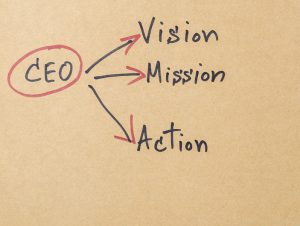
It says that in order for a company to institute a new initiative the first must-do step is: Get CEO buy-in! The CEO then gets the buy-in of senior management. Senior management then directs the initiative down to middle management who carries it out through the workforce.
But if you’ve ever worked for a medium or large company you probably learned a different response to any big announcement of a new initiative: “Yay, I’ll believe it when I see it.”
Many initiatives never make it down to the workforce level. And the few that do often fade out with few if any lasting remnants of their existence. The common excuse, “We didn’t have enough buy-in.”
But the real reason they fade is because they are clumsily tacked onto existing work. They aren’t integrated into the existing operating, managing and reporting systems. Therefore, they don’t feel natural and easy. When we become over-worked or stressed the best solution is to lob off the work that doesn’t fit.
When it comes to advancing women in the workplace, we’ve been trying to use this same top-down approach for 40 years. A women’s organization approaches a CEO and in the tradition of all new initiatives, has him sign a document or make a video declaring the company will now work towards gender equality. It’s great PR – for both parties – but the results are minimal – just like they were with every previous management initiative.
So why do women still use the top-down approach to advance women?
Because we still believe too much in the myth of the hierarchal power and not enough in our own inherent power.
In reality change happens from within and amongst people. It comes from interaction and open and honest communication. So, any woman in any role has more power to affect changes in attitude, behavior and culture than the CEO.
As women we can create change by positively asserting ourselves and making change safe. People are often afraid of change because they fear they will be negatively impacted. When we negate their fears and replace them with positive experiences, the change is embraced.
This is why in my efforts to advance women I focus on the positive changes and meaningful outcomes any woman can create in her workplace:
Improved performance, efficiency and profitability
Achievement and pride in daily accomplishments
Less stress, frustration, chaos and health issues
These changes happen because when women assert themselves, we transform the workplace. We make our workplace Whole.
We’ve all heard narratives about how women “bring balance” to male-dominated workplace. But balance is an incomplete portrayal of the power of women. It still implies that men take more initiative and drive performance while women only curb and prevent them from being total bulls in the china shop.
Balance doesn’t imply full equality.
Wholeness does.
To understand Wholeness, we only have to look at the Yin-Yang concept we are all familiar with.
Yin and Yang are equal halves of the whole. They are dynamic. They continually interact and influence each other in an easy and natural manner, making their interaction feel right. Neither is superior or inferior, each controls the other and both need the other to create a harmonious Whole.
If we think about Yang working all by itself as it does in many of our workplaces, we realize its performance limitations. Working by itself Yang can’t roll all the way over and revolve. Not even the CEO with all of his mighty hierarchal power can make Yang to revolve on his own.
Nor can the CEO make Yin to assert herself and influence Yang. Yin has to decide to do that on her own. That is the power of her equality – she must be the one who recognizes and accepts that she is one half of the whole. She must be the one who steps into and exercises her full equal power.
The changes women want have always been women’s to make. We just haven’t seen our power to do so because we have always been misled into believing in the power of the hierarchy. And even though the male-dominated workplace knows this is a myth it keeps quiet because it wants to hide the fact that the hierarchy can’t create change and doesn’t even know how.
Changes in the workplace and the advancement of women will happen, but only when women accept that men and women really are equal and choose to exercise their equality.
I keep reading about how gender bias holds women back. But gender bias has never been a topic I’ve given a second thought to. Given my career that seems pretty odd.
When I start a new job or project, I recognize that most of the men I work with never had a female peer who they have to compete against. And the men I supervise never worked for a woman either.
I recognize they have a fear of the unknown. Their fear of working with a woman is no different than the fear they had when they got a new computer system or when the company was sold and new management took over.
I know their worst fears come from dramatic horror stories they’ve heard over the years:
I am an angry man-hater who wants revenge on men.
They will have to walk on eggshells around me because I will be looking for gender biases and reasons to claim harassment and discrimination. I am a risk to their jobs and family’s financial security.
I am a Token Woman who got promoted just so the company can tout their diversity and I’m not qualified for my job.
My indecisiveness, timidity and insecurity will make their jobs harder.
Since I know none of those apply to me, I ignore them. I am confident that my initial actions will quickly dispel these fears in the men as well.
Will being a woman make me different to work with?
Oh hell yes!
But in ways they never considered.
The first thing I do is ask: What isn’t working?
Tell me all those problems you have endured for years that create stress and frustration? What problems make coming to work a chore and keep everyone from feeling like they accomplished something? What are the problems that lead to alcoholism, drug addiction and a myriad of health issues?
I open Pandora’s box.
I know their list will be long. I know the men need to vent and I listen to them. As they vent I lead them to reaching consensus on the top priorities. Without them knowing it, I’ve already declared that I am different from a man.
Unlike the long list of men who came before me, I will lead them in fixing the problems.
Notice I didn’t say the “I am going to fix the problems.” Men have heard the Savior declaration countless times and they know Saviors are quickly be distracted so nothing ever changes.
As a woman, I am not going to try to be the Savior of the Big Hero. Instead, I am a leader and we are a team.
The first lesson I teach my team is that we all work as part of a system and everything we do affects someone else. Out of respect for each other, no one is allowed to half ass their work and pass it off to someone else to deal with and fix. Instead we are going to take our top priority problems, sit down together and figure out why work can’t get done right the first time. Then together we will come up with changes to our processes so the problems don’t happen again.
I create a Purple Zone systems-driven workplace where we all work in unison and holistically.
I make us more efficient and effective. I drive performance upward. We exceed all of our metrics. We deliver more money to the bottom line.
Consequently, I out-perform all of my male colleagues. That gets attention and earns me promotions.
If I listen to all the narratives and studies about gender bias I am supposed to believe that my drive to out-perform all of my male colleagues is rooted in gender bias. I am supposed to have an inherent inferiority complex that tells me I must out-perform my male colleagues by miles if I am to get ahead.
Wrong!
I do it because it is my job.
I do it because I care about my colleagues. I put all that empathy, nurturing and caring women are famous for into action. I want all of us to go home at the end of every day with the feeling of satisfaction that comes from accomplishment. I want each of us to be proud of ourselves and see ourselves as achievers. I want to relieve the stress and frustration so everyone can be healthy.
I work this way because I am a woman and this is what we do.
Empowered Women Create a Gender Bias That Says – Please Hire More Women!
Growing up women learn to say “No” to unacceptable behavior. But people don’t always listen. That’s because we are just saying “No” and not using the Power of “No.”
Just saying “No” leaves the door open for negotiation.
Does she really mean it? Let me see. Maybe if I pester her enough she will give in. Maybe if I am nicer or promise her something she wants in return, she will give in.
Just saying “No” allows the encounter to become a challenge to see who will back down or give in first. If the woman gives in, the antagonizer feels they won – and they learn that “No” doesn’t really mean “No.” It means that she is open to negotiations and wants something in exchange. Or, that she doesn’t have the strength and confidence to stand up for herself.
The Power of “No” is different.
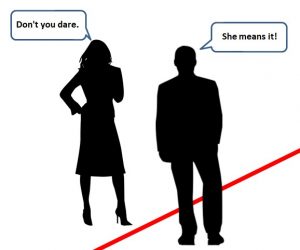
It draws a line and says “Don’t you dare cross it.” The woman has a look in her eye that says she is serious. She will not back down or budge one iota from her position. Anyone who dares to cross the line will suffer the consequences.
The Power of “No” is intimidating. It makes the antagonizer stop and think about their actions. If they cross the line they know they are choosing to do something wrong. They have to decide if what they want is worth the consequences.
Way back in the mid-20th century young girls used to learn the Power of “No” by watching their mothers and the women in their family enforce the rules in the home. Mothers didn’t say “Wait till your father gets home.” They pulled out the wooden spoon themselves.
Girls also witnessed countless examples of female power, determination and intimidation every Sunday night on Mutual of Omaha’s Wild Kingdom. Their role models were the females of every species who protected their young. The females didn’t just say “No” and open negotiations:
Predator: “I want to eat your babies”
Female: “No. Go away.”
Predator: “Oh come on, let me eat your babies. If you let me, I’ll take you to this really nice watering hole.”
As soon as a predator came too close animal mothers used the Power of “No.” It didn’t matter how big or powerful the predator was, the mother never backed down. She never thought “This is going to be too hard or I might get hurt or he has too much power so go ahead and take my babies.” She always stood up for herself and her young and fought back.
We still see some examples of women using the Power of “No.” We see it in the mother who drags her son home from the middle of a riot. I saw it all the time in the construction trailer where the administrator laid down the law and enforced the trailer rules:
Clean your boots off before you enter.
Don’t use the copier without permission.
Don’t take office supplies.
Don’t ever use the women’s bathroom.
She made even the most macho obnoxious men obey. No one dared cross her.
The Power of “No” is female power. It recognizes that women have an inner strength and a determination unmatched in men. It says women have the authority to set the rules for acceptable behavior and the power to enforce those rules with consequences.
When women use the Power of “No,” they assert and stand up for themselves. They turn #MeToo into #HeSangSoprano, #IFiledCharges, #HeNeverDidThatAgain, #HeListened and #ProudofMyself.
Unfortunately over the past couple of decades women have distanced themselves from the Power of “No.” When my daughters were growing up other mothers and I discussed how girls were no longer getting the same messaging we received. That’s because the Power of “No” was no longer politically correct because it was associated with motherhood and maternal instinct.
By taking away the Power of “No” girls and women were left with just saying “No” and a belief that men have this incredible power that women can’t overcome. We diminished ourselves as we traded in the Power of “No” for the political power we expected to find in victimization.
But victimization doesn’t advance women. It never has and it never will.
Asserting ourselves, standing up for ourselves and using the Power of “No” does advance women.
As women, we need to go back and reclaim our inherent female power. We need to draw the lines of acceptable behavior… and then give that deadly look that says “Don’t you dare cross that line.”
When I began my career my male colleagues didn’t know how a female engineer would be different from a male engineer. They soon discovered the difference – “She can write!”
At first I laughed because engineers are notoriously bad writers so it wasn’t difficult to do better. But then I saw the danger in this acclaim.
Instead of being seen as engineer, I could be seen as a woman only and get pushed into a traditional female role.
One year later my fears became a reality. I was moved to a new job where my overwhelmed boss discharged me to help write performance reviews and award packages. I sat in the back corner of the small room occupied by the two secretaries with a typewriter on my desk.
I knew I had to change my situation.
I soon discovered an upside to my new location – everyone talked to the secretaries. I soon learned about every issue and problem in our department. I realized there was a big beautiful world of opportunity out there – I just had to figure out how to get out from behind my desk.
Opportunity soon knocked when a supervisor came to the secretaries begging for their help in rewriting the Wastewater Treatment Plan. The secretaries quickly volunteered me.
Eureka!!!
I had a perfect excuse to get out from behind the desk. I told the supervisor I needed to understand how things worked so off we went to the shops and the wastewater treatment plant where I talked to the men about operational issues. I gladly took over rewriting the plan.
The next thing I knew I had the Snow Removal Plan, the Vegetation Removal Plan, the Flood Control Plan and the Traffic Control Plan sitting on my desk to update and rewrite.
Writing these plans took me all over the Air Force base I worked on and exposed me to the larger base mission. I met and talked to everyone. I learned how my department was supposed to support the mission and where it was falling short. By the time I left that assignment I had more operational knowledge than any of my male peers.
At my next assignment I sold my knowledge to my Commander and landed a new job normally given to someone with at least 6 more years of experience.
About a month into my new job, my supervisor was pulled away to handle a crisis. He gladly dumped some of his responsibilities onto me, especially the monthly presentation to the Wing Commander, which we called “the monthly bloodbath.”
I should have been terrified but my earlier experience taught me how Wing Commanders and senior officers wanted information presented to them. I changed up the presentation and to everyone’s shock I survived my first presentation. Over time those monthly presentations made me very comfortable in public speaking. I had a new and valuable skill.
I also I realized technical knowledge coupled with strong communication skills is very powerful. Too often the person giving a presentation is just a speaker – they aren’t the person with operational authority. I however had operational authority – I could present issues, answer technical questions, implement the decisions and then discuss the results at the next presentation. I eliminated the middle man (my supervisors) and established direct communication to higher level decision-makers.
I became the person they came to, to get things done.
After leaving the Air Force I continued to combine technical knowledge and communication skills. I got a job conducting an operational audit for a government contractor where I uncovered a serious problem. My report went right up the chain to senior management. They loved my report and I was soon offered a new job writing proposals.
My writing skills were once again front and center and giving me the opportunity to develop more professional skills – proposal writing, marketing and contract negotiations.
I took the job. However, I remained leery of being seen more as a writer than engineer.
Many years later I proved to myself that I was correct to be leery. I had two job offers on the table – one to write proposals and one to run an operational department. The job running the department paid 33% more.
I realized I always had my priorities right – operational and technical skills were more important. They were the key to better pay and advancement. Communication skills were supplemental – useful to distinguish and leverage myself, but they should never be my primary workplace skill.
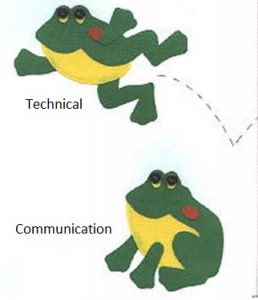
All through my career I used both my skills. If I established myself with technical skills, I then used communication skills to distinguish myself. Likewise, if communication skills could get my foot in the door, I used them and then found an opportunity to apply my technical expertise.
Many men have a hard time understanding how I could do this because the male-dominated workplace believes you can only excel at one skill. Consequently I’ve been asked countless times: “Are you an operations person or a proposal writer?”
I answer: “I do both” and watch their heads explode!
For women it is easy to fall into the trap of having to choose between our skills. These choices often maneuver and trap us into more conventionally female jobs that pay less and deter our advancement.
This is why we should never conform and never choose. Instead we should learn new skills, leap frog them over each other and leverage our skills to distinguish and advance ourselves.
A few weeks ago while working with the TV on, I heard a commentator relay a rumor that Tillerson, McMaster and Mattis had a “suicide pact” and if one left they would all leave.
I found myself yelling at the TV – “You guys don’t know what you are talking about. No one goes through with a suicide pact!”
As a woman who has supervised lots of men, suicide pacts were part of my daily life, beginning in my first management position and never stopping.
Suicide pacts are typically voiced as:
“If George gets fired then Jim, Terry, Dan, Paul and Bob will quit.”
“If George doesn’t get the promotion then he will quit and so will Jim, Terry, Dan, Paul and Bob.”
The first time I faced the threat of a suicide pact I saw it for what it was – an intimidation tactic.
I also didn’t miss the fact that it was played out on me because I was a woman. They guys thought I was more likely to cave into their demands than one of my male supervisors who would have met their threat with several choice words.
In the early years of my career my initial response was to be dumbfounded. I thought about giving them the dramatic, tearful, hysterical response they wanted:
“Oh no! You can’t quit! I am just a poor little woman who is in over her head. I won’t survive without you! I will give you anything you want – just please don’t leave me!”
I may have actually used that response a couple of times when I was in a “don’t jerk me around” mood. But for the most part, I gave them a more direct and realistic response:
“So you’re telling me you are going home and telling your wife ‘Honey you will be so proud of me! I quit my job today because George didn’t get the promotion!’ I’m sure that will go over well.”
And that’s the truth. No one quits their job because someone else didn’t get a promotion, got fired or got laid off.
As I woman I’ve faced countless suicide pact threats and had only 1 man actually go through with it after I fired his supervisor.
The rest of the men in the pact eagerly showed up for work the next day vying to fill the newly vacant supervisor position.
It only took a week before the man who quit was asking his pact members to help him get his job back. It took them another two weeks to get up the courage to ask me if he could come back.
I said “No.”
The man went to work for his fired supervisor but didn’t have steady work. After 2 months his pact mates approached me again. I made it clear that I don’t put up with people who try to intimidate me. (The man had sent me nasty emails prior to firing his supervisor.) After two weeks of negotiating I hired back the man in a lower position and for less pay. I also made him come to my office and apologize to me in person.
As women we have to respond to suicide pacts for what they are – an intimidation tactic with no weight. The men who use them are all bark and no bite. Therefore, we never give into them.
They do however give us important feedback about our team. The men who use them don’t tolerate stress well. They use the suicide pact as a means to hide that fact that they are under stress and really want to quit. Ironically, defying the suicide pact by firing or not promoting their supervisor and bringing in someone who is more capable, is often the best remedy to their stress. They just don’t see it.
As good managers and leaders, it is our job to see it for them and have the courage rise above the threat to do what is best for everyone.
I remember when it was rare to be a woman in the workplace who wasn’t a secretary or in HR. I began my engineering career in the Air Force on a base with 5,000 airmen. When I arrived you could count the number of female officers on one hand and the senior ranking woman was a 1st Lt.
Using today’s popular narratives, you would expect that we faced horrible conditions – discrimination, sexual harassment, subjugation etc.
Not true.
Instead there was a lot of curiosity. That curiosity led to questions. The questions led to countless conversations about the role of men and women in the workplace and in the home.
Those conversations happened informally in offices and in shops. They also happened formally through a committee of women the base leadership established. Anyone could bring their questions and concerns about working with the opposite sex to the committee.
The example I remember is a NCO in aircraft maintenance who came to us about his one female aircraft mechanic. While working in the hanger it got hot so he told everyone they could take off their fatigue top and just work in their t-shirts. Back in those days, we wore white t-shirts so when the woman took off her fatigue top you could see her bra through it…and it was leopard print. The NCO had her put her fatigue top back on but then he was worried about her working in the heat. He reassigned her to a different task which wasn’t fair to her or the men.
Our solution was simple. The female aircraft mechanic should wear a white or beige bra with her uniform and save the leopard print for her civilian clothes. We also told the NCO that her bra will still be visible under her t-shirt (we all knew this from personal experience) but he and the other male mechanics just had to deal with it. (Yes, we were still a bit prudish back then.)
Later we followed up with the female mechanic and she said everything worked out fine.
What was drastically different between those days and today is that back then we had open honest direct communication where anyone could honestly express their point of view, fears or vulnerabilities. No subject was off limits. And no one was told their ideas and opinions were wrong.
We recognized that we were all in new territory. We recognized that most men had no experience working with a woman as a peer just like we had no experience working with men. Therefore our objective was to broaden everyone’s perspective and comfort zone without incrimination.
Through our very politically incorrect conversations men and women got to know each other and build the relationships necessary for women to realize our equality.
That is how it was for about 20 years. Then everything changed. Suddenly we were all being called into training seminars where we were “educated” about each other. We were told what we could and could not say.
www.123rf.com 31134098
As the woman in the room, the spotlight was on me. “Diversity” singled me out and labeled me as “different.” I was told in front of my male colleagues that I could bring my issues to HR or the Diversity office and they would help me, confidentially.
My response was “I don’t have any issues.”
The trainer however looked at me as if to say, “You can tell us what’s really going on later.”
I could feel the walls going up in all of my male colleagues.
After the training I talked to my boss. He asked me if there were any issues I never voiced and I told him there weren’t. But the trust was damaged. We could no longer talk openly and honestly as we always had. For several months the guys and I walked around on eggshells with each other as I slowly re-built their trust.
I was furious.
I was furious at the arrogance of a training seminar swooping in and damaging both my relationships and my career.
I was furious that these supposed experts were ignorant of the one rule that helped women like me – open and honest communication.
I was beyond furious that they didn’t talk to me before the training. They just assumed that I was a timid, insecure woman who couldn’t stand up for herself. I felt more insulted and degraded by something meant to empower me than I had ever felt by an incident in my career.
And I wasn’t the only woman who felt that way. I knew many women who broke through all kinds of barriers without any outside help who felt like our strength and confidence were no longer politically correct. We were supposed to sit around and talk about how we were “victimized” evn though we didn’t feel like victims. We wanted to talk about how we tackled issues, kicked butt and distinguished ourselves.
After years of diversity training classes, it was one of the last ones I attended that finally gave me some satisfaction. My diverse team and I sat through 2 hours of being told how to be politically correct with each other. Immediately afterwards, we all looked at each other and said “We’re going to keep doing what we’ve been doing.” And we all walked out.
Very concerned, the trainer came to see me. I unloaded on her. I told her she didn’t know the first thing about being a woman like me and she sure as heck didn’t know the men I worked with and supervised. I told her we were a tight team and we weren’t going to allow her or anyone else to divide us. We all experienced that before and this time we decided to take a stand and say “No.”
I realize that what I resented all those years was that someone who never walked in my shoes and never talked to me about my experiences thought they had the credentials to tell me how to deal with being the woman in the room.
But more so than that, I felt like my voice and the voice of other experienced women didn’t count. More accurately, we were supposed to remain silent because what we had to say may contradict the popular or media-driven narratives.
That has to change. We need to bring back open and honest conversation so more women with real-world experience can lead in advancing women in the workplace. We after all, are the ones who can say “Been there, dealt with that, let me tell what works.”
Empowered Women Know Open and Honest Conversations Work Wonders




























 I keep reading about how gender bias holds women back. But gender bias has never been a topic I’ve given a second thought to. Given my career that seems pretty odd.
 Tell me all those problems you have endured for years that create stress and frustration? What problems make coming to work a chore and keep everyone from feeling like they accomplished something? What are the problems that lead to alcoholism, drug addiction and a myriad of health issues?


 All through my career I used both my skills. If I established myself with technical skills, I then used communication skills to distinguish myself. Likewise, if communication skills could get my foot in the door, I used them and then found an opportunity to apply my technical expertise.

 As I woman I’ve faced countless suicide pact threats and had only 1 man actually go through with it after I fired his supervisor.