Category: Thinking Like Empowered Women

  • Have a 21st Century Concept of Management

    Recently I shared a Facebook post in which Shira Goodman, CEO of Staples recalls her best career advice:

    “Be open to making lateral moves.”

    I agree – making lateral moves is what propelled my career too. However, we often think that we should stay within our functional area so we can build the relationships we need to work our way up the corporate ladder.  But that theory is so mid-20th century!

    To get ahead in the 21st century we need to think about how a 21st century company really functions.

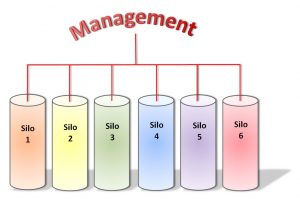
    First, take a look at your company’s organizational chart(s).  You will probably see lots of functional silos.  This reflects 19th century management theory when manufacturing drove our economy.

    The male-dominated workplace however still loves these functional silos because they allow men to use an expertise to acquire status.  That expertise can be in a skill/profession, client type, region or project/production phase.  As men work within their silo gaining knowledge and experience they master their functional area and become our awe-inspiring experts.

    Take a moment to think about how you think about experts.

    We expect experts to know the best way to do something.  We don’t question the experts.  We expect that a workplace that has lots of experts in their functional silos to perform the best.  But do they really?

    Let’s do a 21st century reality check.

    In the course of doing your work, how often do you interact with people from different functional silos?  Probably quite a bit.

    And how often do you or your co-workers have problems getting the right or complete information from people in the other functional silos so you can do your job quickly and efficiently?

    Probably a lot.  If you think about it, you will probably realize you waste a good part of your day trying to correct work passed to you from other people.

    The problem is that the old functional silo structure assumes that the experts can best complete their work without the interaction (distraction) of others.  Sometimes that work is then “handed-off” to another functional silo to complete by itself.  However, the handed-off work is often completed in a manner that suits the first silo but not the second.  This causes rework for the second.

    While this system works well for silo managers and the experts, it doesn’t work well for the workforce who interact all day long with people from multiple silos.

    21st century workplaces are more complex and therefore require integrating work across the silos so the big picture work gets done efficiently.  Silo managers can no longer just look down through their silo – they must look across all silos and integrate the work of their silo with that of the others.  They must bring all the functional areas and people together to function as one entity.  This is the primary responsibility of 21st century management.

    The old mentality of working your way up your silo doesn’t prepare managers to integrate work.  However, someone who has moved from silo to silo understands how work has to get done from the perspective of more silos.  They understand the integration necessary for the company to perform better. They will be better managers.

    The male-dominated workplace and academia however, still don’t appreciate the power of integration because it reduces the status of their expertise.  They consider people who move from functional area to functional area as a “jack of all trades but master of none.”

    But integration of activities and functions is an expertise.   It is an expertise that requires communication, coordination, collaboration and multiple task management skills.  These are skills women excel at far better than men.  This is why women need to aspire to middle and senior management positions in the 21st century.

    So, if you are one of those people who has moved between functional areas a lot and believe your career options are limited because you don’t have one big area of expertise, change your perspective.  You just may be an integration and efficiency expert.  Go for that management position!   because you have skills that  do not.  You will outperform your siloed male colleagues.


    Empowered Women Manage Through Integration


    Find this article helpful?

    Sign up to receive more and check out my New Book!
    Follow The Woman In The Room on Facebook
    Take a quick moment to share 
  • Why Retiring is Wrong

    This is from my friend Natalie Hill.  While many men in Tucson retire out to pasture on the golf course, their wives keep “working” pursuing their interests and passions.  This is one of the things that make Tucson different from any other place I’ve ever lived – Tucson embraces female energy.  In Tucson I’ve had the pleasure to get to know many “older women” who don’t believe in going out to pasture.  

    Why Retiring is Wrong

    Thought that might catch your attention.

    Of course, there are exceptions to everything and I’m not the black and white thinker my subject line implies.

    So let me explain why I say retirement is wrong.

    I disagree with the whole idea of retirement.

    It’s bad for the mind.

    Bad for the body.

    Bad for the the planet.

    Here’s why.

    Here’s the kind of retirement I’m talking about.

    The kind where people no longer do any sort of meaningful work that supports people or the planet.

    The kind where bridge, golf and the upcoming cruise are the main events on the calendar.

    This kind of retirement is saying to the mind and body – you’re not important or needed here any more.

    Might as well shut down.

    Turns out the body does better with daily exercise. No surprise there.

    If you need some convincing of WHY you need to exercise after 50, read Younger Next Year, by Crowley and Lodge.

    So I’ll leave the body out of it.

    Let’s talk about the planet.

    Retiring to the golf cart or the bridge table or the Princess Line is not what most of us think of when we think of making the world a better place.

    And this is where we all come in.

    You accumulate skill and wisdom and knowledge over the course of your life.

    This is what I call your Brilliance.

    And when you reach a Certain Age, that Brilliance is RIPE!

    It’s juicy and mature.

    Just think how much good we could do if, at the age people typically retire, they instead give the received from their bountiful life.

    Can you imagine how much GOOD people in their 50’s, 60’s, 70’s, 80’s (and beyond) could do for the planet?

    That’s 40 more years of giving!


    Empowered Women Don’t Go Out to Pasture!


    Empower Yourself  – Subscribe to my articles – Contact Me

    Assert and Express Yourself – Leave a Comment & Share this article

    Follow The Woman In The Room on Facebook for more empowering ideas!

  • How to See Someone Else’s Point of View

    Recently I listened to a woman complain about a male colleague during which she said “I hate passive-aggressive behavior.”  After our conversation I realized that she was the one who was being passive aggressive.

    Our conversation reminded me of a simple, yet very powerful tool I learned  years ago to understand how my colleagues see the world around them.

    I simply LISTEN and when they talk about other people (or me), I hold up a mirror in front of them.  More often than not, they are telling me how they see the world.

    Each of us has a perspective shaped by who we are and our experiences.  We think our perspective is accurate and complete.  We think we are see things as they really are and without bias or limitation.   And too often we fail to recognize there is a larger perspective and our point of view is only a slice of it.

    It is difficult for each of us to look in the mirror at ourselves and widen our perspective by ourselves.  We need the help of others.  Therefore, it is up to each of us can help other people grow and broaden their perspective.

    www.123rf.com – 17870734

    We start by simply listening and holding up the mirror.  We don’t comment or critique.  We don’t try to interject our all-so-important point of view.  We don’t pretend to listen as we really think over in our heads all the ways the person is wrong and what we are going to say to prove our point of view is better.

    We just listen and let the other person reveal themselves.

    It is amazing how much people will reveal when we just shut and listen.  They will tell you about their fears that shape their perspective.

    It is also amazing how much we learn about our own perspective and its limitation when we listen to others.  We start seeing our own fears that limit our perspective.

    It is only after we listen a few times that we can begin to have a good understanding of who the other person is and why they think the way they do.  We can then begin to expand their point of view (and ours).

    We also have to recognize that just like us, the other person is naturally defensive about their point of view.  Therefore, we don’t want to trigger a defensive response – we want them to think, not react.  This is why I like starting with the phrase “I was thinking about you said about….”

    www.123rf.com – 6818438


    It invites a conversation.  And once the conversation starts, it is difficult to keep other people and their points of view from joining in.  That is what we want.

    Each of us has a different slice of the whole and our diversity of experience, knowledge and points of view helps us form a larger, more complete perspective.   It is from this larger point of view that we can solve problems and address issues more effectively and completely.

    So next time you hear someone talking about someone else, hold up a mirror.  What you see may be very revealing.


    Empowered Women Listen


    Find this article helpful?

    Sign up to receive more and check out my New Book!
    Follow The Woman In The Room on Facebook
    Take a quick moment to share 
  • Have the Right Attitude to Stand Up for Yourself

    When women experience inappropriate behavior, sexual harassment, bullying or discrimination in the workplace, we have a lot of reactions – shock, anger, resentment, fear.  Our mix of emotions creates confusion as we try to figure out what we should do about it.
    We want to hit the right and appropriate response but we aren’t always sure what it is.  We don’t want to come off as a trouble-maker by blowing the incident out of proportion.  But we also don’t want to downplay the incident and feel like we let ourselves be diminished.  All we really want is stand up for ourselves and be treated with respect for doing so. 

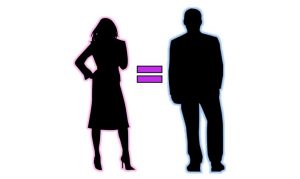
    I found that finding the right response begins with having the right attitude.  The right attitude says that no one has the right to diminish anyone else.  This attitude also infers that no one is superior to or better than anyone else.  Being higher in the organizational structure, having more education, more job experience, more authority or more anything doesn’t make a difference.   As human beings we are all equal and deserve to be treated as such.

    When you apply this attitude you come to terms with how diminished the incident really made you feel.  Too often women are taught to go right into victimization, no matter who the man is or what the comment or behavior was.  However I don’t like victimization because it automatically assumes the offender has power over you and the ability to diminish you.   It assumes a natural or inherent inequality.

    The right attitude however makes you ask one simple question:  Who is this guy that he thinks he has the right to diminish me?
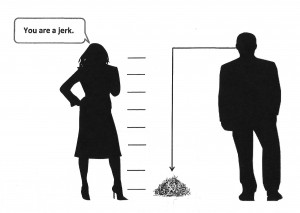
    That is an empowering question.   It makes you think about why you elevated this guy’s opinion and subjugated yourself to it.  Why does his opinion matter to you?

    It reminds you that no matter who he is, or thinks he is, he still puts on his pants one leg at a time.  Therefore, he is just an ordinary human being and not part of a superior alien species.  He may have more power and authority in our workplace but again that doesn’t give him the right to diminish others.  It simply means he has a different role and responsibilities.  And his responsibilities often dictate that he ensures everyone be treated fairly and equally.

    When you recognize your inherent equality, your perspective changes and a new question quickly comes to my mind: What the heck is wrong with this guy?

    This question helps you recognize that the incident says nothing about you and only makes a statement about your offender.  It allows you to refocus on your offender and why he acted the way he did.

    Armed with the right attitude, we can then come up with effective, empowering and appropriate responses to incidents.  Personally, I divide incidents and my response into three categories based upon the severity of the incident.   In the first two categories, the offender doesn’t have or isn’t using his organizational power to impact to you.  This makes it easier to see him simply as a jerk and the incident as representing that something is off with him.

    My first response category is the Eye Rolling Response.  These incidents are very minor and not worthy of any concerted response on your part.  The eye rolling, smirk or “what is wrong with you” expression conveys the message that you aren’t impacted, diminished or subjugated.  It is the “I’m rubber, you’re glue, what you say bounces off of me and sticks to you” response.

    You want to be careful not to over-respond to these incidents because your offender can be feeling you out, interpret your over-reaction as a sign of weakness and continue to target you.

    My second response category is where most incidents fall.  You want to stand up for yourself and make a point but, you are afraid it will be blown out of proportion and backfire on you.  All too often we let these offenses go without a response.  Then we feel bad about that too.  We feel trapped in a no-win scenario.

    When you think about what you really want, you realize you want culture change.  You want your response to help the offender(s) to grow out of their behavior.

    The reason we struggle with this category so much is because we’ve been taught to be limited in our responses.  We are taught the only acceptable response is to file a complaint and take the issue to management to resolve.  But there are two problems with this.

     

    The first is that when we take the problem to HR or management we feel like we are acknowledging being diminished, and that we aren’t capable of standing up for ourselves.  It is disempowering.  It doesn’t make us feel strong or equal.


    The second problem is that the offender will be blamed then possibly punished.  In either case he will see himself as being diminished.  He will want to restore his equality and respect.  And that means you probably just made an enemy in your workplace.

     

    The problem with the standard file a complaint response to these types of incidents is that the solution usually raises one person up and diminishes the other.  It doesn’t maintain the equality and the balance of personal power.  It is further complicated by the fact that men and women perceive the situation from two very different perspectives.


    Women are fighting for their respect and self-esteem.  We assume men are too but they aren’t.

    Once men are diminished they see themselves as fighting for survival.  At this level they fight back more fiercely than women who see this situation from their perspective think is warranted.   This leads women to conclude that men are fighting back because they believe in the subjugation of women.  So women then fight back harder.

    This misunderstanding of perceptions throws the situation way out of wack.  Each party feels diminished and blames the other without understanding the other party feels diminished too.  The conflict goes round and round with no happy kumbaya ending.  It teaches all us that standing up for yourself just creates a bigger mess and isn’t worth it.

    This is why in this category we need to think beyond the file a complaint response and be more creative.

    Over the years I’ve written several articles about being creative and the effectiveness of using humor to stand up for yourself, address an incident and create culture change.  Contrary to what we are taught, humor doesn’t diminish the seriousness of our response or suggest we are merely laughing it off.  Instead humor creates a positive environment where no one is diminished so the offender can grow and change their attitude without blame or shame.  (super-important to men)

    Creative and humorous responses demonstrate that you are equal, strong and confident without conflict.  This earns you the respect you wanted all along.

    My third category of responses is for the really egregious and ugly stuff.  It is where I make a firm stand and take formal action because the offender’s comment, action or behavior successfully impacts me and I can’t stop it.  The impact can be:

    • Monetary affecting my role, promotion, raise, bonus or lay off.
    • Invasive physical contact
    • Unwanted attention from a Creeper so I longer feel comfortable or safe in the workplace and/or away from it.
    • Bullying

    Out of all of these issues, the monetary ones are actually the easiest and most clear cut to resolve.  However they are often an indicator of a larger culture that will tolerate the other issues.
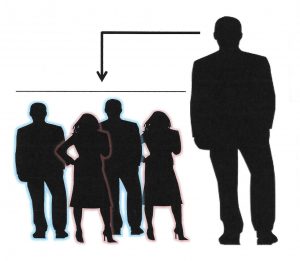
    So, whenever you face incidents in this category take a good look around your workplace.  You will probably discover that you are not alone in your situation.  This includes your male colleagues who often silently endure degrading behavior.

    In this category the offender is more emboldened.  He’s gotten away with his actions before and that made him feel powerful.  He began spinning a flywheel and created a cycle where he abused and intimidated people to make himself feel more powerful.  As he abused more people his flywheel spun faster, produced more energy and making him seem invincible.  Consequently, no one stood up to him.  It is an intimidating one-on-one situation that makes many of us back down and then feel guilty about it.   We know the offender is counting on us backing down just like everyone else did and this makes us angry.  We want to stand up for ourselves.  We want what’s right.

    Again this is where your attitude reminds you that he is just a man who created an image and you aren’t totally powerless against him.  This fact gives you the determination to stand up for what is right and see it through to the end.

    It also forces you into a reality check and recognize that dismantling his intimidating flywheel may take time – there may not be that satisfying swift and dramatic victory.  So, check your attitude – are you really trying to diminish and punish him?  Or, are you trying to neutralize him, hold him accountable and get justice?  There is a big difference between the two and only the latter will be successful.

    When you are dealing with an offender especially those with a long list of victims you are not engaging in a battle of wills or power.  You are engaging in a battle of flywheels.  Therefore, your objective is to put a new flywheel into motion that counters his.  You take a stand in order to create momentum against the offender that allows just a few more people come forward.  They then increase the momentum of your flywheel.  As word spreads, more people come forward and your flywheel is further energized.  Your offender becomes less intimidating and his flywheel loses momentum.  Eventually the offender is neutralized by the momentum of the forces against him.

    It is a scary to be the first person to take a stand and be the one who starts the second flywheel into motion.  But if you really believe that all people are equal and no one has the right to diminish anyone else, then you have a duty to stand up.  And remember you won’t be in this alone – you will recruit others to increase the momentum of your flywheel.

    I’ve found that finding other people to join you is easier when they know you are committed and will not back down.  I then present them with a binary choice:  Do they want to be on the side that stands up for what is right?  Or, do they want to be on the side that supports this bad behavior?

    I keep their decision black and white.  They can choose to go on the record as a good guy or a bad guy.

    Most people want to be the good guys and want to do what is right.

    Your “good guys” help recruit the other “good guys” they know and trust.   Together you increase the momentum of our flywheel and spread its influence across the workplace.  Sometimes you will be fortunate and the right good guys get on board and immediately stop the behavior.  Sometimes it takes a while.  In these cases, I find that there is an irony.  The  offender keeps up his behavior to energize his  flywheel but in reality he is adding momentum to my flywheel.  In the end he destroys himself – and I never had to go negative or get ugly.  I just had to stand up for what is right.

    I lost count of how many times I’ve successfully put the second flywheel into motion on behalf of myself or others.  While it is scary to do the first couple of times, you realize that when we exercise our inherent equality we can restore power and respect to everyone.  This energizes a new flywheel within yourself that strengthens your attitude that no one has the right to diminish anyone else.  The next time you have the opportunity to take a stand, you do so but with even more confidence.


    Empowered Women Have the Right Attitude to Stand Up For What is Right


    For more articles on harassment and discrimination go to  The Ugly Stuff article category

    Empower Yourself  – Subscribe to my articles – Contact Me

    Assert and Express Yourself – Leave a Comment & Share this article

    Follow The Woman In The Room on Facebook for more empowering ideas and solutions!



  • Women Can Lead Men Through Culture Change

    www.123rf.com 51741376
    www.123rf.com 51741376

    Construction sites have a reputation for crude behavior and the women who work on them can face behavior seldom found in other workplaces. This situation keeps most women away from the industry and those that do enter it often opt for support jobs in the office. Those of us who do venture out onto the construction site enter an extreme male-dominated workplace where it is essential that we know how to handle situations correctly so we don’t ruin our career.

    To understand what I am talking about let’s examine a situation I’ve encountered a couple of times – the crude and denigrating drawing of me in a porta-pottie.

    If someone made a derogatory drawing of a female colleague in the men’s room at the main office we know what would happen. HR would get involved, a company-wide email would go out denouncing the drawing, there would be mandatory training and the culprit if identified would be fired. In short there would be expressed outrage.

    However if a woman took this same approach out on the construction site, it would back fire on her – big time!

    Why?

    Our first instinct may be to blame construction site culture full of sexism, discrimination and a good ole boy’s club that doesn’t want women intruding into their territory. However, that is wrong and reveals our inherent misunderstanding of the situation. The reality is that any man who used expressed outrage to deal with a site situation would face the same consequences as us. However, most men already understand it back-fires is because it goes against the reasons men enjoy working on a construction site.

    As women we are taught to use expressed outrage as our go-to solution.  We are taught that men want to have power over us and we have to fight back in order to have our own power. But again, that is wrong and reveals our fundamental misunderstanding of the male-dominated workplace.

    In reality, the vast majority of men don’t aspire to have power over others – they aspire to preventing others from having power over them. They want to be independent and autonomous.N3A11

    The construction site epitomizes a work environment where men get to be independent autonomous. Since it is away from all of the office rules, policies and structure, the construction site has a freedom most workplaces never experience. That is why men (and women) like working there.

    When a woman expresses her outrage at the crude comment, men interpret it as her dragging the office rules out to site with her and trying to control them. She and her rules are trying to have power over them. In response they rebel.  They they no longer work with her and even sabotage her so she fails at her job and leaves the site.

    From a discrimination standpoint, that is extremely unfair. But it is reality.

    No one can come onto the site, dictate behavior and be successful. (Every good Safety Manager knows that.) To change site behavior requires coaching, building relationships, earning respect and a healthy sense of humor.  These are behaviors women excel at.

    A woman who works out on the site must understand these fundamentals and apply them in her response. This should be easy because they align with the culture she wants. Therefore, unacceptable behavior becomes an opportunity to lead and establish a rapport that propels our career forward. That is the approach I took in responding to my porta-pottie drawing:

    Many years ago when I worked on a construction site, I could tell something was up. As I walked around site, the guys all looked at me and whispered to each other as if they were expecting me to react to something. After a couple of days I asked a man I had a good relationship with what was going on. He refused to tell me. That made me really curious. As the situation continued and I got more looks, I kept pestering him and a few others to tell me what was going on. Eventually, the man I first asked told me that there was a drawing of me in a crude position on the wall of a porta-pottie. He wouldn’t tell me which one.

    News spread fast that I knew. The titillating drama on site sky-rocketed as everyone wondered – What is she going to do?

    I didn’t react at all. For the next two days I went about doing my job as normal, all the while chuckling to myself at the men who were obviously waiting with anticipation for my reaction. The waiting fed the titillating drama.

    By not reacting right away, I put the ball in my court, I was in control. I also gave myself a couple of days to think about my reaction and figure out how I would use it to my advantage.

    Eventually, I went around to different port-potties and just looked at them. This got everyone’s attention and heightened the drama some more.  Is she going to open the porta-pottie and see the drawing? How was she going to react?

    Again by not reacting, I remained in control.  I created an image of strength for myself which began earning me respect.

    The next afternoon as I made my rounds on site I stopped in front of a porta-pottie and said “Is this the one with the drawing of me?” No one answered. So I asked, using a tone appropriate for opening a big gift-wrapped present, “Which one is it? I want to see my drawing!”

    I never opened up a porta-pottie door which again fed the drama.

    Over the next day or two as I made my rounds, the guys brought up the drawing themselves.  They wanted me to know they didn’t do it. Of course they all knew who did and with a little prodding eventually gave me enough information for me to figure out which porta-pottie and who drew it.  The man was no longer on site.

    By waiting a couple of days and playing off construction site drama, I completely changed the situation. No one wanted to be associated with the drawing and how it denigrated me.  This was the sign I was looking for – they respected me and wanted me to respect them in return.

    However, I still needed to resolve the situation and do it in a way that earned me even more respect.

    When I felt the time was right, I went to see the drawing for myself. As I approached the porta-pottie, every eye on site was on me and some men approached. When I looked at the drawing I used my planned reaction “Dang I didn’t know my butt looked that good!”

    I wanted to give a humorous reaction to show I wasn’t offended. The crude drawing didn’t have power over me – it couldn’t diminish me, my role or my authority on site. My reaction showed I was strong and confident. It also showed that I understood and valued how the construction site doesn’t conform to office rules.

    The ball was still in my court and I needed to pass it to someone else so we could play ball and build teamwork. So, right after my joke reaction I said “Johnny I heard you drew this.”

    I purposely accused Johnny because everyone knew Johnny already respected me and followed me to this project so he could continue working with me. I also knew Johnny had a good sense of humor and he would banter back with me as he proclaimed his innocence.

    As women we need to appreciate and take advantage of how much men like to banter with each other. Banter and humor are more effective in making a point than outrage or blame. However, we have to be extremely careful. Too often when women banter with men we stay engaged too long and wind up getting hurt. To be effective our banter has to be short and direct.

    After Johnny denied the drawing, I bantered back with “I don’t know, I kept hearing you did.”   Then I looked at the other guys as if to say “Aren’t you the one who told me he did?”  This brought everyone into the joke on Johnny. (No one was thinking about the drawing anymore.)

    Johnny of course responded with his own banter back, asserting himself.  He drew a good line for the banter to end. If I continued to banter back he could feel like I was unfairly blaming him, trying to make him the scape-goat and trying to assert power over him.

    To exit the banter I needed to shift everyone’s attention again so I replied “Johnny, you may be a good artist but is unit 18 ready for inspection tomorrow?”

    I already knew it wasn’t. There was a problem Johnny was having trouble resolving. So before Johnny could give his excuse I interrupted him with “Show me what the problem is.”

    That simple statement showed I cared about and respected the men who worked on site. It distinguished me from a lot of my peers who avoided getting involved with the problems until they absolutely had to.

    As I walked away with Johnny, another man took a marker and covered over the drawing. That proved that I earned the respect of the men on site. From that point on, any time a new man came on site and wanted to denigrate me, the guys stood up for me. It didn’t take long for me to have a great reputation and be the project the guys requested to work on.

    When we are disrespected and even denigrated, the easy response is to express outrage.  But we have to think about what that really accomplishes and if it is the best response.  Does it change the culture?  Does it earn us the respect we want?

    As I’ve said many times before, our goal isn’t to accumulate notches in our “How women have been treated unfairly belt.”   Those notches won’t advance us or our careers.   They won’t create culture change.  They will however discourage us.

    This is why we have to think beyond our expressed outrage, blame and shame responses.  To do so requires understanding how your male-dominated workplace really thinks and acts.  We then have to think outside the box and be creative.  We want to work with our colleagues; encourage and coach them; ease their fears and insecurities; broaden their perspective so they realize they just may enjoy working with us a lot more than working with another man.  If we can do that then we’ve led men through the culture change we want.


    ***If you are being sexually harassed or discriminated against please read this article:  The Important Thing Women Still Don’t Do When Sexually Harassed.


    Empowered Women Lead Men Through a Cultural Change

    Find this article helpful?

    Sign up to receive more and check out my New Book!
    For more articles on harassment and discrimination go to  The Ugly Stuff article category
    Follow The Woman In The Room on Facebook
    Take a quick moment to share 
  • You Wanted It, You Got It!

    Several years ago I was working on a project where some senior male managers didn’t want a woman in charge.  They wanted to prove that anything I could do, a man could do better.

    www.123rf.com – 57566386

    This was a particularly difficult project and men lasted about 2 months.  So every 2 months, I was back in charge with a mess to clean up until they found another man to take over.  I stayed in this revolving door for over a year.  My direct supervisor fought hard on my behalf, using every bit of clout he had but even he couldn’t make a difference.

    Eventually they ran out of men who were my peers, so they decided to promote their star up-and-coming young man, a man who I was mentoring.  I was basically out of a job because this time all of my responsibilities were taken away.  A couple of days later, the young man approached me in the hallway and said “You are still going to do everything you’ve been doing right?”

    I gave him a steely cold stare and said “No.  You wanted it, you got it.”  I turned and walked away.

    Four weeks later he gave his notice.

    He approached me again and said “I didn’t realize how much you did.”

    My cold response was “No you didn’t.”

    He then apologized and confessed to back-stabbing me to get the job.  He showed me emails, leaving no doubt that a particular manager saw me as the company’s Token Woman.

    After my young colleague left, no man would take over.  They threatened to quit if assigned to the project.  This time I didn’t step forward.  Instead, my supervisor went to bat for me again and this time they gave in – with a 15% pay raise.  By this time the project was in dire straits and everyone ran away from it like rats leaving sinking ship.  They were happy to have somebody, anybody take over.

    In the end the company lost a tremendous amount of money trying to prove the impossible – that a man could run the project better than a woman.  Soon after I was put back in charge, another woman joined the project and together we kicked butt and got ‘er done while all the men scratched their heads wondering how we did it.

    All these years later, I find myself in a similar situation.  For several years I’ve been the President of a board for a small organization.  This year, a man came forward, wanting to be President.  I chose to take a break and let him be President.  Since taking over he’s made a mess of things.

    As he tries to squirm out of his responsibilities I am holding him accountable and find myself again saying “You wanted it, you got it.”

    All too often men take on positions they aren’t ready for.  As women we watch them mess up and then we make a HUGE mistakewe clean up their mess for them.

    For some reason we find power in this.  We find power in secretly knowing that men need us and can’t do their job without us.  But that is our mistake – we keep it a secret when it should be a huge flashing neon sign that our male colleagues need the skills we bring to the male-dominated workplace.

    It is time for women to take off our aprons and put down our dust pans.  If a man wants a position then he’s got it along with all the responsibilities and accountability.  He can clean up his own mess or step down.

    If we wind up taking over and have to clean up someone else’s mess, then we only do it  with full recognition – the authority, job title and pay.  And our pay must be higher than what the mess-maker earned….because that is what any other man would demand.


    Empowered Women Don’t Clean-up Other People’s Messes for Free!


    For more articles on harassment and discrimination go to  The Ugly Stuff article category

    Empower Yourself  – Subscribe to my articles – Contact Me

    Assert Yourself  by Expressing Yourself – Leave a Comment & Share this article

    Follow The Woman In The Room on Facebook for more empowering ideas!


  • She Should Have Stood Up For Herself

    38335949 - view of scared woman during job interview
    www.123rf.com – 38335949

    Recently I read an article in which a woman wrote about her experience interviewing for a new job.   She did all the research on the job and knew how much she should be paid.  During the interview, the men who interviewed her offered her 30% less than she expected and said it was because she was married, her husband had a high-paying job and her career was secondary to her husband’s.  Her response was simply “If that’s how you think then this job probably won’t work out.”

    Reading the article my first response was ‘Bravo!  See you proved there still are gender biases.”  But halfway through my gut response, I stopped myself and wondered why she didn’t challenge them or push back.  She just walked away.  We should never do that!

    There are a few sexist behaviors that we should never let go unchallenged.  One is unwelcome and inappropriate physical contact.  Another is unfair compensation – MONEY.  As a woman working in traditionally male roles, equal pay for equal work was a continuous concern.

    Back in the early 80’s when I began my career most married women didn’t have careers.  If they worked they had menial jobs so, the men in my all-male office  didn’t understand why I pursued a career on par with them.  I could have been offended and cited a feminist mantra but that wouldn’t help me build rapport.  So I gave them a creative but honest answer: “My husband has a long list of expensive toys he wants to buy and my income helps us do that.  Wouldn’t you like it if your wife earned as much as you?  It takes all the financial pressure off you and you get to buy more toys.”

    After thinking about my answer for a couple of minutes one of my coworkers asked “Can you talk to my wife?”

    Over the years I’ve come up with other creative and yet effective responses.  My responses flip the situation and make men think about how their sexist behavior could personally impact them:

    • “So you guys are willing to pay a man who won’t do nearly as good of a job as me, more money, just because he has a family?  That sounds like a really bad business decision and like you really need me.  How hiring me instead of him hurt your bonuses?  Will your wife appreciate you bringing home a smaller bonus because you had to take care of another man’s family?”
    • “My husband and I may be getting a divorce.  He would very much appreciate it if you would hire me and pay me as much or more than him so he doesn’t have to pay spousal or child support.  Are any of you divorced?”  (Believe me, that gets men really thinking!)

    As women we want the workplace to be a meritocracy where we are fairly compensated based on the results we deliver.  Our performance also helps determine our manager’s bonus so we flip the situation and make our compensation about his bonus.  I have no qualms about asking the simple question: “Who do you want to trust your bonus to – him or me?”

    It works because men place a specific monetary value on their work and the correlation between their effort and their compensation is never far from the front of their minds.  We sell them on ourselves by offering more compensation (a bigger bonus and possible pay increase) with less effort.  They do the math and they get it.

    As women we always have a concern that our compensation is less than our peers so ensuring our compensation is equitable is something we must always stand up for.

    Admittedly when we are faced with a compensation offer that is unfair, it is difficult to come up with a good response in the moment, other than expressing our anger.  Too often we let it go.  We out to our car or back to our office and think of all the things we wish we said.  We kick ourselves for not saying them and that only feeds into how we already let someone else diminish us.

    However, just because we didn’t respond in the moment, it doesn’t mean we missed our chance to stand up for ourselves.  To stand up for ourselves we again flip the situation and our perceptions – we make it all about them.

    We realize inappropriate, dismissive or demeaning comments and offers says nothing about us.  Just because someone tries to diminish us, it doesn’t mean we have to accept it.  We can push it back on them and make it say something about them.  In this case, it means they are stupid – like really stupid.  Who in their right mind in the 21st century makes a sexist offer or comment?

    There is nothing to stop us from going back in (when convenient) and saying in our “dumb me, I just realized this” tone, say “I can’t believe you did that in an interview.  Do you realize you’ve given me a reason to claim discrimination? Do you realize the can of worms you just opened?  You realize of course I have to report this! Good, I have your business cards. Thanks for wasting my time while I deal with this!”

    Yes, a little acting does help. It’s even good to be a little nervous, flustered and upset because it makes them more nervous.  They just had the ownership of their stupidity put back on them.

    Follow up and report it to someone else in the company.  You will probably get a very favorable response, especially if the company is larger.  I did this early in my career when I was being interviewed for a contract job and walked out with a very generous contract.

    When we stand up for ourselves we step into our own empowerment and demonstrate we won’t get pushed over and run over – and that is very important to our employers.  Think of it this way – if you aren’t even willing to stand up for yourself, then you certainly won’t be willing to stand up for the company.  Employers want people who take a stand.


    Empowered Women Stand Up For Themselves 

    Find this article helpful?

    Sign up to receive more and check out my New Book!
    For more articles on harassment and discrimination go to  The Ugly Stuff article category
    Follow The Woman In The Room on Facebook
    Take a quick moment to share


  • She Got It Right

    www.123rf.com/photo_72609001
               www.123rf.com/photo_72609001

    I need to brag about my youngest daughter because she proved herself a good role model to other Millennials.

    My daughter is in school to become a veterinary technician where she is required to do internships.  She wanted to do an internship at an equine clinic and she researched various clinics in her area finally settling on one.  When she asked her school advisers about this clinic, they told her that clinic doesn’t take interns.  Several other people in her program also told her they called to ask about an internship but they were all turned down.

    My daughter didn’t let what her advisers or classmates said deter her.

    She gathered up her grades and letters of reference,  got in her car and drove to the clinic.  When she walked in she told them she was there to apply for an internship.  They told her that they don’t take interns.  My daughter then proceeded to tell them that she was passionate about working with horses, she owned a horse and competed in eventing for many years.  She went on to say that for 12 years in order to earn extra riding lessons she got up early on Sunday mornings to muck stalls (shovel manure) and exercise horses.  The clinic was impressed by her passion, dedication and willingness to work and learn.

    She walked out of the clinic with an internship.

    On the last day of her internship she walked out of the clinic with a new job.

    Her first patient
         Her first patient

    As her mother I was proud but not surprised.  I taught both of my daughters to go for what they want and not to let anyone’s “No” or discouragement stop them.

    I taught them this lesson because of a workshop I took early in my career.  In this workshop there were only a couple of women and about 200 men.  I don’t remember what the workshop was actually titled but I always remember it as: The Career Advice Men Give To Other Men.

    The speaker told the story of how he had a dream to become a fighter pilot but when he applied he was denied because he couldn’t meet the strict qualifications.  He was told to give up on his dream.  Then he told the audience the words I never forgot “If someone tells you ‘No,’ then you are talking to the wrong person.”

    He continued his story about how he preserved for almost 3 years until he found the right person who worked with him and helped him get a waiver to the qualifications.  He got his dream job.

    This is the lesson women need to learn.

    There are a lot of doors that are closed to all of us – both men and women.  However, men and women are taught to treat closed doors differently.

    As women we are taught we need someone else to invite us and open the door for us.  When we don’t get an invitation, no one opens the door or the door is slammed in our face, we give up.  We chalk it up to biases, discrimination and not being empowered.

    Men however are told to go for what they want.  When faced with a closed door, they turn the door knob and walk in.  They stay until someone kicks them out.  If they are kicked out, then they try again.

    In my career I walked through many doors – no knocking, no invitation.  I was once kicked out and the door locked behind me.  I still didn’t go away.  I just sat outside and waited.  Eventually someone else came up to the door and went inside with him.  I didn’t get kicked out again.


    Empowered Women Walk Through Closed Doors


    Empower Yourself – Subscribe to my articles – Contact Me

    Express Yourself – Leave a Comment & Share this article

    Follow The Woman In The Room on Facebook 

  • Be Confident In Your Doubts and Questions

    15478082 - thinking businesswoman staring upwardsWe’ve all worked with that guy – you know, that guy who is so confident he has the answer for every situation and problem.  I’ve worked with lots of these guys over the years.  However, it was the first guy like this that I helped me figure out how to deal with them.  His name was Terry.


    Terry and I were in the Air Force as 2nd Lt’s together.  He was “a big boy” who liked to project his body mass in an attempt to intimidate.  Every morning he spent the first half hour walking around the office, coffee cup in hand announcing what time he got to work.  We were supposed to believe that he was so important he had to get to work before anyone else.

    As brand new 2nd Lt’s we were given a lot of “special assignments” – things no one else wanted to do so they dumped them on us.  On our first group assignment, all the 2nd Lt’s gathered in a small conference room.  Terry automatically assumed he was in charge.  I was surprised none of the other men challenged him because according to the stereotype they should all be fighting to be in charge.  Curious as to how this would unfold, I settled back to watch the Terry Show.

    Terry obviously read the playbook that described how to distinguish yourself and get ahead.   He followed it word for word.  I remember wondering who taught it to him and if he had an overbearing father who had high expectations.

    Taking charge, he decided what we were going to do and how we were going to do it.

    Listening, I had questions.  I didn’t think his plan was well thought out and would work.  So I raised my questions to Terry and he blew me off.  (I got mandozed)  He was confident he knew better.

    If Terry expected me to now fall in line (because the playbook says I should be intimidated) he was mistaken.

    I didn’t allow his confidence to override my confidence in my doubts.   

    After the meeting I raised my concerns with some of the other guys but in the end we went along with Terry’s plan.

    As it turned out I was right.  We wound up in turmoil.  Fortunately because I never gave up on my doubts, we were able to quickly put together a recovery plan.  It was not fun but we pulled it out in the end.

    On our next group project Terry assumed he was in charge again.  He came up with the plan and again I had questions.  He mandozed me again.  I looked to my male colleagues for support but they didn’t want to challenge him.

    After the meeting I grabbed a couple of the guys I had become good friends with  and told them we couldn’t repeat the mess from last time.  We held our own meeting and I told them where I thought Terry’s plan would fail.  We developed a recovery plan in case I was right.

    I was right – Terry’s plan failed where I expected.  My colleagues and I put our recovery plan into action without even consulting Terry.   We saved the project.  And even though this experience wasn’t as bad as the first, it still wasn’t enjoyable.  I was done working this way.

    When we gathered to plan our third project, Terry stood at the head of the table assuming he was our de facto leader.   As I sat along the conference room wall, I observed how he stood at the front of the table exuding the confidence of a man in charge.

    However, he wasn’t the only highly confident person in the room.  I was also confident.  I was confident that:

    • Terry was primarily interested in making a name for himself and promoting his career.
    • Terry’s plan wouldn’t work and we would have to jump through hoops again to save the project.
    • If we continued to go forward with poorly planned projects all of our careers would suffer.
    • I didn’t have the perfect plan either.
    • If we all worked together we could come up with a good plan.Cat Dozer


    So, as Terry began talking, my frustration got the better of me and I suddenly blurted out “We’ve done it your way twice.  Both times were a mess.  We’re not doing it your way anymore.”

    I got up and stood at the side of the table daring him to challenge me.  (My  girldozer dared him to try to mandoze me again.)

    He didn’t challenge me.

    Initially I took the lead.  As a team we figured out how to do our project.  As we worked on the project, one of my male colleagues transitioned into the project leader.  Terry occasionally challenged him but the project team pushed back.  Working as a team, our project was more successful than we expected.

    We learned teamwork and allowing different people to lead as their skills are needed was the key to success. 

    For our fourth project we had to hold a fundraiser and were expected to raise at least $2,000.  Our team decided to put on a carnival.  As the scope of the carnival grew, we all took a leadership role.  We hoped to beat expectations and raise $8,000-$10,000.

    Unfortunately the week of the carnival a blizzard hit and we had to postpone.   We held our carnival two weekends later and it was a hug hit!  We raised over $32,000.

    But our biggest surprise was how Terry stopped working to promote himself and became a team player.  Over the next two years we remained a tight team.  No one threw anyone else under the bus in order to order to advance themselves.

    Our projects taught us a lot about leadership and teamwork, however I also learned a lot about confidence.

    I learned to be confident in my questions – in what I don’t know and what I don’t understand. 

    Too often men want to charge off without proper planning or understanding the consequences of their actions.  Women are told this is being bold and confident.  But after lots and lots of experience in dealing with this, I learned it’s a red flag that they really don’t know what they are doing.

    I’ve learned to counter men’s need to act by firing up the girldozer and blocking them.  I voice my questions and concerns.  If men can’t answer my questions then they can’t proceed until they can.

    As a manager and leader, this has been critical to my success.  It has saved us from wasting countless dollars and man-hours and from making mistakes that make us look professionally incompetent.

    Many women don’t explore the power of their girldozer because we are taught that the mandozer is more aggressive and powerful and can run right over us.  Believe me, it can’t.  We have an incredible power to hold our ground, to not give in and to say “No.”

    By being confident in our doubts and questions, we drive better planning and avoid catastrophes.  I can’t even count how many times the guys have come back to me, hat in hand, grateful I stopped them from making a mistake.  It’s in these moments my confidence gets bolstered and I get to hold up that infamous girl-sign that says “I told you so.”

    Empowered Women Are Confident In The Value of Their Doubts and Questions

     Express Yourself – leave a comment

    To Subscribe to my articles Contact Me

    For more ideas on Empowering Women follow me on Facebook

  • It’s Time To Get Out Of The 20th Century And Start Thinking Like 21st Century Women

    http://www.123rf.com/ 16673028 -
    http://www.123rf.com/ 16673028 –

    A couple of years ago I was introduced to a woman who coached professional women.  When I told her I was in the construction industry we struck up a conversation about the male-dominated workplace.  As she talked I kept thinking “That hasn’t really been my experience” but I continued to listen because I am interested in other perspectives.

    Eventually she talked about how working mothers are judged differently from working fathers.  That’s when it struck me that her words were directly out of the 1970’s and 80’s.  I interrupted her and told her that – thanks to divorce – the male-dominated workplace has dramatically changed its attitude towards working parents.  Now that men get joint custody and experience being a single working parent, they understand and empathize with the challenges of being a working mother or a single working mother.

    As she began to talk again, I started wondering where she was getting her information from.  She never worked in the male-dominated workplace, so in my mind I began challenging what she said.

    As I tuned back into our conversation she was discussing how aggressive men are and how they use “tear-down-to-rise-up” in order to get ahead and get promoted.

    Before I could stop myself I blurted out “No they don’t!  That’s just something women believed back in the 70’s.  We watched too much Mutual of Omaha’s Wild Kingdom growing up and believed that since survival of the fittest worked in the animal kingdom it also works in the male-dominated workplace.  It’s women who promote the idea of tear-down-to-rise-up and it’s one of the biggest reasons we make.”

    After our conversation I began thinking about how much misinformation about the male-dominated workplace is still out there – how, even though we are well into the 21st century, we still discuss it using outdated 20th century narratives.

    The problem with the old narratives is that we wrote them while we were still dependent on men for financial security and social status.  They were obtained in the larger world outside the home.  We thought we understood this world and believed it was driven by power and strength.  Everything we were taught in school, in history, in literature, on TV and even in fairy tales told us men always fought each other and the winner was rewarded with money, respect, power and status – everything women didn’t have.

    We knew men didn’t go to work every day and physically fight each other – it was more of a mental battle.  The men with the more dominant, forceful, aggressive and bold personalities were the ones who got ahead.  We even believed that companies were successful because the men at the top had larger than life personalities and it was the sheer force of their personality that drove the company’s success.

    http://www.123rf.com/ 29871151
    http://www.123rf.com/ 29871151

    By the 1960’s women wanted their own respect, status and financial security.  So we entered the male-dominated workplace anxious “to compete with men” and fight for our power, wealth and place at the top.  We were ready to be aggressive, forceful and climb the corporate ladder the only way we were taught – by battling the man above us, beating him and taking his place.

    We assumed we had it figured out. But we didn’t know we were sold an image of the male-dominated workplace designed to portray men as heroic figures to women.  The idea, that men tear-down-to-rise-up, fit our romanticized ideals and imagination but it wasn’t reality.

    The reality of how men get ahead was far less gallant.

    The male-dominated workplace hierarchy is really a carefully constructed network of alliances.  Men use their connections to be invited to join an alliance.  When the alliance does well, the men in the alliance also do well.  Therefore, if a man wants to move up the corporate ladder, it is critical to be part of the right alliance.

    system-1527687_640Women went into the workplace without understanding this and that using tear-down-to-rise up brings the wrath of the entire alliance down upon us.


    Alliances are built on trust.  Alliance members look out for each other and take care of each other.  When women used tear-down-to-rise-up men saw us as a usurper who stabbed an existing alliance member to gain entry to their alliance.  This meant we couldn’t be trusted and therefore had to be removed.  The alliance became aggressive and pushed the women out or down.

    For women, this aggressive response reinforced our larger narrative.  Men want to keep all the power for themselves.  Men don’t want women in the workplace.  Men are aggressive.  Femininity is weak.  Women need to ramp up their aggression in order to beat men in the workplace and rise to the top.

    Because these narratives are self-fulling they have endured.  Today they are main-stream and accepted as truths.  They are told to women as career advice but actually only serve to hold women back.  Let’s look at one example all women are familiar with – the conference room meeting.

    We’ve all read or heard that when we attend a meeting in the conference room, we must sit at the table because that is where men sit.  By sitting at the table, we can lean-in and jump into the raucous battle of ideas.  Our goal is to defeat all the men so our idea is the winning idea!  That’s how we show we are confident, bold and have that larger than life personality that will get us promoted.  (Ironically we are told this by people who used connections and alliances to get ahead.)

    But as any woman who has experienced in this scenario knows, having the winning idea is not the same as having the best solution.  The winning idea is an incomplete solution that results in problems and unintended consequences.  It may produce a conference room victory but it won’t deliver the expected results.  And without results, you don’t get invited into the best alliances.

    Let’s correct this narrative and bring it into the 21st century.

    When we go into the conference room for a meeting, we aren’t after a win – we are after a solution, the best solution.  To do this, we don’t sit at the table – we use the power seat.  From here, we can take control of the room, stop the debate and begin collaboration.  We know the best solution comes from listening to everyone and combining ideas.  We want to be the person who makes this happen – we want to be the leader.

    As the leader of the collaborative effort we then continue to take a leadership role through the implementation. Even if we aren’t the person officially in charge, we can still assert our leadership by continuously working the solution to keep it on track and on target.

    When our efforts produce the expected or better than expected outcome, we are seen as achievers.  And everyone wants to be associated with the best achievers.  This is what creates new connections and invitations to join the best alliances.  This is how we advance ourselves in the 21st century.

    We are 17 years into the 21st century and it is way past time to drop the narratives that focus on power, competition, aggression, personality, a me-first attitude or natural male superiority.  We have to understand how the male-dominated workplace really functions, what drives it and how women can excel in it.

    Our 21st century success will be determined by our ability to work with and manage complex issues, problems and situations.  This takes collaboration, teamwork, systems-thinking and leadership from within, all qualities women possess in spades.  But it also requires one major step first – accepting that we are complimentary equals to men.

    The 21st century a perfect era for women to advance – but – we have to leave the 20th century narratives behind and write new ones for the 21st  century based in our inherent equality and value.


    Empowered Women Think and Act In The 21st Century.

    Express yourself and leave a comment

    To subscribe to my articles Contact Me.

  • What Are We Doing Wrong?

    After last week’s presidential election, many of us are questioning what it will take for women to finally shatter the big glass ceiling.  Is there something we are missing – something we aren’t doing or doing wrong?

    http://www.123rf.com/photo_52414922
    http://www.123rf.com/photo

    The answer is – Yes.

    We are too focused on motivating, inspiring and encouraging.  And not focused enough on achieving.

    Men climb the ladder to success starting at the bottom as a Doer.  When I began my career, this is the secret that was shared with me – I was told what types of jobs and roles to go for.   And which ones were dead-ends.

    As Doers, our jobs are directly involved in producing our workplace’s tangible products and services.  These jobs are traditionally male – they develop, plan, sell and execute the workplace’s products and services.  There is direct one-on-one interaction with the product or service.  This interaction allows Doers to directly correlate their actions to results.  They get to say those very important words:

    “This is what I made happen!”

    When we create results, we transform ourselves from Doers to Achievers.

    Achievers are the ones who climb the corporate ladder and create a merit-based workplace.

    Being an Achiever levels the playing field to help women overcome any gender-biases that may exist.  When we play the Achiever card, we literally say “You can go with his performance or you can go with mine.”  Then we give them the look that says “Do you really want to risk your career and bonus with him?”

    Because our workplaces are performance driven, they tend to go with the best Achievers. Therefore, achievements give us power.

    To me, this presidential election drove this point home.  Voters wanted change, they wanted achievements so the best Achiever won.

    But wait – Trump won.  Wasn’t Hillary the most qualified person to ever run for President?!

    This is the important distinction we need to make.  Qualifications aren’t achievements.

    There is no doubt that Hillary prepared to be President.  However there was a hole in her preparation – she wasn’t the traditional workplace Doer who worked her way up based upon the merit of her achievements.  Ironically, she took a very traditional path – she spring-boarded off of her husband’s political success to in order to launch her own political career.

    Historically, this is very acceptable.  Many of the first female leaders came into their positions because their husbands or fathers were leaders.  Widows filled their husband’s vacant positions – 47 women have filled their husband’s Congressional seat and many of the early female governors came to office following their husband’s death.  The world’s first female prime minister, Sirimavo Bandaranaike of Ceylon, took over her husband’s seat after he was assassinated.  Indira Gandhi built her political career using her father’s legacy.  So there is ample precedent for Hillary to launch her career from her husband’s.

    Except this is America.  The land of Doers and Achievers.  The land of the self-made man…and the self-made woman.   We are wary of people who short-cut their way to the top – we expect them to earn it.  So anyone who takes the short-cut, better produce a host of achievements.

    This included Hillary.

    She ran for the NY Senate seat vacated by longtime Democrat Sen. Moynihan at the urging of the Democratic establishment.  They were interested in her because of her high profile, not because she had a long list of achievements in NY state government.

    When she ran for the Democratic nomination in the 2008 presidential race, she had to make it on her own merit.  To be honest, I don’t think in 2008 America was fully ready for a female president.  However I still think she could have gotten the nomination if she had a long impressive resume of achievements.  She could of played the Achiever card and told Obama he was still wet behind the ears and needed to go back to the Senate and accomplish something before he thought about being President.

    Following the 2008 election, Hillary became Secretary of State, but again, not because she had great international experience and achievements.  It was preparation for the 2016 presidential race where yet again, the system/ the establishment decided she would be the 2016 Democratic nominee.

    By 2016 Hillary had all of the qualifications, but did she have a resume full of achievements to go with it?

    I did a google search on Hillary’s accomplishments and made a list of them.  Then I looked at them as a manager who was hiring someone and applied the infamous “so what” test.    (This is when you read the accomplishment and then ask “so what?”)

    Early Career:

    • Fought for children and families. So what? (What did you accomplish?  What did you change?)

    First Lady:

    • Told the world that “Women’s rights are human rights.” (What did you do next?    What countries changed their laws as a result of your efforts?)
    • Fought for Healthcare Reform as First Lady. (It failed.)
    • Worked with Congress to pass Children’s Health Insurance Program. (Good accomplishment! But that was 25 years ago. How did you capitalize on to improve other programs for families and children?)

    NY Senator:

    • Helped get 9/11 responders the healthcare they needed. (Helped.  As NY Senator you should have “led the effort.”)
    • Helped expand veteran benefits for National Guard and reservists. (Again, helped – not “led the effort.”)
    • Negotiated ceasefire between Israel and Hamas. That year was the most peaceful in Israel in years.  (Good accomplishment!  Saved lives!)
    • Forced Iran back to the negotiating table and temporarily halted its nuclear enrichment program. Helped negotiated tough sanctions against Iran.  (Good! But again, helped – not led.)
    • Was present in the situation room when Asama Bin Laden was killed. (So were the fly on the wall and the mouse in the corner.  What was your contribution to getting Bin Laden? )
    • Convinced President Obama to use military intervention in Libya. (One word – Benghazi)


    I was surprised how much the word “helped” was used to describe Hillary’s accomplishments.  I don’t know if the people writing the articles used “helped” to convey a team effort or because she really had a secondary role , but I guarantee you, that if it this was a man, “led” or “lead” would be used a lot more.  There would be a direct connection between his actions and results – there would be no doubt he made it happen.

    There are no short-cuts to real success for anyone because even if you take the short-cut up the ladder, you still have to achieve.

    For most of us, there are no short-cuts.  We have to become skilled Doers who get things done, make things happen and get results.  Our resumes have to read as a list of our accomplishments:

    • Led marketing campaign and secured $250 million in new contracts, raising annual revenue by 85% for 4 years.
    • Reduced safety lost time incident rate from 1.4 to 0.8 in 2 years.
    • Reduced quality defects from 10 per unit in 0.8 in 6 months.
    • Converted a projected $7 million loss into a $3.2 million profit in 10 months.
    • Reduced employee turnover from 22.4% per year to 12.1% per year in 2 years.
    • Doubled the number of women in management positions over a 3 year period.


    Creating results is how we get seen as Achievers and Leaders.  This is how we get people to support and promote us.  We always have to remember that our workplaces must perform, they must produce so they look for  Achievers and Leaders.

    And we can’t be shy about touting our achievements.  If we are, then we miss out on the best part – achievements make us and our team feel good about who we are!  Achievements motivate, inspire and challenge us to grow and to reach for even greater achievements.  They create the enthusiasm we need to aspire to be our greatest selves.

    http://www.123rf.com/
    http://www.123rf.com/

    Being an Achiever working with a team of Achievers is one of the best workplace experiences we can have. 

    When we are ready, women will break through every glass ceiling.  But it won’t be one selected woman doing it for us.  That’s not our way.  We will do it together as a group of highly qualified Achievers and Leaders.


    Are you ready to join that group of women?

    Explore my website to learn more about HOW to empower yourself to lead the male-dominated workplace.

    Empowered Women Play the Achiever Card, Not the Woman Card 


    scanEmpower Yourself – Think outside the male-dominated workplace box


    Subscribe to my articles – Contact Me

    Express Yourself – Leave a Comment & Share this article

    Follow The Woman In The Room on Facebook for more out-of-the-box ideas!


  • Are You So Inspired You Do Nothing?

    www.123rf.com 31622389 -
    www.123rf.com 31622389 –


    It’s been another rough day.


    You’re tired, frustrated and stressed.


    You go on Facebook, because you know you will find the inspirational words you need.

    Your hardest time often lead to the greatest moments in your life.

    Keep the faith – it will be worth it in the end.


    You feel better.

    You forget about work and all the things that went wrong.  You know you are strong enough to deal with whatever they throw at you.  You focus on how it will all be worth it in the end.

    A few months go by.  You have a new boss and he’s a real jerk.  He makes you feel incompetent.  One of your female colleagues is sucking up to him all the time and you know she is throwing you under the bus to him.  You’re unhappy at work and all the negativity from work is making you feel bad about yourself.

    That night while on Facebook, you see another inspirational message that makes you put it all in perspective.

    Don’t rely on other people for your happiness and self-worth.  Only you can be responsible for that.  Accept who you are – the good and the bad and make the changes in yourself YOU want to make.  Don’t change who you are based on who others want you to be.


    You feel better.

    More time goes by and work is bearable.  You’ve gotten use to your boss and his quirks.  You’ve worked out a relationship with him that isn’t great but it is manageable.

    You know you aren’t really happy.  You want more but can’t seem to find the motivation, time or energy to make any changes.

    Then once again on Facebook you see another inspirational message.

    The people who find happiness are the ones who don’t make excuses.  

    If something is broken, they fix it.

    If something is wrong, they make it right.


    You want to find happiness.  You don’t feel like you are making excuses.  It just seems like things aren’t broken yet.  They aren’t quite bad enough to warrant making a big change.

    Time passes.  There are ups and downs.  Through it all you stay where you are.  Never quite miserable but never quite happy either.  You feel stuck.

    You wonder why you can’t move forward.  What’s holding you back?

    The answer may be surprising.

    It may be all those inspirational messages you’ve been reading.  They may be inspiring you stay exactly where you are.

    Sound crazy?

    It’s not.  It’s partly due to how women are wired and partly due to what we are taught.

    Women are different from men.  When we are under stress we don’t fight or take flight.  We tend and befriend.  We talk to a friend, air our grievances, vent, bitch, etc.  Once we get it out, we feel so much better.  We can go on.

    I call this Stress Endurance.

    Our Stress Endurance allows us to hang in there and deal with it.  Any woman who has given birth, raised children or taken care of a dying parent knows what I am talking about.  We are designed to cope.  Mankind has always relied on our incredible ability to cope.

    While this makes us incredibly strong, it also has a downside – especially when others know how to use it against us.

    Other people, our workplaces, media and society all know that if they can pacify women, we won’t demand change.  We will stay put.

    While I was aware of this for many years it wasn’t until I took a marketing course that I learned just how much it is used against us.  Media plays on our feelings of inadequacy, inferiority and vulnerabilities.  It knows that when we feel bad, we want to tend and befriend.

    In response it offers us all kinds of “friends.”  They come in many forms, from words to a wide assortment of products all designed to make us feel better.

    Once we feel better there is no need to change the situation.

    But eventually something else happens and we need to tend and befriend again.  We go back to our “friends.”  And the cycle repeats and repeats and repeats.

    What our “friends” won’t ever tell us is how to stop the cycle by fixing what is wrong.  But then why would they?  If we didn’t feel bad, we wouldn’t need them.  It is in their best interest to keep the cycle going so we keep going back to them – reading the words, buying the products.

    Even worse, we are told we are powerless to fix what is wrong or to change what is broken.  We have to wait for others to take action and change things because we aren’t empowered.  This gives us permission to accept the status quo and to keep using our “friends” to do nothing more than cope.

    I consider this one of the greatest hoaxes being played on women today.  It is 21st century oppression.  Our understanding, empathy and good feelings are being used and manipulated to hold us back.

    As women, we have to train ourselves to become consciously aware of this phenomenon.  We have to see past feeling good.  We have to look into what caused the situation and what we can do to change it.  Only then can we break this cycle of being used.

    The truth is our stress endurance doesn’t exist just so we can endure a bad situation because we are too weak to do anything about it.  It exists so we have the strength, fortitude and endurance to do something about it and to keep going to see it through to the very end.  

    So, if something isn’t working, we fix it.

    If it’s wrong, we make it right.

    We don’t just cope.  We change the situation.

    Empowered Women Get Inspired to Act

    To subscribe to my articles Contact Me.

    Leave a Comment and Share!


  • How Girls Can Be More Like Boy Scouts

    Every so often I see a news story about girls who want to join the Boy Scouts.  Most of the stories are presented from the angle of the Boy Scouts not being inclusive and questioning why girls can’t join.  My response has usually been to question why the girls don’t join the Girl Scouts.  I couldn’t imagine that the programs would be drastically different.

    www.123rf.com/ 19531250

    Boy was I wrong!

    Following a discussion with a friend I went onto the Boy Scout website to look at their program.  I found the page listing the merit badges.  http://www.scouting.org/meritbadges.aspx

    The first badge American Business immediately caught my attention.  I was curious what boys had to do to earn the badge.  I was impressed.  Here are just some of the requirements:

    • Explain four features of a free enterprise system and how the Scout Oath and Scout Law apply.
    • Describe the industrial revolution, 5 important people from it and what they did.
    • Explain how changes in interest rates, taxes and government spending affect the flow of money into or out of business.
    • Explain how a proprietorship gets its capital.
    • Name five kind of insurance useful to business and describe their purpose.
    • Pick two or more stocks and request the annual report. Explain how to use it to manage your investments.
    • Run a small business involving a product or service for at least three months. Explain why it is needed.  Keep records showing the costs, income and profit or loss.

    I wondered if the Girl Scouts had a similar badge so I went to their website.  http://www.girlscouts.org/content/dam/girlscouts-gsusa/forms-and-documents/our-program/Badges/BadgeList_2016.pdf

    One of the first badges that caught my eye was Eating for Beauty which girls in 6th, 7th and 8th grade can earn.  This set me off onto a rant about how this is 2016 and this sounded like the exact opposite message 12 year old girls should get!  Shouldn’t there be badges encouraging girls at this age to like math, science or technology?

    As I continued scanning through the Girl Scout badges I noticed they seemed to represent safe, traditional or noncontroversial roles for girls – art, cooking, environment, advocacy and diplomacy.  These still appear to isolate women roles to family, beauty, fashion, domesticity and charitable work.

    Where is the Girl Scout counterpart to the Boy Scout’s American Business badge?

    Where are the badges that force girls out of their comfort zones to challenge and prepare them to take their place in their community, workplace and society on par with men?

    Where are the badges that will help girls close the gender wage gap?

    In comparison the Boy Scout merit badges produce well-rounded boys.  Of course they have badges for Engineering, Electronics, Chemistry, Surveying, Robotics etc. etc.  But they also have badges for sports, artistic pursuits and practical skills.

    This is how I expected the Girls Scouts badges to be.  I decided to look into the Cookie Program because that is what I see the Girl Scout TV commercials promote.

    I thought that the Cookie Program would be how the Girl Scouts taught girls to be business women.  But after digging around on the website I didn’t find anything that led me to believe that the Cookie Program had any real depth to it.  The girls simply decide how many cookie boxes they will sell, how they will sell them and agree on how to spend the money.

    The short-coming of the Cookie Program is that it leaves too little for the girls to do.  Unfortunately for the girls, Girl Scout cookies have huge brand recognition and are an annual American event.  The cookies literally sell themselves.  The girls miss out on creating a business idea; determining its viability; marketing, selling and promoting their business and then providing the product or service themselves.   They don’t experience running a small business in its entirety like a Boy Scout.

    The Girl Scout website says the Cookie Program teaches girls Money Management –“I make change happen.”  While that may be a cute play on words, learning how to make change prepares a girl to be a minimum wage cashier, not a successful business owner. 

    I know I am being critical but it is because I see the Girls Scouts perpetuating a pattern I see in many women’s groups.  All too often women pick the low hanging fruit and then we cheer and congratulate ourselves as if we just changed the world.  But in comparison to men we accomplished very little.

    For example, a group of girls are going to bake apple pies.  But instead of getting apples from the grocery store they get to go to the orchard and pick the apples.  When they get there they only pick the low hanging fruit – the fruit they can reach from the ground.  A girl wants to climb the tree to get more apples but is told it isn’t safe and to come down.  The girls collect a bushel of apples and are proud of their big out-of-the-kitchen accomplishment of picking apples.  They cheer, hug and congratulate themselves.  Then they return to the kitchen and make 5 pies.

    Meanwhile a group of boys are told they are going to the orchard to pick apples to they can make pies.  The boys climb the trees and pick every apple they can safely reach.  They collect 12 bushels of apples.  Then because they were taught to produce, they go into the kitchen and make 40 pies and 25 jars of applesauce.

    The women’s 5 pies pale by comparison.

    As women it is time for us to be honest with ourselves.

    The real reason we aren’t reaching parity with men is because we are still playing it too safe but pretend we aren’t.  We create feel good moments that allow us to hide, mask or ignore what we aren’t accomplishing. We tell girls to make pretty boxes to for their apple pies and that will make their pies better than the boys’.  We ignore the fact that the girls can earn $50 for selling their pies and the boys $400 plus $125 for the applesauce.

    We change the subject so we can deliberately miss the point that we didn’t challenge the girls to go beyond what is safe, easy, non-challenging, nonthreatening and noncontroversial.  If you really listen to women you find we have this down to an art form.

    What would happen if we told the girls to climb the trees to pick more apples?

    Some girls would scurry right up the tree and then reach down and help the other less confident girls climb the trees.  The girls would help each other feel safe and secure as they reach for the furthest apples.  They would pick 14 bushels of apples.  Then they would work together to carry and load all the bushels into the car.  Once in the kitchen they would make 48 pies and 32 jars of applesauce.  They would make pretty boxes to package the pies and decorate the jars of applesauce.  They would sell their pies for $5 more and the applesauce for $2 more than the boys.

    Too often we think the only solution for girls who want to climb trees is to have them join the boys – force the Boy Scouts to accept girls.  But this only perpetuates problems for girls.  Girls who want to climb trees are labeled masculine while the rest of the girls are permitted to play it safe.  It perpetuates the myth that “girls” can’t do the same things or achieve as much as boys – that “real girls” need to play it safe and have boys do things for them.

    We have to stop protecting girls from discovering their own capabilities.  Just because girls aren’t part of the Boy Scouts doesn’t mean that girls (and women) can collect their own merit badges such as:

    • I Figured it Out
    • I Didn’t Want To Do It But I Did It Anyway
    • I Didn’t Know I Could Do That


    We have to encourage girls to figure out their own ways of doing and achieving.  Then they can collect my favorite merit badge:

    The Guys Do It That Way But I Did It This Way and I Got Better Results

    Challenging ourselves to do more and be more is one of the greatest human experiences.  It is time to include all girls and women in that experience.

    Empowered Women Challenge Themselves

    To subscribe to my articles Contact Me

    Follow The Woman In The Room on facebook

    Don’t forget to Leave a Comment and Share (And if I am all wrong about the Girl Scouts, blast away.  Please prove me wrong!)