Category: Thinking Like Empowered Women

  • What a Secretary Taught a Female Engineer

    When I went into the Air Force as an engineering officer in 1982 my first reaction to my new workplace was: “What the Hell?  I thought you guys knew what you were doing!”

    35506381 - 1950s style secretary working at office desk and smiling with hand on chin
    http://www.123rf.com/photo_35506381

    My reaction came from the perspective of a young woman raised at a time when society believed men excelled in business… and women were housewives because they couldn’t.

    Given this perspective, I naively expected that since men “excelled in business” that everything would be thoroughly planned out, then flawlessly executed.  I expected men to run their workplace like Martha Stewart hosting a dinner party.  But much to my dismay, the male-dominated workplace functioned more like a housewife who burned dinner every night.

    Being a natural efficiency freak I wasn’t prepared for the amount of chaos and crisis management that was accepted as standard operating procedure.  While women were expected to fit into and conform to how men functioned, I didn’t want to fit into my male colleagues’ chaotic way of doing things.  I wanted to function better.

    I needed to talk to a woman with experience in the workplace and have her explain how it functioned to me.  But, there were no senior professional women or senior female Air Force officers.   The only women with years of experience in the workplace were secretaries.

    Could I talk to them?

    Or, would I lose credibility as an engineer and an officer?

    Watching my male colleagues for a clue, I concluded that since they seldom talked to the secretaries, I should be careful.

    I found myself in an uneasy quandary but luckily the Air Force provided me an opportunity to get what I needed.

    The Air Force said its mission was to “Fly and Fight” but the sarcastic joke was that the real Air Force mission was to “Fly and Write.”  Everyone was expected to write, even my fellow engineers who had horrific writing skills which were only surpassed by their even more atrocious spelling.  Because my squadron had so many bad writers we had a rule: Nothing left our squadron until it was reviewed and approved by the Squadron Commander’s secretary Marian.

    Marian wasn’t like the secretaries we see portrayed on TV.  She was a smart, professional executive secretary with a Bachelor’s degree in English.   She was my commander’s unmistakable right hand on all administrative matters for which she was grossly underpaid.

    As the new 2nd Lt. I was delegated a lot of writing assignments.  After turning a few draft documents into Marian for review she reported to my Squadron Commander that I could write.  And spell!   Word quickly spread that there was ONE BIG difference between male and female engineers – female engineers can write.  As a result I was given even more writing assignments.

    Those writing assignments gave me cover to talk to Marian anytime I wanted.

    As the Commander’s secretary Marian had all the inside information.  By talking to her I got the first-hand account of what went on in meetings I was too junior to attend.  Needless to say what Marian told me was often quite different than what filtered down to me through the workplace hierarchy.

    One day the higher ups held a meeting on a very important issue.  Afterwards I went to see Marian to get the scoop on what was said.  She told me what they discussed and the course of action they decided on.   Then with absolute certainty she said the words that forever changed my career:  “But it won’t work.”

    What does she mean that it won’t work?  How does she know?  She’s not an engineer or a facilities management professional – she’s just a secretary with an English degree!

    Marian then went on to explain the holes in their plan – the things they didn’t discuss or consider.  It was the holes that would cause their plan to fail. (Weeks later she was proved right)

    Listening to Marian I realized she was seeing the same problem in her meetings that I was dealing with, with my male peers: Poor Planning.

    My fellow 2nd Lt.’s and I were routinely given special projects to work on as a group.  And true to stereotype I had one of those loud mouth male colleagues who thought he knew it all.  On our first project he dismissed my concerns about his plan and we wound up doing the project his way.  The project quickly became a disaster as my concerns came to fruition.  Though we pulled it out in the end, I was not a happy camper fixing problems I knew could have been prevented.

    Our second project followed the same scenario with the loud mouth taking over.  I tried to get some of my other male colleagues to take him on with me but it didn’t work.  This time however, I was smarter and got with a couple of my colleagues to develop a recovery plan for what I knew would be the problems.  When disaster hit, we put our recovery plan into action.

    On our third project, the loud mouth again assumed he was in charge again until I stood up and said “We’ve done it your way twice and both times were a disaster.  We aren’t doing it your way anymore.”  I then took over the meeting and we collaborated on how to do our project.  Both that project and the next were great successes.

    Up until Marian said “It won’t work” I attributed my desire for collaboration and detailed planning to me being a slightly more OCD engineer than my male peers.  I suddenly realized it wasn’t an engineer thing.  It was a woman thing.

    My perspective changed dramatically.  Maybe there were more differences between male and female engineers than better writing, spelling and communication skills.  But what??

    This realization set Marian and I off on a new mission to find out how men and women differ in the workplace.  Given her lack of opportunity she was very committed to helping me advance.  She gave me the support to feel like I didn’t need to become one of the guys; I didn’t need to conform to how the guys did things.  I could be different.  I could be a woman, I could be me.

    I will always remember the day she literally pushed me out of her office like a mother bird pushing her young out of the nest to fly.  She pointed me down a different path from my male colleagues and told me to go walk it.

    For over 30 years I’ve stayed on that path.  Along the way I discovered that women bring many different but highly beneficial qualities to the male-dominated workplace.  I learned that women aren’t meant to fit into the male-dominated workplace, they are meant to transform it into something better, more productive and more profitable.

    Even though Marian was “only a secretary” she was one of my most influential mentors.  She kept me from being absorbed into the all-male culture which has either driven so many female engineers out of the profession or held them back.  By walking the path she encouraged I discovered how women can succeed in the male-dominated workplace by being themselves.  And I am now able to share that information with other women.

    So, on behalf of myself and many other women all I have left to say is: Thanks Marian!


    Empowered Women Walk Their Own Path


    To subscribe to my articles Contact Me

    Follow The Woman In The Room on facebook

    Don’t forget to Leave a Comment and Share

  • What a Mary Kay Lady Taught a Female Engineer

    I often see it cited that one reason women aren’t advancing in the male-dominated workplace is because women don’t have enough female role models.  I always question how much of a factor this really is because I never had an older woman in my profession to be my role model.  I don’t know if a professional role model would have made any difference or would have made anything easier.

    42256454 - portrait beauty product shop manager
    http://www.123rf.com/photo_42256454

    Whenever we discuss the value of role models we have to first think about what it is we expect from our role models.  From the media it seems role models are little more than cheerleaders who motivate and validate that “Yes, someone like me can make it in this career field!”  I always thought the idea that I needed to resemble someone else in the workplace in order to know my value was an absurd notion because I saw my uniqueness as an advantage.

    To me role models should do more than validate that it is okay for us to be in a role.  To me they should challenge our perceptions.  They should open us up to new perspectives and help us grow personally and professionally.  Given that,our role models can come from a variety of places including some very unexpected places.

    Back in 1982 when I began my career as an Air Force 2nd Lt, the highest ranking female officers on my base were 1st Lt.’s.  There were no female senior officer role models because most women left military service once they became pregnant.  This was so prevalent that the Air Force didn’t even have a maternity uniform for the few women that stayed in.  Female service members were simply expected to get out and become “Dependents”  – the official name for spouses and children of military servicemen.

    I was also an engineer and there weren’t any female engineer role models to be found either.  In my town there were 2 other female engineers but both of them also graduated in 1982.  One of my fellow female engineers was an Air Force officer too who joined my squadron and the other worked for the Corps of Engineers.  We were told that there were a couple of other female engineers in a town 200 miles away.  When we looked them up we discovered one had already left engineering and the other was only about 3 or 4 years older than us.

    Given my situation, I fully understand how it feels to be the odd duck in your workplace.  The only person I could completely relate to was the other female engineer in my squadron.  She and I became good friends and together we quickly changed a lot of misperceptions about women in the Air Force and women as engineers.  We forged our own path and our reward was a lot of self-confidence and a strong sense of self.

    So today when I read about women needing role models I question if in return they are missing out on the self-confidence and sense of self we gained.  Looking back It isn’t a trade-off I would want to make.

    Even though there were no older female officers or engineers, I still managed to find both a female role model and a female mentor in women who came from a much more traditional background.  These women were my squadron commander’s secretary and his wife.

    My first squadron commander was a strong leader and by far the best squadron commander I had in the Air Force.  From him I learned that strong men surround themselves with strong people, including strong women.

    His secretary, Marian became my mentor.  I will always credit her with teaching me to see the male-dominated workplace from a female perspective.  She is the one who pushed me down this path of figuring out how women improve (not merely fit into) the male-dominated workplace.   (More on Marian in my next article)

    However, it was my commander’s wife Mary who became my role model on how to be a businesswoman.  She was a Mary Kay lady.

    On the surface a Mary Kay lady who lives in the traditional feminine world of make-up and skin care seems a world apart from a female engineer and Air Force officer.  But Mary smashed the traditional image of a non-working military officer’s wife who lives her life to support her husband’s military career.

    You see, Mary wasn’t just an average Mary Kay lady.

    She was the TOP Mary Kay Lady.  As in the #1 Mary Kay lady.

    Mary had Mary Kay’s largest and most profitable global network of consultants.  She had a global empire before most male CEO’s even knew what globalization was!

    Of course she drove the infamous pink Cadillac.  But what made everyone take notice was that she earned more money than her husband.  A lot more.  The rumors around base as to how much she made were staggering.  When the average household income was about $24,000 per year, it was rumored that she was a self-made millionaire.

    Mary was a role model to many Air Force wives and she helped many other women become wealthy too.  We openly joked that the husband of any woman working with Mary better be comfortable with the idea that his wife would be making more money than him.  We quietly joked that my squadron commander held counseling sessions for such husbands.

    To me, Mary represented the ultimate successful powerful business woman.

    She also became my role model for a military officer’s wife.

    When I went into the Air Force I wasn’t just an officer, I was married to another officer so I was also an officer’s wife.  This was still a fairly rare – there were only 5 female Air Force officers married to other officers on my base.  Within my squadron and wing, being a married female officer wasn’t a big deal because Mary already smashed all traditional perceptions about being an officer’s wife.  When she talked to me about being an officer’s wife the first thing she said was “I don’t bake cookies.”  (Blasphemy!)  She also rarely attended wives luncheons and social events.  She couldn’t, she has a business empire to run.

    http://www.123rf.com/photo_34154137
    http://www.123rf.com/photo_34154137

    However within my husband’s squadron and wing, they had a much more traditional view of a wife’s proper role.  When they found out that I was an engineer, I got the polite “That’s nice.”  But when I showed up to a luncheon in my Air Force uniform, the temperature in the room dropped precipitously.  I had to outside into the -25 degree wind chill to warm up.

    After such an icy reception I didn’t attend another wives’ event for 12 years.  And according to Mary that was fine because I had more important things to do.  I had a career to work and my own money to make.

    Unfortunately I was only around Mary for one year before her husband got transferred.  But her influence always remained.

    When I got out of the Air Force and began working in the civilian sector, I copied Mary.  I wanted to look like her version of a businesswoman and not what society said I should look like.

    Mary was always impeccably dressed, even at the grocery store.  She never looked frumpy like some officer’s wives who wore oversized denim jumpers.  Mary dressed like a feminine businesswoman.  She didn’t follow the Dress for Success prescribed businesswoman attire of a black, gray or navy suit with 2” pumps that was society thrust upon women as the ideal.  Mary wore dresses or slacks that showed off her figure.  She wore 3” heels.  She had colorful accessories.  She never looked drab, boring or unisex.  She looked like a successful woman.

    Following Mary’s example, I indulged in my desire for really nice clothes.  After wearing matronly uniforms for 10 years, I wanted to look young and feminine.  I bought colorful, stylish and well-tailored business clothes.  I wore 3+” heels.  My skirts were almost scandalous at 1-2” above my knee.   I dressed to make myself feel good.  And my copy of Dress for Success was tossed into a bottom drawer and forgotten.

    Many years later when I became a Commander’s wife, Mary still served as my role model.  By then the Air Force had dropped its unwritten policy that officer’s wives shouldn’t work so they could support their husband’s careers.  Too many military families including senior officer’s families were struggling financially and most wives had no choice but to work.  All too often they wound up in low paying jobs even though they had a degree.

    I was working as a project manager for a company that constructed military family housing.  This was something I was very passionate about because as a former engineering officer and military spouse I was acutely aware of the extremely substandard condition of military housing.  I knew how important replacing the old housing was to supporting our military families.

    One day my husband came home and said his boss asked him about me.  His boss “noted” that I seldom attended wives functions on base and I didn’t routinely gather all of the wives in my husband’s squadron in our home for hen parties.  My husband simply told him I worked.

    I looked at him and said “Did you tell him what I do?”

    “No.”

    Mary’s statement “I don’t bake cookies” from long ago reverberated in my head and sent me off into rant.  “You should have!  I don’t go to luncheons because I am too busy.  Everyone in your squadron knows what I do!  If you asked any of them if they would rather have me build them a new home or bake them cookies, they would say they would rather I build new homes.”

    I had my full-Mary on.

    Several months later, I got the opportunity to correct my husband’s boss’s perception of me.  My company was constructing his new home on base.  On the day he was scheduled to tour his new home, I went out the house and waited.  When he came into the home, I introduced myself.  I explained that this is how I spent my time.  He was impressed.

    I felt like I followed in Mary’s footsteps.  She set a new standard for military wives 20 years ago and now I felt like I was doing the same.  I stepped far outside of all of the traditional roles that often box in military wives.

    Because I didn’t have women in my profession in my workplaces, I looked around at what other women were doing and Mary Kay ladies were a continuous source of inspiration.  While not every woman who took to selling Mary Kay was successful, I knew a few who were in traditional low pay dead-end jobs who found their real success in Mary Kay.  They found their self-confidence and their sense of self.  And that is what it all boils down to.

    The role of the role model isn’t to give us someone to copy or validate us.  A real role model is someone who finds their own unique path in life and then has the courage to walk it.  They then inspire us to do the same.

    Empowered Women Are An Example To Other Women

    To subscribe to my articles Contact Me

    Don’t forget to leave a Comment and Share

    Follow The Woman In The Room on facebook

  • Growing Personal Strength

    A few weeks ago a friend and I scheduled to go on a hike up through a canyon.  My friend took up hiking about a year ago to the surprise of many of her friends.  She doesn’t look like your typical southern Arizona hiker who lives in Birkenstocks and buys all their clothes at Summit Hut.33331903_m

    No, her typical attire is a dress with heels that measure at least 3 inches in height.  Her lipstick of choice is bright red.  Her hair, fingernails, toenails and eyelashes are always done.  She oozes femininity.

    When she told me several weeks ago that she wanted to do this hike, but couldn’t get her usual hiking partner to go, I told I’d go with her.  We picked a weekend.

    Wouldn’t you know that the weekend we picked was the first super-hot day of the year?   And we got a later start than we wanted.  So when we started out it was already about 90 degrees.

    In Arizona we try to take comfort in that at least “it is a dry heat.”  But what that really means is that all of the moisture is sucked out of your body as the sun mercilessly beats down, baking you.  And being the desert, there are no lovely leafy trees to shade you.  There are only rocks to absorb the sun and give off more heat.

    So about 3 miles into our climb my friend began to overheat and feel sick.  We had to stop and discontinue our hike without reaching our destination.

    Naturally she felt embarrassed and disappointed since she is the one who wanted to do this hike.  But she didn’t look on it as a failure.  She tried.  She got 3 miles further than if she sat home always wanting to do the hike but never attempting.

    Of course she had a facebook “friend” who had to tell her how she and her kids do that hike all the time.  And she posted a picture to prove it.  Then she had to mention how she walks 50 miles per week and my friend has no excuse for not walking that much.  Then, just to dig the knife in a little deeper, she said she sees people much older than my friend hiking the area all the time.

    Yes, there are always people who look for opportunities to judge us as weak and then tear us down further.  There are always people who need to discourage us and make us feel inferior.

    But I am proud of my friend.  I don’t see this as just about hiking.  I noticed that when she began hiking she took many other steps to move forward and change her life.  I see her hiking as a metaphor for her growing personal strength.

    Too often women are seen as the fairer (weaker) sex based purely on physical strength.  But strength isn’t just about how much you can physically lift or how far you can run or hike.  Strength is actually a mental exercise.

    Anyone who works out or participates in a sport knows that doing more and pushing beyond your current state requires mental strength.  Whatever our current physical strength is, is our current comfort zone.  We can choose to either stay safely tucked away in it or expand it.  My friend is choosing to expand hers.  She is choosing to challenge herself to do more and be more.  She is mentally strong.

    Her facebook friend may feel superior for her ability to do the hike and walk 50 miles every week, but does she have the mental strength and courage to expand beyond her current comfort zone?  Does she have the mental strength to make some necessary changes in her life?

    When I began cycling 10 years ago, riding 45 miles seemed like a really long ride.  But now it is a typical Sunday ride.  When I decided to ride in El Tour de Tucson for the first time I wanted a challenge – I wanted to have to train.  I knew I could do the 65 mile race in my current condition so I challenged myself to train for the 85 mile race.  The first time I rode the 85 miles was mentally hard, especially the last 5 miles where I kept asking myself over and over again “Why am I doing this?”  But my body pushed through.

    The next time I rode it, I knew mentally I could do it so I pushed myself for time and I was the 10th or 12th female finisher.  The next time I rode in the 85 mile race I finished 8th and met my time goal.  I had a new comfort zone.

    Now to challenge myself again, I know what I have to do.  I have to do the whole 109 mile ride.

    Mentally I am whining like a little kid “I don’t wanna!”  And I have all kinds of excuses to feed my mental whining. For years I told myself that I am not a long distance rider.  That feeds into the idea that I am now too old for long distances.  I tell myself that because I didn’t ride for almost two years I am too out of shape and too old to get in shape by November.   Besides it’s summer and too hot to train long distances.  And if all that doesn’t work, my last ditch excuse is that even if I am in phenomenal shape my daughter moved to Dallas and can’t be my support during the race.  I tell myself I can’t ride without a personal support team even though there are plenty of support stops along the route.

    Those are all mental excuses and I know it.  I know that physically I can do it – I can finish in a reasonable time.  I certainly won’t be breaking any records but I won’t be dead last either.

    I know when I sign up I will be whining.  I know all during the race I will be whining and towards the end sniveling.

    But as soon as I cross the finish line I know I will say “That wasn’t as bad as I thought.  I could have gone faster.”

    The mental challenge will be won and I will be ready to take on the physical challenge of improving my time.  My mental strength will push me physically during the next race.

    As women we aren’t always taught how to interchangeably use our physical and mental strength to push ourselves further.  Too often our society equates strength with the physical and since women generally aren’t as physically strong as men, we aren’t seen as mentally strong either.  We are cast as being emotional and as falling apart or crying when challenged.  It is as if we are led to believe we are mentally weak so we don’t push or challenge ourselves; so we give up before we even try, thereby perpetuating the myth.

    But after working with thousands of men, I would declare that most women are definitely mentally stronger than men.  This is why women have the trait of Stress Endurance.  We can be Energizer bunnies that just keep going and going and going.  We use our mental strength to discover our current physical limitations and then expand it.

    My friend discovered a physical limitation during our hike.  But her mental strength is pushing her courageously forward to make big changes in her life and move out of her current comfort zone.  Through those changes she will clear a path that allows her to grow in her physical strength.  I have no doubt that she will keep growing and expanding her comfort zone.  And I have no doubt that she will expand it far enough to meet her goal of hiking the Camino de Santiago.

    And then I am going to drag her butt up Machu Picchu with me.


    Empowered Women Grow in Their Personal Strength  

    To subscribe to my articles Contact Me

    Leave a Comment and Share!

  • Do Women Self-Discriminate?

    Recently I read a comment in a post:18692973_m

    “Women want to be treated the same as men except when they want to be treated differently.”

    Then I did a double take – the comment was written by a woman and had over 10,000 Likes.  Wow!

    I couldn’t help but wonder what experiences 10,000 people had to make them all find more than a grain of truth in that statement.  Do women really want to pick and choose when they want to be treated as equal to men?

    I will admit I’ve known some women like that.

    Gender equality means men and women have equal value and equal treatment.  So to understand the comment, I Googled gender inequality issues, reasons, causes, etc.  Most of the articles discussed income inequality and the wage gap.  There were also a lot of general discussions about glass ceilings and gender biases.  The articles all came from the perspective of how society is constructed to hold women back or make it difficult for women to have economic parity with men.

    However the comment and the experiences of 10,000 people say that it isn’t just society holding women back.  Women aren’t doing all they can to advance themselves either.

    After many hours of searching I still couldn’t find any articles that discussed why women pick and choose their moments of equality.  Then buried in one article I found the term “diminished responsibilities.”  The example it cited was men dismissing a woman who wanted to help unload a truck.  “Don’t worry sweetheart, we got this.  You go on back to the office.”

    According to the article if she wants to unload the truck then the men should let her.  That sounds good.  That sounds like equality.

    But wait!

    What about the other 2 women who work in the office?

    Shouldn’t they be out helping to unload the truck too?  Isn’t that equality?  Or do they get to decide that unloading the truck is man’s work so this is one of those situations they don’t want to be treated as equals?

    In the past we’ve excused women from this type of work because it was physical.  However, current workplace safety rules have pretty much negated this excuse.  Equipment must be used to lift heavy objects, even by men who are strong enough to lift the object without equipment.  So there is no reason why women can’t help unload the truck.

    Today there is no reason why women can’t do the overwhelming vast majority of things once considered a man’s job, even physical work.

    So I see diminished responsibilities expanded with four applications:

    1. It is men saying women can’t  do something because it is a man’s job
    2. It is women excusing themselves from doing something because it is a man’s job

    (We can all come up with examples to fit these applications.)

    1. It is women saying men can’t do something because it is a woman’s job.

    (Sorry, I am having a hard time coming up with an example of this except for giving birth, breast feeding and helicopter mothers who never cut the apron strings to their sons.  I can think of a lot of things we let men do but then aren’t satisfied with the results.  So, if you have an example, leave a comment.)

    1. It is men excusing themselves from something because it is a woman’s job

    (We can come up with a long list of examples but they are all considered politically incorrect.)

    If women will stop themselves from doing a man’s job but won’t stop a man from doing a woman’s job, we can conclude that women pick and choose when we want to be equals.

    That makes women sound like hypocrites.

    If we are going to have true equality then we need to eliminate all four applications of diminished responsibilities.  We need to set a new standard where we see most jobs, tasks, responsibilities and accountabilities in terms of being an adult, not in terms of being a man or a woman.

    Actually this isn’t even an equality issue – it is just a fact of modern life.  Today, there are a lot of single people in all age groups who have to carry life’s responsibilities solo.  Men have to cook, clean the bathroom and do laundry.  Women have to take care of their cars, earn a living and manage their finances.   This is just the way it is.

    And yet, we are still using a mid-20th century perspective of inequality.  Too often we are solely focused on others oppressing or discriminating against women.

    We ignore that many women are still sitting back, letting men take the lead and in a secondary role by their own choosing.  Our society still allows women to choose #2 – to see tasks and jobs as men’s jobs and opt out.

    Even though this still perpetuates the idea that women are weaker or inferior to men, we don’t call this politically incorrect, discrimination or inequality.  But it is self-inflicted discrimination.

    As women we have to look in the mirror and see if we are choosing to hold ourselves back – if we only want to assume the perks of equality and not the less pleasant responsibilities and accountabilities that come with it.


    As a society we have to apply equality evenly – between men and women and amongst women.  This means we see men and women as adults who share a common list of responsibilities and accountabilities and have an equal expectation of living up to them.  If we don’t then we all wind up confused and with 10,000 people liking the comment above.  And that’s not good for anyone.

    Empowered Women Don’t Self-Discriminate


    Leave a comment and don’t forget to share!

    To subscribe to my articles Contact Me


  • Run to the Ball!

    A few weeks ago while walking my dog in the park I watched a father hit baseballs to his young son.  The boy standing in place missed several balls as they hit the ground all around him.  His father finally said “You have to run to the ball.  Don’t wait for it to come to you.”  The boy started moving to meet the ball and even though he didn’t catch the fly balls, he got many of them on the bounce.
    I found myself thinking that the father taught his son a great lesson that went well beyond baseball.  Don’t wait for things to come to you, you have to run to them and meet them where they are.

    I could understand the boy’s hesitation.  Running to the ball is scary.  It can hit you in the face and give you a black eye.  Or you can embarrass yourself if you slip on the grass and fall flat on our face.

    Thinking about my trips to the park and watching all the activities boys and men engage in there, it made me wonder how many girls are taught to run to the ball.

    Too many girls are still never told they have to run to the ball.  Too many aren’t even encouraged to get out there on the field and play.  And if they do play and find out they don’t like it, they can quit and go sit on the sidelines.  Girls are allowed to play it safe.

    Boys aren’t allowed to play it safe.  If they don’t like the game or don’t play well, they change positions or find a different game to play.  They have to keep playing so they learn how to make things happen for themselves so they keep advancing themselves.

    When my girls were growing up they didn’t play ball, they rode horses.  At the barn, parents who brought their daughters out for the first time would ask me if riding horses was worthwhile.  I would laugh and say “Be prepared for tears.  Lots and lots of tears.”  Learning to ride a horse and make it go over jumps is hard and sometimes frustrating work.  And of course parents were concerned about their daughters falling off and getting hurt.  “They will fall off.  They may get hurt.  But they will have to get back up on that horse again and keep trying.”    That is the real lesson.

    But are we so afraid of our girls getting hurt – physically or emotionally – that we give them permission to sit on the sidelines?

    What would happen if all girls were told like boys are that they had to play and they cannot quit?

    What if we taught all girls they have to run to the ball and they have to make things happen for themselves?

    Isn’t that real equality?

    Or is our thinking about equality limited to:  If you want to play, then equality says the boys have to let you play.  But if you don’t want to play that’s okay.

    If we allow girls to sit on the sidelines, then shouldn’t be surprised that they are more vulnerable as women.

    We shouldn’t be surprised that women aren’t equally represented in high positions in government and business.

    We shouldn’t be surprised that there are very few self-made female billionaires.

    We shouldn’t be surprised that women earn $0.78 to every $1.00 men earn.

    We shouldn’t be surprised that women stay in a bad situation at home or at work.

    We shouldn’t be surprised about the number of single mothers that are trapped in poverty.

    And we shouldn’t be surprised that society hasn’t fully benefitted from the gifts and talents of women.

    It seems to me that all girls should be taught to run to the ball.  They should be out in the field experiencing what it is like to miss the ball, get hit by the ball and to be laughed at when they slip and fall on their face.

    Only when they are out on the field do they build the character to keep trying.

    And it only when they keep trying that they learn the exhilaration of running and catching the ball they didn’t expect to catch.  It is only then they will hear the crowd cheering “You go girl!”

    What girls choose to do with their ability to go for the ball once they are women is up to them.  But with the character instilled in them as girls, they know as women they can get out on the field and play.  And they know that as they play they will get better and better to the benefit of themselves, their workplace and society.

    Megan Martin getting through an obstacle:  https://www.youtube.com/watch?v=51V-cY414qg

    (Karen O’Connor refusing to fall off her horse: https://www.youtube.com/watch?v=Du3496C7WwE


    Empowered Women:

    Run to the Ball,

    Get Back on the Horse,

    Keep Trying Until They Make it Through the Obstacle

    Keep Going


    To learn more about the empowerment and value of women in the workplace check out my new book.

    Don’t forget to leave and comment and share!


  • Knowing Your Value is Critical to Getting Paid What You Are Worth

    There is a lot of discussion about how women earn $0.77 for every $1.00 men earn.  In the short media sound bite clips we are led to believe that this is primarily due to wage discrimination and women being poor wage/salary negotiators.  This is misleading.  This is not to say wage discrimination doesn’t exist or that I don’t have personal experience with significant wage discrimination.  However, I will hope most women will do like I did, ask questions, get the facts, state my case and get it corrected. 48649048_m

    One of the principle reasons women earn less than men is due to career/job selection and not understanding the value of the job.

    Our workplaces exist to make money.  In most workplaces the best paying jobs are those that directly impact how much money our workplace makes.  Being able to state in tangible terms how your actions impacted the bottom is the best justification for negotiating more money.

    For example, anyone in sales or business development brings in new customers, clients and work.  They should be able to equate how their actions impacted revenue.

    Most of our jobs have one degree of separation from money.  We have metrics and we intuitively understand how those metrics equate to money.

    • An HR professional reduced annual turnover from 24% annually to 8% annually in two years.
    • A Safety professional reduced lost time incident rate from 1.3 to 0.95 in one year.
    • A Quality professional reduced defects from 12 per 100 units to 0.4 per 100 units.
    • A construction superintendent completed the project 6 weeks ahead of target schedule and four months ahead of contract schedule.
    • A programmer was part of a team that got the new software to market 6 months early.
    • A payroll clerk suggested a new timesheet reporting process and reduced the time to enter payroll by 2 hours per week.


    When we understand how our actions impact the performance of our workplace, we know our value.  When we know our value we want to be paid what we are worth.  In one of my workplaces, I was able to show how a project administrator was worth double her current salary and had a greater impact on the bottom line than some project managers.  While she didn’t get her salary doubled, she did get a significant raise.

    I’ve done this with other women too.  I was asked to cut the salary and benefits of one of my female employees until I showed the nearly $1 million she personally added to the bottom line.  I justified several raises for another woman after she corrected several problem areas and saved the workplace $1.7 million dollars.  And I justified a 15% raise for yet another woman after I documented how she out-performed all of her male peers.

    It all comes down to dollars and cents.  All women need to think of themselves as businesswomen, no matter what role they are in.  They provide a service by doing work.  The workplace pays them for their services.   It is a transaction.  As the value of the services a woman provides increases then what the workplace pays her for those services increases.  Women can’t believe the workplace is entitled to freebies.

    And if the workplace is unwilling to pay fair value for a woman’s work, then she is free to look for an employer who will.  As businesswomen we should always be looking for the best return to maximize our personal bottom line.

    Empowered Women Know Their Value

    To receive articles by email Contact Me.

    Don’t forget to share and leave a comment!

  • Why Women Are Mean to Other Women In the Workplace?

    We want to think of women as caring and we hope their presence makes the workplace a more cooperative environment.  As one of my female traits I list that women work in groups and we assume that their groups are cooperative and supportive.  While we want to associate women with positive, peaceful and loving characteristics, we know women can also be extremely nasty to each other in the workplace.  A lot of women report they have worse relationships with female colleagues and supervisors than their male.  24371149_m

    Even though I’ve worked with 50 times more men than women, I would say half of the meanest people I’ve worked with are women.  And by far, the #1 top position is held by a woman who personified every negative quality ever associated with a woman to an extreme degree.  I will give credit to other women who tried to rival her Queen of Mean position, but they all fell short.  And if anyone out there thinks they have a story about a mean and nasty woman in the workplace, believe me, my story can top yours.

    Why can women be so nasty to other women?       

    I think it happens because there is a conflict between who women naturally are and the type of person they think the male-dominated workplace expects them to be.  A lot of women believe that the male-dominated workplace is competitive and in order to rise up, you have to pull down.  Another woman in the workplace is a unique competitor.  Competing against her is not like competing against male colleagues.    

    Women know that being the only or one of a few women in the workplace is an advantage.  We know how to manipulate situations to our advantage in ways our male colleagues can’t.  This was one of the very first lessons I learned as a woman in the male-dominated workplace. 

    When I went into the Air Force, as new 2nd Lt’s we were assembled into groups of 12-15 to meet the top brass.  Typically I was the only woman in the group or on occasion there may have been one other woman.  When the Colonel was introduced to a dozen random faces, he remembers the one that was different.  He always remembered the name and role of the woman in the group.  This was huge advantage. 

    It didn’t take long for me to figure out other ways to take advantage of being a woman.

    If my workplace was working on an important proposal or report, I volunteered to use my better communication and writing skills to proofread.  I could invite myself in as a team member on the most important projects.

    If there is a big meeting with outside clients or senior management, I knew how to get myself introduced.  I just played hostess when lunch was brought in.  Setting up lunch, I got into the conference room.  There is always a man who is anxious to eat.  I introduce myself, strike up a conversation and eat lunch with the big boys.  Meanwhile my male colleagues are wandering around the office trying to figure out how to get in. 

    In one workplace, a retiring male colleague taught me another trick.  The women in the workplace make it their business to know what is going on.  I learned how to use the network of office women to know what was really going on in my workplaces. 

    I’ll be honest, I play the woman card to my advantage.  Some women are afraid of being associated with the stereotypes but we use them to get our foot in the door.  It is what we do once we are in the door that is important. 

    When another woman comes into the workplace, we suddenly have competition – someone who can do what we can do.  Our woman card is no longer as valuable.  Now that competitiveness we were taught to have, kicks in but in a slightly different way than being competitive with men. 

    We see this new woman as invading our turf.  That makes her the aggressor.  She knows we have an advantage in the workplace and she needs to pull us down so she can take our place.  This makes us defensive and women are the most aggressive when they are defensive. 

    Before it became politically incorrect to say so, we believed women had a maternal instinct that made us great defenders.  You Tube is full of videos of females in every species defending their young against predators.  They never back down.  They fight to the death.  No matter what we call it this instinct it makes females incredible defenders.  We will be mean and defend our turf against the new woman. 

    There is another characteristic of the male-dominated workplace can cause women to be nasty to other women – Autonomy.  Men work autonomously.  Women feel ostracized and rejected when their male colleagues work autonomously and not as part of a cooperative team.  I’ve seen this a lot and women become bitter.  They then put on blinders and refuse to help others.  Again, this is a defense mechanism to ward off unhappy feelings.

    When a new woman comes in and the men gravitate toward her because she is the new, a woman’s feelings of estrangement increase.  There is jealousy.  When women see everyone else getting along and they are left out it hurts.  Women can lash out. 

    There are many issues that make women nasty in the workplace.  One of the first things I look for is bullying.  As a manager, I’ve learned that most of the women who were mean, nasty or bullying to other women were acting out from being bullied in the workplace.  Some other women act out due to abuse at home or from being abused as a child.

    When women are mean or nasty in the workplace, we shouldn’t assume they are just ugly people and accept it.  We need to find out the root cause and get it addressed.  Most workplaces have an Employee Assistance Program (EAP) that gives employees resources for free counseling.  Our goal is not to punish and further ostracize the woman but to solve the root cause of the issue so we can bring her into the team if possible. 

    I’ve found it is best if women are allowed to work out the issues amongst themselves with little HR involvement.  A third party is used to choose sides.  And if a male manager wants to get involved don’t let him!  I’ve never seen men getting in the middle of a dispute between women without making it worse.  He will allow himself to be used to choose one side, then the other side, then back to other.  Men try to treat women like men when resolving their conflict.  It makes the backstabbing between the women escalate. 

    While we can’t stop either men or women from bringing their personal baggage and issues into the workplace, we can change the male-dominated workplace so women don’t feel the need to compete and take down each other.  Women should understand that we excel when we work in cooperative and supportive groups.  If we aren’t working that way then we need to figure out why.  That may sound Pollyanna-ish but it is part of our responsibility as being empowered women.      

    Empowered Women Ensure Women Work in Supportive and Cooperative Groups

    Please share this article!

    To sign up to receive new articles Contact Me.


  • Discriminate or Bully?

    Women still talk about being discriminated against in 2016, but is it still a relevant issue for women in today’s male-dominated workplace?   Over the past 20 years workplaces have invested great sums of money training themselves and their employees on how to avoid sexual discrimination claims.  They know exactly where the lines are drawn.27245377_m

    So, today, no company should have a discrimination suit unless they have employees who are really stupid.

    Amazingly I know from personal experience that there are some really stupid men out there.

    I had a manager call a meeting about a project that I was a senior leader on and invite all my subordinate male colleagues but not me.  Instead he announced in front of everyone that I had three tasks that day:

    1. Make dinner reservations
    2. Go buy office supplies
    3. Pick up his boss at the airport later that day

    My very first thought was: How stupid are you?  You stepped right into a discrimination claim!

    What did he think I was going to do when I picked up his boss and am alone in the car with his boss on the hour long drive back from the airport?

    Actually, I didn’t give his boss an earful about discrimination.  Instead, I took full advantage of the situation to discuss the project and my views.  That discussion continued over dinner.  I don’t know if I was supposed to attend the dinner but I did – after all, if I make the reservations you can bet I will include myself.  Then the next day I gladly drove the boss back to the airport where we again had a long discussion about the project and I presented my detailed plans to correct the problems he heard about.

    Those discussions paid off.  So while I was clearly being discriminated against, legally it is hard to claim damages from discrimination since I manipulated the situation to my advantage and advancement.

    Unfortunately not every situation can be twisted and taken advantage of.  There are still some men who are incredibly stupid – like what rock did you climb out from under, stupid.

    A new manager invited me and a male colleague to dinner to get to know us better.  That sounds professional except he invited us to a restaurant where the waitresses only wore pasties above their waist.  Yes, he invited me to dinner at a gentleman’s club.

    I didn’t go to the dinner.  Instead I began what turned out to be a very thick folder on this man’s many issues with women.

    When faced with discrimination, women face a difficult decision – Do you fight it or just move on?

    Too often women expect that if they take their issue to their company, their company will do the right thing.  But the company spent a lot of money learning how to obstruct discrimination claims.  They too learned how to twist discrimination claims into something that can be ignored.

    Decades ago paternalism put all women below all men so even the least valued men, the Omegas, were above women.  After spending lots of money on discrimination training, companies learned a little trick to hold women back without it being labeled as discrimination – group women with the Omegas.

    With this technique, a manager can take action against all women and a few inconsequential men and get away with it.  Companies know that as long as women are not singled out and there are no sexual or gender specific comments or actions, it isn’t discrimination.  Companies are legally safe.

    While discrimination is a great rallying cry for women, it isn’t the greatest personnel issue women face in the workplace today.  Bullying is.  And bullying isn’t illegal.

    I thought about the women I’ve worked with and can’t think of too many in the past 15 years who haven’t been bullied.  As for myself, I lost count of how many times men tried to bully me in order to hold me back or get me removed from my job so they could take it over.  I know my number is high because I was in competing with men for the best jobs.  However, most of my female colleagues weren’t.  They were just targets.

    What can we do about workplace bullies?

    You have to stand up against them, usually by yourself.  Bullies exist in the workplace because they are allowed to.  The culture allows it.  Bullying is considered a personnel issue for supervisors to address but most won’t.  The supervisor either likes the bully and empowers him or the supervisor is bullied themselves.  When addressed, bullying gets brushed off as a training issue.  Or if the bully is a manager, then the bully just needs more management training.  The training however seldom comes or is effective.

    Asking HR for help usually doesn’t work – they refer you back to the supervisor.  I read that you should make a business case and ask HR or others to stop bullying for their own self-interests.  However, twice I’ve found the women in HR who was trying to address an issue in tears herself after being bullied.

    You can find allies in the workplace to help you deal with a bully but you have to look hard.  You have to find someone who has strong values and isn’t afraid of conflict.  I’ve found that people who have military experience especially Marines are a great ally.  However, the vast majority of people who are bullied in the workplace eventually leave.

    Always remember that bullies exist because they are allowed to.  So when you are bullied or see someone else being bullied, you have to ask yourself if you are going to intervene or look the other way.  And if you choose to look the other way, can you live with the consequences?

    Between discrimination and bullying, bullying is by far a bigger issue in the workplace for women.  Discrimination has many legal and financial ramifications making it a risky endeavor.  Bullying doesn’t.  So why would anyone who wants to put down or hold back a woman act out through discrimination when they can be a bully and get away with it?  Bullying is the issue we need to focus on.

    Empowered Women Stand Up to Bullies  

    To receive my articles just Contact me

  • Is Wonder Woman a Heroine Or a Shero?

    One reason I started my website and blogging was to help women be proud of who they naturally are.  Too often we are afraid to say that men and women have different traits because we assume all traits identified as female will be labeled inferior.   Our society has historically favored male traits and used men to set the standard. 36953256_m

    As women we are conditioned and taught to think like men and often don’t even realize it.  We just feel those subtle little differences where we don’t align with the standard.  And we are trained to interpret them as not measuring up or fitting in.

    Using men as the standard, women are portrayed as a subset of men.  We are part of man-kind, created from Adam’s rib.  We are wo-men.  We are fe-male.  We don’t have our own unique characterization that doesn’t reference us back to men.

    This is why I like the words feminine and heroine.  Feminine is distinctly different sounding from masculine.  Heroine is distinctly different sounding from hero even though it has hero is in its spelling.  Saying heroine doesn’t conjure an image of a man.  We visualize a noble, courageous woman who is admired for her own achievements.  She is the equal of a hero and fully capable of acting on her own.  When she teams up with a hero, they are full side-by-side partners.  A hero doesn’t overshadow a heroine.

    As a word that creates an image of womanhood, heroine is great because it portrays an image of a woman that is unique and independent from a man.

    However, heroine is now being replaced by the word “shero.”  As soon as we say shero, we think of the word hero.  Men come into the picture.  It is as if we can’t think of a strong woman without also being reminded that men are heroes too – we can’t talk about Wonder Woman without talking about Superman.

    Shero gives us the subtle message that men set the standard and women are attached to men.   S-HERO   It doesn’t support an image that women can be unique and independent from men.

    I looked up the definition of shero.  It is used interchangeably with heroine.  More correctly it is used to describe a woman who stands up for women’s right and equality.  Okay.  But why can’t we still use heroine to describe a woman who stands up for women’s rights?

    Is it because when we think of a heroine, we think of Wonder Woman with her Amazonian body, tiny outfit and golden lasso?  Does Wonder Woman over sexualize a heroine so we are using shero to tone it down?

    THIS IS WHERE IT GETS REALLY INTERESTING:

    Completely unrelated to this article, I was doing some research on New Womanhood when I came across an article in The New Yorker by Jill Lepore about Wonder Woman called “The Last Amazon.”  It seems odd that researching early feminism would pull up an article on Wonder Woman.

    http://www.newyorker.com/magazine/2014/09/22/last-amazon

    Here are some quotes from the article:

    “Superman débuted in 1938, Batman in 1939, Wonder Woman in 1941. She was created by William Moulton Marston, a psychologist with a Ph.D. from Harvard. A press release explained, “ ‘Wonder Woman’ was conceived by Dr. Marston to set up a standard among children and young people of strong, free, courageous womanhood; to combat the idea that women are inferior to men, and to inspire girls to self-confidence and achievement in athletics, occupations and professions monopolized by men” because “the only hope for civilization is the greater freedom, development and equality of women in all fields of human activity.” Marston put it this way: “Frankly, Wonder Woman is psychological propaganda for the new type of woman who should, I believe, rule the world.”

    “But more of the mystery lies in the fact that Wonder Woman’s origins have been, for so long, so unknown. It isn’t only that Wonder Woman’s backstory is taken from feminist utopian fiction. It’s that, in creating Wonder Woman, William Moulton Marston was profoundly influenced by early-twentieth-century suffragists, feminists, and birth-control advocates and that, shockingly, Wonder Woman was inspired by Margaret Sanger, who, hidden from the world, was a member of Marston’s family.”

    “Her “undermeaning,” Marston explained, concerned “a great movement now under way—the growth in power of women.” Drawn by an artist named Harry G. Peter, who, in the nineteen-tens, had drawn suffrage cartoons, she looked like a pinup girl. She’s Eleanor Roosevelt; she’s Betty Grable. Mostly, she’s Margaret Sanger.”

    Margret Sanger is Wonder Woman!

    I like this!  We have a new image of heroines as confident, intelligent, athletic, courageous and sexy feminists.

    So, we don’t need sheros.  We have heroines like Wonder Woman!


    Empowered Women are Heroines

  • What Men and Women Can Teach Each Other About Teamwork

    Last week I heard a woman say (paraphrasing) “Women should stop using teamwork as something they are better at than men.  Men play sports and use teamwork more so they are better at teamwork than women.” 41327855_m (1)

    My problem with this statement is that understanding teamwork through sports gives us a limited perspective of teamwork.  Teamwork has many deeper, richer and more powerful applications.  We have to understand how women use teamwork to fully appreciate the true power of teamwork.

    We understand that teamwork is the cooperative and coordinated effort of a group of people acting together in a common cause.  Each person on a team has a function and their actions have to be harmonious with all of the actions of all of the other team members.

    When teamwork is used in sports, the common cause is to defeat the other team and win.  Sports tie teamwork to competition and winning.

    In order for the team to win, it needs the best players.  That drives the team to look for A players.  Realistically, it is difficult to have a team comprised of only A players.  Most teams have a few A players, a lot of B players and few C.  To make up for the shortcomings of the B and C players, the team needs an MVP, a player whose skills are superior.  We learned this in elementary school when broke into teams at recess.  Each team captain wanted to choose first so they could get the MVP on their team.  In my school it was Randy Curly.  Every time it was Randy’s turn to kick in our game of kickball, he kicked a homerun.  Randy and MVP’s secure the win.

    But when we rely on individual stand out performances and MVP’s are we really promoting teamwork and working together?  Or are most team members just fillers used to showcase the MVP?

    When individual team members are allowed to stand out from other team members, it invites competition amongst team members.  There can be ball hogging.  The objective of working together to achieve something great can be lost to individual ego and personal glory.

    Since competition can degrade teamwork, sports don’t always give us the best representation of teamwork.

    Women use teamwork to enable many individuals to function as one entity.  When women work together there is a high level of synergy and intuitive action.  Women are continuously aware of what other team members are doing and when they see another team member needing help, they step in and give that help.  The team continuously rebalances workloads so they all finish at about the same time.

    I am sure there are a lot of women who disagree and are saying “Women don’t work that way!”

    And they are right because women have been taught to emulate men.  They have been taught to replace their natural teamwork with competition.  They were taught they need stand out performances and to be MVP’s in order to compete with their male colleagues.  And when women go into a workplace feeling like the underdog, then their sense of competition is heightened and teamwork suffers.

    There are also many women like me who work with men and don’t get to practice our natural female teamwork skills.  I try using my collaboration and synergy skills with men but it was like playing catch where I throw the ball and no one throws it back.  It wasn’t until I started supervising women and participating in women’s circles that I got to reconnect with my feminine teamwork skills.

    For me the difference between how men and women approach teamwork was driven home a few years ago when I attended a seminar.  The instructors noticed that for the first time they had enough women to form an all-female team for an exercise.  They wanted to see if there were differences between how men and women completed the task.  For the exercise we were given stacks of yellow Post-its and 25 minutes to build something.  All of the women except me were in traditional roles and worked with women.  So I felt a little out of place as they immediately started talking.  I will admit that my mind started racing through stereotypes especially when they decided to build a purse.

    Fearing too much female energy, I decided to balance it with a little male energy by driving the work and keeping us on task.  In other words, I was afraid they would talk too much and we would never get done in our 25 minutes.

    We made assignments and began.  After 5 minutes, with nonstop chatter, I noticed two women trade assignments, soon followed by the other two trading assignments.  They never discussed trading work, it just happened.  Then after 12 minutes, the two groups switched assignments with each other, again without saying a word except for the nonstop talk about shopping for purses.  Inside, I was freaking out.  Scared we would get off track I brought up how we traded assignments.  We took a minute to assess, improve the design and reassign tasks.  The talking never stopped and I learned more about purses than I ever knew.  We finished on time with a perfectly functioning handbag.  It was really cool!

    As for the men, two teams attempted a city scene.   But each team member worked independently and when they assembled their cities they wiggled like Jell-O.  It was obvious they didn’t have the synergy of women.

    The lesson I learned is that true teamwork requires a balance of male and female traits.  When both are present we can have great achievements.  Luckily for all of us, the Super Bowl is our annual national reminder of this.

    Every year in the week leading up to the Super Bowl a sports reporter asks a player who he thinks is the most important player on the team.  And every year the answer is the same – no one is the most important player on the team.  While every player is highly skilled in his position, they are not the league’s best player.  It is how they work together that makes them great.

    Last year, I heard a player explain the team’s performance by saying that they practiced and worked together so much that they got to know each other intuitively.  They learned how to play intuitively and work as one entity.  Listening to him I immediately thought – they achieved the synergy women naturally have.

    Great teamwork is achieved by blending the intuition, collaboration and synergy of women with the driving action of men.  With great teamwork, we have great achievements.

    Championship teams remind us that the greatest feelings of victory don’t come from defeating an opponent, they come from achieving more than you believed you could.


    Empowered Women Elevate Teamwork Above Competition

    Contact me to receive new articles

    And don’t forget to share!

  • Women and the Word “Just”

    [et_pb_section fb_built=”1″ _builder_version=”3.22″][et_pb_row _builder_version=”3.25″ background_size=”initial” background_position=”top_left” background_repeat=”repeat”][et_pb_column type=”4_4″ _builder_version=”3.25″ custom_padding=”|||” custom_padding__hover=”|||”][et_pb_text _builder_version=”4.0″ background_size=”initial” background_position=”top_left” background_repeat=”repeat” hover_enabled=”0″]

    Those of you that have read a lot of my articles know I love to give a different perspective anytime there is an issue based on something women do differently from men and there is the assumption that what women do is wrong or inferior.   Last week I was going through old emails from my daughter and I came across and article she sent me on how much women use the word “just.”

    8227567_m

     The article caught my attention because not long ago while editing my book, I tuned in to just how many times I use the word “just” in my writing.  It has to be one of my favorite words!

    While editing I just deleted the word “just” because it just wasn’t needed – it seems superfluous.     

    However, according to the woman who wrote the article, women use “just” as a permission word.  And using “just” casts women into the “child position” and the person we are speaking to into the “parent position.”   For example saying:

     “I just want to talk to you about…”

     “If I can just get an answer on…”

     “I am just seeing how you are doing on…”

    The relationship caused by the word “just,” just ruins our credibility. 

    Now, I know I use these phrases all the time at work.  However, I usually preface them with: “Hey, you got a minute?  I just want to discuss…“ 

     I know I use the word “just” to establish a limitation or set boundaries.  In my writing I use “just” to limit my thoughts and prevent myself from going off on tangents.  It helps me remain focused.   But if “just” is a bad word for me to use, then should I just say what I am really thinking:

    “Hey, you got a minute?  I’ve got a lot on my mind and there are 3 things we need to talk about.  But I’m not ready to discuss all of them yet and also I don’t have enough time right now.  So, I want to discuss this 1 topic.” 

    Sounds awfully wordy.  So to me, saying “just” is just easier.   

    Given how bad the word “just” supposedly makes women look, I decided to check another source.  So, I looked up the word “just” in the dictionary and some of the definitions are:

    • Within a brief preceding time

    • Exactly or precisely

    • Only or merely

    Funny, the dictionary doesn’t say “just” is a permission word.  But if the “experts” say it is a bad word for women to use, then what happens if  we change out “just” and use “only” instead?

     “I only want to talk to you about…”

       “If I can only get an answer on…”

      “I am only seeing how you are doing on…”

    Does using “only” do a better job at conveying a limitation or boundaries better?  Or do we still sound like we are still asking permission? 

    Or, do we sound a bit bitchy?

    Obviously tone has a lot to do with it.  And if a woman is asking a question and sounds all mousey, then there is something wrong.  But did you notice all of these examples are examples of interrupting someone?  (In which case is it better to sound bitchy or mousey?)   

    When we interrupt someone, we don’t know what they are working on or how important it is.  When we use “just” we are conveying a limitation or boundaries so they can gauge how much time we will need.  This allows them to determine if they have time for us.  That is being respectful and having some manners.

     Suppose instead of using the word “just” we say:

    “Excuse me, do you have time to talk about…?”

    “Excuse me, do you have an answer for me on…?”

    “Excuse me, I want to see how you are doing on…?”

     If a woman said that would the “experts” tell us she still be asking permission because children used to be taught to say “excuse me”? 

    OK.  Let’s just get something straight.    

    Just because women show deference to someone else it doesn’t mean we are timid, insecure or that there is something wrong with us.  It doesn’t mean we see ourselves as subordinate or as a child.  We just might be using some manners and we just might be showing some respect for someone else. 

    And there is just nothing wrong with that.

    And maybe for that reason alone, I will continue to use the word “just” as much as I want.

    One more thing.

    Do you know what I just hate? 

    I just hate it when a man just comes walking into my office and just starts talking to me about something and expects me to just drop what I am doing and pay attention to him and whatever it is he wants to talk about.  I just find that rude.  Maybe he should just take a few lessons from women in how to use “just.”  


    Empowered Women Have Manners.


    [/et_pb_text][/et_pb_column][/et_pb_row][/et_pb_section]

  • Leading From Within – A Leadership Style for Women

    Leading From Within – A Leadership Style for Women

    A common response from women to my website tagline “Empowering Women to Lead the Male-Dominated Workplace” is:

    “I don’t want to lead men.”

    I often wonder why I get that response. Can it be their perception of leadership?

    When we think of leadership, we typically picture a leader who is out in front of his followers.   He is the leader because he was confident enough to step forward, put himself in front of the group and convince them that he knows what to do. Being a leader is a vulnerable position. People often disagree with you and tell you that you are wrong. They challenge you. Some people want to replace you in your leadership position in order to advance themselves or their point of view. Being a leader isn’t easy so I understand why many women don’t want to lead and especially don’t want to lead a group of men.

    But are we only looking at leadership from a male perspective? Is this why women hesitate to lead?

    How can women use their perspective to be leaders?

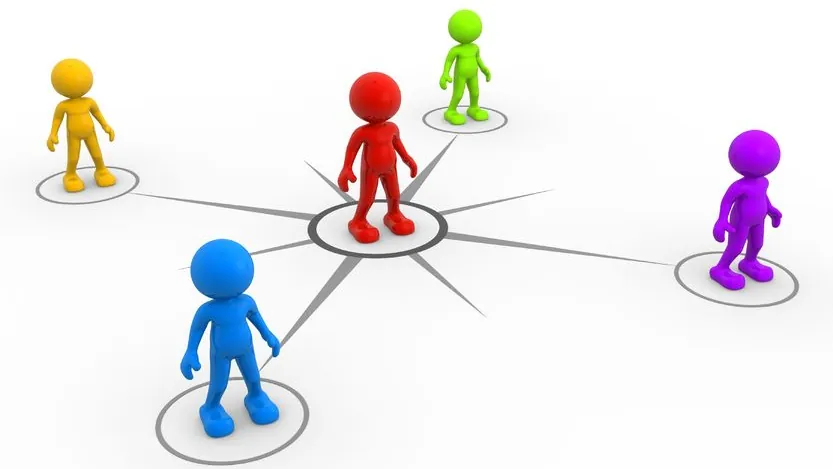
    As a project manager I was the project leader. I saw myself as the hub of a wheel, coordinating the activities of various functions, departments and personnel who are connected to me through the spokes of the wheel. Unlike our typical perception of a leader, I am not out in front of everyone, I am amongst everyone. Unlike a male perspective of leadership I am not using a hierarchy to give me power over people. Instead I am using a woman’s circular perspective. Standing amongst people presumes leadership gives us as power with people. I am empowered and every member of my team is empowered.

    In project and complex environments, a leader oversees many tasks or functions. The leader isn’t an expert in each one and can’t develop the solution to every problem or the answer to each new situation on his own. The leader must rely on the input of others. When the leader is on top of a hierarchy, interaction is limited and information is filtered as it makes its way to the leader. This style of leadership doesn’t produce the best solution.

    Using a circular perspective, standing amongst people interaction is not limited. The role of the leader is not to direct the solution or answer but to draw out the collective expertise of the group and integrate ideas in order to derive the best course of action. Standing amongst people requires collaboration, synergy, integration and coordination, all traits that women excel in.

    To become comfortable with asserting our leadership, we start by being a good team member. People are assigned to a team because they have skills and expertise the team needs. Each team member steps forward with their skills each time they recognize the team needs them. Team members can’t sit back and wait to be called upon because the leader and other team members may not know the skills are needed. Whenever a team member takes action that impacts another team member, the impacted team member is responsible for stepping forward and letting the team know how they are impacted. To have a fully functioning team, each team member must exercise leadership.

    When we see our workplace taking actions that adversely affects morale or performance we need to make a leadership decision. We can look at our position in the organizational hierarchy and believe we aren’t in the right position to speak up or do anything. Or, we can see ourselves as a team member with a responsibility to speak up. And of course someone with a hierarchal perspective can always challenge us or outright dismiss us. But that shouldn’t be the reason we don’t speak up. In my experience it often comes back to bite them and I find I am listened to a little bit more the next time. So even though there was a delay and the step forward small, my leadership had an impact. We shouldn’t believe that leadership is only about creating a big impact. Leadership is also exercised to make the slow, step-by-step journey of moving in a new direction.

    Leadership is about change. Anyone who wants to change the status quo or wants to improve the status quo must see themselves as a leader. Non-leaders accept things as they are even if they don’t like them. To be a leader you must believe that you have the right to express your point of view and believe in your point of view. That can be scary, especially when you are the only voice with that point of view. But then, that is how many great changes began.

    A good leader leads the people from above them. A great leader leads the people from within them. – M .D. Arnold

    The task of the leader is to get their people from where they are to where they have not been. – Henry Kissinger

    Empowered Women Get Paid Their Worth

  • How Women Become Empowered

    The tagline to my website is “Empowering Women to Lead the Male-Dominated Workplace.”  Since writing it, I’ve been amazed at how controversial this statement is.   This is because as a society we created a controversy instead of simply understanding the different perspectives men and women have about empowerment.14024223_m

    First, let’s understand what empowerment means.  I like the definition in Wikipedia:  “Empowerment refers to policies and measures designed to increase the degree of autonomy and self-determination in the lives of people and in communities in order to enable them to represent their interests in a responsible and self-determined way, acting on their own authority.”

    I like this definition because it uses the terms autonomy and self-determination.  In my list of male and female balancing traits, I list Autonomy as the primary male trait.  Men understand Autonomy – doing what they want, when they want based upon what they think is best.  Men naturally think autonomously.

    Men’s Autonomy allows them to empower themselves.  As teenagers they couldn’t wait to turn 18 so they could become legal adults who no longer had to ask their parents for permission.  Men believe that once they become a legal adult, they are fully empowered.  Period.

    Today, there is no reason why all women shouldn’t have this same attitude – that once we are an adult we are fully empowered.  But many of us still don’t assume the empowerment that is rightfully ours.  Part of the reason why is because we don’t have the same instinctual perspective about autonomy as men.  We don’t see ourselves as an individual first.  We see ourselves as part of a group.  Unlike men, when we take action we recognize it impacts other people.  Therefore we feel a need to check with others and validate that our action works within the group.  We expect other people to give us feedback and tell us how the action we want to take impacts them.  Women give us this feedback.  Men however wonder why we are asking for permission or validation.  To them, if we believe the action is what we need to do, then being autonomous and empowered we should just do it.    If we ask for permission or validation, they will assume we see ourselves as teenagers and treat us as such.

    In my senior year at Virginia Tech in the early 80’s I was explaining my career decision to an old male administrator.  He got a very annoyed look on his face then yelled at me: “You’re free white and 21.  You don’t need to explain what you are doing to me.”  I was shocked by his statement for two reasons.  The first was his obvious bigotry.  The second is why I always remembered this moment.  While I heard the statement before, I understood that it applied only to men because women based on gender had no rights or privileges of their own.  In a shocking way, he told me I was fully empowered.  He told me to think of my autonomy and self-determination exactly the same way any of my male peers would.  I was a legal adult and I have every right to go out and live my life on my terms.  Period.

    And that is what I did.  And my life on my terms put me in traditional male roles in one of the most male-dominated industries.  Through my experiences I got to understand empowerment from both a male and female perspective.

    Where women erode their inherent autonomy is in believing that we need laws, rules or policies to empower us.  But, from a male perspective being empowered through permission makes empowerment an oxymoron.  You can’t have self-determination if you have to ask to be granted self-determination.  Our view of empowerment is backwards from how men understand and use their empowerment.

    As women we need to reverse how we think of empowerment.

    Once we turn 18 we are adults and therefore are fully empowered with the right to our own self-determination.  It then takes laws, policies, rules and values to limit our autonomy and self-determination.  This is how empowerment works in the male-dominated workplace.  This is why we hear men at work say “It is better to ask for forgiveness than for permission.”  Unless you are explicitly restricted in your action, you are free to act according to what you believe is best.  Women have to understand this perception of autonomy and empowerment in order to be happy and successful in the male-dominated workplace.  The women that do, love working in the male-dominated workplace.  They don’t create barriers that don’t really exist.  The women that don’t get it, unknowingly hold themselves back.

    Being empowered also means accepting yourself for who you are and knowing your value.  This is how society truly works against empowering women in the workplace.

    Our society values stereotypical or traditional male traits more than female traits.  This is especially true in the workplace.  Men don’t have to question their value or right to empowerment.  But, for women, it is a constant reminder that the traits they naturally feel are inferior.  If we empower who we naturally believe we are, then, we are empowering inferiority.  This deters women from feeling the same empowerment men take for granted.  After all who wants to stand up and proclaim “This is who I am and I am proud to be inferior!”?

    The reason I started speaking out on empowering women is to tell women that our natural traits are not inferior in the workplace.  Who we naturally are is powerful and very much needed in the male-dominated workplace.

    From my experience I know that in today’s complex workplace, female traits are the most powerful and most underutilized tools the male-dominated workplace has at its disposal.  Throughout my career I’ve proven that when I added my female traits to my male-dominated workplaces, performance soared.  I know our female traits are the keys to success the male-dominated workplace has struggled for decades to find.

    So, the foremost “measure” society needs to take to empower women is to stop promoting male traits as the be-all, end-all in the workplace.  We must stop the constant messaging telling women that they must identify with traits our society labels as “male” in order to be successful.

    Male traits represent only half of the equation.  The other half is female traits.  We must recognize that men and women are designed to work together, in balance and only when both sets of traits are present can there be sustained superior performance.

    No law, rule, policy or other person can empower women as much as our own attitudes and perceptions.  As women we must embrace who we are and understand how everything that we are told is “wrong” about us is actually right, valuable, powerful and transformative.  Then we must grab ahold of our full empowerment that has just been sitting over there in the corner getting dusty.  No one else is going to pick it up, dust it off and hand it to us.  We don’t have to ask anyone’s permission and we shouldn’t assume we have to run through a blockade of men to get it.  It is completely your choice as to whether or not you pick it up.  It is completely your choice how you use it in your life.  And because these are your choices, you are empowered.


    Empowered Women Chose To Use Their Inherent Empowerment

    Contact me to receive new articles

    And don’t forget to share!