I’ve been anticipating it and it finally happened. Someone, (Ed Rollins) called Alexandria Ocasio Cortez “little girl.”
Of course, AOC thought the comment was pure misogyny. And her response probably caused lots of old guys to chuckle and shake their heads saying, “Oh little girl, you have so much to learn.”
Obviously, there is a huge generation gap at play but in this case the “little girl” moniker is something AOC shouldn’t dismiss. It’s a warning she should heed.
Remember when Trump called Marco Rubio “Little Marco?” It wasn’t a reference to his hand size or the size of anything else. The slam meant that Rubio was still wet behind his ears. He didn’t have the breadth of experience to be President. Sure, Rubio had a lot of political policy positions, but he lacked real-world experience. He was never responsible for executing his policy positions or accountable for their results.
Rubio didn’t experience the hard knocks, leaving him green and untried. Trump picked up on this created the “Little Marco” nickname.
But Trump also gave him some respect. He didn’t call him “Little Boy Marco.”
Being called “little boy” or “little girl” means you don’t have the basic the knowledge to come up with good ideas. It means you still need to learn how the world and your workplace function before you open your mouth and express your ideas.
We are all “little boys” and “little girls” in the beginning of our careers. Even though we have a college or technical degree, we haven’t applied our education out in the real world. Therefore, we haven’t discovered the many ways our book learning fails against the realities of the world.
We need to spend our early years wisely because what we learn in these years sets the path for the rest of our career. We need to tackle challenging assignments and experience the hard knocks. This is how we us learn and grow. But most importantly, it’s how we earn respect.
AOC needs that experience. When she answers questions, her gaffs reveal how much she still has to learn. So, she needs to spend the next few years quietly learning, challenging herself and growing.
But unfortunately, she is in the social media spotlight. And she may be confusing media popularity with respect. She needs some old school mentors to pull her out of the spotlight, take her under their wing and challenge her.
If she expects to be taken seriously, her ideas have to do more than sound and feel good. She must make them complete and feasible. She needs to figure out how to make them work in the real world. Then she must have the courage to present them and be held accountable for their execution and their outcome.
This is how it works in the real world for anyone, man or woman, who wants to be a leader.
The question I am most frequently asked isn’t about working with men, its about working with women:
Why are so many women such horrible bosses?
Even though I’ve never had a female boss, I’ve supervised and worked with women who supervised other women. From those experiences, I totally understand the question. There never seemed to be a shortage of drama and conflict. And because many of the women bosses acted horribly towards their subordinates, I dealt with a lot of HR issues that my male colleagues either ignored or just ran away from.
It may seem surprising that so many women are horrible bosses because women frequently tout their soft skills – understanding, listening, empathy, communication and teamwork – as reasons why women are better supervisors and managers.
But when women abandon those traits, we become cold, selfish, mean and bitter. I found we also choose to isolate ourselves, rejecting all efforts to feel included and part of the team.
Why does this happen to so many women?
The short answer is:
Because we listened to and believed all the erroneous narratives about men and the male-dominated workplace.
The most destructive narrative we believe is that the male-dominated workplace functions through survival of the fittest.
http://www.123rf.com/ 29871151
I remember this narrative from back in the 1960’s. Every week we watched Mutual of Omaha’s Wild Kingdom where we witnessed how the strongest, boldest, fiercest male rose to the top. Then we would see a courageous young male challenge and fight the Alpha for his position.
Most of the time the Alpha wasn’t toppled and the young usurper retreated to lick his wounds.
As we watched survival of the fittest play out, male scientists also told us men were like a wolf pack with Alphas, Betas and Omegas. In school, teachers taught us about the Gilded Age when ruthless, cutthroat men rose to enormous power and wealth.
We were conditioned to believe men and the male-dominated workplace functioned through aggression.
In response, we created our own narrative:
“Tear-down-to-rise-up.”
Women touted this narrative over 40 years ago and it still thrives.
“Tear-down-to-rise-up” teaches women to be aggressive. We believe we have to tear down and discredit our male colleagues in order to stand out. If we want a promotion, then we have to take down the person in the position and replace them.
www.123rf.com – 39546075
Through the decades, “tear-down-to-rise-up” hasn’t been an effective strategy to advance women in the workplace. It’s only been effective in ruining our workplace relationships.
When we use it on our male colleagues they respond aggressively and ostracize us. We then interpret these responses as proof that the narratives are right – the workplace functions through survival of the fittest and men don’t want women competing with them in the workplace.
Unfortunately, we haven’t realized we just created and trapped ourselves in a self-fulfilling prophecy.
Our fundamental problem is that we don’t understand how men really function in the workplace and we don’t understand their form of aggression.
Even worse, we’ve spent decades teaching women to act like men – to act the way our narratives tell us men act. In the process, we’ve forgotten that WE ARE WOMEN! And women’s aggression is very different from men’s.
Men use offensive aggression. They aggressively go after what they want. Most conflicts between men exist because a man can’t do what he wants, the way he wants because another man, is using his position or power to stop him. Eventually, someone backs down or there is a compromise. Then, for the most part, once there is resolution, the antagonism is gone.
Women use defensive aggression. When we feel attacked, we go for the kill. Mutual of Omaha’s Wild Kingdom showed us that females are not afraid of any predator, especially when it comes to protecting their young. So, when we feel defensive in our workplace, we apply our instinctual “mama bear” attitude and we can get really mean. And as long as our defensiveness persists, so does the antagonism.
We use “tear-down-to-rise-up” to focus on our relationship with men in our workplace. Meanwhile we’ve ignored the effect our defensive aggression and using “tear-down-to-rise-up” has when we use it on another woman.
Many women bosses came up through the ranks believing in or using “tear-down-to-rise-up.” If they used it on their male colleagues, then they probably developed a lot of hard feelings.
In my experience, a woman who is a horrible boss is also extremely defensive. She expects to be attacked by men and women.
She expects men to favor a popular woman colleague and unfairly advance her career. She expects an ambitious younger woman to use “tear-down-to-rise-up” on her.
Her defensiveness makes her attack.
In response, the woman who is attacked becomes defensively aggressive. She attacks back.
Since the boss’s self-fulling prophecy has come true, she escalates. The other woman sees the boss as a predator and doesn’t back down. She may not openly retaliate. She may just rely on other more subversive means to get back at the boss.
It doesn’t take long for the workplace to be consumed in emotional female drama.
Chances are you’ve witnessed this in your workplace. And if not, turn on any REALITY television show featuring women. These shows promote women as aggressive, combative and overly emotional. They don’t act the way we want women to act.
In my experience many women bosses who act horribly have personal issues that have nothing to do with the workplace. Being a woman, I used to try to help them. But they exhausted me. So, I decided that I’m not a psychologist and they were responsible for getting help with their issues. My job was to address and hold them accountable for how their behavior affected the workplace.
The other common problem I’ve encountered with horrible women bosses is that they don’t how to work with other women.
Many turned off or abandoned their female traits believing they are incompatible with the male-dominated workplace. They try to fit in with the guys by becoming one of the guys.
Some look down on women in traditional roles. They fear that being seen as “a woman” will make their male colleagues lose respect for them. They fear they will lose some of their nontraditional responsibilities and be assigned more traditional ones. Their fear makes them defensively aggressive.
So how do we get women to stop being so defensive and aggressive? How do we get them to empower their positive female traits?
I found that since so many of these women feel ostracized, the best strategy is teambuilding. While there are many ideas for “teambuilding” out there, I’ve found that most of them aren’t effective. People know it’s artificial. So, you can always count on some men to not show up because “they have real work to do.”
What I’ve done that is very effective is to get everyone together and have them solve a workplace problem together. This video discusses this method and why it is so effective, especially when led by a woman.
Unfortunately, most men just wimp out of dealing with horrible women bosses which is why they persist. So, it comes down to women to address them. And while we may not think it is our job to do so, what we are really trying to do is have women empower their true female traits in the workplace.
Being a woman working in a career-field dominated by men, I’ve run into countless men afflicted with BMOC (Big Man on Campus) Syndrome.
Usually the first warning sign that a male colleague has contracted the syndrome is his aggressive declaration “I want to be in charge” accompanied by the look and body language that says, “Because I am The Man.”
Allowed to run its course the syndrome affects the ego, over-inflating it to an unrealistic level. Soon he is stricken with BMOC Syndrome’s most recognizable symptom – a big head.
As women, our conditioned response to BMOC Syndrome is to back off and let the syndrome completely infect him. But, when we do, we allow the disease to spread – and we get infected too.
In us, the disease presents very differently. Our typical symptoms are a diminished ego, a loss of assertiveness and a smaller voice. Since the symptoms of BMOC syndrome are so radically different in women, our male colleagues refer to it as Little Woman Syndrome.
When I first began working one of my male colleagues had a very serious case of BMOC Syndrome. I backed off and let him “take charge.” I developed Little Woman Syndrome.
However, after his second bout of the syndrome I realized his BMOC Syndrome also infected our team and workplace. As a team our symptoms were chaos, disorganization, poor communication and poor performance. In other words, we were a big mess.
After that experience I decided to dedicate my life to stopping the spread of BMOC syndrome and its devastating effects on women and the workplace.
After years of combating countless cases of BMOC Syndrome, I am happy to report that I’ve developed a few remedies for the disease’s various stages.
As women, we typically encounter the first stage of BMOC Syndrome early in our career when everyone is trying to establish themselves – trying to make their mark. Our infected male colleague becomes offensively aggressive and overly competitive. He may also develop a brown nose and/or puckered lips.
As women, we think we have a binary choice when faced with an infected colleague – we can fight him or back off. As I already mentioned, most of us choose to back off and contract Little Woman Syndrome. Once infected it can become a disease that infects us the rest of our career.
Some women choose the fight option and try to contract BMOC Syndrome in the name of equality. They try to be as aggressive and competitive as their colleague. However, that seldom works because very few women can out-man a man with BMOC Syndrome. Instead, they wind up letting their male colleague infect them with Bitchy Woman Syndrome.
Our male colleagues love it when we come down with this!!
The true remedy to BMOC lies in a powerful third option, one that is homeopathic and natural to women. We don’t fight or retreat. Instead, we hold our ground. We stay put. We become immobile and use the Power of “No.”
By holding our ground, we don’t allow BMOC syndrome to elevate one man’s ego at the expense of everyone else’s. We keep everyone equal and working as a team. This allows us to say:
“No. You and your ego don’t get to come ahead of this team. We all have ideas and we will express them. Together we will resolve this issue/problem/project as a team. We will work together, succeed and make our mark as a team. So, park your ego and sit down.”
Using this natural remedy for the first time can be terrifying. We would rather swallow a spoonful of cod liver oil! However, we have to understand that the ONLY reason it is so difficult is because we’ve been taught women have no natural immunity to BMOC Syndrome.
And guess who taught us this?
Men with BMOC Syndrome.
However, once we take a stand, we are inoculated, we are forever immune to BMOC Syndrome. Something happens inside our head, heart and body and all we can say is:
“No. I will not be infected with Little Woman Syndrome just so a man can be The BMOC.And I won’t fall into the trap of Bitchy Woman Syndrome either, no matter how much they want me to get it.
Once we accomplish that physiological change within ourselves, we assert ourselves. We take on leadership roles. We have achievements for ourselves and our team.
It feels wonderful!
But then our success attracts the second stage of BMOC Syndrome.
Men who are pre-disposed to BMOC Syndrome become jealous of our success becauseit’s bigger and better than theirs.
They don’t believe a woman should have that kind of success, power, authority or achievement. All of that should reside within A Man. Consequently, they will try to take our success and claim it for themselves.
In mild cases of BMOC syndrome, they openly challenge to us. As the syndrome progresses, they backstab us. In the most severe cases of BMOC syndrome men actively sabotage us.
However, before we catch a bout of Bitchy Woman Syndrome, we remember:
The reason he is attacking us is because we are better than him.
We are The Achiever who has a track record of meeting goals and objectives.
We have more clout than him. Management depends on us and our performance.
My simple remedy to this is a little attitude and confronting him directly:
“So, we have X problem. Do you know how to fix it? What are you going to do?”
Many times, if we put him on the spot, we shake his fake self-confidence. We remind him that he has to deliver better performance than us. Our challenge and self-confidence more often than not make him back off.
Or another remedy is using our clout with our management allies. Again, with a little attitude that reminds them who they rely on, we request that this pip-squeak stop annoying us.
These remedies work in many workplaces. But not all.
In some workplaces, management itself is deeply infected with BMOC Syndrome. Our colleague knows this so he will us his brown nose and puckered lips on these infected managers to help him usurp you.
Suddenly, you are removed from your job or role for no valid reason – except – “This area is functioning so well, that A Man has to be in charge of it.”
As a woman, it is the most frustrating experience we will experience because we know that there is absolutely nothing we can do. We have no recourse. Of course, we can fight or file a complaint. However, those just lead to us being quarantined because they decided we have Bitchy Woman Syndrome.
At this point we have to be careful.
Our natural immunity is down and it’s easy to feel defeated and become infected with Little Woman Syndrome. We will get advice telling us to take on and be content in a “support role” (traditional female job no real man wants). People will also tell us the fairytale that if we work hard and show our dedication and loyalty then one magical day these men with BMOC Syndrome will notice us, realize our value and reward us.
Ha! That will NEVER, EVER happen! The men will live happily ever after, but we won’t.
To recover, we once again empower our natural immunity and the Power of “No.” We say “No” to contracting Little Woman Syndrome or Bitchy Woman Syndrome.
When we do this, our brain connects to the intuitive wisdom of women.
We realize that the man who usurped us was only after our job title. He doesn’t want the hard work, responsibility and accountability that come with it. He can’t do the job and he knows it.
He is counting on us to contract Little Woman Syndrome. He expects that because we are desperate to prove our worth, we will keep doing his job while he is out playing golf and taking long “business” lunches.
However, we don’t fall for the trap he has laid out for us. Instead, we use our womanly wisdom. We:
Accept that we were kicked to the curb. We lost our role and title. We also lost the work, the responsibility and the accountability.
Accept that we can work our fingers to the bone but we will never be rewarded.
Remember that we are the Achiever, not him. He can’t do the job on his own.
Using our womanly wisdom, we become infected with Empowered Woman Syndrome.
Empowered Women don’t do somebody else’s job for them. Empowered Women make men do their damn own job, especially when they usurp ours.
So, when our usurper demurely comes to us, requesting us to “help him out” and keep doing our previous duties, because “we are so good at them and we are a good team player,” we say:
“No. You wanted the job. You got it.”
Then we turn and walk away.
He wanted the title, he got it. He also got the responsibility, the hard work, long hours and the accountability.
Many women are afraid to say this because we think he will go running to management, complaining we aren’t a team player.
But – we should dare him too.
Remember those managers have BMOC Syndrome so I guarantee their response will be:
“What do you mean you need a woman to help you? You’re The Man. We expect you to do the job. We put you in that position to prove whatever a woman can do a man can do better.”
So, for our usurper, running to management is a really bad idea.
Remember we set the standard for the job and now he has to measure up to it. We let him figure out how to do it all by himself – after all, he’s The BMOC.
Meanwhile, we enjoy our time being kicked out to the curb and the frilly, girly duties we were assigned. And because we are women, we keep an eye on our usurper and wait patiently. We know he is screwing up our job and we know he will fail.
Some of my usurpers quit and walked out the door.
Some were fired.
Others just wiggled their way into a new, less demanding job.
Yes, I’ve been usurped a lot. There is a lot of BMOC Syndrome out there. But that’s okay because in response, I’ve contracted a very severe case of Empowered Woman Syndrome.
And I learned that BMOC Syndrome is no match for Empowered Woman Syndrome.
Eventually, I always got my job back.
However, before I took it back, I had one condition. I knew that when my usurper asked to be paid more than me and the BMOC managers agreed because he’s The Man.
My Empowered Woman Syndrome required me to now be paid more than him because I am The Woman, and I have to clean up the mess made by The Man.
Empowered Women Aren’t Intimidated by BMOC Syndrome
If you haven’t figured it out from reading my articles, I believe in women standing up for themselves. I believe women can stand up to anybody and to institutional power. After thinking about why I feel so strongly about this, I realized I learned this powerful lesson in the first grade.
My first grade teacher was mean and a bully.
To this day I can’t tell you her name because I never really knew it. I always called to her Mrs. Poo-Poo Head.
Within the first hour on the first day of school she made very clear that she hated boys and blonde-haired girls. Reading through the attendance roster, she rearranged us to let us know who she favored and who she didn’t. My friend Shelly, who was a sweet blond-haired girl was removed from her desk in the front row and sent to the desk closest to the door. The teacher then moved two brunette girls up to the front and made it clear that they were her favorites.
All the boys were sent to the back rows.
I was a redhead with curly hair and freckles. After she informed me that redheads are the devil’s children I was moved to the back row, next to Gino, the boy she despised most of all.
She demonstrated her hatred of boys every day.
When we had to line up to go somewhere, she typically called for the girls to line up first with her two favorites at the front of the line. Shelly and I took our places at the end.
If boys jumped the gun and lined up at the same time as the girls she humiliated them. Her favorite punishment was to put bows in their hair and make them walk around all day with the bows.
As the last girl in line, I tried to make the boys sit down before they were caught. I was scolded for helping the boys and sent to sit in the hall as my punishment.
In those first months of school I was sent to sit in the hall about once a week for helping the boys or speaking out that something was unfair.
I remember a spelling bee where the final 3 were myself, another girl and a boy. When the boy correctly spelled his word, our teacher told him he spelled it wrong. I spoke out and said he spelled it correctly. Other kids joined my protest. The boy and I were sent out of the classroom to sit in the hall.
As The Girl in the Hall, I got some attention because my school used this punishment to remove unruly boys from class. After the first couple of punishments, other teachers began asking me what I did to warrant my punishment. I replied with the truth that I challenged my teacher’s unfairness. After a while I became aware that the teachers next door and across the hall monitored how often I sat in the hall.
One day Gino came to school with a broken leg. It was no secret that he was abused at home by his father and his two older teenage brothers. Seeing his broken leg our teacher came back to him and asked him what happened. He said he fell down the stairs and after more questioning it was clear that his father pushed him. Our darling teacher then sided with his father, told him he was a bad kid and deserved it as well as the beatings he got from his brothers.
Sitting at my desk and listening to her, I began crying. She scolded me for crying.
I will always remember it was at that moment that I began hating this woman.
My tears turned to anger. I kept whispering to Gino that it was going to be all right and not to listen to our teacher because she was a mean wicked witch.
Later that day we went to gym class. Our teacher told the gym teacher that Gino couldn’t be excused from gym class because he didn’t bring a note from home. Listening to our teacher I learned that Gino’s mother couldn’t write a note because she was in the hospital with cancer.
The gym teacher didn’t challenge our teacher and Gino wasn’t excused. I got the impression they considered Gino’s family “trash” and if was OK abuse Gino because it was what he deserved.
My anger and hatred intensified
As we did our jumping jacks I looked over at Gino who was struggling with his full leg cast. Our teacher and gym talked as they stared at him. To me, my teacher seemed obviously proud of the punishment she inflicted on him.
My 6 year old mind saw the evil, wicked witch portrayed in fairy tales. My anger exploded. I got out of line and went up to the teachers and began yelling at them. The gym teacher pulled Gino out of the line and had him sit along the wall. I was told to sit down next to him. Then another boy got out of line to defend me and Gino. He was sent to sit along the wall too.
I didn’t consider being expelled from gym class as punishment. Using my imagination, I pictured us sitting under a big sign that said, “The Winners.” I was never afraid of standing up to that witch again.
In early December our teacher said she had a “special” holiday project for the last week of school. She said that whoever brought in the most potpie tins could help her. I told my mother and we collected the tins from our neighbors and family. A week before the deadline I brought in a bag containing 18 -20 tins. My classmates were all excited about how many I was able to round up.
On the big day of the project, everyone told me they knew I would be the helper. However, our teacher announced that one of her favorites would help her. I felt betrayed. My classmates sat in shocked disbelief.
Then one of the boys spoke up on my behalf. Before the teacher could reply, the rest of the class joined in, including her two favorites.
She had a full blown mutiny on her hands.
I knew the reason they stuck up for me when I was wronged was because I stuck up for them when they were wronged.
I spent the day helping my teacher do our project of filling the tins with plaster and putting a candle in the middle. Amazingly we got along extremely well. I could tell that for some reason this project meant a lot to her. It had a personal and special meaning that made her very happy.
Those last two days before Christmas break were the happiest days in the classroom. After the holidays it was all back to “normal.”
In the spring, she eventually went too far. When 3 boys lined up with the girls, instead of putting bows in their hair, she made “bonnets” for them out of doilies and ribbon. She then made them walk through the school wearing their “bonnets.” I remember some other teachers questioned her about it. She gave her standard reply that if the boys wanted to line up with the girls, then she would treat them like girls.
When we got back to the classroom, she had the girls and the boys with bonnets remain lined up against the wall. She then berated the boys and told them she was going to call their fathers and tell them their sons want to be girls.
The boys got very upset and began crying. One boy got hysterical and kept pleading, “Don’t call my father, don’t call my father.” (It was 1967 in New Jersey so you can imagine how some fathers would react to that phone call.)
Most of the girls started crying. Then two boys who were seated stood up. From the look on their faces, I thought they were going to attack our teacher who was still mocking the boys relentlessly. Since our teacher was standing in front of me, I got out of line and placed myself between her and the boys who were ready to attack. I began yelling at her to stop. Other kids started yelling at her to stop. Every kid in the class was either yelling or crying.
She got control of herself and sent me and the three crying boys still wearing their bonnets to sit in the hallway again.
This time other teachers came out of their classrooms to check on us. I remember sitting there trying to console the boy who had been hysterical. I don’t remember what I said but it was clear something had to be done. The teacher in the classroom next door went back into her classroom and called the principal. The principal and some other women came and we were taken to the lunchroom for the rest of the day.
For the remainder of the year, our teacher was a lot more subdued. I assumed she got in a lot of trouble. I also noticed our classroom door was always left open as was the teacher’s next door. And every day the principal or another adult stopped by our classroom.
On the last day of school our teacher tried to get in her last little jab in at me. I got 100% all year on my spelling tests so I was supposed to get a BIG gold star on the front of my spelling book. However, she gave me a little gold star. I knew she did it deliberately, so I called her out on it.
I stood there at her desk going through my book, showing all my perfect tests. She never looked at me or said a word but eventually slammed a BIG gold star on the front of my book. Everyone looked up. I gathered my book and walked back to my desk in the last row in triumph.
To me, I didn’t earn my BIG gold star for spelling.
I earned my BIG gold star for standing up to the wicked witch.
After reading this story it is easy to focus on my teacher and be outraged that she was allowed to bully, abuse and victimize her students. We can blame the school administration and the organizational power structure for not doing their job, intervening and removing her from teaching.
But if you focus on the teacher, you miss the real moral of this story.
Back in the 1960’s and 70’s, bullying was a battle between the bully (and their friends) and the person being bullied (and their friends.)
It was up to us to stand up to a bully and make the bullying stop.
With this principle as my foundation, my first grade experience taught me all I needed to know about bullying:
Bullies thrive when no one stands up to them.
Adults can be intimidated by a bully and be bullied too.
People can witness bullying and choose to look the other way.
You have to be your own knight in shining armor. If you wait to be rescued, you will be bullied while you wait because of lessons 2 and 3.
Most people are afraid to be the first one to stand up to a bully.
If you are the first to stand up against a bully, you have to rally support.
Other people will join you in your fight against a bully because most people want to do what’s right.
If you stand up for other people, they will stand up for you.
People who stand up to bullies together form a bond and become allies.
Bullies don’t stop just because you stood up to them once. You have to keep standing up to them.
If you keep standing up to a bully, eventually something will change, something will be done.
All bullies can be defeated. It just takes one person choosing to step forward and start the process.
As a 6 year old, I summed up these lessons in fairytale terms:
When Good fights Evil, Good always wins.
As it turned out my first grade experience prepared me well for the rest of my life.
In third grade two different groups of boys thought they could beat up the girl with the curly red hair. They both learned I always fight back. And when you rip my favorite coat, I get really, really mad and there is hell to pay.
In college when a guy tried to grab me to sexually assault me, I grabbed him back…in the crotch. I then squeezed as hard as I could, yanked down and twisted. He screamed out in pain.
As a woman in a male-dominated workplace, first grade taught me to never be intimidated by any of the men I worked with or any of their power plays. I didn’t care who they were, I believed I could stand up for myself. If they retaliated, which some did, I just kept standing up for myself.
I refused to let evil or bad behavior win.
Of course there were times when I questioned if I should back down (usually from listening to the advice of others.) There were also times when I questioned if I should get involved in a situation because the person being bullied didn’t want to stand up for themselves.
But then I always remembered Gino with his broken leg and I felt compelled to take a stand.
(BTW, Gino’s mother passed away during the school year and he went to live with his grandmother…without his older brothers.)
I lived by the lessons I learned all through the first half of my career with success and great satisfaction. But in the latter half, Rule 4 went away.
Society decided that people shouldn’t stand up for themselves. Instead, we must report incidents to people with the proper authority and rely on them to rectify the situation on our behalf.
Because of my experience in first grade, I don’t like this. It disempowers us and empowers people with the “proper authority.”
It gives them the power to decide if we are worthy of defending or if we deserve how we are being treated.
And because the new policies didn’t eliminate Lessons 2, 3 and 10, I got mixed results from reporting bullying, harassment and unfair practices.
Some of my managers handled the situation so badly they made the situation worse. In one workplace we discovered that the person we had to file the complaint with, was severely bullying the bully we complained about.
I’ve also learned the hard way that many, if not most, of the people with proper authority who are supposed to deal with the situation, don’t want to and won’t do anything. I’ve had them try to intimidate me and bully me to make the complaint go away.
However, in all of these cases I kept going and eventually found the good people who sided with me.
There are good people who will do something.
When I was sexually harassed at work and did get the fairytale response every woman hopes and dreams of:
A true (though not handsome) knight in shining armor who was more upset by the incident than I was, was willing to fight for my honor.
However, he said he had to delay his response a day because he was so angry that he knew he would punch my offender in the face that day.
I’ve also known senior managers who dropped everything to get on a plane and intervene in a situation.
The latter half of career taught me that in spite of these new corporate policies and our heightened awareness, Rule 4 still exists:
You have to stand up for yourself.
You have to be your own knight in shining armor.
Don’t expect chivalry. Don’t expect that even when a friend offers hours of listening, compassion, understanding, and empathy, they will put themselves on the line to fight alongside you.
Most importantly, don’t expect anyone to fight harder for you than you are willing to fight for yourself. And if you are afraid to stand up for yourself, then just remember:
If a classroom of first graders can stand up to their bully teacher, then grown adult women can certainly stand up to their workplace bully.
I never stopped believing in the lessons I learned in first grade. As I applied them throughout my life, I learned one more powerful lesson women are seldom told:
There is GREAT POWER in doing what is right, standing up for what is right and speaking the truth.
Bullies and evil-doers are afraid of this power because,
The current narrative says that all unwanted sexual attention and harassment is based in power. It isn’t.
Sometimes it is simply about sex.
Like many women I experienced a lot of unwanted attention and been harassed by outside associates, peers and even the men who report to me. Most of the time, I was the one with more power. I knew their advances weren’t intended to diminish me.
They just saw a woman who was different from most women and decided “I want to try her out.”
Many men cross the line into unwanted attention simply because they are looking for sex and believe the old saying: “Nothing ventured, nothing gained.” If they take their shot, they might get lucky.
This game gets played a lot when we are out of town. Men want to know if we are one of those women who also believes “What happens in Vegas, stays in Vegas.”
Do we transform from serious career woman to party girl?
Too often women make the mistake of being too polite when we reject these advances because we don’t want to hurt the man’s feelings or come on too strong. But when we are polite, he interprets it as us leaving the door open. He again thinks nothing ventured, nothing gained so he tries to open the door some more.
The harassment begins.
So ladies, we can’t be polite in our rejection – we take our shot and send him down in flames. His ego will recover.
There are also some men who have this weird notion that if he is interested in us, then we want him too. The idea that we aren’t attracted to him doesn’t even register as a possibility.
I’ve dealt with this and so have most of the women I’ve work with. And again, women have to give an absolute “No” and sometimes take action to make these guys leave us alone.
In one of my workplaces a lower-level man who worked for me developed a crush on me. One day I walked in on a group of my male colleagues including his supervisor talking about how the man could make some overtures to me. My angry reaction was:
“Guys, let me make this really clear. I GET A SAY IN THIS. Just because he’s interested doesn’t mean I going to say, ‘Ooohhh I’m so lucky, a man likes me.’”
“I decide who I date! And I DO NOT want him coming around me. So, you better get out there and start discouraging him because if I hear you encouraging him, I will come after all of you for sexual harassment.”
My colleagues did follow through. They made it very clear to him that I was way out of his league, and they intervened whenever he attempted to come near me.
Then there are the men who don’t believe a woman can be single – she must have a man in her life. She MUST have sex with someone!
It’s another strange thought process that only make sense in the male mind.
These men play match maker and try to set you up with every single man they know, including men you wouldn’t date in a million years.
They don’t understand that you have standards for the men you date beyond the possession of male genitalia.
Since I’m not easily offended by male antics, my approach to dealing with this is to give the guys my list of dating requirements and say, “Find me this guy.”
The list of course has very high requirements. But if they can find him….
Then there are the weirdos and naturally creepy men.
The first time I ran across this man was 6 months into my career when I went to a training course. The last man to enter the classroom was looking for a seat and I motioned that the seat next to me was vacant. That was my mistake.
He interpreted my offer of a seat as me saying: “I want you to sit next to me because I want you.” Two days later, this man, who was the stereotypical geek, professed his love for me and began stalking me. By the end of the week, he said that he was leaving his wife and child for me.
At first, I was concerned for my safety but then realized I could break this little geek in half like twig, so I tried to ignore him.
Ironically his stalking turned out to be helpful.
One of our classmates became extremely ill and needed to go to the hospital. We didn’t have a car to take him, but I knew who did – my stalker. And being a good stalker, he was standing right there. He gladly gave us a ride.
After the course, thankfully, I never saw or heard from him again.
Unfortunately, he wasn’t the last creeper I dealt with. However, I took all of the others much more seriously.
We must remember that there is a lot about our colleagues that we don’t know. We only have a professional relationship with them and even if we are friendly a lot about them remains hidden.
We should always listen to our gut instincts. If something feels off, then something probably is off.
I’ve worked with quite a few men who seemed normal but then their behavior changed. They either developed a mental illness or had one all along that they hid. A few became dangerous.
As women we will face a variety of situations and incidents. The one size fits all POWER narrative is far too simplistic. We have to recognize situations for what they are, so we deal with them appropriately.
When we follow the narratives that say every situation is about POWER, we automatically cast ourselves in a weaker, subordinate position.
We tell ourselves we have to be afraid. We fear if we say “No” there will be consequences and reprisals. This makes us less willing to act or fight back – either in the moment or afterwards.
So, instead of assuming a man wants to assert power over you, consider he may just be looking for sex. After all, we had a sexual revolution several decades ago and men know women want (good) sex too. And we all know colleagues who got involved.
By now I’ve written enough articles like this to know there are some women who don’t want to hear anything other than it as all about power and are chomping at the bit to counter and say:
“Well, what about abuse and assault – that’s about power.”
I don’t disagree – those are about control and power. But just because they are, don’t make all incidents about power.
When we make all incidents about power, we hand men power they don’t have.
They will gladly take it and use it to their advantage.
Some then think, nothing ventured, nothing gained so why not try mixing power with a request for sex. If we fall for it, they use it again and again and again. They learn they can harass and abuse and get away with it.
So, remember, it’s not always about power.
Sometimes it’s about sex and getting laid. And we have the power to say “No” and take action if our decision isn’t respected.
Empowered Women Don’t Give Men Power They Don’t Have
I read an article about women and sexual harassment. After reading the article I got in a comment battle with another woman over how women should respond to sexual harassment and assault. She was very focused on offering empathy and sitting up all night with a woman who has been hurt. To her offering empathy and understanding is what empowered women do.
To me, empowered women do a lot more – they also take a stand and pursue justice. An empowered woman, after sitting up all night listening to her hurt friend, goes out the next morning and starts the process of getting justice. She is her advocate.
She puts her empathy, caring and understanding into action to help her friend get the justice she deserves.
The other woman focused on being a victim and creating a lot of energy around those feelings of victimization. But putting a lot of energy into that state perpetuates that state. And as the author of the article also discussed it’s hard not to be affected yourself by the story of others and let it drag you down.
To me, we need to put the energy towards healing and moving beyond the incident, so it doesn’t permanently alter our lives in a negative manner. I think of these negative incidents as someone pushing you down and infusing you with their negative energy. Our recovery process should then focus on working our way back up, ejecting their negativity and replacing it with our own positive energy.
I’ve always found that standing up for myself and pursuing justice works miracles in speeding up the recovery process. It gets me and the energy moving in the right direction. Sometimes the justice process is swift and easy, sometimes it is really hard, but you keep moving forward. If you are lucky enough to have an advocate she ensures you keep taking steps forward, even if they are baby steps.
When I feel I got the justice I deserve, I feel empowered and strong.
This is why I don’t reflect back on my career and see a long list of harassment, discrimination or unfair incidents. I see challenges and obstacles that made me stronger and more confident. They are a reminder that men don’t have power over me.
The subtext of the other woman’s comments (and what really fired me up) was that it implied that when men act inappropriately, empowered women can only respond in an emotional manner. Therefore, change can only come when men decide to change their own actions. Until then, it is women’s duty to keep pouring out the empathy and understanding to other women.
Doesn’t that sound a lot like the stereotypes?
Men act. Women are emotional.
What about women taking action?
After reading many comments on many posts, it seems that many women don’t believe or don’t want to believe that women have the power to act and influence men to change their actions.
Our society is conditioned to believe women won’t act. It believes if we give women their #MeToo moment to vent, appease them emotionally, sacrifice a few men, then eventually women will sit down, shut up and go away.
We conditioned men to believe they just have to wait it out. They don’t have to change because women aren’t going to do anything to make them change. Women aren’t going to impose consequences.
If women want real and lasting change in men’s behavior, then women have to stop just talking and empathizing. We need to act by standing up for ourselves, pursuing justice and imposing consequences.
But again, from reading through lots of comments, there are a lot of women who don’t want us to see women as actors and doers because it then makes women responsible and accountable for their own actions. In every incident they want women to be seen as innocent little lambs who are attacked by the big bad wolf in order to put 100% of the focus on men’s actions.
They don’t want us to ask:
“Why did you go up to his hotel room?
“Why did you get falling down drunk with those guys?”
“Why did you let him in?”
I can hear women screaming now “You want to bring back Victim Blaming!”
No.
I want women to understand the negative consequences of us denying our action, responsibility and accountability.
We’re way too anxious to believe our equality means we can act just like men. However, there are many environments and situations where we face vulnerabilities men don’t. We need to wise up to these.
Empowered women aren’t afraid to admit their mistakes and learn from them.
Fear of Blame is a guy thing. Men are afraid of admitting mistakes because it can affect their status.
Unfortunately, they’ve projected it to women and use it against us as victim blaming.
Men intimidate us with our 10% mistake, so we don’t expose their 90% mistake.
Men use our Shame to avoid their Blame.
We need to get wise to this and stop falling for it.
I’m not afraid to expose my mistake and take my 10% of accountability. If anyone wants to victim blame me then my response is “I know I’m not perfect. I am human. We all make mistakes.” Then I give them the look that says “Shall we discuss your long list of mistakes?”
This attitude let me to file an 80 page complaint against a serial abuser in which I included all of my dirty laundry. Not only was the serial abuser addressed but the company instituted a lot of policy changes to prevent the abuse he doled out.
I know I keep harping on how important our attitude and perspective are to standing up for ourselves (and others) and getting justice. This is why we can’t see ourselves as a powerless victim.
Several years ago I was sexually harassed at work and filed a complaint. My complaint was not kept confidential. Luckily someone who received it intervened and stopped a subsequent email that would have made it public.
I was horrified, disgusted and angry. As I drove home from work, I realized I was victimized – twice. I got very upset. After wallowing in my victimization for 20 minutes I thought:
“What the hell do I have to be ashamed of? I didn’t do anything wrong. The man who breached my confidentiality after being instructed to protect it was who was wrong.”
(My harasser was already fired.)
I realized how thinking of myself as a victim disempowered me. So I picked up the phone, called the appropriate person and got my justice.
That was the only time in my career I ever associated myself with “victim.”
Justice in her womanly form – raised sword and no blindfold.
I prefer to be a justice seeker and someone who always stands up for what is right. I found there is a lot of power in that.
And that probably explains why women are discouraged from believing in our power to act, our power to influence men and our power to invoke consequences.
There are some industry cultures that endorse a drinking culture – frequently getting together after work to drink. Coming from one such industry I understand how it normalizes alcoholism and creates problems for women.
Many women and women’s organization encourage women to participate in this culture in order to get ahead. However, my been-there, dealt-with-that, experience says:
Women must be very careful any time they are around men who are drinking!
Personally, I’m not much of a drinker – one glass of wine is my limit. So, I’m not big into getting together 3-4 nights a week after work for drinks. Frankly, I have better things to do with my time. And that is the first lesson about men the drinking culture:
Men who participate in it don’t have much of a life outside of work.
They don’t have a family or girlfriend they want to get home to. They don’t have a dog or even a hamster to take care of. They don’t go to the gym to work out, play a sport or have a hobby. Sadly, work is their life because it is their escape from the rest of their life. Recently separated or divorced men are often the ring leaders of getting the guys together after work so they don’t have to go home to a small, empty apartment.
Women are mistakenly encouraged to go out with the guys for the social bonding that will build relationships and advance our careers.
But how much career advancement do we get from our peers?
The answer is: Very little.
We are also told we need to participate if our boss or management is going because it is a great time to pitch your ideas and get face-time.
No, it isn’t. Because when men leave work, they leave work.
If you want to pitch an idea or discuss business in a more casual setting, that is what lunch is for.
After work, at the bar the “work” men discuss is in the form of telling war stories. Their minds are on story telling not on solving any workplace issues or making important business decisions. So, any idea you pitch probably won’t penetrate the boss’s brain…but…one of your male colleagues may overhear it and pitch to the boss over coffee the next morning.
Actually, the only career tangible value to going out with the guys is to get to know them better as guys. As they tell their war stories and jest at each other, we can pick up on tidbits of useful information.
We can find out who worked on what and how they screwed it up. We can learn more about office politics. We can learn who has a relationship with who and who we might want to get to know. these could become opportunities for us to assert ourselves – if we remain sober and clear headed enough to mine those gold nuggets of information.
But this is where we can run into problems.When we are out with the guys, they will pressure you to drink. More than you want to. More than you should.
The guys will offer to buy you drinks; they will buy you drinks even if you decline. They will pressure you to keep up with them and it is easy to fall to the pressure unless you own your limits.
As I said I am not much of a drinker and I proudly declared it.
I encouraged the guys to call me a “light-weight.” Make me the Designated Driver. The more pressure that was put on me to drink the more of I proudly I declares – to the entire bar – that I am a genuine light-weight. Poke fun at me for my limits – I will accept the laughter at my expense because I know that the ability to laugh at myself is 100 times more important to bonding with the guys than how much or how often I drink.
I also limit my drinking for my own safety!
Feminism encourages women to go out drinking with their male colleagues and act just like “one of the guys.”
But when there is a lot of drinking going on we must always remember that this is when we ARE NOT one of the guys.
Let me repeat that:
When it comes to drinking, WE ARE NOT one of the guys!!
We all know what people are like when they get drunk. And while I like to talk about how men and women are equal and how women have a mental strength, we lose our edge when we get intoxicated.
We must always remember that men are physically stronger, so when we get drunk, we become physically vulnerable.
A woman who gets drunk in the presence of men potentially puts herself in a dangerous situation.
This situation is exponentially magnified when we are traveling out of town with the guys.
We all know the slogan: “What happens in Vegas, stays Vegas.”
Well, this slogan is derived from an old military saying, “What happens TDY, stays TDY.”
It was a permission slip for military men on temporary duty away from home to behave in (crude and vulgar) ways that was completely unacceptable back at home. But they could get away with it because no one every told.
All men know this code. And they apply it on business trips.
Consequently, on a business trip, that nice family man whose family hangs out with your family suddenly hits on you. Or he’s in the “gentlemen’s club” or a bar doing things you know would piss off and hurt his wife.
The bottom line is that you don’t know who a man will become when he travels out of town.
So, my best advice to you when you go out of town for the firsttime with your male colleagues is: Trust No One!! This includes your boss and senior managers. (Yes, I had a new senior manager in our get-to-know-each-other-dinner invite me to the Crystal City Restaurant. I didn’t show up.)
This first trip is the time to act like prudish Little Miss Goody-Two-Shoes.
Some rules I follow are:
Don’t tell anyone your hotel room number.
Remain situationally aware at all times.
Be social. Go out to dinner with the guys but limit your drinks.
Decline dinner or drinks at the CCR and other gentlemen’s club no matter how famous the club is.
After dinner, you can hang out with the guys for a bit but be aware. Be aware of the drinking. Be aware of colleagues who are getting too friendly and asking lots of personal questions. As soon as they do err on the side of caution and go back to your room. Don’t accept offers to walk you to your room. Don’t get in an elevator with your colleague. And if you get a knock on your door in the middle of the night by one of your colleagues, (yes, it happens) DO NOT answer it!! Don’t even respond.
Our male colleagues want to know “what kind of girl we are” when we are out of town. This is especially true for women who are single or perceived by our colleagues to be available or potentially available.
If you have a man in your life and he has not made himself known to your male colleagues, you may be perceived as fair game. (Guys know exactly what I’m talking about.)
Unless known to be “off limits” our colleagues will push themselves on us just to see how we respond. They will push our boundaries, just to test our resistance.
And this isn’t just about testing how we will behave out of town. They are also gauging how much they will be able to push us around once we are back at work.
Now, as for “What happens in Vegas, stays in Vegas,” well, sorry ladies, that applies to the guys. It may not apply to you!
When you get back to the office, expect all of the guys to hear about “what kind of girl” you are.
As unfair as it is, your behavior out of town can affect you. It may determine how much RESPECT your male colleagues give you.
To men, respect is super important. Our male colleagues want us to respect them. Therefore, when we demand respect from them, we are speaking a language they understand. Likewise, when we don’t respect ourselves or act in a way, so they don’t respect us, they see it as us inviting their bad behavior.
This is why it is up to you to set your boundaries and keep them.
As women we are free to set our boundaries wherever we want BUT we must always be aware of the potential consequences.
This is why it’s better to err on the side of caution and be a little prudish than to wind up in a situation that produces lifelong regrets.
As for our male colleagues, they understand we have the power to set our own boundaries. Most men will rise to whatever standards you set because most men want to earn our trust and respect!
When men know they have earned our trust and respect, they will then become our protectors from the few men we absolutely cannot trust. (It’s another guy thing.)
It takes time to learn which men we can trust completely. And we need to remember that trust is built over time and through many situations. But even with that we shouldn’t be surprised if a man suddenly breaks our trust. We can be disappointed and even hurt but not totally surprised.
This doesn’t mean we should always be wary or fearful.
It means that as women we always need to be situationally aware so if something does happen, we can manage it.
For example, I was roofied in what seemed like a safe situation – the typical get together after work for drinks with my colleagues. I have no idea who did it or even if the drink was meant for me. But because I limited my drinking, I recognized the situation and got help.
And yes, there have been occasions when I had too much to drink and had an absolute blast with some of my male colleagues who also had too much to drink. But again, theses were men I trusted completely.
As women we can be one of the guys but only in a safe environment.
Too often we listen to bad feminist narratives telling us that our equality means we can act just like men. If men can do it, then we can do it too!
These narratives ignore the obvious differences. They ignore Reality.
Consequently, too many women have suffered the consequences. We are the ones who get sexually assaulted, raped and even gang raped.
Our equality is not about acting the same as men. Women originally fought for our rights, so we had the power to elevate men’s behavior. Not copy their bad behavior.
Our equality is about exercising our inherent power to influence men. We set the standards for acceptable behavior, and we maintain our power and control to enforce that behavior. We decide who we can trust and which men become our equal by rising to our standard.
2026 Update:
When I first published this article, the feminists HATED it. How dare I tell women we can’t act like men, behave however we want and get drunk whenever, wherever we want.
Well, in the years since, I think the #Me Too movement proved my point.
Empowered Women Know When They Can’t Be One of the Guys
When women experience inappropriate behavior, sexual harassment, bullying or discrimination in the workplace, we have a lot of reactions – shock, anger, resentment, fear. Our mix of emotions creates confusion as we try to figure out what we should do about it.
We want to hit the right and appropriate response but we aren’t always sure what it is. We don’t want to come off as a trouble-maker by blowing the incident out of proportion. But we also don’t want to downplay the incident and feel like we let ourselves be diminished. All we really want is stand up for ourselves and be treated with respect for doing so.
I found that finding the right response begins with having the right attitude. The right attitude says that no one has the right to diminish anyone else. This attitude also infers that no one is superior to or better than anyone else. Being higher in the organizational structure, having more education, more job experience, more authority or more anything doesn’t make a difference. As human beings we are all equal and deserve to be treated as such.
When you apply this attitude you come to terms with how diminished the incident really made you feel. Too often women are taught to go right into victimization, no matter who the man is or what the comment or behavior was. However I don’t like victimization because it automatically assumes the offender has power over you and the ability to diminish you. It assumes a natural or inherent inequality.
The right attitude however makes you ask one simple question: Who is this guy that he thinks he has the right to diminish me?
That is an empowering question. It makes you think about why you elevated this guy’s opinion and subjugated yourself to it. Why does his opinion matter to you?
It reminds you that no matter who he is, or thinks he is, he still puts on his pants one leg at a time. Therefore, he is just an ordinary human being and not part of a superior alien species. He may have more power and authority in our workplace but again that doesn’t give him the right to diminish others. It simply means he has a different role and responsibilities. And his responsibilities often dictate that he ensures everyone be treated fairly and equally.
When you recognize your inherent equality, your perspective changes and a new question quickly comes to my mind: What the heck is wrong with this guy?
This question helps you recognize that the incident says nothing about you and only makes a statement about your offender. It allows you to refocus on your offender and why he acted the way he did.
Armed with the right attitude, we can then come up with effective, empowering and appropriate responses to incidents. Personally, I divide incidents and my response into three categories based upon the severity of the incident. In the first two categories, the offender doesn’t have or isn’t using his organizational power to impact to you. This makes it easier to see him simply as a jerk and the incident as representing that something is off with him.
My first response category is the Eye Rolling Response. These incidents are very minor and not worthy of any concerted response on your part. The eye rolling, smirk or “what is wrong with you” expression conveys the message that you aren’t impacted, diminished or subjugated. It is the “I’m rubber, you’re glue, what you say bounces off of me and sticks to you” response.
You want to be careful not to over-respond to these incidents because your offender can be feeling you out, interpret your over-reaction as a sign of weakness and continue to target you.
My second response category is where most incidents fall. You want to stand up for yourself and make a point but, you are afraid it will be blown out of proportion and backfire on you. All too often we let these offenses go without a response. Then we feel bad about that too. We feel trapped in a no-win scenario.
When you think about what you really want, you realize you want culture change. You want your response to help the offender(s) to grow out of their behavior.
The reason we struggle with this category so much is because we’ve been taught to be limited in our responses. We are taught the only acceptable response is to file a complaint and take the issue to management to resolve. But there are two problems with this.
The first is that when we take the problem to HR or management we feel like we are acknowledging being diminished, and that we aren’t capable of standing up for ourselves. It is disempowering. It doesn’t make us feel strong or equal.
The second problem is that the offender will be blamed then possibly punished. In either case he will see himself as being diminished. He will want to restore his equality and respect. And that means you probably just made an enemy in your workplace.
The problem with the standard file a complaint response to these types of incidents is that the solution usually raises one person up and diminishes the other. It doesn’t maintain the equality and the balance of personal power. It is further complicated by the fact that men and women perceive the situation from two very different perspectives.
Women are fighting for their respect and self-esteem. We assume men are too but they aren’t.
Once men are diminished they see themselves as fighting for survival. At this level they fight back more fiercely than women who see this situation from their perspective think is warranted. This leads women to conclude that men are fighting back because they believe in the subjugation of women. So women then fight back harder.
This misunderstanding of perceptions throws the situation way out of wack. Each party feels diminished and blames the other without understanding the other party feels diminished too. The conflict goes round and round with no happy kumbaya ending. It teaches all us that standing up for yourself just creates a bigger mess and isn’t worth it.
This is why in this category we need to think beyond the file a complaint response and be more creative.
Over the years I’ve written several articles about being creative and the effectiveness of using humorto stand up for yourself, address an incident and create culture change. Contrary to what we are taught, humor doesn’t diminish the seriousness of our response or suggest we are merely laughing it off. Instead humor creates a positive environment where no one is diminished so the offender can grow and change their attitude without blame or shame. (super-important to men)
Creative and humorous responses demonstrate that you are equal, strong and confident without conflict. This earns you the respect you wanted all along.
My third category of responses is for the really egregious and ugly stuff. It is where I make a firm stand and take formal action because the offender’s comment, action or behavior successfully impacts me and I can’t stop it. The impact can be:
Monetary affecting my role, promotion, raise, bonus or lay off.
Invasive physical contact
Unwanted attention from a Creeper so I longer feel comfortable or safe in the workplace and/or away from it.
Bullying
Out of all of these issues, the monetary ones are actually the easiest and most clear cut to resolve. However they are often an indicator of a larger culture that will tolerate the other issues.
So, whenever you face incidents in this category take a good look around your workplace. You will probably discover that you are not alone in your situation. This includes your male colleagues who often silently endure degrading behavior.
In this category the offender is more emboldened. He’s gotten away with his actions before and that made him feel powerful. He began spinning a flywheel and created a cycle where he abused and intimidated people to make himself feel more powerful. As he abused more people his flywheel spun faster, produced more energy and making him seem invincible. Consequently, no one stood up to him. It is an intimidating one-on-one situation that makes many of us back down and then feel guilty about it. We know the offender is counting on us backing down just like everyone else did and this makes us angry. We want to stand up for ourselves. We want what’s right.
Again this is where your attitude reminds you that he is just a man who created an image and you aren’t totally powerless against him. This fact gives you the determination to stand up for what is right and see it through to the end.
It also forces you into a reality check and recognize that dismantling his intimidating flywheel may take time – there may not be that satisfying swift and dramatic victory. So, check your attitude – are you really trying to diminish and punish him? Or, are you trying to neutralize him, hold him accountable and get justice? There is a big difference between the two and only the latter will be successful.
When you are dealing with an offender especially those with a long list of victims you are not engaging in a battle of wills or power. You are engaging in a battle of flywheels. Therefore, your objective is to put a new flywheel into motion that counters his. You take a stand in order to create momentum against the offender that allows just a few more people come forward. They then increase the momentum of your flywheel. As word spreads, more people come forward and your flywheel is further energized. Your offender becomes less intimidating and his flywheel loses momentum. Eventually the offender is neutralized by the momentum of the forces against him.
It is a scary to be the first person to take a stand and be the one who starts the second flywheel into motion. But if you really believe that all people are equal and no one has the right to diminish anyone else, then you have a duty to stand up. And remember you won’t be in this alone – you will recruit others to increase the momentum of your flywheel.
I’ve found that finding other people to join you is easier when they know you are committed and will not back down. I then present them with a binary choice: Do they want to be on the side that stands up for what is right? Or, do they want to be on the side that supports this bad behavior?
I keep their decision black and white. They can choose to go on the record as a good guy or a bad guy.
Most people want to be the good guys and want to do what is right.
Your “good guys” help recruit the other “good guys” they know and trust. Together you increase the momentum of our flywheel and spread its influence across the workplace. Sometimes you will be fortunate and the right good guys get on board and immediately stop the behavior. Sometimes it takes a while. In these cases, I find that there is an irony. The offender keeps up his behavior to energize his flywheel but in reality he is adding momentum to my flywheel. In the end he destroys himself – and I never had to go negative or get ugly. I just had to stand up for what is right.
I lost count of how many times I’ve successfully put the second flywheel into motion on behalf of myself or others. While it is scary to do the first couple of times, you realize that when we exercise our inherent equality we can restore power and respect to everyone. This energizes a new flywheel within yourself that strengthens your attitude that no one has the right to diminish anyone else. The next time you have the opportunity to take a stand, you do so but with even more confidence.
Empowered Women Have the Right Attitude to Stand Up For What is Right
For more articles on harassment and discrimination go to The Ugly Stuff article category
Empower Yourself – Subscribe to my articles – Contact Me
Assert and Express Yourself – Leave a Comment & Share this article
Construction sites have a reputation for crude behavior and the women who work on them can face behavior seldom found in other workplaces. This situation keeps most women away from the industry and those that do enter it often opt for support jobs in the office. Those of us who do venture out onto the construction site enter an extreme male-dominated workplace where it is essential that we know how to handle situations correctly so we don’t ruin our career.
To understand what I am talking about let’s examine a situation I’ve encountered a couple of times – the crude and denigrating drawing of me in a porta-pottie.
If someone made a derogatory drawing of a female colleague in the men’s room at the main office we know what would happen. HR would get involved, a company-wide email would go out denouncing the drawing, there would be mandatory training and the culprit if identified would be fired. In short there would be expressed outrage.
However if a woman took this same approach out on the construction site, it would back fire on her – big time!
Why?
Our first instinct may be to blame construction site culture full of sexism, discrimination and a good ole boy’s club that doesn’t want women intruding into their territory. However, that is wrong and reveals our inherent misunderstanding of the situation. The reality is that any man who used expressed outrage to deal with a site situation would face the same consequences as us. However, most men already understand it back-fires is because it goes against the reasons men enjoy working on a construction site.
As women we are taught to use expressed outrage as our go-to solution. We are taught that men want to have power over us and we have to fight back in order to have our own power. But again, that is wrong and reveals our fundamental misunderstanding of the male-dominated workplace.
In reality, the vast majority of men don’t aspire to have power over others – they aspire to preventing others from having power over them. They want to be independent and autonomous.
The construction site epitomizes a work environment where men get to be independent autonomous. Since it is away from all of the office rules, policies and structure, the construction site has a freedom most workplaces never experience. That is why men (and women) like working there.
When a woman expresses her outrage at the crude comment, men interpret it as her dragging the office rules out to site with her and trying to control them. She and her rules are trying to have power over them. In response they rebel. They they no longer work with her and even sabotage her so she fails at her job and leaves the site.
From a discrimination standpoint, that is extremely unfair. But it is reality.
No one can come onto the site, dictate behavior and be successful. (Every good Safety Manager knows that.) To change site behavior requires coaching, building relationships, earning respect and a healthy sense of humor. These are behaviors women excel at.
A woman who works out on the site must understand these fundamentals and apply them in her response. This should be easy because they align with the culture she wants. Therefore, unacceptable behavior becomes an opportunity to lead and establish a rapport that propels our career forward. That is the approach I took in responding to my porta-pottie drawing:
Many years ago when I worked on a construction site, I could tell something was up. As I walked around site, the guys all looked at me and whispered to each other as if they were expecting me to react to something. After a couple of days I asked a man I had a good relationship with what was going on. He refused to tell me. That made me really curious. As the situation continued and I got more looks, I kept pestering him and a few others to tell me what was going on. Eventually, the man I first asked told me that there was a drawing of me in a crude position on the wall of a porta-pottie. He wouldn’t tell me which one.
News spread fast that I knew. The titillating drama on site sky-rocketed as everyone wondered – What is she going to do?
I didn’t react at all. For the next two days I went about doing my job as normal, all the while chuckling to myself at the men who were obviously waiting with anticipation for my reaction. The waiting fed the titillating drama.
By not reacting right away, I put the ball in my court, I was in control. I also gave myself a couple of days to think about my reaction and figure out how I would use it to my advantage.
Eventually, I went around to different port-potties and just looked at them. This got everyone’s attention and heightened the drama some more. Is she going to open the porta-pottie and see the drawing? How was she going to react?
Again by not reacting, I remained in control. I created an image of strength for myself which began earning me respect.
The next afternoon as I made my rounds on site I stopped in front of a porta-pottie and said “Is this the one with the drawing of me?” No one answered. So I asked, using a tone appropriate for opening a big gift-wrapped present, “Which one is it? I want to see my drawing!”
I never opened up a porta-pottie door which again fed the drama.
Over the next day or two as I made my rounds, the guys brought up the drawing themselves. They wanted me to know they didn’t do it. Of course they all knew who did and with a little prodding eventually gave me enough information for me to figure out which porta-pottie and who drew it. The man was no longer on site.
By waiting a couple of days and playing off construction site drama, I completely changed the situation. No one wanted to be associated with the drawing and how it denigrated me. This was the sign I was looking for – they respected me and wanted me to respect them in return.
However, I still needed to resolve the situation and do it in a way that earned me even more respect.
When I felt the time was right, I went to see the drawing for myself. As I approached the porta-pottie, every eye on site was on me and some men approached. When I looked at the drawing I used my planned reaction “Dang I didn’t know my butt looked that good!”
I wanted to give a humorous reaction to show I wasn’t offended. The crude drawing didn’t have power over me – it couldn’t diminish me, my role or my authority on site. My reaction showed I was strong and confident. It also showed that I understood and valued how the construction site doesn’t conform to office rules.
The ball was still in my court and I needed to pass it to someone else so we could play ball and build teamwork. So, right after my joke reaction I said “Johnny I heard you drew this.”
I purposely accused Johnny because everyone knew Johnny already respected me and followed me to this project so he could continue working with me. I also knew Johnny had a good sense of humor and he would banter back with me as he proclaimed his innocence.
As women we need to appreciate and take advantage of how much men like to banter with each other. Banter and humor are more effective in making a point than outrage or blame. However, we have to be extremely careful. Too often when women banter with men we stay engaged too long and wind up getting hurt. To be effective our banter has to be short and direct.
After Johnny denied the drawing, I bantered back with “I don’t know, I kept hearing you did.” Then I looked at the other guys as if to say “Aren’t you the one who told me he did?” This brought everyone into the joke on Johnny. (No one was thinking about the drawing anymore.)
Johnny of course responded with his own banter back, asserting himself. He drew a good line for the banter to end. If I continued to banter back he could feel like I was unfairly blaming him, trying to make him the scape-goat and trying to assert power over him.
To exit the banter I needed to shift everyone’s attention again so I replied “Johnny, you may be a good artist but is unit 18 ready for inspection tomorrow?”
I already knew it wasn’t. There was a problem Johnny was having trouble resolving. So before Johnny could give his excuse I interrupted him with “Show me what the problem is.”
That simple statement showed I cared about and respected the men who worked on site. It distinguished me from a lot of my peers who avoided getting involved with the problems until they absolutely had to.
As I walked away with Johnny, another man took a marker and covered over the drawing. That proved that I earned the respect of the men on site. From that point on, any time a new man came on site and wanted to denigrate me, the guys stood up for me. It didn’t take long for me to have a great reputation and be the project the guys requested to work on.
When we are disrespected and even denigrated, the easy response is to express outrage. But we have to think about what that really accomplishes and if it is the best response. Does it change the culture? Does it earn us the respect we want?
As I’ve said many times before, our goal isn’t to accumulate notches in our “How women have been treated unfairly belt.” Those notches won’t advance us or our careers. They won’t create culture change. They will however discourage us.
This is why we have to think beyond our expressed outrage, blame and shame responses. To do so requires understanding how your male-dominated workplace really thinks and acts. We then have to think outside the box and be creative. We want to work with our colleagues; encourage and coach them; ease their fears and insecurities; broaden their perspective so they realize they just may enjoy working with us a lot more than working with another man. If we can do that then we’ve led men through the culture change we want.
Several years ago I was working on a project where some senior male managers didn’t want a woman in charge. They wanted to prove that anything I could do, a man could do better.
www.123rf.com – 57566386
This was a particularly difficult project and men lasted about 2 months. So every 2 months, I was back in charge with a mess to clean up until they found another man to take over. I stayed in this revolving door for over a year. My direct supervisor fought hard on my behalf, using every bit of clout he had but even he couldn’t make a difference.
Eventually they ran out of men who were my peers, so they decided to promote their star up-and-coming young man, a man who I was mentoring. I was basically out of a job because this time all of my responsibilities were taken away. A couple of days later, the young man approached me in the hallway and said “You are still going to do everything you’ve been doing right?”
I gave him a steely cold stare and said “No. You wanted it, you got it.” I turned and walked away.
Four weeks later he gave his notice.
He approached me again and said “I didn’t realize how much you did.”
My cold response was “No you didn’t.”
He then apologized and confessed to back-stabbing me to get the job. He showed me emails, leaving no doubt that a particular manager saw me as the company’s Token Woman.
After my young colleague left, no man would take over. They threatened to quit if assigned to the project. This time I didn’t step forward. Instead, my supervisor went to bat for me again and this time they gave in – with a 15% pay raise. By this time the project was in dire straits and everyone ran away from it like rats leaving sinking ship. They were happy to have somebody, anybody take over.
In the end the company lost a tremendous amount of money trying to prove the impossible – that a man could run the project better than a woman. Soon after I was put back in charge, another woman joined the project and together we kicked butt and got ‘er done while all the men scratched their heads wondering how we did it.
All these years later, I find myself in a similar situation. For several years I’ve been the President of a board for a small organization. This year, a man came forward, wanting to be President. I chose to take a break and let him be President. Since taking over he’s made a mess of things.
As he tries to squirm out of his responsibilities I am holding him accountable and find myself again saying “You wanted it, you got it.”
All too often men take on positions they aren’t ready for. As women we watch them mess up and then we make a HUGE mistake – we clean up their mess for them.
For some reason we find power in this. We find power in secretly knowing that men need us and can’t do their job without us. But that is our mistake – we keep it a secret when it should be a hugeflashingneon sign that our male colleagues need the skills we bring to the male-dominated workplace.
It is time for women to take off our aprons and put down our dust pans. If a man wants a position then he’s got it along with all the responsibilities and accountability. He can clean up his own mess or step down.
If we wind up taking over and have to clean up someone else’s mess, then we only do it with full recognition – the authority, job title and pay. And our pay must be higher than what the mess-maker earned….because that is what any other man would demand.
Empowered Women Don’t Clean-up Other People’s Messes for Free!
For more articles on harassment and discrimination go to The Ugly Stuff article category
Empower Yourself – Subscribe to my articles – Contact Me
Assert Yourself by Expressing Yourself – Leave a Comment & Share this article
Recently I read an article in which a woman wrote about her experience interviewing for a new job. She did all the research on the job and knew how much she should be paid. During the interview, the men who interviewed her offered her 30% less than she expected and said it was because she was married, her husband had a high-paying job and her career was secondary to her husband’s. Her response was simply “If that’s how you think then this job probably won’t work out.”
Reading the article my first response was ‘Bravo! See you proved there still are gender biases.” But halfway through my gut response, I stopped myself and wondered why she didn’t challenge them or push back. She just walked away. We should never do that!
There are a few sexist behaviors that we should never let go unchallenged. One is unwelcome and inappropriate physical contact. Another is unfair compensation – MONEY. As a woman working in traditionally male roles, equal pay for equal work was a continuous concern.
Back in the early 80’s when I began my career most married women didn’t have careers. If they worked they had menial jobs so, the men in my all-male office didn’t understand why I pursued a career on par with them. I could have been offended and cited a feminist mantra but that wouldn’t help me build rapport. So I gave them a creative but honest answer: “My husband has a long list of expensive toys he wants to buy and my income helps us do that. Wouldn’t you like it if your wife earned as much as you? It takes all the financial pressure off you and you get to buy more toys.”
After thinking about my answer for a couple of minutes one of my coworkers asked “Can you talk to my wife?”
Over the years I’ve come up with other creative and yet effective responses. My responses flip the situation and make men think about how their sexist behavior could personally impact them:
“So you guys are willing to pay a man who won’t do nearly as good of a job as me, more money, just because he has a family? That sounds like a really bad business decision and like you really need me. How hiring me instead of him hurt your bonuses? Will your wife appreciate you bringing home a smaller bonus because you had to take care of another man’s family?”
“My husband and I may be getting a divorce. He would very much appreciate it if you would hire me and pay me as much or more than him so he doesn’t have to pay spousal or child support. Are any of you divorced?” (Believe me, that gets men really thinking!)
As women we want the workplace to be a meritocracy where we are fairly compensated based on the results we deliver. Our performance also helps determine our manager’s bonus so we flip the situation and make our compensation about his bonus. I have no qualms about asking the simple question: “Who do you want to trust your bonus to – him or me?”
It works because men place a specific monetary value on their work and the correlation between their effort and their compensation is never far from the front of their minds. We sell them on ourselves by offering more compensation (a bigger bonus and possible pay increase) with less effort. They do the math and they get it.
As women we always have a concern that our compensation is less than our peers so ensuring our compensation is equitable is something we must always stand up for.
Admittedly when we are faced with a compensation offer that is unfair, it is difficult to come up with a good response in the moment, other than expressing our anger. Too often we let it go. We out to our car or back to our office and think of all the things we wish we said. We kick ourselves for not saying them and that only feeds into how we already let someone else diminish us.
However, just because we didn’t respond in the moment, it doesn’t mean we missed our chance to stand up for ourselves. To stand up for ourselves we again flip the situation and our perceptions – we make it all about them.
We realize inappropriate, dismissive or demeaning comments and offers says nothing about us. Just because someone tries to diminish us, it doesn’t mean we have to accept it. We can push it back on them and make it say something about them. In this case, it means they are stupid – like really stupid. Who in their right mind in the 21st century makes a sexist offer or comment?
There is nothing to stop us from going back in (when convenient) and saying in our “dumb me, I just realized this” tone, say “I can’t believe you did that in an interview. Do you realize you’ve given me a reason to claim discrimination? Do you realize the can of worms you just opened? You realize of course I have to report this! Good, I have your business cards. Thanks for wasting my time while I deal with this!”
Yes, a little acting does help. It’s even good to be a little nervous, flustered and upset because it makes them more nervous. They just had the ownership of their stupidity put back on them.
Follow up and report it to someone else in the company. You will probably get a very favorable response, especially if the company is larger. I did this early in my career when I was being interviewed for a contract job and walked out with a very generous contract.
When we stand up for ourselves we step into our own empowerment and demonstrate we won’t get pushed over and run over – and that is very important to our employers. Think of it this way – if you aren’t even willing to stand up for yourself, then you certainly won’t be willing to stand up for the company. Employers want people who take a stand.
I read a lot of articles about women in the workplace and it seems we are fixated on identifying every slight, bad comment and bit of poor behavior. I’ve been told many times that the intent is generate awareness of sexual biases in the workplace and let women know what they are facing.
I can accept that but sharing bad experiences without presenting solutions that change workplace behavior does nothing to advance women. It only lets us make another notch in our “how women are treated unfairly” belt. We need solutions that actually work.
So why don’t we get solutions?
There are many reasons. One reason is because many people believe an individual woman can’t do anything to change her workplace. They believe change only happens from the top down and it takes CEO and senior management intervention to advance women.
However, that is a myth. The male-dominated workplace already knows (and it can cite lots of its own examples) that top down directed change does NOT work. Real change can only happen from within. This is why it is up to individual women to change their workplace’s behaviors.
So how do we do that?
We think outside the box. We get creative so we make sure we don’t absorb the negativity being thrown at us and allow it to diminish us.
Typically we are taught that that when we are faced with unacceptable behavior we have a binary choice – Let it go or Fight back. Too often women let things go when we would really prefer to take a stand because we don’t want conflict. We are afraid that the conflict will back fire on us – we will be seen as a troublemaker and the sexist behavior dismissed.
There is however a third option that is effective – teach men through humor.
Humor works because men like to jab, joke and prank each other. (It is what makes working with men so much fun.) When we use humor we show that we aren’t easily offended which men then interpret that as being strong and confident. Humor is also an easy way to build rapport and become part of the gang.
I’ve used humor to deal with a variety of situations from mild to crude. Here is an example of how I handled one sexism based situation:
I was a project manager working in a construction office out on a construction site when I kept hearing rumors that I wore “high heels” to work. I typically wore one of two pairs of old shoes. They had 1-1/2 to 2 inch heels and were far from my definition of “high heels.” To me they were “construction office shoes” and not something I would wear if I worked in the main office. If I went out on the construction site, I put on another pair of “site shoes” that I kept under my desk.
One day while sitting in my office I overheard another project manager on the phone whispering about my unsuitability for being a project manager. He whispered “She even wears high heels to the office.”
That was it! It was time to put this issue to rest.
The next time I went home I brought back a pair of black high heels. They weren’t sexy. They were just a nice pair of heels that I would wear with a business suit to look “professional.”
When I got to my office I took one of each pair of shoes and set them on my desk. Under the shoes I hung a sign that said “High Heels, Office Shoe, Site Shoe” with arrows pointing to the appropriate shoe.
That got a discussion going. The guys began an all-day discussion of women’s shoes and their personal preferences. I learned that my “high heels” were nice but not sexy enough to be considered “date shoes.” I told them I left my Carlos Santa shoe collection at home because I didn’t want them drooling all over my desk.
By the end of the day the matter was settled. It was determined that I didn’t wear “high heels” in the construction office. I wore “ugly shoes.”
After that the other project manager and I developed a really good working relationship. We teamed up and used our similar sense of humor to lighten the mood in an otherwise stressful environment. By not getting mad, offended and preaching to the guys, I built rapport and strengthened our team.
Throughout my career I probably experienced many more sexist incidents than most women. However, I’ve only made a few notches on my “how I was treated unfairly” belt because I chose to use humor to flip the situation. By flipping the situation, I stood up for myself and I made a positive impact on my male colleagues. Consequently the sexist behavior that was intended to diminish me only made me stronger and more secure in who I am.
I have more stories and I will share them in future articles.
Empowered Women Use Humor to Take a Stand Against Sexism
For more articles on harassment and discrimination go to The Ugly Stuff article category
Empower Yourself – Subscribe to my articles –Contact Me
Express Yourself – Leave a Comment & Share this article
Sexual harassment is back in the headlines. And it is pretty much a repeat of what happens every time the issue is raised. There is a lot of sensational media drama as the story swirls around pitting her word against his. Without witnesses or proof there is no resolution and no accountability.
As women we still think we’ve achieved something because we “increased awareness” and shined a light back on an important issue. But in reality we’ve done little to help women feel they can take a stand and get justice. We’ve done little to make women feel they will be believed.
At the heart of the problem is that we no longer have a definitive line that says “You don’t treat women that way.” I am old enough to remember when that line existed and there was more gentlemanly behavior. Over the years I watched the line become blurred and erased.
One reason why is because we empower every woman to draw her own line as to what offends her. What offends one woman another woman lets drop. So there a lot of different lines.
Each woman also draws more than one line. Most of us divide inappropriate comments and conduct into three categories.
The most flexible category is all the stuff we roll our eyes at and blow off. It is “inappropriate” but we aren’t so sensitive that we are personally offended. We can even find some of it funny. We know that if we call men’s behavior “unacceptable” then we also have to police some of our own.
http://www.firerescuedogs.com/
I remember when they guys in the shops were told to take down all of their Snap-on Tools calendars because they were labeled “offensive” even though there were no women around. They protested because the secretaries had Hot Fireman calendars out in the open in the office. After some good and eye-opening discussion the Hot Fireman calendars were banned too and all the sexy calendars were relabeled “unprofessional.” (Even if the calendar was to raise money to save puppies – Lifeline Puppy Rescue)
At the opposite end of the spectrum is the category of all of the comments and actions that are worth taking a stand against. These are the sexual harassment situations we speak up about immediately – sometimes on our own by simply saying “Stop It” and sometimes by reporting it. We expect the behavior to stop and the offender to suffer the appropriate consequences.
In between these two categories is all the murky stuff. In here we find all of the comments and actions we find offensive and consider sexual harassment but don’t report. We don’t know what to do about it, so we let the offender get away with it. We buy into the idea that it isn’t worth the hassle or that nothing will come of it anyway. This category makes us feel unhappy with ourselves because we want to take a stand but don’t.
There are a myriad of reasons why we don’t report an incident. I’ve been in that situation.
A male colleague made an offensive comment and I didn’t report it because I didn’t think my employer would treat the situation properly. Two weeks later the man’s employer approached me because they had complaints about him from other women. I told him the man made an offensive comment but I needed a day or two to think about it because I suspected my employer would handle it incorrectly. Ironically I trusted the man’s employer to handle the situation with complete integrity.
I decided to report the incident. The man was fired. And my employer did as I expected – it was mishandled in a manner that was even more offensive than the original comment. What was done fell into the category of reporting immediately and wanting consequences. Fortunately when I reported how it was mishandled, my complaint was handled appropriately and I felt vindicated.
When we get into this murky category there is an important change we need to make in how we deal with the incident. Even though we don’t report it, we document it!
I document incidents by sending an email to myself. I like this method because it automatically records the date and the content of the email can’t be altered. It is also easy to file away on your computer for safe keeping…just in case you need to pull it out later.
I typically write the email while I am still at work while the incident is still fresh in my mind. The email should states all of the facts about what happened, how you felt about it and why you didn’t report it. It doesn’t have to be eloquent.
If you have a good friend and confident, copy them on the email or forward it to them. Have them send back a reply that they received it. They are your witness.
Make sure you also use your email to document the incidents you report – no matter how supportive your workplace seems! You can also document all kinds of murky incidents at work including safety and ethical issues. I’ve used it a lot to document when I saw someone else being treated inappropriately who wouldn’t report it.
We should never assume we are being singled out and are the only one being treated inappropriately. I guarantee you, you are not alone. The person who is inappropriate with you is also doing it to someone else. It could be women in other departments, female clients or outside associates.
It could even be a male colleague. In an environment where women experience inappropriate behavior, men are also harassed and bullied.
Without documentation all the behavior in this murky category stays a dirty little secret. But with documentation comes the power to do something.
Word about inappropriate behavior eventually gets out. The stories start and people discreetly talk about their experiences.
You realize this is a bigger problem and there is a pattern of behavior.
Because of your emails you now have documentation and proof. You can take a stand. Even if each of the single incidents isn’t “that bad” the volume or repetitive nature of them, make them worthy of reporting. You can do something about the scummy little secret that pollutes your workplace.
All too often we brush off behavior in the murky category and regret it later. But if we document the incident we can say or do something about it when the time is right. Even if we don’t take a stand for ourselves, our documentation may give credence to someone else who is taking a stand.
We have the power to reduce the endless swirl of he-said-she-said that stagnates this issue. We can build the credibility that encourages more women take a stand so we build momentum. In time we can re-draw the definitive line where we all agree “You don’t treat people that way.”
Empowered Women Document, Document, Document!
For more articles on harassment and discrimination go to The Ugly Stuff article category




























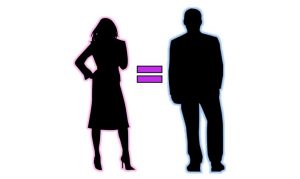
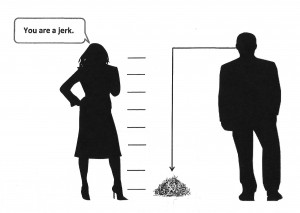
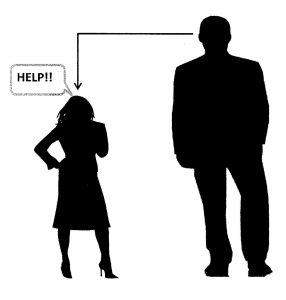
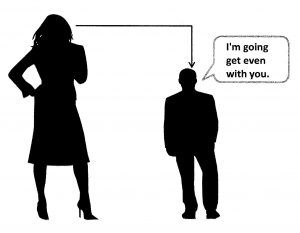
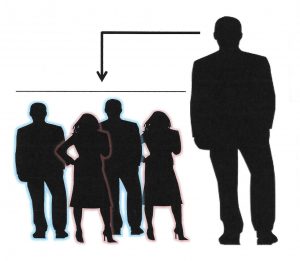 So, whenever you face incidents in this category take a good look around your workplace. You will probably discover that you are not alone in your situation. This includes your male colleagues who often silently endure degrading behavior.





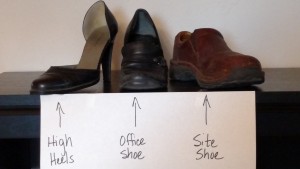 When I got to my office I took one of each pair of shoes and set them on my desk. Under the shoes I hung a sign that said “High Heels, Office Shoe, Site Shoe” with arrows pointing to the appropriate shoe.