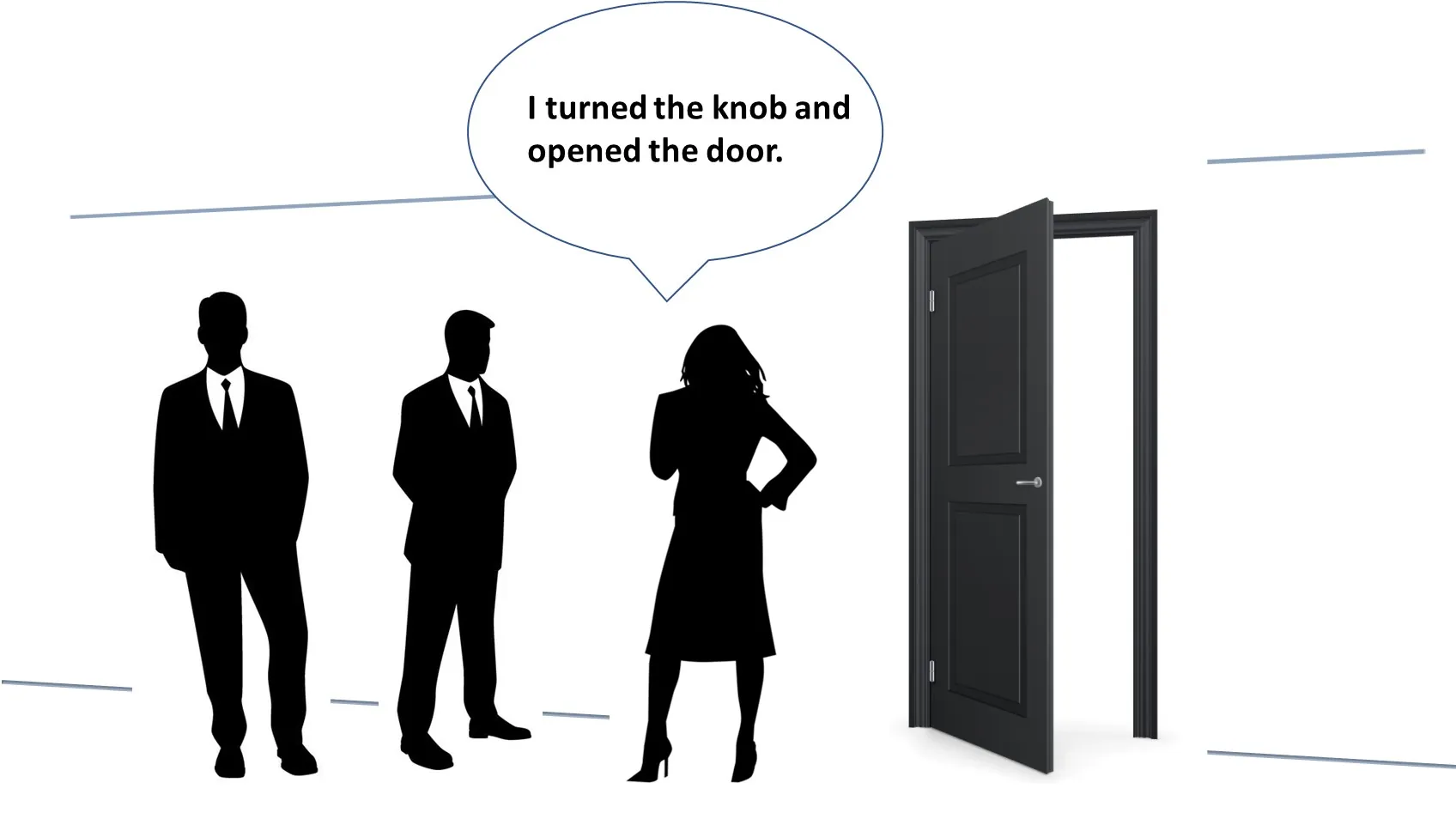
All through my career I faced closed doors. On the other side of the doors were the All-Boys Clubs. I could have let each closed door stop me but as I looked at the door, I also saw knob.
So, I turned the knob, opened the door and walked in.
It was easy.
Of course, men were surprised to see me. but I knew I had just as much right to be there as any man. I knew my credentials, experience and achievements actually gave me more right to be there than many of the men.
And this may shock many women – the vast majority of men accepted me and made me part of their group.
Remember closed doors have knobs. So, turn the knob and walk in.
“Toxic Masculinity” makes women concerned about working with men. However, since I spent my career in environments where women expect to find lots of toxic men and toxic masculinity to run rampant, I want to share what I learned about toxic behavior and how to control it.
Watch this YouTube video:
Working in a hard-core male industry I found that out of every 10-15 men, I could expect to find 1 toxic man.
I usually identified him because he spent a lot of time trying to make himself sound important or tough. He was usually the man I found to be the most obnoxious.
As women we frequently think their aggressive behavior makes a toxic man the Alpha male – and that is exactly what he wants us to think.
But, in reality, the toxic man is just an Alpha Wannabe.
As women, since we don’t understand relationship dynamics of our male colleagues, we get a lot of things about them wrong. For example, we’re taught that the Alpha male is horrible, toxic, oppressive, epitomizing every male behavior we hate.
That is NOT true!
In reality, the Real Alpha Male is our best and most powerful ally.
So, watch this video and learn how the male dynamic really works.
And by the way, my feedback from men has been that I got this right!
This debate leaves us confused. Which is it? And why does it matter to women?
Initially as women we may be drawn to the side of the debate that says “words matter” because women are typically better at communication. The importance of Words puts female skills on par with the stereotyped male trait of Action and helps us see our equality. We are further encouraged by the old saying:
“The pen is mightier than the sword.”
It tells us that words wield power over the physical Action which has always made women feel weaker and inferior.
But let’s keep this in perspective.
The typical debate between Words and Action is philosophical and we need to concern ourselves with what is important in the workplace. Do “Words matter” there? Or is Action what counts?
In actuality our workplaces deal in both Words and Action.
Our workplaces exist to develop, plan, market and deliver a product or service to its customers. All of those require Action. When we are involved in those activities, we have timelines and budgets to meet and pressure to get our work done. Therefore,
ACTION = WORK
Our workplaces also have people who deal in words. They are typically in business development and sales. They use words to convince customers to purchase buy a product or service. We don’t always view this as Work. We see it as something less, like hype.
It is one of the first lesson we all learn in life – be leery of the sales pitch. We know it is easy to use Words to make false claims and promises; that a good salesman can use Words to make a sow’s ear sound like a silk purse. However, when the sow’s ear is delivered instead of the silk purse, customers aren’t happy. They don’t complain to the salesman because they are no longer around. Customers complain to the person who made and delivered the final product to them.
Consequently, there is often friction between the people who work through Words and the people who work through Action. The people who work through Action have to figure out how to deliver on what the Words sold. They must have the skills, knowledge and experience to solve problems and make customers happy. Therefore, they are critically important to any business.
Words can claim or promise anything. They can say the sun rises in the West then makes a sharp turn to set in the South.
Words have the luxury of being able to ignore and lie about Reality.
Action can’t. Action must deal with Reality in order to achieve an objective.
So then why do we keep hearing, “Words matter”?
Well, let’s look at who says it – the media, spokespeople, lawyers, salespeople, diplomats, and politicians.
These are all people whose business product is Words. So obviously “Words matter” to them because their livelihood and status come from Words.
Therefore, we can conclude that “Words matter” to people who sell Words. Likewise, “Action speaks louder than words” to people who must deliver a product or service.
The ultimate conclusion to the debate may be that neither Action nor Words matter more because in our workplace, ultimately it is Money that matters.
As women we can’t allow ourselves to get sucked into the debate and into believing our Words have power that actually belongs to our Action. We have to recognize the limitations of our Words.
“Words don’t change the Truth.”
“Your actions speak so loud, I can’t hear what you are saying.”
We often use Words to create awareness about a problem. However, solving the problem requires Action. For this reason, women have to move beyond the stereotypes and take the Action that delivers a viable solution.
But we are hesitant to do so because we like that our Words to offer empathy and express our feelings. We like the stereotypical way we identify as women:
Men Act, Women Feel
So, to find our equality, we elevate Feelings which means we elevate the power of Words. We dismiss the old saying:
“Sticks and stones may break my bones,
but words will never hurt me.“
Today we use Words on social media to create emotional reactions and hurt people. This proves that “Words matter.”’ Our ability to use Words to effect other people makes us feel like we have power over them. So yes, in dysfunctional way “Words matter” and are mightier or at least more practical than sticks, stones or a sword if we want to hurt other people.
However, doing good and making positive change will always require us to put our Feelings and Words into Action.
Only through Action can we correct a situation and deliver Justice.
(Notice Justice is NOT blindfolded so she sees her scales and is ready to use her sword. She is ready to ACT.)
Contrary to our narratives and the stereotypes women have a long history of taking Action and improving civilization.
Our Action helped end slavery, expand voting rights, improve health and sanitary conditions, improve labor conditions, reduce childhood mortality, win wars and secure our equal rights.
Women’s Action is powerful.
It makes our workplace, community and society better.
That is why we need to be leery when someone tells us, “Words Matter.” We need to question if they trying to sell us something. Or are they trying to dissuade us from using the power of our Action?
Remember:
History books are written about the people who believe Action matters and recited by people who believe Words matter.
We need more women taking Action and making it into our history books.
All of our workplaces have goals and objectives they want to achieve. The standard approach is to ask the best and brightest employees to generate ideas, work through the planning process and develop a plan to achieve the objective. But, no matter how “well-planned,” our workplaces still experience problems achieving the objective.
Why is that?
It is because the planning process is too entrenched in male-thinking.
Don’t believe me?
Google “Planning Process” and read some of the results. They leave little doubt that the planning process requires a lot of stereotyped male traits – intellectual, analytical, rational etc. They also use a lot of jargon leading us to believe that Planning is what the smart and highly educated people do.
The not-so-smart and not-so-well-educated execute the plans that are handed-down to them. I read “Plans must be communicated and explained to those responsible for putting them into practice. The participation and cooperation of subordinates is necessary for successful implementation of plans.”
Sounds a bit elitist and snobbish.
I could let that pass if the feelings of superiority were deserved – but they aren’t. In my experience very few, if any, plans can be handed-down and implemented without revamping. I’ve seen many plans designed by the so-called planning experts get thrown in the trash because they simply don’t work.
The fundamental problem is that the male-dominated workplace believes in the separation of planning and implementation. This idea goes back to the 19th century and Frederick Taylor’s scientific management theory. Even though we have moved away from a manufacturing economy into a more service and technology based economy, we still dragged a lot of his management theory into the 21st century.
Why?
Dr. Myron Tribus of MIT explained it this way:
“It suits the self-image of managers [and planners] that they were superior, the brains for others who could only supply the brawn.”
So even though the management theory doesn’t produce the best results, the male-dominated workplace hangs onto it because it feeds ego, status and a feeling of superiority for some.
We see this distinction carried out in many of our workplaces (and society) – there is a separation of the educated personnel who “work with their heads” from the “uneducated” personnel who work with their hands.
The Suits
As a young female engineer, this class distinction was readily apparent in my first workplaces. Engineers worked over here and craftsmen worked over there. The only engineers who worked with the craftsmen were there as the managers.
I often thought that if I were a man, I probably wouldn’t question this arrangement. But as a woman the separation and distinction seemed contrived. I questioned it.
When I was assigned several plans to write, I could have sat at my desk and developed them all by myself like my male colleagues were doing. However, I decided to “cross over,” interact with the craftsmen and ask for their input. I found that they were incredibly knowledgeable. I learned that if I wanted to know HOW things worked and HOW to get things done, I should ask them. Working with them, I wrote plans that they later implemented. The plans actually worked and achieved the objective.
About a year later the engineering staff was floundering for 2 years trying to solve a recurring design problem. Many engineering consultants from top firms were brought in. No one could come up with a solution.
Then I had an idea:
Let’s ask the craftsmen who were sent out every week to fix the problem.
I took the initiative to gather them together and asked them if they could come up with a solution. Working together it took them 1 hour to figure it out.
1 freaking hour!!!
That was a pivotal moment.
I realized that all of the separations and the distinctions in the workplace by function and education was a detriment to effective planning and implementation. If everyone worked together through the planning and implementation processes, we would meet and potentially exceed our objectives.
When I became a manager, this became my management philosophy:
Work Together
At first it was difficult because the various factions had rivalries they enjoyed. So, I forced the issue. I scheduled planning meetings between the planners and craftsmen and literally sat in the meetings as the babysitter. Eventually they began building relationships and collaborating. I almost died of shock the first time I walked into the Planning office and found craftsmen in there voluntarily collaborating with the planners.
Within a few months the change in our performance was noticeable. Within a year our performance was exponentially better.
Throughout my career I continued to make the various workplace functions work together in both the planning and execution of work. I believed everyone needed to park their egos at the door and that no one is so smart and so superior that they have all the answers.
I ran into opposition, especially in the last 15 years or so. There seems to be more and more men who believe their education distinquishes them and it is beneath them to interact with the workforce. They believe they get to pontificate from the on-high of their cubicle and create dictates for the minions to follow.
Of course, their dictates don’t work because they don’t understand how things work in the real world. But don’t tell them they are wrong – they get angry and ugly.
However, I NEVER had a problem telling them they needed to get off their perch and participate in the real world if they wanted to be of any value. If they still didn’t listen, I cut them out.
I didn’t involve them. I let them sit in their cubicle by themselves and pout. When they got upset because “they aren’t consulted in their area of expertise, my response was, “We’re all working together over here. You may join us any time you like. That decision is up to you.”
A few men never joined.
For most men, it is a challenge to undo the old learned ways of how the male-dominated workplace should function because their ego and self-identity are tied to their function and place in the organizational hierarchy. I found that women are essential to creating the change.
Women are much more comfortable working together with other people. Women aren’t as ashamed of what they don’t know so they are more willing to ask questions and collaborate. I laughed many times when men witnessed how women work together for the first time. They were amazed by women’s interaction, collaboration, problem-solving and the volume of work women produce.
As a manager I used women to draw men into collaboration. There are always a few men who are easily drawn in by the energy women create when they work together. These men and women form the core of the collaboration group. Once the core is established it is easier to invite more men to join in. Before long men are telling other men they have to join in.
That’s when you know you are successful.
The collaboration group creates a lot of positive energy in the workplace. That positive energy is a natural attraction since so many of our workplaces drain us of energy. As people work together to produce results, achieve the objectives and improve performance, the positive energy grows and the group becomes powerful. It isn’t afraid to take on the bad actors, the people who use the workplace for selfish gain and the workplace bullies.
It is this positive energy that transforms the male-dominated workplace and creates the genuine teamwork we want.
Empowered Women Put Teamwork First By Respecting Everyone, In Every Role
We like to think of negotiating as two sides coming together, sharing ideas and compromising on their interests in order to achieve a larger common objective. That is how negotiations work in an ideal world.
However, all too often we wind up in negotiations where one or both sides don’t want to negotiate in good faith – they refuse to subjugate their personal interests to the common objective.
They want to win.
They want the other side to lose.
Compromise is not acceptable.
Working in the construction industry I dealt with many of these bad faith negotiations where intimidation and threats were common tools. Negotiations worked on the belief that the strongest and most powerful will prevail and win. Negotiations were little more than a contest of wills, testing who was weaker and give in first.
Most people hate these types of negotiations. We don’t like the ugliness that goes along with them. So, when we face bad faith negotiations most of us (both men and women) make a critical mistake:
We are too nice.
We believe that if we are nice, if we act in good faith, if we concede something first then, they will realize we are good people who they can trust and work with. We believe our goodness will cause them to have a change of heart.
In our optimism and naivety, we believe we have the power to make goodwill blossom all over so we can negotiate among the sunshine, flowers and rainbows.
But it doesn’t happen.
Instead ,they hit us with a sledgehammer and then run over us with a truck.
Undeterred, we stick to our values.
We continue to tell ourselves that if we continue to be nice, we have the power to win them over.
But then our good faith efforts are rewarded with an even larger hammer getting dropped on us and an even larger truck running us over.
We may try again. We may try again several times. But eventually we get the message that the other side’s top objective is for us to lose.
They want us to bend to their will so they are in control.
So, how do we negotiate towards a common objective when we are faced with bad faith actors?
The traditional response is for each side to aggressively attack each other. We get as ugly as we can be in order to intimidate the other side into backing down and conceding. However, this seldom works. It usually results in each side just getting more entrenched in their position.
In more strategic workplaces there is a different tactic.
Instead of being more confrontational and taking steps forward to get in each other’s face, we deliberately take steps back.
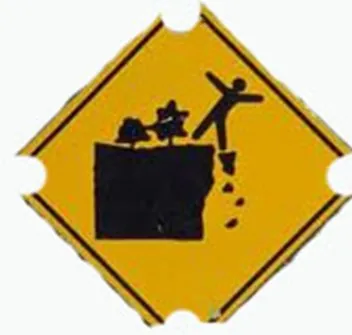
We engage in a dangerous game of trying to back up them up so they step backwards off their cliff first. In other words, we want them to make so many mistakes that they take themselves out.
When we take a step backwards and claim our power, we send a message that they don’t intimidate us. We don’t have to be aggressive and confrontational because we are confident in our position. We create the perception that we are using our territory and taking everything that is rightfully ours. And we will NOT give it up.
In response the other side takes a step backwards too. They have to claim their territory too and prove how confident and powerful they are.
But are they?
Do they really know what is rightfully theirs and the limitations of their power? Or are they going to make false claims – claims they can’t deliver or prove. Claims that prove their incompetence and lack of credibility.
When we assert everything that is rightfully ours, our strategy is to force them to also assert themselves. However, they are still playing the domination and intimidation game. So, in their haste to prove they are more powerful than us, they eventually respond with false claims.
We then calmly discredit their claims, “Sorry, you can’t do that. Sorry, that’s not true.”
We prove we aren’t intimidated.
Because people hate to lose, they then make more false claims and take actions they expect to intimidate us. They believe they are expanding their territory and proving their power. However, if we know those claims are false, they discredit themselves. We have successfully backed them up onto unstable ground and eventually they fall.
This is not a game for the faint of heart!!
(And why most people don’t do it.)
It requires, putting away our ego and defensiveness so we play strategically. We must know our industry and profession inside out, backwards and forwards. We must know and be honest about our capabilities and our limitations. In my industry, I also had to know my legal and contractual obligations that gave me both power and restrictions.
I learned how to project my power and work within my limitations.
To succeed, we must play cooly and confidently. We must engage intellectually, not emotionally.
The biggest mistake people make is that they revert back to emotions. Some go back to being aggressive and trying to intimidate, going for the win. However, playing into this emotion causes us to do something stupid and shoot ourselves in the foot. (We want to make our opposition to do that to themselves.)
Other people revert back to being nice. They value “being liked, being respected, making friends and being seen as fair and compassionate,” above all else. They tell themselves this is the best long-term strategy that will pay off in future negotiations.
WRONG!!!
It actually sends a clear message that you are a weenie who is afraid to assert yourself. It reveals your vulnerability.
Too often people are afraid to assert their full power and leverage because they’re afraid of how the other side will respond. They don’t understand that the other side already knows what power you have and if they see that you’re afraid to use it, they know you are a weenie. And they will take full advantage of.
They will take advantage of that today and in every future negotiation.
This is why we must NEVER be afraid to project our full power.
This quote from Marianne Willamson says a lot about us:
“Our deepest fear is not that we are inadequate. Our deepest fear is that we are powerful beyond measure. It is our light, not our darkness that frightens us.”
So, we concede nothing. We give up nothing. We stand up for ourselves and refuse to back down. (I can imagine how many people are cringing at this thought. How many people, especially women, are afraid of doing this.)
And that is why it is so effective. Anyone who is willing to project their full strength and power is INTIMIDATING! It’s what makes the other side respond foolishly and take themselves out.
When the other side sees themselves losing, they may go for the stalemate. They back off and lull us into thinking we won. But nothing is resolved. There is no guarantee they will now negotiate in good faith. They could just be buying time until they have the opportunity to strike again.
In my industry stalemates were very common but never a good thing. Since nothing was fully resolved, tensions kept boiling under the surface. When either side believed they could assert an advantage they took it and conflict erupted all over again. This lack of resolution ultimately resulted in a lose-lose scenario.
This is why we can never be afraid to play hardball and go for a final resolution or what we think of as “the win.” In order to get the outcome, we want we must become skilled players who force the other side to acquiesce. We must force them to accept there will be no win-lose scenario in which they are the winner.
We must also accept there won’t be a no win-lose scenario in which we are the winner either.
In order to turn bad faith, into good faith, we must be gracious and generous in our victory. We must grant a win-win solution.
When the other side knows they are going to lose, their priorities change. Their biggest priority isn’t making us lose – it’s protecting themselves. They want to save face and not look like a bunch of weeny losers.
This is when we can finally be nice.
Their change in priorities makes them very willing to accept a win-win solution. Amazingly, these solutions are easy to derive once everyone stops trying to intimidate and prove their power. Win-win solutions just require everyone to accept the realities of the situation (not bravado) and to do their job.
Understandably, many women don’t like engaging in these bad faith negotiations because of all of the macho bravado and posturing that accompanies it. I know that because I am a woman, the first tactic men used on me was intimidation.
However, my reaction was to roll my eyes and think, “Really??”
Who says that just because he is a man and I am a woman, I have to be intimidated?
What is there about him that is supposed to intimidate me?
I never figured that out.
Many men used intimidation because they assumed that I was the “token woman hire” who didn’t know my job. They assumed they could roll right over me with a bunch of BS. But not so fast guys. I know my job and profession extremely well. Much better than most men.
Over the years I learned that women are far better at knowing details. Therefore, we’re really good at detecting men’s BS. This gives us leverage…and power. We’re the ones who can force negotiations to be based on facts, not intimidation. We’re the ones who actually discover the full strength and power of our side.
I learned that men’s weakness in providing and working through details is what led to all the bravado and intimidation tactics. So, when the bravado started on the other side, I knew they were losing. To be a powerful negotiator, I just had to stick to the strategy. And yes, there was a lot of satisfaction in being the “toughest” person in a room full of men.
While negotiating through intimidation is still very popular, in the early 2000’s some men came up with a new negotiation strategy.
Instead of going all macho-bravado against macho-bravado, one side changed out a team member. They brought in a man who could nitpick really well (for a man).
Now, men have always dealt with nitpicky men and know how to intimidate them and blow them off. So, this new man wasn’t one of those. This man applied a new tactic:
He acted like men’s worse nightmare: A bitchy, nagging wife.
www.123rf.com – 37345269
Yup.
The first time I saw it used, I was stunned.
I was also stunned by how incredibly effective it was at neutralizing the machismo in the room. (And yes, I chuckled.) But I was also a little freaked out by the inner depths of the male psyche that was revealed to me. Were men really that intimidated by bitchiness and nagging?
At first, I thought this tactic was unique to one particular situation. But then I encountered it again. And again, in different workplaces. It had become common place.
Admittedly, I found this tactic humorous until it was used against me.
Yes, men (note the plural) played bitchy, nagging wife against me.
Really???
No.
Sorry guys, that will NEVER work against me!
“Do you really want to see who can be the bigger bitch?!”
“Bring it on! I guarantee no man will ever out-bitch me!”
They caught on. So, they changed tactics again and went all macho.
After I stopped laughing my response was: “No guys. After you’ve gone all bitchy-woman, you can’t pull off being a macho-man. It just doesn’t work.”
When they realized none of their tactics were working against me, I was labeled “infuriating.” Personally, I loved being called “infuriating” because it meant we were now playing by my rules.
Playing by my rules, intimidation and BS claims have no effect. I don’t react to it. I stay put and send a very clear message “That doesn’t work against me.”
My second rule was to deal only with facts. No game playing.
In life there are facts and realities that are fixed. They can be laws of nature, industry requirements, contract terms, laws or even basic math: 2 + 2 = 4.
Bravado does not change facts. All the bravado in the world doesn’t make 2 + 2 = 8, even though men will try their best to convince us it does.
In negotiating it is important to find and put all the facts out on the table. When the BS is discarded and we deal only in facts, then the number of negotiable items is significantly reduced.
As I said, women are extremely good at facts and details. This is where we find our leverage in negotiations. We can overload the other side with the inarguable facts that cement our territory.
My bad faith actors also knew this tactic. So, they had their bitchy-man write a very lengthy letter or email making all kinds of claims. It was very effective against my male colleagues. They only made it part way through before they were overwhelmed and lost it using a lot of colorful graphic language.
But not me. (No bitchy-man was going to out-woman me. I was ready to play.)
Remember that episode from season 4 of Friends where Ross and Rachel decide to get back together after “taking a break”? Rachel has one condition.
She writes Ross a long letter in which she describes everything that went wrong and requires Ross to accept full responsibility for why things went wrong. Ross, anxious to get back together lies and says he read the letter – twice – and agrees to everything in the letter. But, as he learns what he agreed to, he is unable to keep up the charade.
Ross finally comes clean and admits that he fell asleep reading the letter – it was 18 pages long – front and back!
Rachel’s letter is a pure female masterpiece. It’s what the bitchy-man tries to replicate.
But he can’t out-woman, out-bitch, or out-Rachel us.
We are women and those qualities belong to us.
During my career I write countless “Rachel Letters” and relished every opportunity to dive into the deepest depths of my femininity and turn male bravado BS into stuttering, stammering blather. It is so empowering!
No matter what strategy they use, we CANNOT allow men to intimidate us during negotiations.
We know they will get ugly and try to intimidate us because they believe we are afraid of conflict. They believe we only want sunshine and roses. They don’t realize the power of our sunshine and light.
Unfortunately, too many of us have been conditioned to fear conflict and give intimidation and bravado more power than it deserves. We were never taught about our own feminine power and how to use it to get the good outcome we want.
As women, we are NOT required to negotiate by men’s rules which set us up to lose. We can use strategies that rely on our feminine strengths to counter male tactics and gain the upper hand.
As women who want the win-win scenario and to create a workplace full of sunshine and roses, we can’t be afraid to get our hands dirty. We must remember that to plant the flowers, we must dig in the dirt and get our hands dirty.
Empowered Women Aren’t Intimidated By Anyone Who Acts In Bad Faith
2026 Update:
I’ve thought about this blog many times during President Trump’s tenure. While I’ve never read “Art of the Deal,” I suspect Trump uses a similar strategy to one I talk about in the first half of this blog.
He absolutely is NOT afraid to use the full power of the United States economically or militarily. And he certainly seems to be overly friendly to “enemies” at the end of a conflict.
It’s interesting to watch all the responses, especially from media.
There are many people who believe he is all about aggression because that is the only strategy they know. It aligns with a narrative they promote.
There are many people who believe we diplomacy has more power than it has. They say we should always be nice and value friendships and alliances above all else. They want to believe everyone in the world wants sunshine and roses and the only reason anyone is aggressive is because we were aggressive first.
This attitude ensures you will be taken advantage of.
A lot of people also don’t want to believe there are ‘bad faith actors” in the world because well, they are afraid to deal with them. It’s easier to ignore them and forever kick the can down the road hoping some event will magically change who they are, just like the singing in Whoville changed the Grinch.
Recently saw a sign that said:
My immediate reaction was, “What do you do when your neighbor is throwing stones at you and doesn’t stop????”
We must remember that this is the real world and “bad faith actors” exist and need someone to stand up to them.
The bottom line is, that when we are faced with “bad faith actors,” we need to wisely use whatever power we have to stop them. That is the only way we can possibly change them.
My first boss died of a heart attack 4 months after I began working.
A year later a male co-worker died of complications following quadruple by-pass surgery.
Six months later a man I frequently worked out with died of a massive heart attack following a run.
One month later, a male co-worker standing 20 feet from me, dropped dead of a massive stroke.
I went to retirement parties and then attended funerals where we sadly sighed, “He never got to enjoy his golden years.”
Many of my male colleagues were alcoholics. It was common to be warned, “Don’t light a match near him today.”
I lost track of how many male colleagues suffered breakdowns from stress. And how many times I wondered if any of my male colleagues would show up for work because they were too stressed-out. Or how many times I heard, “He will be out for a while – don’t know how long yet.”
Heart attacks, high blood pressure, strokes, alcoholism, diabetes, high cholesterol, depression, chain smoking and drug addiction are what I think of when I hear the term “Toxic Male Workplace.”
There absolutely was something “toxic” about the male-dominated workplace that impacted my male colleagues’ health.
These health issues were compounded by the health issues resulting from the safety hazards and work conditions my male colleagues dealt with every day.
Cancer from working around hazardous materials. Cancer from excessive sun exposure. Hearing loss from working around machinery and equipment. Bad backs, knees, hands and hips from repetitive motions and physical work. Arthritis and continuous pain from soft tissue injuries.
Many of the men I worked with “in the office” were there because they suffered an injury and could no longer do the same work they did when they were young.
Somewhere along the way I stopped counting how many men were killed in car accidents as they traveled to work locations.
Nine of my male colleagues were injured in a propane tank explosion, two critically. One never returned to work.
One morning I went to work only to hear that a male colleague was electrocuted during the night while responding to an emergency call.
In one workplace we began the new year with a man being killed at 8:15 in the morning. It wasn’t a Happy New Year.
I can tell lots of gruesome stories of injuries.
So, when I hear the term “male privilege” this is what I think of:
The privilege to do the hazardous and potentially life-altering jobs that few women do.
Working alongside men, doing the same work as men, I don’t ever recall being jealous of my male colleagues or thinking they had it so much better than me.
As a woman, I am supposed to recount all the times I was a “victim” of the male-dominated workplace. However, I saw many more men victimized by it.
I cannot recall how many times I thought, “I’m lucky to be a woman.”
I felt lucky that so much of the pressure my male colleagues felt on a daily basis to get ahead, to provide financially for their family and to get the job done didn’t apply to me the same way it did them. While those things were important to me, especially as a single mother, they didn’t impact my identity, my sense of self or how I perceived my value as much as it did them.
I also felt fortunate that I had the power to change my workplaces in ways men could not.
I lived through the male-dominated workplace’s self-improvement gyrations with its long line of initiatives, programs and technology to change and function better. They all fell short of expectations and most faded away into obscurity.
However, the initiative I introduced made a profound impact.
I encouraged myself and the women I worked with to assert our female traits – our way of thinking and acting.
As women (working in any role), we are well aware of the problems within the male-dominated workplace. We see the stress, frustration and pressure. However, we don’t realize that the power to correct those problems lies within us – not men.
It all begins by exercising our empathy.
We know why “things go wrong” and why our male colleagues get frustrated and stressed out. We have lots of ideas and even know how to fix and prevent some of the problems. However, we remain silent or we talk among ourselves because we bought into the BS belief that we can’t make a difference.
As women, we need to put our empathy into action. We need to speak up and say, “Do it this way.”
And we can’t be deterred when they don’t get it or don’t listen. We simply say, “Do you want your problem to go away or not?”
It takes just one time of us fixing a problem to the get the wheels turning and start changing attitudes.
So, we take the initiative and assert ourselves more, “I can tell you how to fix that problem too.”
Men start listening. Then they start thinking, “Maybe I should ask her about this other problem too.”
Before you know it there is communication, collaboration and coordination. Bigger and bigger problems are getting solved. More problems are prevented. Performance improves.
Better yet, stress and frustration are reduced. My guys told me, “I don’t feel like I’m coming to work and pounding my head against a brick wall all day.”
That is so rewarding to hear.
When we put our empathy into action, we create a happier workplace. We end the toxic male workplace.
Empowered Women Put Their Empathy Into Action and Eliminate The Toxic Workplace
In spite of all of the workplace advice women are given I’ve noticed there is one topic that is seldom discussed – the importance of Informal Power.
Instead, we focus our attention on women achieving Formal Power. I presume this is because Formal Power is an easy measuring stick for how far women are climbing up the corporate ladder. However, when we focus on Formal Power, we neglect to mention that success isn’t only measured only by job title and status.
Real workplace success is measured by our effectiveness and ability to get things done.
In reality, Formal Power has very little to do with being effective. All our Formal Power does is give us the authority and responsibility associated with our role and title.
Formal power doesn’t guarantee we will be respected or have the power to influence and create change.
When I began my career as an Air Force 2nd Lt. this is the very first lesson men taught me.
As a 2nd Lt., I was an officer and had Formal Power over all of the enlisted ranks. However, they reminded me that the Senior NCO’s in the enlisted ranks had Informal Power over me.
So, even though I “outranked” them, I could not get the enlisted ranks to carry out any of my orders unless the Senior NCO’s respected me first.
As the only female officer, in-charge of an all-male operation, this should have been intimidating. However, I heeded their simple lesson:
Before I could effectively exercise Formal Power, I had to earn Informal Power.
So I did.
Informal Power is the ability to lead, direct or achieve without the title or status derived from Formal Power. It is all about You.
Informal Power is derived from your ability to build relationships that are based on Respect. In other words, before you can exercise Formal Power, you typically have to do things and achieve things. You have to take actions that earn you Respect.
As a woman I found the best way to earn tremendous informal power in a male-dominated workplace is:
Stand up for what is right and fair.
Correct an injustice, deal with an ignored personnel issue or end a bad practice. Men in our workplaces can be pretty conflict-adverse so there can be a lot of issues that the guys never addressed. These are golden opportunities for women to seize informal power.
In the later years of my career, when a new job gave me Formal Power, I still always assumed I had no Informal Power. So, I focused on building that first. It was my Informal Power then made me a force to be reckoned with whenever I chose to exercise my Formal Power.
Informal Power is the Power of Influence.
Long before women had any legal rights we mastered exercising our Influence and Informal Power. However, now that we are seeking Formal Power we’ve shunned Informal Power as an inferior form of power – only suitable for those who aren’t capable of obtaining Formal Power.
This dismissal of Informal Power then creates myths about Formal Power, giving it much more power and control than it really has. We lead women to believe that with Formal Power comes respect, influence and ability to impose our will.
It doesn’t.
The weakest and most ineffective manager is the one who relies only on their Formal Power. They use the powers of coercion and reward to make people respond. Or they withhold information, or they don’t offer the help of their connections or expertise. They work from personal insecurities to exercise control.
However, people can only take so much of that before they leave the workplace for another job or they rebel against their manager.
Rebellion sets up a workplace battle between the forces of Formal Power and the forces of Informal Power. In my experience Informal Power typically wins out in the end. We see this lesson throughout history – it is Informal Power that brought about every successful revolution, rebellion and major social change.
So, let’s stop giving Formal Power more clout than it deserves.
Remember, Real Power comes from Informal Power.
And Formal Power if awarded correctly, is the earned authority and responsibility to exercise our Informal Power in the best interests of everyone in our workplace.
Is there a woman alive who hasn’t made a suggestion to a man or a group of men, only to be blown off?
The response you get is: “No, we got this handled. We know what we are doing.”
Then you think to yourself, “No, you don’t.”
You think about all the things they aren’t taking into consideration and how things aren’t going to work out nearly as well as they claim it will. You know they will claim there were “unintended consequences” but you know those consequences were completely preventable if they only listened to you.
Some of us just walk away from these situations, rolling our eyes and muttering something about how foolish men can be under our breath.
Some of us get offended and chalk it up to sexual biases.
I have a different reaction that respects men’s highly prized right to decide for themselves what they think is best.
My response is:
“You guys don’t have to listen to me, but that doesn’t mean I am wrong. It just means I reserve the right to remind you that when things don’t work out as you think they will, that you should have listened to me. I reserve the right to say:
‘I told you so.’”
I don’t think there is a man alive who doesn’t know the fact of life, that when a woman tells him something he should listen. It’s just that every so often (or frequently) men want to believe that this particular situation is that magical exception to that fact of life.
It isn’t.
Working in a male-dominated industry I got to say, “I told you so” a lot. Sometimes several times a day.
Every so often, I walked in on a group of male colleagues as they discussed how they could hide from me the fact that I was right and they should have listened to me. I enjoyed those moments when I got to be smug.
On one of my projects, the men were so determined to prove that this was the project where they never had to listen to me that they blew off everything I said. In other words, if I said they should turn right, they deliberately turned left.
They continued to blow me off for months. It wasn’t long before I had many opportunities to say “I told you so.”
I said, “I told you so” so many times that eventually I stopped having to say it. I began just pointing to myself as if to say:
“Who was right? Oh, that was Me!”
They still didn’t learn.
Actually, they did learn. They just got very stubborn and refused to concede. So, we kept going.
My motions became less dramatic. Eventually, all I had to do was walk into the room and look at them. They hung their heads in shame saying, “We know.”
It took two years for them to concede. And it cost the project millions of dollars.
Later in my career I got a lot more assertive.
If a man tried to blow me off I gave him a look and said:
“DO NOT blow me off. Listen to me. I am right and I know it. If you ignore me and things don’t work out, I will climb on top of this desk and announce to everyone that, ‘I told you so.’ Is that what you want?”
The wise ones conceded.
More than once when they listened we later got to see how my advice prevented a major mistake or catastrophe. In those moments I wasn’t shy about saying:
“Aren’t you glad you listened to me?”
Watching me, other women in my workplaces also got more assertive. They exercised their right to be right and to say, “I told you so.”
As women working together, we changed our workplace dynamic. Our male colleagues listened to us whenever we spoke out. Even better, they started checking with us first to seek out our advice and wisdom.
In the mid-1970’s I decided I wanted to be an engineer. I didn’t have any role models, except for maybe, sort of, Barbara Walters who I met when I was 15. I told her I wanted to be an aerospace engineer and she told me to go for it and not let the men stop me. She confirmed that it was up to me to make my dreams happen.
The idea that I needed a female role model – a female engineer to mentor me – never really occurred to me, partly because I don’t know where I would have found one. But mostly it was because I didn’t know what purpose a female role model served other than to set an example – If she can do it then, I can do it too.
I knew lots of boys who had role models or sports heroes – men they wanted to emulate or who inspired them. Most boys never met or worked with their role models.
Their role models just set high performance bars and showed them what was possible. Each boy knew he had to find it within himself if he wanted to reach or exceed the bar set by his role model.
As a young woman going into a traditionally male career field, I identified with the male concept of inspirational role models. But I also I found male role models in my workplaces – men who set a high performance bar and inspired me to achieve more. I thought, “If he can do it then, I can do it too…and probably better.”
I made it through my career without any female role models. Looking back would they have helped?
Maybe, but probably not.
The few women I met who could have been a role model, well let’s just say that some didn’t have good relationships with their male colleagues. They wouldn’t have been a good source of advice. I also knew lots of other “professional” women who worked in secondary or support roles. However, in their roles, they didn’t have to compete with men for a promotion. We didn’t face the same obstacles.
Looking back, I realize that the type of female role model that would have been helpful would have been a woman who saw herself as an equal professional to her male colleagues, but who also knew how to leverage herself as a woman.
So yes, some professional womanly workplace wisdom would have been nice. That way I wouldn’t of had to figure it out on my own.
Today, our narratives cite the lack of female role models in the workplace as one of the reasons women aren’t advancing in their careers and in certain professions. They say women need female role models.
However, from my experience I have a problem with why they say women need role models.
According to too many articles, young women need other women they hold in high esteem to give them “a sense of personal acceptance, approval and validation.” Female role models “give young women permission to be in the workplace” and provide a “support system.”
Wow.
That sounds so 1970’s. It reminds me of the stereotypes that say women can’t function as individuals. That we, poor little women, need the constant support of other women because we don’t have what it takes to make it.
I also suspect that these narratives are driven in part by our media-driven culture that promotes certain female role models not so much as to help women, but to boost the image of the female role model.
So, let’s be honest about the type of help and guidance women really need.
Women should have professional role models.
Our role models can be either male or female. They inspire women to think bigger, grow professionally and strive for more.
Women need professional mentors in their workplace.
Again, they can be either male or female. Mentors teach women teamwork, leadership and the skills necessary for their industry. A mentor helps groom a woman for the next step(s) in her career.
Women should have female role models who broke through barriers and achieved something few other women have. Female role models inspire women to think bigger and try something they never considered themselves doing.
Female role models are especially helpful for girls and women who were conditioned to be in a box. Some women were taught falsehoods about what women CAN’T do. Others were taught falsehoods about what women SHOULDN’T do. Female role models help women break free of their box and explore who they can be.
Women need female mentors to help them understand and assert the value of their feminine self in the (male-dominated) workplace. Female mentors help women realize that women are one half of the whole and the only way a workplace can achieve its highest potential is by women asserting themselves. Female mentors remind women, “Our workplaces need us.”
Women also need female mentors to help them navigate how to be a 21st century woman who wants a strong marriage, a family and a career. We are still in the very early stages of figuring out how women can have it all and do it all. And figuring that out will require a big female group effort.
While role models and mentors inspire and guide us, we have to remember one thing:
It still always comes down to us.
We still need to have the drive, self-confidence and sense-of-self to grow, overcome challenges, achieve our potential and have the life we desire.
Only we can make our dreams and aspirations a reality.
Empowered Women Use the Wisdom of Others and Share Their Wisdom
I’ve noticed a trend in social media posts – women are offended at being the woman in the room. They are offended when other people are surprised to see a woman in a predominantly or historically male role.
A common refrain is:
“It is so unfair that I have to break through these barriers …that I have to deal with people who don’t understand that a woman can do this job.”
I have to be honest, my reaction is, “OMG – get over it!”
Reflecting back over my career, whenever I was introduced to people they included my non-traditional accolades
Civil Engineer
Air Force Officer Veteran
Construction Project Manager
Construction Company Manager
A woman who spent her career supervising men
Yes, most people looked at me as if I was some kind of alien creature. They didn’t know what to make of me. As for me, I enjoyed my power to mess with their minds and eventually shatter their preconceived notions and stereotyped expectations.
I was never offended by their reaction. I saw myself as broadening their perceptions. I was their educator as to the possibilities of what women can do.
I am proud to be the woman in the room, the woman on the construction site and the woman in charge of the men. I am proud of all the obstacles I’ve overcome and barriers I broke through. I am proud of all perceptions I’ve changed and all the times I inspired men to want more for the women in their lives. I am especially proud of all the times I exceeded expectations and out-performed all of my male colleagues.
Being the woman in the room made me the woman I am today, a woman who is helping forge a new path for women that allows all of us to become the women we have the potential to be.
So no, I don’t get the drama and distress women have because they are the woman in the room. They are continuing to widen the path so more women can follow. They are continuing the mission to advance women in the workplace.
Actually, let me take that back. I do understand what is causing women to be more upset than proud – social media.
When I began this website in 2012, I realized that the posts and blogs about “advancing women” didn’t provide actionable advice. They were more interested in generating clicks and “likes” than in actually advancing women. It is the age-old marketing tactic of playing to women’s emotions.
Over the years this marketing tactic has evolved. The current trend is to write posts that make women react with empathy and play to our tend and befriend response to stress. So, when a fellow woman writes about being offended or treated unfairly, our instinctive female response is to befriend her and respond with sensitivity and empathy…generating lots of click, “Likes” and comments…which generate revenue.
Coincidentally as I was drafting this article I received an email from a woman’s organization containing a link to a woman who talked about how to generate more followers on social media. About 1 minute into her talk, she said, “create empathy.”
Once you become aware of how we are being manipulated you will see lots of posts and blogs that create an empathetic reaction. Some of the story lines include:
It’s lonely – no one looks like me.
I don’t have a female role model
It feels like everyone is critical
I tried but it was hard to interact with my male coworkers
I feel like no matter what I do, it isn’t good enough
I’m not heard – they don’t listen to my ideas
My dream job turned into a nightmare because of the men
Let’s be honest.
These types of posts don’t help women.
They discourage women.
So, we need to wise up. We need see how women are being used, manipulated and played. How so many efforts to “advance women” are actually designed to hold us back.
We have the power to disrupt the industry so, lets do it. Let’s show that women aren’t just empathetic reactions – we can think and solve situations.
We need to reject empathy-triggering posts and change the discussion. When a post discusses an unfair or offensive action, we need to ask:
What did you do about it?
Did you stand up for yourself?
How did you resolve it?”
What lesson can other women learn from your experience?
We need to demand solutions.
Those of us who are or have been the woman in the room should take the lead in this effort. We should be the biggest advocates and spokeswomen for women. We should seize opportunities to broaden people’s perspectives and even blow a few minds. We should be proud of what we accomplished and the contribution we’e made to advancing women.
Every woman who has been the woman in the room knows it can be challenging and also lonely.
So, let’s give the woman in the room some female companionship.
Let’s make The Woman In The Room, The Women In The Room.
Empowered Women Are Proud To Be The Woman In The Room
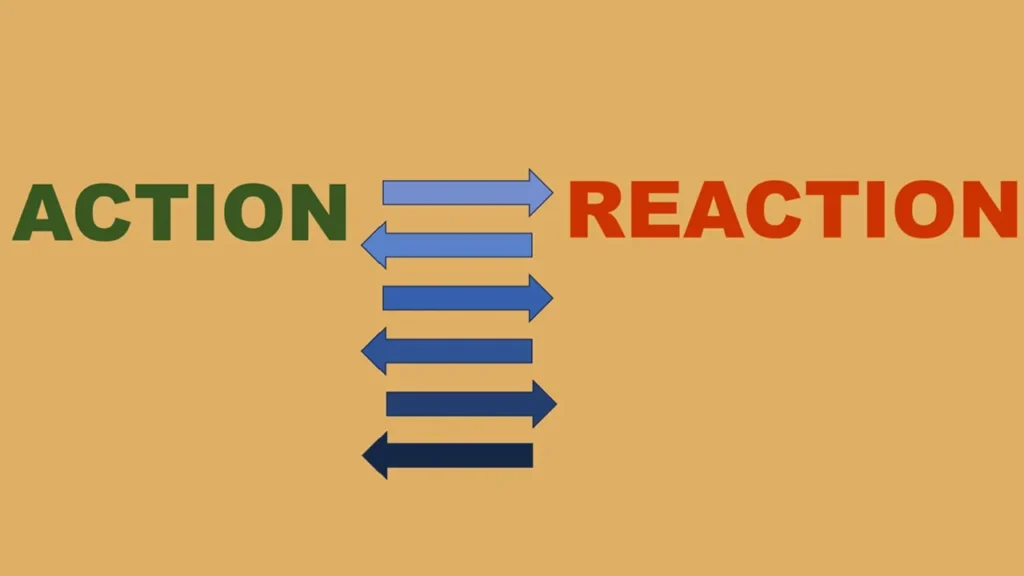
For every Action, there is an equal and opposite Reaction
As a female engineer, I discovered there is a similar law in the male-dominated workplace:
When one man Acts, all other men must React
Early in my career, my Reaction to this phenomena was to ask: “What are you guys doing?”
To me it was wild to watch the frenzy of activity that went in all different directions as each man gave his individual response.
Why do men act this way?
They do it to maintain a balance of power and their individual status. Now as women, we’re told men aspire to have power over each other.
Not true.
Men don’t want power over each other as much as they don’t want another man to have power over them. In other words, men want Autonomy more than power.
So, when one man acts, all other men must react in a way that shows they are not subjugated to the actor. If the actor acts in a way to prove his power over other men, then expect those men to rebel.
Any man who doesn’t react is seen as weak. He isn’t a man who has a manly sense of self or self-respect. He is a submissive man who can easily be used and manipulated.
Being a woman, this law of the male-dominated workplace didn’t apply to me, so I didn’t react. Then of course a man asked in a frenzied, panicked voice “Aren’t you going to do something?”
My response was typically:
“Do what? I’m not going to react just to react. If I need to react, I will react and I will do so with the appropriate response.”
In the first couple of years of my career men’s Law of Action and Reaction created one of my biggest pet peeves about working with men:
Too many men shooting from the hip.
It drove me nuts.
When men shoot from the hip, they don’t take the time to figure out the appropriate and best response. They don’t even take the time to figure out what really happened. They just React. Consequently, they create new but completely avoidable problems. Men call this:
The Law of Unintended Consequences
I call it: The Law of IGNORED Consequences.
Resolving unintended consequences wastes a lot of time and money which is my other big pet peeve. So, out of my frustration I got very forceful at breaking the Law of Action and Reaction.
One time when I was leading a meeting something happened. As soon as the guys started reacting, I ran and stood in front of the door. As I barred the door, I said:
“Guys, STOP!You don’t know what you are doing.”
That got their attention because challenging men’s competency is always a good way to get their attention. That’s another law of the male-dominated workplace.
Before they could React to me, I would tell them:
“Do you guys even know what you are reacting to? No, you don’t. So, let’s stop and figure out what is going on so we can respond the right way and we shut him down, for good.”
You see, in the male-dominated workplace the Law of Action and Reaction is perpetual. The original actor interprets the initial Reaction to his initial Action as an Action, so then he must React. This Reaction is then interpreted by the original reactors as a new Action so they must React again. As so it goes back and forth.
This back and forth can go on and on for days, weeks, months, years…
A great example of this is the Stock Market.
Something happens. The big investors immediately make the market plunge or soar. But is the reaction the correct response? There is no way to know because there is no tangible change in the performance of a company or sector yet. They react to possibility of a change.
Then when other men see the big guys acting, they get worked up into a frenzy:
“I have to React. I have to React.”
These “Momentum Investors,” then drive the market way too far up or way too far down – far beyond a reasonable response to the situation. But this is what happens when everyone is just reacting to what everyone else is doing.
The Stock Market calls it “Volatility.” I call it “Stupidity.” There is no need for it if we stop and think about the situation.
(However, on the positive side, it does create great opportunities for women to make money if we buy low when men over-tank the market and sell high when men get way too enthusiastic.)
In the list of tangible values women bring to the male-dominated workplace, our ability to break the Law of Action and Reaction is at the top.
It is of enormous value because we can stop the behavior that leads to the creation of wasted time, money and manpower. When we stop or disrupt this behavior we can make a huge direct and meaningful impact on productivity and the bottom line of our workplace.
Empowered Women Don’t React Blindly. They Respond Appropriately.
Making a video version of this blog to post on YouTube is on my to-do list. Stay tuned…and in the meantime, watch my other videos.
At a recent dinner a woman and I were talking about women in tech. She brought up a story about a young woman who was the only woman in her department. One of her male co-workers dropped $2 every day into her cubicle. He did it to diminish her – to make her feel like a sex object.
The woman was upset that women have to deal with stuff like that. I told her that if women think outside the box, we can get the upper hand.
I said that if it was me, I would bring in a jar and sit it on my desk with a big note that says “Dot Appreciation Jar.”
Every day I would add my colleague’s money to my jar. Then after a couple of days, when my co-worker arrived, I would hold out my hand expecting the $2. Once in my hand I would give him a perky “Thank you.”
I suspect that would throw him off because he would get the message that I wasn’t insulted.
When I had enough money, I would stop by Starbucks in the morning and get him a Venti Caramel Macchiato (men always seem to like those) and a pasty and something for me too…with his money.
Then with my best perky sunshine and smiles voice I would deliver his coffee as if he and I are besties who do little things for each other all the time. (Very girlie).
Of course, that would get the attention of all the other guys. They’d want to know why he got coffee and pastry and not them. What did he do that was so special?
He was the one who was insulting me every day!!
My answer would be:
“He appreciates me!! He knows he could be working with someone who looks like the rest of you guys, but he’s got ME instead!”
As I told this part, the men sitting near us started laughing. I asked, “That would work right?” They nodded it would.
I told the woman:
If a woman allows herself to be insulted or offended she automatically loses.
The guys would then continue to do stuff to her because they know they can get a reaction.
The trick to dealing with these situations is to NOT react and figure out how to turn the tables to your advantage.
Making a joke out of the whole thing shows you have a sense of humor – something men like their colleagues to have. It also demonstrates strength and that you can stand up for yourself without diminishing any of the guys.
It’s a power play where you establish that everyone (especially you) is an equal.
That is a power women have.
We don’t acknowledge that there is a hierarchy that has the power to elevate and diminish people. If we eliminate the hierarchy from our perspective, then it doesn’t exist. And if it doesn’t exist then we never respond to it and we never give energy to it.
The HUGE MISTAKE women make is that they believe men are all about power and hierarchies. (Men encouraged us to believe it.) This is what we’ve been taught but it is WRONG!
Men are all about their AUTONOMY. They like their independence and they rebel against men who make power plays over them.
As women, we must show our male colleagues that we have autonomy too. We have the power to CHOOSE how we respond to their games.
If women want to be seen as equals, then it is up to us to act as equals. That means we can’t engage in a power dynamic even if our male colleagues do. We simply refuse to play their game and by their rules.
Our equality means we play our game by our rules.
Remember Star Trek and how Capt. Kirk beat the Kobayashi Maru test?
It was a no-win scenario. But Kirk didn’t like to lose and he didn’t believe in no-win scenarios.
So, he changed the conditions of the test. He gave himself an opportunity to win and he won. Initially, he was accused of cheating. But in the end, he was awarded a commendation for original thinking.
Women need to pull their own Kobayashi Maru.
Who says we have to play the workplace games according to the rules written by the guys?
Who????
All the people who make a living off of telling women how the male-dominated workplace oppresses us???
All the people who tell women we need to fit in, conform and think and act like the guys???
Or is it all the people who want power hierarchies because they hope to be at the top or they want an excuse for not having done more with their opportunities???
. And there all the people who tell us men have power structures that diminish us and discriminate against us. And all those people who tell us we have no power and change has to come from the top down through new policies.
These people think inside-the-box. They set us up to play the no-win scenario for their personal reasons. They don’t want us to prove we can win.
It’s up to us to think out of the box so we can break out of the box.
Women need to stop conforming and playing men’s games by men’s rules. We have to pull our own Kobayashi Maru and play our game by our rules using our original female thinking.
That is how we advance women and change the workplace.
Empowered Women Think Outside The Box
To learn how I handled a similar situations with my male colleagues, watch these YouTube videos:
Recently I read through the Action Plan of a women’s organization I was interested in joining. As I read, I kept wondering:
What action I am supposed to take?
What am I supposed to do?
This is a huge problem women have.
We have ideas, principles and values. Let’s call these Abstracts. We believe that when we state these Abstracts and say we support them, we are taking ACTION.
But that’s not action. It’s just words.
Here are some examples:
The organization supports funding of a public education system that results in the uniform opportunity for all students to master the attitudes, knowledge, and skills necessary to thrive in a competitive and changing world.
The organization supports voter registration procedures, voting options and systems that are accessible to all, easy to administer, and have appropriate security measures to prevent fraud or technology disruptions. The organization supports Voting Options of:
Early voting in person and by mail
Traditional polling places
Voting Centers
That sounds great but as a member of the organization:
What do I need to do?
What is the Action Plan to accomplish these objectives?
Loving sentiment but what is the issue and the action?
The mistake women commonly make is that we think that if we put an idea out there – create awareness by protesting – then some male-dominated entity should pick up our idea and run with it. We expect them to listen to our idea and exclaim:
“That is a wonderful idea! Let’s put Jack and Henry on it. They can figure out what needs to be done and present their solution to the President/CEO for approval. Thank you so much for bringing this deficiency to our attention. We are rewarding you with a promotion, raise or monument!”
Sorry, that’s not how it works.
A year ago, I criticized an article that was bemoaning how a group of women who wanted a better maternity leave policy in their company had to spend hundreds of hours of their own personal time to build the case, present it and convince their company to pass it. By the time it was enacted, all the women involved in advocating for the new policy were past the point in their lives when the new policy would benefit them.
The long list of women who commented were outraged that the company didn’t look at its own maternity leave policy and say “We need to change this!”
They were outraged that it took so long and the women had to spend their personal time and money on the issue. They were outraged that the women weren’t even going to benefit from it so the company needed to compensate them for their time.
I was taken aback that in the 21st century, so many women still have patriarchal views.
So, my comment was:
“Welcome to the real world ladies! This is how things get done and change is made. It takes hard work and sacrifice.”
Action by Who? Who do You want to act on the issue that is important to you?
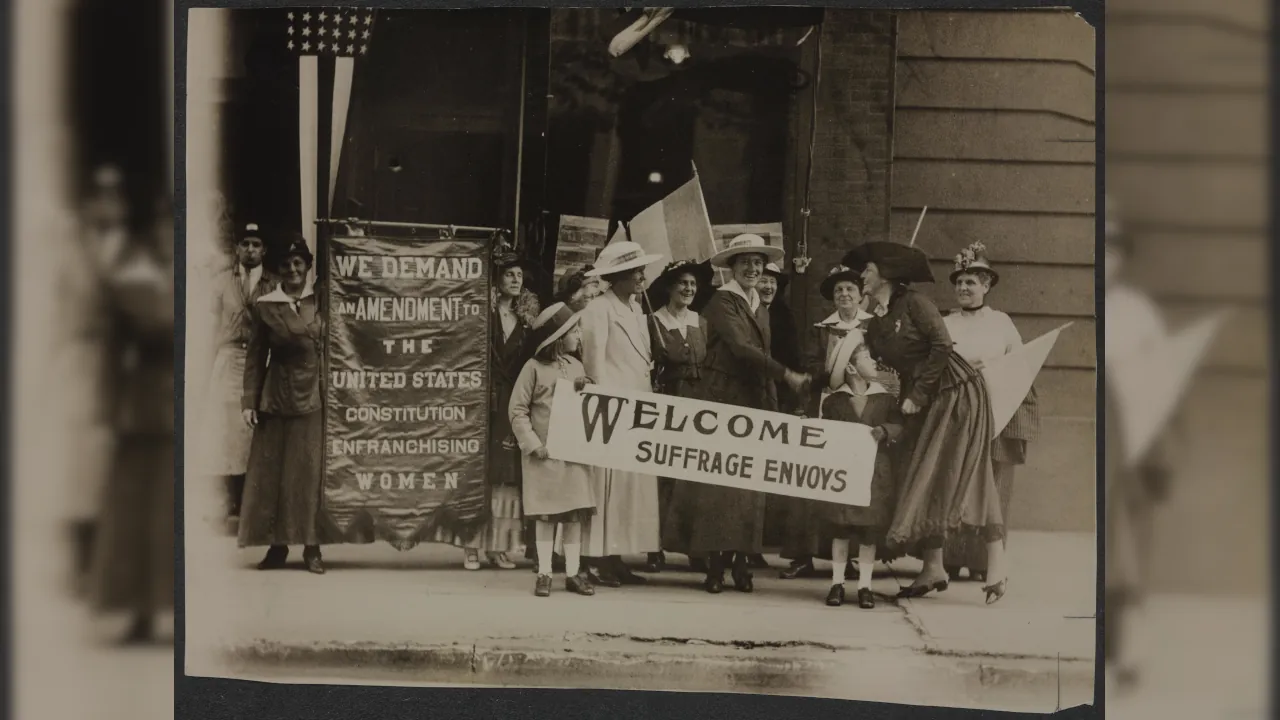
For a while, I’ve been studying the Woman’s Suffrage movement. There’s no better example of women taking action on a specific issue to create change – because they did it without any legal rights!
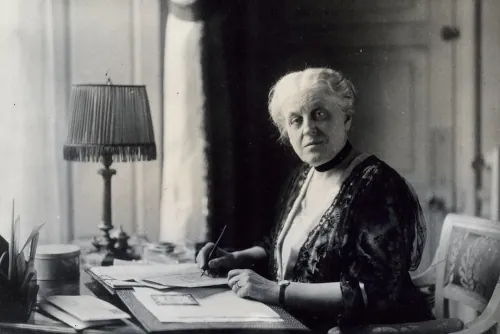
This statement by Carrie Chapman Catt who developed “The Winning Plan” to get women the right to vote, discusses what it took:
“To get that word, ‘male’, out of the Constitution, cost the women of this country 52 years of pauseless campaign; 56 state referendum campaigns; 480 legislative campaigns to get state suffrage amendments submitted; 47 state constitutional convention campaigns; 277 state party convention campaigns; 30 national party convention campaigns to get suffrage planks in the party platforms; 19 campaigns with 19 successive Congresses to get the federal amendment submitted, and the final ratification campaign.”
They didn’t just protest and complain.
They did the hard work!
They developed an Action plan and worked the plan.
And many of the women who were the first leaders of the movement such as Lucretia Mott, Susan B. Anthony, Elizabeth Cady Stanton, Lucy Stone, Sojourner Truth…and the list goes on and on…never got to see their life’s work come to fruition.
After the 19th Constitutional Amendment was ratified, Carrie spoke about what it took to achieve it:
The vote is the emblem of your equality, women of America, the guarantee of your liberty. That vote of yours has cost millions of dollars and the lives of thousands of women. Money to carry on this work has been given usually as a sacrifice, and thousands of women have gone without things they wanted and could have had in order that they might help get the vote for you. Women have suffered agony of soul which you can never comprehend, that you and your daughters might inherit political freedom. That vote has been costly. Prize it!
Her words spoke to future generations of women to remind us that the work isn’t done and we must continue to ACT:
The vote is a power, a weapon of offense and defense, a prayer. Understand what it means and what it can do for your country. Use it intelligently, conscientiously, prayerfully. No soldier in the great suffrage army has labored and suffered to get a `place’ for you. Their motive has been the hope that women would aim higher than their own selfish ambitions, that they would serve the common good.
The vote is won. Seventy-two years the battle for this privilege has been waged, but human affairs with their eternal change move on without pause. Progress is calling to you to make no pause. Act!”
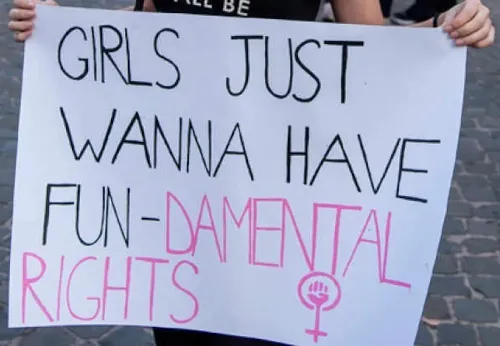
Suffragettes already gave you Fundamental Rights. Use them.
The Suffragettes worked hard so we could participate as equals in society, government and the workplace. They expected us to assert our rights and end the patriarchy. They expected us to continue the hard work of creating change to better our family, community, workplace and government.
If we just protest and expect men or the government (primarily men) to make changes on our behalf, then we let them down. We squander our rights, empowerment and equality.
And nothing changes or gets done.
The women who spent all the hours getting a better maternity leave policy did it for all of the womenin their company and to add to the momentum of better maternity leave policies for all women in all workplaces. They served the greater common good.
Women have always inspired society to aspire to higher ideals, values and principles. But to create the change that incorporates our values, ideals and aspirations into the way we work and live, requires hard work.
Whether or not we personally benefit from our action isn’t important. It’s important that our action benefits the greater and common good for all people.
Empowered Women Take Action For The Good Of All People