

Congratulations Women!
We are now earning 57% of the college degrees!! Whoo-hooo! We will soon close that nasty wage gap and have equal representation in the workplace all the way up to the board room. Right?
Not quite.
When just we focus on getting a degree, any degree, we ignore the two other factors that contribute to wages and promotion:
- What employable job skills your degree gives you.
- The type of job and career path you take.
So sorry, the reality is that not all college degrees have value. And given the high cost of a college degree, everyone should first ask themselves:
“What kind of job am I going to get with my degree?
Is my degree a good investment?”
For example, I was recently talking to a woman who was very proud of her daughter who was getting her PhD in Art History through an elite program. I bit my tongue instead of asking her, “And what kind of job will she be getting with her PhD?”
When I got home, I looked up the program. The program cost $75,000 per year and it was a 3-year program! Adding in the costs for her bachelor’s and master’s degrees, we can assume this young woman invested a fortune in her education.
But what is the return on her huge investment going to be?
If we look at college majors from the perspective of Return on Investment, we see two categories:
The first category are majors that provide the specialized knowledge required to enter a profession. These majors include architecture, accounting, engineering, nursing, doctor, elementary education, computer science and law.
Trade and vocational programs also fall into this category.
These programs and their degrees give us clearly defined options for our career path. We are offered jobs because employers recognize the value of our skills and/or knowledge.
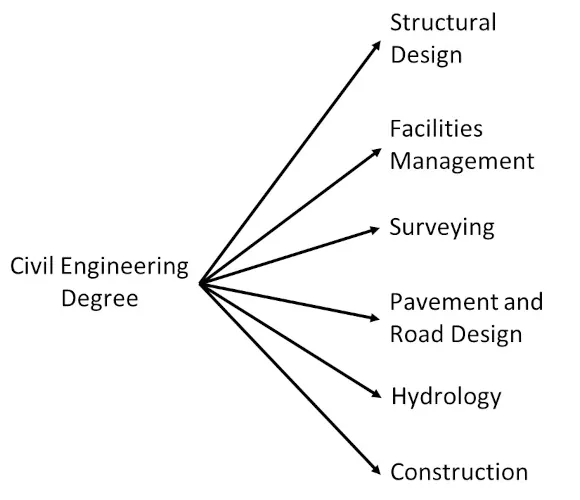
The second category are degrees that don’t result in clearly defined career paths. These degrees give you knowledge in an area, but that knowledge doesn’t convert to job skills. After graduation we can be left wondering, “Now what do I do?”
These degrees make it difficult for us to find a job that pays better than if we never went to college at all. In my day we said women who went to college for these degrees got a degree in “Underwater Basketweaving.” Many liberal arts degrees fall into this category. Even the popular degrees of Business and Psychology, can also fall into this category.
So, before we pursue a college degree we have to remember that companies are in specific industries and they want to hire people with the knowledge, skills and experience specific to their industry. Therefore, a liberal arts or generic business degree may not be very valuable in securing a higher paying job right out of college. The return on our investment may not come until several years later.
But by then was it really our degree that mattered?
Or was it how we performed in our job?
Today too many women still get college degrees that don’t translate to high paying careers because we don’t get degrees that provide employable skills.
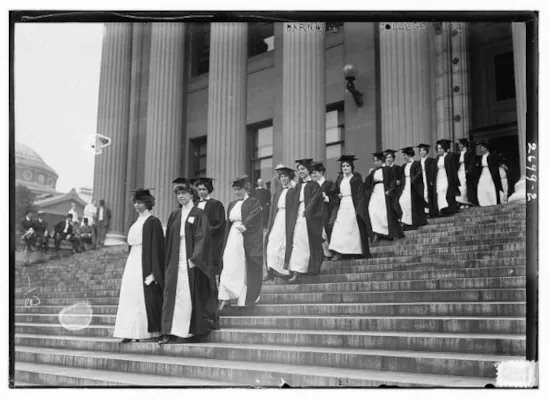
Even back in the 19th and early 20th century, women-only colleges provided an education and degree that was on par and equal to the degrees men got in their colleges. They focused on developing critical thinking and problem-solving skills so women could prove their intellectual equality to men.
Today, even when women get degrees from that provide skills, too many of us choose majors that lead to the lower paying jobs. In short, not enough women are getting degrees that lead to the same financial independence, financial security and ability to support their family on par with men.
Last year Glassdoor published a study, The Pipeline Problem: How College Majors Contribute to the Gender Pay Gap. It verified:
- Men opt to for the highest paying majors. Of the top 10 highest paying majors, 9 are heavily male dominated.
- Women opt for lower paying majors. The one exception is Nursing. It is in the top 10 highest paying majors and heavily female-dominated.
- When men and women have the same degree, men choose higher paying career paths than women.
The study concluded that 54% of the gender pay gap is attributed to “occupation and industry sorting of men and women into different jobs that pay differently throughout the economy.”
In other words, 54% of the gender pay gap is attributed to the degrees and career paths women choose.
The study also revealed something else that was very interesting – a reverse pay gap in some professions. In others no pay gap. Even more interesting is that most of these are in the highest paying professions.
Architecture – women earn 14% more.
Advertising – women earn 8.1% more
Environmental Science – women earn 6.8% more
Chemical Engineering – women earn 5.4% more
Kinesiology – women earn 4.9% more
Mechanical Engineering – women earn 3% more
Accounting, Finance, Civil Engineer and Nursing – no pay gap
Personally, I am not surprised by this at all!
In my career I learned that many traditionally male-dominated professions such as engineering, architecture, accounting, finance, medicine and statistics, are actually better suited for women than men.
Women should dominate these professions.
If you are wondering why, I explain it in my book The Woman In The Room: How I Discovered the Unique Value of Women in the Male-Dominated Workplace.
Celebrating that women get 57% of college degrees is celebrating a gee-whiz fact. How many college degrees women get doesn’t change anything if we aren’t choosing college majors and choosing career paths on par with what men choose.
It’s time to evolve out of our mid-20th century mindset and realize that in the 21st century the male-dominated professions are a goldmine of opportunity for women. If we apply ourselves correctly, we can not only close the wage gap but reverse it in many of the highest paying professions.
Empowered Women Don’t Get Degrees in
“Underwater Basketweaving”
To learn more, watch this YouTube video: