Author: admin1

  • Finding the Self-Made Woman

    www.123rf.com 35315428

    America loves the story of the self-made man – the man who started his life in abject poverty and rose to the pinnacle of wealth and success.  It is story of extremes, drive and determination.  And it seems to be an almost exclusively male story.

    I went through the lists of the wealthiest men and women in the world.  Many of the wealthiest men were self-made men.  However, all of the women inherited their wealth from their father or husband.  While there were plenty of men who also inherited their wealth, the common thread was that it was a man who started the company and created the wealth.

    As I looked down through the list of “self-made women,” Oprah Winfrey stands out as a true self-made woman, as well as Judy Faulkner who founded Epic Systems – ever hear of her?  Probably not, because she is ranked #722 in wealth.  (Oprah wasn’t in the top 500 either.)

    The other “self-made women,” co-founded the company with their husband which makes us wonder: Given that the list of wealth-creators is so overwhelmingly male, should we assume that it was really the husbands who founded the company and their wives received co-founder status as a benefit of marriage rather than effort?

    That may seem unfair to the wives especially when we recall the saying:

     Behind every great man is a great woman

    And the unsaid second part:

    Who really deserved to be out in front because she had 10 times the business sense!

    This discrepancy reveals the difference in how we value the roles men and women play in a business.

    In many start-up family businesses it is typically the man who provides the technical skills that produce the company’s product or service, while the wife provides the business (financial) sense to keep the company going.  While both skill sets are needed for success, we give more credit to the men and their skills that produce the product or service.  The wife’s business skills are considered secondary support skills.

    A modern example of this is Mark Zuckerberg and Sheryl Sandberg – the corporate marriage of technical skills and business skills.  He has $74 billion while she has a mere $1.6 billion.  But how much of his $74 million is a direct result of her business skills?

    As women, this disparity is something we have to come to terms with.  We must recognize that the people who have the technical skills to create a new product or service and then start a company will always be compensated far better and given more credit than those who provide the support skills.

    This is why women need to take a two-layered approach to starting our own businesses.  First, we need technical skills whether is it in a profession or a trade.  We need to know how to do, create or produce something. (A college degree doesn’t guarantee a skill)

    If we aren’t ready to be an entrepreneur with brand new product, we go into an established workplace and build our expertise.  The dangerous part about this is that we can find ourselves trapped in a functional silo doing the same type of tasks over and over again. This is why we make lateral moves.

    Lateral moves allow us to stay within our profession where our current skills are valued but add on a new skill.  For example I’ve been in Operations but also in Purchasing and Business Development.  Lateral moves broaden our perspective and we begin seeing what our male colleagues and male-dominated workplaces often miss – how our two skill sets should be integrated so or workplace achieves greater efficiency and delivers more money to the bottom line.

    When women start thinking this way, we stop thinking only in terms of technical skills.  We start thinking like the business savvy wife who sees better ways to get things done.  The important marriage and blending of technical skills and business savvy occurs within us.

    Understanding both the technical aspects and the business aspects of a company is what makes women, as business owners stand out.

    Over the years I’ve met many very successful single women who started and owned their own trucking companies.  Talking to them and watching my own construction industry I learned that women should learn skills typically associated with men and the male-dominated industries with the goal of eventually starting their own business.  The women truckers and I are confident these woman-owned businesses will be incredibly successful and out-perform their male-owned competitors.

    As women we have a long way to go to catch up with men in creating insanely successful businesses that put us at the top of the billionaire list.  But that’s okay because I question if accumulating massive wealth is the right measure of success for women.  I find it hard to describe but being at the very top seems like an extreme and disconnected position – so that when you get there, there is something unsatisfying and empty about it.  Instead of feeling a huge sense of achievement, you feel alone so all you want to do is come down and reconnect with real life and real people.

    As women maybe our goal should be much simpler – ensuring we assert ourselves and live up to who we are.  We stop being the great woman who remains hidden behind the great man and become the great self-made woman who challenges herself and achieves her full potential.  And who knows, by doing so, maybe half of the top self-made billionaires will be women.


    Empowered Women Go for Achieving Their Full Potential


    Find this article helpful?

    Share and Sign up to receive more

    Checkout my New Book:

    The Woman In The Room: How I Realized the Unique Value of Women in the Male-dominated Workplace

    Follow The Woman In The Room on Facebook


  • Change For Women Won’t Come From the Top Down

    www/123rf.com – 36093924

    There is an old fallacy that change happens from the top down.

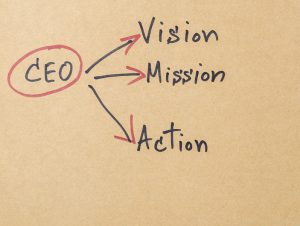
    It says that in order for a company to institute a new initiative the first must-do step is: Get CEO buy-in!  The CEO then gets the buy-in of senior management.  Senior management then directs the initiative down to middle management who carries it out through the workforce.

    But if you’ve ever worked for a medium or large company you probably learned a different response to any big announcement of a new initiative: “Yay, I’ll believe it when I see it.”

    Many initiatives never make it down to the workforce level.  And the few that do often fade out with few if any lasting remnants of their existence.  The common excuse, “We didn’t have enough buy-in.”

    But the real reason they fade is because they are clumsily tacked onto existing work.  They aren’t integrated into the existing operating, managing and reporting systems.  Therefore, they don’t feel natural and easy.  When we become over-worked or stressed the best solution is to lob off the work that doesn’t fit.

    When it comes to advancing women in the workplace, we’ve been trying to use this same top-down approach for 40 years.  A women’s organization approaches a CEO and in the tradition of all new initiatives, has him sign a document or make a video declaring the company will now work towards gender equality.  It’s great PR – for both parties – but the results are minimal – just like they were with every previous management initiative.

    So why do women still use the top-down approach to advance women?

    Because we still believe too much in the myth of the hierarchal power and not enough in our own inherent power.

    In reality change happens from within and amongst people.  It comes from interaction and open and honest communication.  So, any woman in any role has more power to affect changes in attitude, behavior and culture than the CEO.

    As women we can create change by positively asserting ourselves and making change safe.  People are often afraid of change because they fear they will be negatively impacted.  When we negate their fears and replace them with positive experiences, the change is embraced.

    This is why in my efforts to advance women I focus on the positive changes and meaningful outcomes any woman can create in her workplace:

    • Improved performance, efficiency and profitability
    • Achievement and pride in daily accomplishments
    • Less stress, frustration, chaos and health issues

    These changes happen because when women assert themselves, we transform the workplace.  We make our workplace Whole. 

    We’ve all heard narratives about how women “bring balance” to male-dominated workplace.  But balance is an incomplete portrayal of the power of women. It still implies that men take more initiative and drive performance while women only curb and prevent them from being total bulls in the china shop.

    Balance doesn’t imply full equality.

    Wholeness does.   

    To understand Wholeness, we only have to look at the Yin-Yang concept we are all familiar with.

    Yin and Yang are equal halves of the whole.  They are dynamic.  They continually interact and influence each other in an easy and natural manner, making their interaction feel right.  Neither is superior or inferior, each controls the other and both need the other to create a harmonious Whole.

    If we think about Yang working all by itself as it does in many of our workplaces, we realize its performance limitations.  Working by itself Yang can’t roll all the way over and revolve.  Not even the CEO with all of his mighty hierarchal power can make Yang to revolve on his own.

    Nor can the CEO make Yin to assert herself and influence Yang.  Yin has to decide to do that on her own.  That is the power of her equality – she must be the one who recognizes and accepts that she is one half of the whole.  She must be the one who steps into and exercises her full equal power.

    The changes women want have always been women’s to make.  We just haven’t seen our power to do so because we have always been misled into believing in the power of the hierarchy.  And even though the male-dominated workplace knows this is a myth it keeps quiet because it wants to hide the fact that the hierarchy can’t create  change and doesn’t even know how.

    Changes in the workplace and the advancement of women will happen, but only when women accept that men and women really are equal and choose to exercise their equality.

    Empowered Women Create the Change They Want


    Find this article helpful?

    Share and Sign up to receive more

    Follow The Woman In The Room on Facebook

    Checkout my New Book:

    The Woman In The Room: How I Realized the Unique Value of Women in the Male-dominated Workplace

    Available outside the United States on Amazon – Search using:

    The Woman In The Room Callihan


  • Gender Bias – So What?

    I keep reading about how gender bias holds women back.  But gender bias has never been a topic I’ve given a second thought to.  Given my career that seems pretty odd.

    When I start a new job or project, I recognize that most of the men I work with never had a female peer who they have to compete against.  And the men I supervise never worked for a woman either.

    I recognize they have a fear of the unknown.  Their fear of working with a woman is no different than the fear they had when they got a new computer system or when the company was sold and new management took over.

    I know their worst fears come from dramatic horror stories they’ve heard over the years:

    • I am an angry man-hater who wants revenge on men.
    • They will have to walk on eggshells around me because I will be looking for gender biases and reasons to claim harassment and discrimination. I am a risk to their jobs and family’s financial security.
    • I am a Token Woman who got promoted just so the company can tout their diversity and I’m  not qualified for my job.
    • My indecisiveness, timidity and insecurity will make their jobs harder.


    Since I know none of those apply to me, I ignore them.  I am confident that my initial actions will quickly dispel these fears in the men as well.

    Will being a woman make me different to work with?

    Oh hell yes!

    But in ways they never considered.

    The first thing I do is ask: What isn’t working?

    Tell me all those problems you have endured for years that create stress and frustration?  What problems make coming to work a chore and keep everyone from feeling like they accomplished something?  What are the problems that lead to alcoholism, drug addiction and a myriad of health issues?

    I open Pandora’s box.

    I know their list will be long.  I know the men need to vent and I listen to them.  As they vent I lead them to reaching consensus on the top priorities.  Without them knowing it, I’ve already declared that I am different from a man.

    Unlike the long list of men who came before me, I will lead them in fixing the problems.

    Notice I didn’t say the “I am going to fix the problems.”  Men have heard the Savior declaration countless times and they know Saviors are quickly be distracted so nothing ever changes.

    As a woman, I am not going to try to be the Savior of the Big Hero.  Instead, I am a leader and we are a team.

    The first lesson I teach my team is that we all work as part of a system and everything we do affects someone else.   Out of respect for each other, no one is allowed to half ass their work and pass it off to someone else to deal with and fix.  Instead we are going to take our top priority problems, sit down together and figure out why work can’t get done right the first time.  Then together we will come up with changes to our processes so the problems don’t happen again.

    I create a Purple Zone systems-driven workplace where we all work in unison and holistically.

    I make us more efficient and effective.  I drive performance upward.  We exceed all of our metrics.  We deliver more money to the bottom line.

    Consequently, I out-perform all of my male colleagues.  That gets attention and earns me promotions.

    If I listen to all the narratives and studies about gender bias I am supposed to believe that my drive to out-perform all of my male colleagues is rooted in gender bias.  I am supposed to have an inherent inferiority complex that tells me I must out-perform my male colleagues by miles if I am to get ahead.

    Wrong!

    I do it because it is my job.

    I do it because I care about my colleagues.  I put all that empathy, nurturing and caring women are famous for into action.  I want all of us to go home at the end of every day with the feeling of satisfaction that comes from accomplishment.  I want each of us to be proud of ourselves and see ourselves as achievers.  I want to relieve the stress and frustration so everyone can be healthy.

    I work this way because I am a woman and this is what we do.

    Empowered Women Create a Gender Bias That Says – Please Hire More Women!

    Find this article helpful?

    Learn more in my New Book!
    Sign up to receive more articles
    Follow The Woman In The Room on Facebook
    Take a quick moment to share
  • The Power of “No”

    www.123rf.com 46417247

    Growing up women learn to say “No” to unacceptable behavior.   But people don’t always listen.  That’s because we are just saying “No” and not using the Power of “No.”

    Just saying “No” leaves the door open for negotiation.

    Does she really mean it?  Let me see.  Maybe if I pester her enough she will give in.  Maybe if I am nicer or promise her something she wants in return, she will give in.

    Just saying “No” allows the encounter to become a challenge to see who will back down or give in first.  If the woman gives in, the antagonizer feels they won – and they learn that “No” doesn’t really mean “No.”  It means that she is open to negotiations and wants something in exchange.  Or, that she doesn’t have the strength and confidence to stand up for herself.

    The Power of “No” is different.

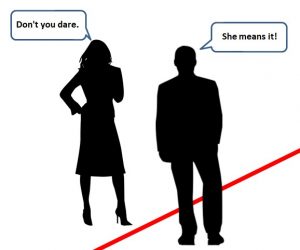
    It draws a line and says “Don’t you dare cross it.”  The woman has a look in her eye that says she is serious.  She will not back down or budge one iota from her position.  Anyone who dares to cross the line will suffer the consequences.


    The Power of “No” is intimidating.  It makes the antagonizer stop and think about their actions.  If they cross the line they know they are choosing to do something wrong.  They have to decide if what they want is worth the consequences.


    Way back in the mid-20th century young girls used to learn the Power of “No” by watching their mothers and the women in their family enforce the rules in the home.  Mothers didn’t say “Wait till your father gets home.”  They pulled out the wooden spoon themselves.

    Girls also witnessed countless examples of female power, determination and intimidation every Sunday night on Mutual of Omaha’s Wild Kingdom.  Their role models were the females of every species who protected their young.  The females didn’t just say “No” and open negotiations:

     Predator:  “I want to eat your babies”

    Female:  “No.  Go away.”

    Predator:  “Oh come on, let me eat your babies.  If you let me, I’ll take you to this really nice watering hole.”

    As soon as a predator came too close animal mothers used the Power of “No.” It didn’t matter how big or powerful the predator was, the mother never backed down.  She never thought “This is going to be too hard or I might get hurt or he has too much power so go ahead and take my babies.”  She always stood up for herself and her young and fought back.

    We still see some examples of women using the Power of “No.”  We see it in the mother who drags her son home from the middle of a riot.  I saw it all the time in the construction trailer where the administrator laid down the law and enforced the trailer rules:

    1. Clean your boots off before you enter.
    2. Don’t use the copier without permission.
    3. Don’t take office supplies.
    4. Don’t ever use the women’s bathroom.

    She made even the most macho obnoxious men obey.  No one dared cross her.

    The Power of “No” is female power.  It recognizes that women have an inner strength and a determination unmatched in men.  It says women have the authority to set the rules for acceptable behavior and the power to enforce those rules with consequences.

    When women use the Power of “No,” they assert and stand up for themselves.  They turn #MeToo into #HeSangSoprano, #IFiledCharges, #HeNeverDidThatAgain, #HeListened and #ProudofMyself.

    Unfortunately over the past couple of decades women have distanced themselves from the Power of “No.”  When my daughters were growing up other mothers and I discussed how girls were no longer getting the same messaging we received.  That’s because the Power of “No” was  no longer politically correct because it was associated with motherhood and maternal instinct.

    By taking away the Power of “No” girls and women were left with just saying “No” and a belief that men have this incredible power that women can’t overcome.  We diminished ourselves as we traded in the Power of “No” for the political power we expected to find in victimization.

    But victimization doesn’t advance women.  It never has and it never will.

    Asserting ourselves, standing up for ourselves and using the Power of “No” does advance women.

    As women, we need to go back and reclaim our inherent female power.  We need to draw the lines of acceptable behavior… and then give that deadly look that says “Don’t you dare cross that line.”


    Empowered Women Use the Power of “No”

    Find this article helpful?

    Sign up to receive more and check out my New Book!

    Follow The Woman In The Room on Facebook

    Take a quick moment to share 


  • Don’t Let a Skill Become a Trap

    www.123rf.com 61070833

    When I began my career my male colleagues didn’t know how a female engineer would be different from a male engineer.  They soon discovered the difference – “She can write!”

    At first I laughed because engineers are notoriously bad writers so it wasn’t difficult to do better.  But then I saw the danger in this acclaim.

    Instead of being seen as engineer, I could be seen as a woman only and get pushed into a traditional female role.

    One year later my fears became a reality.  I was moved to a new job where my overwhelmed boss discharged me to help write performance reviews and award packages.  I sat in the back corner of the small room occupied by the two secretaries with a typewriter on my desk.

    I knew I had to change my situation.

    I soon discovered an upside to my new location – everyone talked to the secretaries.  I soon learned about every issue and problem in our department.  I realized there was a big beautiful world of opportunity out there – I just had to figure out how to get out from behind my desk.

    Opportunity soon knocked when a supervisor came to the secretaries begging for their help in rewriting the Wastewater Treatment Plan.  The secretaries quickly volunteered me.

    Eureka!!!

    I had a perfect excuse to get out from behind the desk.  I told the supervisor I needed to understand how things worked so off we went to the shops and the wastewater treatment plant where I talked to the men about operational issues.  I gladly took over rewriting the plan.

    The next thing I knew I had the Snow Removal Plan, the Vegetation Removal Plan, the Flood Control Plan and the Traffic Control Plan sitting on my desk to update and rewrite.

    Writing these plans took me all over the Air Force base I worked on and exposed me to the larger base mission.  I met and talked to everyone.  I learned how my department was supposed to support the mission and where it was falling short.  By the time I left that assignment I had more operational knowledge than any of my male peers.

    At my next assignment I sold my knowledge to my Commander and landed a new job normally given to someone with at least 6 more years of experience.

    About a month into my new job, my supervisor was pulled away to handle a crisis.  He gladly dumped some of his responsibilities onto me, especially the monthly presentation to the Wing Commander, which we called “the monthly bloodbath.”

    I should have been terrified but my earlier experience taught me how Wing Commanders and senior officers wanted information presented to them.  I changed up the presentation and to everyone’s shock I survived my first presentation.  Over time those monthly presentations made me very comfortable in public speaking.  I had a new and valuable skill.

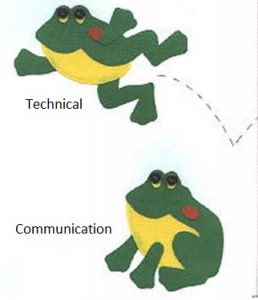
    I also I realized technical knowledge coupled with strong communication skills is very powerful.  Too often the person giving a presentation is just a speaker – they aren’t the person with operational authority.  I however had operational authority – I could present issues, answer technical questions, implement the decisions and then discuss the results at the next presentation.  I eliminated the middle man (my supervisors) and established direct communication to higher level decision-makers.

    I became the person they came to, to get things done.

    After leaving the Air Force I continued to combine technical knowledge and communication skills.  I got a job conducting an operational audit for a government contractor where I uncovered a serious problem.   My report went right up the chain to senior management.  They loved my report and I was soon offered a new job writing proposals.

    My writing skills were once again front and center and giving me the opportunity to develop more  professional skills – proposal writing, marketing and contract negotiations.

    I took the job.  However, I remained leery of being seen more as a writer than engineer.

    Many years later I proved to myself that I was correct to be leery.  I had two job offers on the table – one to write proposals and one to run an operational department.  The job running the department paid 33% more.

    I realized I always had my priorities right – operational and technical skills were more important.  They were the key to better pay and advancement.  Communication skills were supplemental – useful to distinguish and leverage myself, but they should never be my primary workplace skill.

    All through my career I used both my skills.  If I established myself with technical skills, I then used communication skills to distinguish myself.  Likewise, if communication skills could get my foot in the door, I used them and then found an opportunity to apply my technical expertise.

    Many men have a hard time understanding how I could do this because the male-dominated workplace believes you can only excel at one skill.  Consequently I’ve been asked countless times: “Are you an operations person or a proposal writer?”

    I answer: “I do both” and watch their heads explode!

    For women it is easy to fall into the trap of having to choose between our skills.  These choices often maneuver and trap us into more conventionally female jobs that pay less and deter our advancement. 

    This is why we should never conform and never choose.  Instead we should learn new skills, leap frog them over each other and leverage our skills to distinguish and advance ourselves.

    Empowered Women Use All of Their Skills


    Find this article helpful?

    Sign up to receive more and check out my New Book!
    Follow The Woman In The Room on Facebook
    Take a quick moment to share


  • The Suicide Pact Myth

    www.123rf.com 12432420 –

    A few weeks ago while working with the TV on, I heard a commentator relay a rumor that Tillerson, McMaster and Mattis had a “suicide pact” and if one left they would all leave.

    I found myself yelling at the TV – “You guys don’t know what you are talking about.  No one goes through with a suicide pact!”

    As a woman who has supervised lots of men, suicide pacts were part of my daily life, beginning in my first management position and never stopping.

    Suicide pacts are typically voiced as:

    “If George gets fired then Jim, Terry, Dan, Paul and Bob will quit.”

    “If George doesn’t get the promotion then he will quit and so will Jim, Terry, Dan, Paul and Bob.”

    The first time I faced the threat of a suicide pact I saw it for what it was – an intimidation tactic.

    I also didn’t miss the fact that it was played out on me because I was a woman.  They guys thought I was more likely to cave into their demands than one of my male supervisors who would have met their threat with several choice words.

    In the early years of my career my initial response was to be dumbfounded.  I thought about giving them the dramatic, tearful, hysterical response they wanted:

    “Oh no!  You can’t quit!  I am just a poor little woman who is in over her head.  I won’t survive without you!  I will give you anything you want – just please don’t leave me!”

    I may have actually used that response a couple of times when I was in a “don’t jerk me around” mood.  But for the most part, I gave them a more direct and realistic response:

    “So you’re telling me you are going home and telling your wife ‘Honey  you will be so proud of me!  I quit my job today because George didn’t get the promotion!’  I’m sure that will go over well.”

    And that’s the truth.  No one quits their job because someone else didn’t get a promotion, got fired or got laid off.

    As I woman I’ve faced countless suicide pact threats and had only 1 man actually go through with it after I fired his supervisor.

    The rest of the men in the pact eagerly showed up for work the next day vying to fill the newly vacant supervisor position.

    It only took a week before the man who quit was asking his pact members to help him get his job back.  It took them another two weeks to get up the courage to ask me if he could come back.

    I said “No.”

    The man went to work for his fired supervisor but didn’t have steady work.  After 2 months his pact mates approached me again.  I made it clear that I don’t put up with people who try to intimidate me.  (The man had sent me nasty emails prior to firing his supervisor.)  After two weeks of negotiating I hired back the man in a lower position and for less pay.  I also made him come to my office and apologize to me in person.

    As women we have to respond to suicide pacts for what they are – an intimidation tactic with no weight.  The men who use them are all bark and no bite.  Therefore, we never give into them.

    They do however give us important feedback about our team.  The men who use them don’t tolerate stress well.  They use the suicide pact as a means to hide that fact that they are under stress and really want to quit.  Ironically, defying the suicide pact by firing or not promoting their supervisor and bringing in someone who is more capable, is often the best remedy to their stress.  They just don’t see it.

    As good managers and leaders, it is our job to see it for them and have the courage rise above the threat to do what is best for everyone.

    And as for Tillerson, Mattis, Kelly and McMaster, I suspect they all have very high stress limits and would never think of using a suicide pact.  But whoever initiated the rumor is revealing their own perceptions and their stress needs to be addressed.

    Empowered Women Aren’t Intimidated by Suicide Pacts

    Find this article helpful?

    Sign up to receive more and check out my New Book!
    Follow The Woman In The Room on Facebook
    Take a quick moment to share 
  • Open and Honest Communication Advances Women

    www.123rf.com 23735932

    I remember when it was rare to be a woman in the workplace who wasn’t a secretary or in HR.  I began my engineering career in the Air Force on a base with 5,000 airmen.  When I arrived you could count the number of female officers on one hand and the senior ranking woman was a 1st Lt.

    Using today’s popular narratives, you would expect that we faced horrible conditions – discrimination, sexual harassment, subjugation etc.

    Not true.

    Instead there was a lot of curiosity.  That curiosity led to questions.  The questions led to countless conversations about the role of men and women in the workplace and in the home.

    Those conversations happened informally in offices and in shops.  They also happened formally through a committee of women the base leadership established.  Anyone could bring their questions and concerns about working with the opposite sex to the committee.

    The example I remember is a NCO in aircraft maintenance who came to us about his one female aircraft mechanic.  While working  in the hanger it got hot so he told everyone they could take off their fatigue top and just work in their t-shirts.  Back in those days, we wore white t-shirts so when the woman took off her fatigue top you could see her bra through it…and it was leopard print.  The NCO had her put her fatigue top back on but then he was worried about her working in the heat.  He reassigned her to a different task which wasn’t fair to her or the men.

    Our solution was simple.  The female aircraft mechanic should wear a white or beige bra with her uniform and save the leopard print for her civilian clothes.  We also told the NCO that her bra will still be visible under her t-shirt (we all knew this from personal experience) but he and the other male mechanics just had to deal with it.  (Yes, we were still a bit prudish back then.)

    Later we followed up with the female mechanic and she said everything worked out fine.

    What was drastically different between those days and today is that back then we had open honest direct communication where anyone could honestly express their point of view, fears or vulnerabilities.  No subject was off limits.  And no one was told their ideas and opinions were wrong.

    We recognized that we were all in new territory.  We recognized that most men had no experience working with a woman as a peer just like we had no experience working with men.  Therefore our objective was to broaden everyone’s perspective and comfort zone without incrimination.

    Through our very politically incorrect conversations men and women got to know each other and build the relationships necessary for women to realize our equality.

    That is how it was for about 20 years.  Then everything changed.  Suddenly we were all being called into training seminars where we were “educated” about each other.  We were told what we could and could not say.

    www.123rf.com 31134098

    As the woman in the room, the spotlight was on me.  “Diversity” singled me out and labeled me as “different.”  I was told in front of my male colleagues that I could bring my issues to HR or the Diversity office and they would help me, confidentially.

    My response was “I don’t have any issues.”

    The trainer however looked at me as if to say, “You can tell us what’s really going on later.”

    I could feel the walls going up in all of my male colleagues.

    After the training I talked to my boss.  He asked me if there were any issues I never voiced and I told him there weren’t.  But the trust was damaged.  We could no longer talk openly and honestly as we always had.  For several months the guys and I walked around on eggshells with each other as I slowly re-built their trust.

    I was furious.

    I was furious at the arrogance of a training seminar swooping in and damaging both my relationships and my career.

    I was furious that these supposed experts were ignorant of the one rule that helped women like me – open and honest communication.

    I was beyond furious that they didn’t talk to me before the training.  They just assumed that I was a timid, insecure woman who couldn’t stand up for herself.  I felt more insulted and degraded by something meant to empower me than I had ever felt by an incident in my career.

    And I wasn’t the only woman who felt that way.  I knew many women who broke through all kinds of barriers without any outside help who felt like our strength and confidence were no longer politically correct.  We were supposed to sit around and talk about how we were “victimized” evn though we didn’t feel like victims.  We wanted to talk about how we tackled issues, kicked butt and distinguished ourselves.

    After years of diversity training classes, it was one of the last ones I attended that finally gave me some satisfaction.  My diverse team and I sat through 2 hours of being told how to be politically correct with each other.  Immediately afterwards, we all looked at each other and said “We’re going to keep doing what we’ve been doing.”  And we all walked out.

    Very concerned, the trainer came to see me.  I unloaded on her.  I told her she didn’t know the first thing about being a woman like me and she sure as heck didn’t know the men I worked with and supervised.  I told her we were a tight team and we weren’t going to allow her or anyone else to divide us.  We all experienced that before and this time we decided to take a stand and say “No.”

    I realize that what I resented all those years was that someone who never walked in my shoes and never talked to me about my experiences thought they had the credentials to tell me how to deal with being the woman in the room.

    But more so than that, I felt like my voice and the voice of other experienced women didn’t count.  More accurately, we were supposed to remain silent because what we had to say may contradict the popular or media-driven narratives.   

    That has to change.  We need to bring back open and honest conversation so more women with real-world experience can lead in advancing women in the workplace.  We after all,  are the ones who can say “Been there, dealt with that, let me tell what works.”

    Empowered Women Know Open and Honest Conversations Work Wonders

    Find this article helpful?

    Sign up to receive more and check out my New Book!
    Follow The Woman In The Room on Facebook
    Take a quick moment to share 
  • Have a 21st Century Concept of Management

    Recently I shared a Facebook post in which Shira Goodman, CEO of Staples recalls her best career advice:

    “Be open to making lateral moves.”

    I agree – making lateral moves is what propelled my career too. However, we often think that we should stay within our functional area so we can build the relationships we need to work our way up the corporate ladder.  But that theory is so mid-20th century!

    To get ahead in the 21st century we need to think about how a 21st century company really functions.

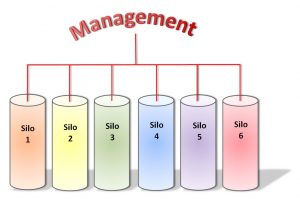
    First, take a look at your company’s organizational chart(s).  You will probably see lots of functional silos.  This reflects 19th century management theory when manufacturing drove our economy.

    The male-dominated workplace however still loves these functional silos because they allow men to use an expertise to acquire status.  That expertise can be in a skill/profession, client type, region or project/production phase.  As men work within their silo gaining knowledge and experience they master their functional area and become our awe-inspiring experts.

    Take a moment to think about how you think about experts.

    We expect experts to know the best way to do something.  We don’t question the experts.  We expect that a workplace that has lots of experts in their functional silos to perform the best.  But do they really?

    Let’s do a 21st century reality check.

    In the course of doing your work, how often do you interact with people from different functional silos?  Probably quite a bit.

    And how often do you or your co-workers have problems getting the right or complete information from people in the other functional silos so you can do your job quickly and efficiently?

    Probably a lot.  If you think about it, you will probably realize you waste a good part of your day trying to correct work passed to you from other people.

    The problem is that the old functional silo structure assumes that the experts can best complete their work without the interaction (distraction) of others.  Sometimes that work is then “handed-off” to another functional silo to complete by itself.  However, the handed-off work is often completed in a manner that suits the first silo but not the second.  This causes rework for the second.

    While this system works well for silo managers and the experts, it doesn’t work well for the workforce who interact all day long with people from multiple silos.

    21st century workplaces are more complex and therefore require integrating work across the silos so the big picture work gets done efficiently.  Silo managers can no longer just look down through their silo – they must look across all silos and integrate the work of their silo with that of the others.  They must bring all the functional areas and people together to function as one entity.  This is the primary responsibility of 21st century management.

    The old mentality of working your way up your silo doesn’t prepare managers to integrate work.  However, someone who has moved from silo to silo understands how work has to get done from the perspective of more silos.  They understand the integration necessary for the company to perform better. They will be better managers.

    The male-dominated workplace and academia however, still don’t appreciate the power of integration because it reduces the status of their expertise.  They consider people who move from functional area to functional area as a “jack of all trades but master of none.”

    But integration of activities and functions is an expertise.   It is an expertise that requires communication, coordination, collaboration and multiple task management skills.  These are skills women excel at far better than men.  This is why women need to aspire to middle and senior management positions in the 21st century.

    So, if you are one of those people who has moved between functional areas a lot and believe your career options are limited because you don’t have one big area of expertise, change your perspective.  You just may be an integration and efficiency expert.  Go for that management position!   because you have skills that  do not.  You will outperform your siloed male colleagues.


    Empowered Women Manage Through Integration


    Find this article helpful?

    Sign up to receive more and check out my New Book!
    Follow The Woman In The Room on Facebook
    Take a quick moment to share 
  • Why Retiring is Wrong

    This is from my friend Natalie Hill.  While many men in Tucson retire out to pasture on the golf course, their wives keep “working” pursuing their interests and passions.  This is one of the things that make Tucson different from any other place I’ve ever lived – Tucson embraces female energy.  In Tucson I’ve had the pleasure to get to know many “older women” who don’t believe in going out to pasture.  

    Why Retiring is Wrong

    Thought that might catch your attention.

    Of course, there are exceptions to everything and I’m not the black and white thinker my subject line implies.

    So let me explain why I say retirement is wrong.

    I disagree with the whole idea of retirement.

    It’s bad for the mind.

    Bad for the body.

    Bad for the the planet.

    Here’s why.

    Here’s the kind of retirement I’m talking about.

    The kind where people no longer do any sort of meaningful work that supports people or the planet.

    The kind where bridge, golf and the upcoming cruise are the main events on the calendar.

    This kind of retirement is saying to the mind and body – you’re not important or needed here any more.

    Might as well shut down.

    Turns out the body does better with daily exercise. No surprise there.

    If you need some convincing of WHY you need to exercise after 50, read Younger Next Year, by Crowley and Lodge.

    So I’ll leave the body out of it.

    Let’s talk about the planet.

    Retiring to the golf cart or the bridge table or the Princess Line is not what most of us think of when we think of making the world a better place.

    And this is where we all come in.

    You accumulate skill and wisdom and knowledge over the course of your life.

    This is what I call your Brilliance.

    And when you reach a Certain Age, that Brilliance is RIPE!

    It’s juicy and mature.

    Just think how much good we could do if, at the age people typically retire, they instead give the received from their bountiful life.

    Can you imagine how much GOOD people in their 50’s, 60’s, 70’s, 80’s (and beyond) could do for the planet?

    That’s 40 more years of giving!


    Empowered Women Don’t Go Out to Pasture!


    Empower Yourself  – Subscribe to my articles – Contact Me

    Assert and Express Yourself – Leave a Comment & Share this article

    Follow The Woman In The Room on Facebook for more empowering ideas!

  • How to See Someone Else’s Point of View

    Recently I listened to a woman complain about a male colleague during which she said “I hate passive-aggressive behavior.”  After our conversation I realized that she was the one who was being passive aggressive.

    Our conversation reminded me of a simple, yet very powerful tool I learned  years ago to understand how my colleagues see the world around them.

    I simply LISTEN and when they talk about other people (or me), I hold up a mirror in front of them.  More often than not, they are telling me how they see the world.

    Each of us has a perspective shaped by who we are and our experiences.  We think our perspective is accurate and complete.  We think we are see things as they really are and without bias or limitation.   And too often we fail to recognize there is a larger perspective and our point of view is only a slice of it.

    It is difficult for each of us to look in the mirror at ourselves and widen our perspective by ourselves.  We need the help of others.  Therefore, it is up to each of us can help other people grow and broaden their perspective.

    www.123rf.com – 17870734

    We start by simply listening and holding up the mirror.  We don’t comment or critique.  We don’t try to interject our all-so-important point of view.  We don’t pretend to listen as we really think over in our heads all the ways the person is wrong and what we are going to say to prove our point of view is better.

    We just listen and let the other person reveal themselves.

    It is amazing how much people will reveal when we just shut and listen.  They will tell you about their fears that shape their perspective.

    It is also amazing how much we learn about our own perspective and its limitation when we listen to others.  We start seeing our own fears that limit our perspective.

    It is only after we listen a few times that we can begin to have a good understanding of who the other person is and why they think the way they do.  We can then begin to expand their point of view (and ours).

    We also have to recognize that just like us, the other person is naturally defensive about their point of view.  Therefore, we don’t want to trigger a defensive response – we want them to think, not react.  This is why I like starting with the phrase “I was thinking about you said about….”

    www.123rf.com – 6818438


    It invites a conversation.  And once the conversation starts, it is difficult to keep other people and their points of view from joining in.  That is what we want.

    Each of us has a different slice of the whole and our diversity of experience, knowledge and points of view helps us form a larger, more complete perspective.   It is from this larger point of view that we can solve problems and address issues more effectively and completely.

    So next time you hear someone talking about someone else, hold up a mirror.  What you see may be very revealing.


    Empowered Women Listen


    Find this article helpful?

    Sign up to receive more and check out my New Book!
    Follow The Woman In The Room on Facebook
    Take a quick moment to share 
  • Have the Right Attitude to Stand Up for Yourself

    When women experience inappropriate behavior, sexual harassment, bullying or discrimination in the workplace, we have a lot of reactions – shock, anger, resentment, fear.  Our mix of emotions creates confusion as we try to figure out what we should do about it.
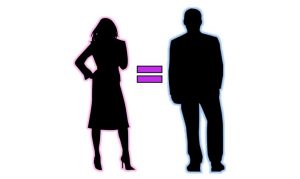
    We want to hit the right and appropriate response but we aren’t always sure what it is.  We don’t want to come off as a trouble-maker by blowing the incident out of proportion.  But we also don’t want to downplay the incident and feel like we let ourselves be diminished.  All we really want is stand up for ourselves and be treated with respect for doing so. 

    I found that finding the right response begins with having the right attitude.  The right attitude says that no one has the right to diminish anyone else.  This attitude also infers that no one is superior to or better than anyone else.  Being higher in the organizational structure, having more education, more job experience, more authority or more anything doesn’t make a difference.   As human beings we are all equal and deserve to be treated as such.

    When you apply this attitude you come to terms with how diminished the incident really made you feel.  Too often women are taught to go right into victimization, no matter who the man is or what the comment or behavior was.  However I don’t like victimization because it automatically assumes the offender has power over you and the ability to diminish you.   It assumes a natural or inherent inequality.

    The right attitude however makes you ask one simple question:  Who is this guy that he thinks he has the right to diminish me?
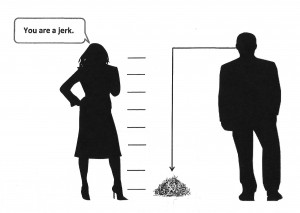
    That is an empowering question.   It makes you think about why you elevated this guy’s opinion and subjugated yourself to it.  Why does his opinion matter to you?

    It reminds you that no matter who he is, or thinks he is, he still puts on his pants one leg at a time.  Therefore, he is just an ordinary human being and not part of a superior alien species.  He may have more power and authority in our workplace but again that doesn’t give him the right to diminish others.  It simply means he has a different role and responsibilities.  And his responsibilities often dictate that he ensures everyone be treated fairly and equally.

    When you recognize your inherent equality, your perspective changes and a new question quickly comes to my mind: What the heck is wrong with this guy?

    This question helps you recognize that the incident says nothing about you and only makes a statement about your offender.  It allows you to refocus on your offender and why he acted the way he did.

    Armed with the right attitude, we can then come up with effective, empowering and appropriate responses to incidents.  Personally, I divide incidents and my response into three categories based upon the severity of the incident.   In the first two categories, the offender doesn’t have or isn’t using his organizational power to impact to you.  This makes it easier to see him simply as a jerk and the incident as representing that something is off with him.

    My first response category is the Eye Rolling Response.  These incidents are very minor and not worthy of any concerted response on your part.  The eye rolling, smirk or “what is wrong with you” expression conveys the message that you aren’t impacted, diminished or subjugated.  It is the “I’m rubber, you’re glue, what you say bounces off of me and sticks to you” response.

    You want to be careful not to over-respond to these incidents because your offender can be feeling you out, interpret your over-reaction as a sign of weakness and continue to target you.

    My second response category is where most incidents fall.  You want to stand up for yourself and make a point but, you are afraid it will be blown out of proportion and backfire on you.  All too often we let these offenses go without a response.  Then we feel bad about that too.  We feel trapped in a no-win scenario.

    When you think about what you really want, you realize you want culture change.  You want your response to help the offender(s) to grow out of their behavior.

    The reason we struggle with this category so much is because we’ve been taught to be limited in our responses.  We are taught the only acceptable response is to file a complaint and take the issue to management to resolve.  But there are two problems with this.

     

    The first is that when we take the problem to HR or management we feel like we are acknowledging being diminished, and that we aren’t capable of standing up for ourselves.  It is disempowering.  It doesn’t make us feel strong or equal.


    The second problem is that the offender will be blamed then possibly punished.  In either case he will see himself as being diminished.  He will want to restore his equality and respect.  And that means you probably just made an enemy in your workplace.

     

    The problem with the standard file a complaint response to these types of incidents is that the solution usually raises one person up and diminishes the other.  It doesn’t maintain the equality and the balance of personal power.  It is further complicated by the fact that men and women perceive the situation from two very different perspectives.


    Women are fighting for their respect and self-esteem.  We assume men are too but they aren’t.

    Once men are diminished they see themselves as fighting for survival.  At this level they fight back more fiercely than women who see this situation from their perspective think is warranted.   This leads women to conclude that men are fighting back because they believe in the subjugation of women.  So women then fight back harder.

    This misunderstanding of perceptions throws the situation way out of wack.  Each party feels diminished and blames the other without understanding the other party feels diminished too.  The conflict goes round and round with no happy kumbaya ending.  It teaches all us that standing up for yourself just creates a bigger mess and isn’t worth it.

    This is why in this category we need to think beyond the file a complaint response and be more creative.

    Over the years I’ve written several articles about being creative and the effectiveness of using humor to stand up for yourself, address an incident and create culture change.  Contrary to what we are taught, humor doesn’t diminish the seriousness of our response or suggest we are merely laughing it off.  Instead humor creates a positive environment where no one is diminished so the offender can grow and change their attitude without blame or shame.  (super-important to men)

    Creative and humorous responses demonstrate that you are equal, strong and confident without conflict.  This earns you the respect you wanted all along.

    My third category of responses is for the really egregious and ugly stuff.  It is where I make a firm stand and take formal action because the offender’s comment, action or behavior successfully impacts me and I can’t stop it.  The impact can be:

    • Monetary affecting my role, promotion, raise, bonus or lay off.
    • Invasive physical contact
    • Unwanted attention from a Creeper so I longer feel comfortable or safe in the workplace and/or away from it.
    • Bullying

    Out of all of these issues, the monetary ones are actually the easiest and most clear cut to resolve.  However they are often an indicator of a larger culture that will tolerate the other issues.
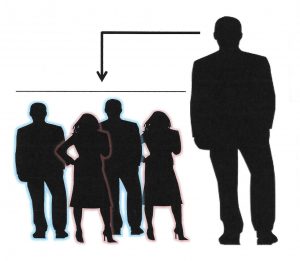
    So, whenever you face incidents in this category take a good look around your workplace.  You will probably discover that you are not alone in your situation.  This includes your male colleagues who often silently endure degrading behavior.

    In this category the offender is more emboldened.  He’s gotten away with his actions before and that made him feel powerful.  He began spinning a flywheel and created a cycle where he abused and intimidated people to make himself feel more powerful.  As he abused more people his flywheel spun faster, produced more energy and making him seem invincible.  Consequently, no one stood up to him.  It is an intimidating one-on-one situation that makes many of us back down and then feel guilty about it.   We know the offender is counting on us backing down just like everyone else did and this makes us angry.  We want to stand up for ourselves.  We want what’s right.

    Again this is where your attitude reminds you that he is just a man who created an image and you aren’t totally powerless against him.  This fact gives you the determination to stand up for what is right and see it through to the end.

    It also forces you into a reality check and recognize that dismantling his intimidating flywheel may take time – there may not be that satisfying swift and dramatic victory.  So, check your attitude – are you really trying to diminish and punish him?  Or, are you trying to neutralize him, hold him accountable and get justice?  There is a big difference between the two and only the latter will be successful.

    When you are dealing with an offender especially those with a long list of victims you are not engaging in a battle of wills or power.  You are engaging in a battle of flywheels.  Therefore, your objective is to put a new flywheel into motion that counters his.  You take a stand in order to create momentum against the offender that allows just a few more people come forward.  They then increase the momentum of your flywheel.  As word spreads, more people come forward and your flywheel is further energized.  Your offender becomes less intimidating and his flywheel loses momentum.  Eventually the offender is neutralized by the momentum of the forces against him.

    It is a scary to be the first person to take a stand and be the one who starts the second flywheel into motion.  But if you really believe that all people are equal and no one has the right to diminish anyone else, then you have a duty to stand up.  And remember you won’t be in this alone – you will recruit others to increase the momentum of your flywheel.

    I’ve found that finding other people to join you is easier when they know you are committed and will not back down.  I then present them with a binary choice:  Do they want to be on the side that stands up for what is right?  Or, do they want to be on the side that supports this bad behavior?

    I keep their decision black and white.  They can choose to go on the record as a good guy or a bad guy.

    Most people want to be the good guys and want to do what is right.

    Your “good guys” help recruit the other “good guys” they know and trust.   Together you increase the momentum of our flywheel and spread its influence across the workplace.  Sometimes you will be fortunate and the right good guys get on board and immediately stop the behavior.  Sometimes it takes a while.  In these cases, I find that there is an irony.  The  offender keeps up his behavior to energize his  flywheel but in reality he is adding momentum to my flywheel.  In the end he destroys himself – and I never had to go negative or get ugly.  I just had to stand up for what is right.

    I lost count of how many times I’ve successfully put the second flywheel into motion on behalf of myself or others.  While it is scary to do the first couple of times, you realize that when we exercise our inherent equality we can restore power and respect to everyone.  This energizes a new flywheel within yourself that strengthens your attitude that no one has the right to diminish anyone else.  The next time you have the opportunity to take a stand, you do so but with even more confidence.


    Empowered Women Have the Right Attitude to Stand Up For What is Right


    For more articles on harassment and discrimination go to  The Ugly Stuff article category

    Empower Yourself  – Subscribe to my articles – Contact Me

    Assert and Express Yourself – Leave a Comment & Share this article

    Follow The Woman In The Room on Facebook for more empowering ideas and solutions!



  • Women Can Lead Men Through Culture Change

    www.123rf.com 51741376
    www.123rf.com 51741376

    Construction sites have a reputation for crude behavior and the women who work on them can face behavior seldom found in other workplaces. This situation keeps most women away from the industry and those that do enter it often opt for support jobs in the office. Those of us who do venture out onto the construction site enter an extreme male-dominated workplace where it is essential that we know how to handle situations correctly so we don’t ruin our career.

    To understand what I am talking about let’s examine a situation I’ve encountered a couple of times – the crude and denigrating drawing of me in a porta-pottie.

    If someone made a derogatory drawing of a female colleague in the men’s room at the main office we know what would happen. HR would get involved, a company-wide email would go out denouncing the drawing, there would be mandatory training and the culprit if identified would be fired. In short there would be expressed outrage.

    However if a woman took this same approach out on the construction site, it would back fire on her – big time!

    Why?

    Our first instinct may be to blame construction site culture full of sexism, discrimination and a good ole boy’s club that doesn’t want women intruding into their territory. However, that is wrong and reveals our inherent misunderstanding of the situation. The reality is that any man who used expressed outrage to deal with a site situation would face the same consequences as us. However, most men already understand it back-fires is because it goes against the reasons men enjoy working on a construction site.

    As women we are taught to use expressed outrage as our go-to solution.  We are taught that men want to have power over us and we have to fight back in order to have our own power. But again, that is wrong and reveals our fundamental misunderstanding of the male-dominated workplace.

    In reality, the vast majority of men don’t aspire to have power over others – they aspire to preventing others from having power over them. They want to be independent and autonomous.N3A11

    The construction site epitomizes a work environment where men get to be independent autonomous. Since it is away from all of the office rules, policies and structure, the construction site has a freedom most workplaces never experience. That is why men (and women) like working there.

    When a woman expresses her outrage at the crude comment, men interpret it as her dragging the office rules out to site with her and trying to control them. She and her rules are trying to have power over them. In response they rebel.  They they no longer work with her and even sabotage her so she fails at her job and leaves the site.

    From a discrimination standpoint, that is extremely unfair. But it is reality.

    No one can come onto the site, dictate behavior and be successful. (Every good Safety Manager knows that.) To change site behavior requires coaching, building relationships, earning respect and a healthy sense of humor.  These are behaviors women excel at.

    A woman who works out on the site must understand these fundamentals and apply them in her response. This should be easy because they align with the culture she wants. Therefore, unacceptable behavior becomes an opportunity to lead and establish a rapport that propels our career forward. That is the approach I took in responding to my porta-pottie drawing:

    Many years ago when I worked on a construction site, I could tell something was up. As I walked around site, the guys all looked at me and whispered to each other as if they were expecting me to react to something. After a couple of days I asked a man I had a good relationship with what was going on. He refused to tell me. That made me really curious. As the situation continued and I got more looks, I kept pestering him and a few others to tell me what was going on. Eventually, the man I first asked told me that there was a drawing of me in a crude position on the wall of a porta-pottie. He wouldn’t tell me which one.

    News spread fast that I knew. The titillating drama on site sky-rocketed as everyone wondered – What is she going to do?

    I didn’t react at all. For the next two days I went about doing my job as normal, all the while chuckling to myself at the men who were obviously waiting with anticipation for my reaction. The waiting fed the titillating drama.

    By not reacting right away, I put the ball in my court, I was in control. I also gave myself a couple of days to think about my reaction and figure out how I would use it to my advantage.

    Eventually, I went around to different port-potties and just looked at them. This got everyone’s attention and heightened the drama some more.  Is she going to open the porta-pottie and see the drawing? How was she going to react?

    Again by not reacting, I remained in control.  I created an image of strength for myself which began earning me respect.

    The next afternoon as I made my rounds on site I stopped in front of a porta-pottie and said “Is this the one with the drawing of me?” No one answered. So I asked, using a tone appropriate for opening a big gift-wrapped present, “Which one is it? I want to see my drawing!”

    I never opened up a porta-pottie door which again fed the drama.

    Over the next day or two as I made my rounds, the guys brought up the drawing themselves.  They wanted me to know they didn’t do it. Of course they all knew who did and with a little prodding eventually gave me enough information for me to figure out which porta-pottie and who drew it.  The man was no longer on site.

    By waiting a couple of days and playing off construction site drama, I completely changed the situation. No one wanted to be associated with the drawing and how it denigrated me.  This was the sign I was looking for – they respected me and wanted me to respect them in return.

    However, I still needed to resolve the situation and do it in a way that earned me even more respect.

    When I felt the time was right, I went to see the drawing for myself. As I approached the porta-pottie, every eye on site was on me and some men approached. When I looked at the drawing I used my planned reaction “Dang I didn’t know my butt looked that good!”

    I wanted to give a humorous reaction to show I wasn’t offended. The crude drawing didn’t have power over me – it couldn’t diminish me, my role or my authority on site. My reaction showed I was strong and confident. It also showed that I understood and valued how the construction site doesn’t conform to office rules.

    The ball was still in my court and I needed to pass it to someone else so we could play ball and build teamwork. So, right after my joke reaction I said “Johnny I heard you drew this.”

    I purposely accused Johnny because everyone knew Johnny already respected me and followed me to this project so he could continue working with me. I also knew Johnny had a good sense of humor and he would banter back with me as he proclaimed his innocence.

    As women we need to appreciate and take advantage of how much men like to banter with each other. Banter and humor are more effective in making a point than outrage or blame. However, we have to be extremely careful. Too often when women banter with men we stay engaged too long and wind up getting hurt. To be effective our banter has to be short and direct.

    After Johnny denied the drawing, I bantered back with “I don’t know, I kept hearing you did.”   Then I looked at the other guys as if to say “Aren’t you the one who told me he did?”  This brought everyone into the joke on Johnny. (No one was thinking about the drawing anymore.)

    Johnny of course responded with his own banter back, asserting himself.  He drew a good line for the banter to end. If I continued to banter back he could feel like I was unfairly blaming him, trying to make him the scape-goat and trying to assert power over him.

    To exit the banter I needed to shift everyone’s attention again so I replied “Johnny, you may be a good artist but is unit 18 ready for inspection tomorrow?”

    I already knew it wasn’t. There was a problem Johnny was having trouble resolving. So before Johnny could give his excuse I interrupted him with “Show me what the problem is.”

    That simple statement showed I cared about and respected the men who worked on site. It distinguished me from a lot of my peers who avoided getting involved with the problems until they absolutely had to.

    As I walked away with Johnny, another man took a marker and covered over the drawing. That proved that I earned the respect of the men on site. From that point on, any time a new man came on site and wanted to denigrate me, the guys stood up for me. It didn’t take long for me to have a great reputation and be the project the guys requested to work on.

    When we are disrespected and even denigrated, the easy response is to express outrage.  But we have to think about what that really accomplishes and if it is the best response.  Does it change the culture?  Does it earn us the respect we want?

    As I’ve said many times before, our goal isn’t to accumulate notches in our “How women have been treated unfairly belt.”   Those notches won’t advance us or our careers.   They won’t create culture change.  They will however discourage us.

    This is why we have to think beyond our expressed outrage, blame and shame responses.  To do so requires understanding how your male-dominated workplace really thinks and acts.  We then have to think outside the box and be creative.  We want to work with our colleagues; encourage and coach them; ease their fears and insecurities; broaden their perspective so they realize they just may enjoy working with us a lot more than working with another man.  If we can do that then we’ve led men through the culture change we want.


    ***If you are being sexually harassed or discriminated against please read this article:  The Important Thing Women Still Don’t Do When Sexually Harassed.


    Empowered Women Lead Men Through a Cultural Change

    Find this article helpful?

    Sign up to receive more and check out my New Book!
    For more articles on harassment and discrimination go to  The Ugly Stuff article category
    Follow The Woman In The Room on Facebook
    Take a quick moment to share 
  • You Wanted It, You Got It!

    Several years ago I was working on a project where some senior male managers didn’t want a woman in charge.  They wanted to prove that anything I could do, a man could do better.

    www.123rf.com – 57566386

    This was a particularly difficult project and men lasted about 2 months.  So every 2 months, I was back in charge with a mess to clean up until they found another man to take over.  I stayed in this revolving door for over a year.  My direct supervisor fought hard on my behalf, using every bit of clout he had but even he couldn’t make a difference.

    Eventually they ran out of men who were my peers, so they decided to promote their star up-and-coming young man, a man who I was mentoring.  I was basically out of a job because this time all of my responsibilities were taken away.  A couple of days later, the young man approached me in the hallway and said “You are still going to do everything you’ve been doing right?”

    I gave him a steely cold stare and said “No.  You wanted it, you got it.”  I turned and walked away.

    Four weeks later he gave his notice.

    He approached me again and said “I didn’t realize how much you did.”

    My cold response was “No you didn’t.”

    He then apologized and confessed to back-stabbing me to get the job.  He showed me emails, leaving no doubt that a particular manager saw me as the company’s Token Woman.

    After my young colleague left, no man would take over.  They threatened to quit if assigned to the project.  This time I didn’t step forward.  Instead, my supervisor went to bat for me again and this time they gave in – with a 15% pay raise.  By this time the project was in dire straits and everyone ran away from it like rats leaving sinking ship.  They were happy to have somebody, anybody take over.

    In the end the company lost a tremendous amount of money trying to prove the impossible – that a man could run the project better than a woman.  Soon after I was put back in charge, another woman joined the project and together we kicked butt and got ‘er done while all the men scratched their heads wondering how we did it.

    All these years later, I find myself in a similar situation.  For several years I’ve been the President of a board for a small organization.  This year, a man came forward, wanting to be President.  I chose to take a break and let him be President.  Since taking over he’s made a mess of things.

    As he tries to squirm out of his responsibilities I am holding him accountable and find myself again saying “You wanted it, you got it.”

    All too often men take on positions they aren’t ready for.  As women we watch them mess up and then we make a HUGE mistakewe clean up their mess for them.

    For some reason we find power in this.  We find power in secretly knowing that men need us and can’t do their job without us.  But that is our mistake – we keep it a secret when it should be a huge flashing neon sign that our male colleagues need the skills we bring to the male-dominated workplace.

    It is time for women to take off our aprons and put down our dust pans.  If a man wants a position then he’s got it along with all the responsibilities and accountability.  He can clean up his own mess or step down.

    If we wind up taking over and have to clean up someone else’s mess, then we only do it  with full recognition – the authority, job title and pay.  And our pay must be higher than what the mess-maker earned….because that is what any other man would demand.


    Empowered Women Don’t Clean-up Other People’s Messes for Free!


    For more articles on harassment and discrimination go to  The Ugly Stuff article category

    Empower Yourself  – Subscribe to my articles – Contact Me

    Assert Yourself  by Expressing Yourself – Leave a Comment & Share this article

    Follow The Woman In The Room on Facebook for more empowering ideas!