

Women are taught to think of men as tough and aggressive. But then we work with men and discover just how many of them really hate conflict. They literally run away from it.
In the workplace, personnel issues can be the biggest source of conflict. The manager may try to hide behind coldness or bravado, but it doesn’t protect him from the raw, honest emotional reaction coming directly at him.
As women our empathy makes us dread firing someone. But in my experience, our discomfort is nothing compared to men. I’ve seen several men get physically ill at the thought of firing or disciplining someone. I’ve known several men who had to fire someone, not show up to work that day.
In one of my workplaces, I watched three senior managers have a secret off-site meeting to develop a plan on how they were going to fire a superintendent on my project. I was shocked by how whimpy these otherwise big manly men were. When the time came to meet with man being fired, the most senior manager was nowhere to be found. Another suddenly had an important phone call. And the one manager who was left, as he was sweating bullets, he tried to get me to do it.
I would say it was the most bungled firing I ever witnessed, but it wasn’t. Even President Trump with his “You’re fired!” television persona, can’t seem to fire people in person.
Watching men deal with conflict, I’ve seen through their “tough exterior” to find that most men are big softies.
Many men have counseled me that the construction site is the domain of the macho men and is managed through intimidation. So why then, am I always going out on site to deal with issues and conflicts the guys avoid???
Dealing with conflicts and I faced many men who got very aggressive. Early in my career, these men were imposing. But by the end of my career all I saw were overwhelmed little boys crying for help.
I learned that overly aggressive men aren’t to be feared. These are men who desperately need help but don’t want to admit it.
I learned that many men get very aggressive in conflict because they fear it, dread it and hate it so much that they only way they can get themselves through it is by being aggressive. (Men have admitted this to me.)
When you figure these men out, you discover that the guys who come across as the biggest grizzly bears, are actually the biggest teddy bears.
So why do men hate conflict so much?
It’s because they don’t like dealing with the reaction.
Men aspire to be Autonomous. They want to believe their actions produce the result they want and that is it. They don’t want any other consequences and certainly don’t want consequences not in their control.

In conflict, men know they aren’t autonomous. They know their action will threaten another man’s autonomy and cause him to react. Not knowing what the reaction will be, leaves them unprepared to deal with it. And since they have no control over the reaction, they feel vulnerable.
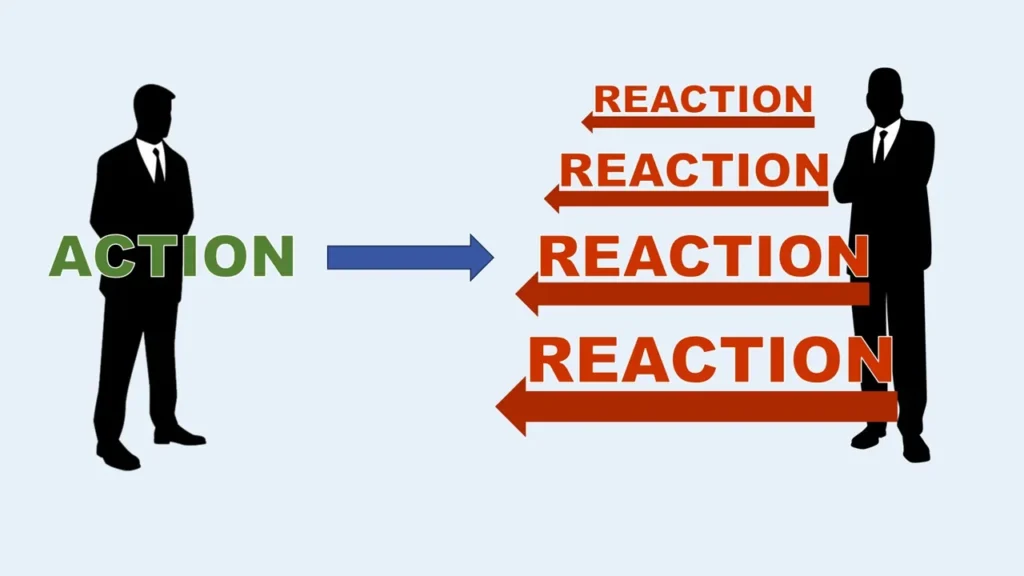
When men feel vulnerable, they know they have lost their autonomy. In order to regain their autonomy, they must react to the reaction.
The need to react goes back and forth and suddenly things go off the rails and a simple issue gets really twisted and complicated.
Men don’t deal with complicated well.
But women do.
Women aren’t afraid of the reaction, feedback or pushback. We expect it. It is a natural part of our group dynamic.
Before the 21st century and before women were taught to act like men and be aggressive, women didn’t feel the need to react. Our emotions such as empathy and understanding told us we should consider the reaction and what it means.
Therefore, we aren’t afraid of conflict. Heck we don’t even consider it conflict. To us, we’re just talking things out. We’re figuring out how to make things work for everyone within the group.
As women in a male-dominated workplace, this is one of the most important transformations we can help our workplace make.
In today’s workplace, no one is autonomous. Each person’s work impacts other people. If we don’t work in coordination with each other, there will be a lot of conflict.
As women we can help men (and aggressive women) learn to talk to each other and become comfortable with reactions from other people. Since we all have responsibilities and objectives, we all feel some pressure to get our work done and don’t want to be negatively impacted by other people.
This is why we need to teach each other to RESPECT each other’s jobs. With respect we can then work together to optimize how we each do our job so we all get the best possible outcome.
As women we’ve historically been credited with bringing communication and teamwork to our workplaces. However, today too many women believe they must be as aggressive and selfish as the stereotyped man. But by following stereotypes that don’t represent the vast majority of men, women are hurting both themselves and our workplaces.
As women we also can’t be a stereotyped woman who is afraid of conflict, especially conflict with men.
As a manager, I always liked conflict because it showed me a problem or issue that needed to be resolved. I saw conflict as an opportunity to facilitate communication and coordination, so we made positive changes in how we did our work.
This made everyone happier!
Resolving conflict creates a better work environment.
Ignoring or being scared of conflict achieves nothing.
As a woman and team member we are the ones who are best equipped to step forward and resolve conflicts. We are far better than men at facilitating and coordinating communication to resolve conflicts. Men know this about us, and many hope we will step up and help them.
However, I don’t want you to think of yourself just as a facilitator or communications specialist. Those are soft skills that put you in a support role.
Recognize that you are stepping up and leading your team through its coordination issues.
Therefore, you are a leader.
Empowered Women Lead Their Workplace Through Conflict
To learn more about dealing with conflict with men, watch this YouTube video:
Comments
2 responses to “Do Men Hate Conflict More Than Women?”
[…] deal with an ignored personnel issue or end a bad practice. Men in our workplaces can be pretty conflict-adverse so there can be a lot of issues that the guys never addressed. These are golden opportunities for […]
[…] Even though I’ve never had a female boss, I’ve supervised and worked with female bosses whose direct reports were women. From those experiences, I totally understand the question because many of the women were horrible bosses and I had to deal with a lot of HR issues that my male colleagues either ignored or ran away from. […]